
Sunday, August 29, 1926 · Gyeongseong (Seoul), Colonial Korea
The Anniversary No One Could Speak Of
Good evening, and welcome to “100 Years Ago Today.” As you wind down your Sunday, let’s travel back exactly a century, to a Gyeongseong just past the autumn-cooling day of Cheoseo, when mornings and evenings had begun to carry a first hint of chill. But August 29, 1926 was a date no one in colonial Korea could mark on a calendar or speak of aloud — even though everyone quietly knew what it meant.
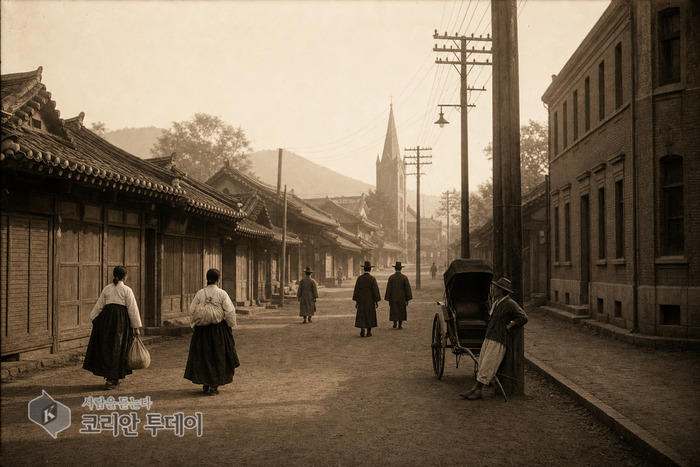
Korea Under Colonial Rule
August 29, 1926 marked exactly sixteen years since the Japan-Korea Annexation Treaty was formally proclaimed in 1910, the date that would later be remembered in Korea as Gukchi-il, the “Day of National Humiliation.” Under the Government-General, there could be no public commemoration of the date — and it remains unconfirmed whether the day’s newspapers referenced it directly at all. What is documented is what else occupied the Korean press that week. On August 22, a column titled “Ramblings” (Hoengseolsusul) published in the Chosun Ilbo triggered a censorship case: writer Choi Won-sun was indicted for violating the Peace Preservation Law, and editor-publisher Kim Cheol-jung for violating the Newspaper Law. Their trial was set for September 8, with prosecutors expected to seek an eight-month prison term for Choi and a six-month detention for Kim. Three days before our date, on August 26, the young novelist Na Do-hyang — author of “The Mute Sam-ryong,” “The Waterwheel,” and “Mulberry” — had died at only twenty-five, a loss the literary community had not yet finished absorbing. And the students arrested for shouting for independence during the funeral of the last emperor, Sunjong, on June 10 had already been formally indicted since June 25, yet as of late August their case remained stuck in preliminary investigation — the actual trial would not open until November.
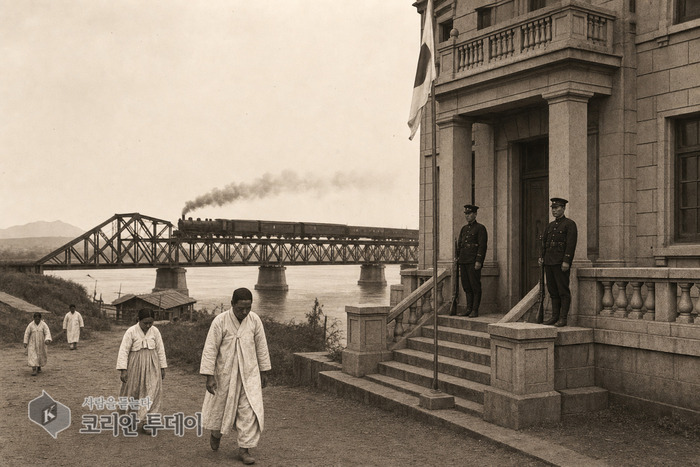
East Asia in Turmoil
That same week, the Government-General’s censorship apparatus had just been sharpened: in May, a dedicated Books Section had been split off from the colonial police to police the press more tightly, and the Chosun Ilbo case was one of its first visible strikes. Near the northern border, in Sinuiju, a court had handed down a ruling on August 23 against a figure connected to Sinminbu, one of the three rival Korean independence organizations then governing Korean communities across Manchuria — though the details of the case remain undocumented. Memories of the catastrophic Eulchuk flood of the previous summer, which had killed hundreds and displaced tens of thousands, were still fresh; a memorial stone had been erected in Gwangju County only two months earlier. Sovereignty, voice, and even the memory of last year’s disaster all remained things Koreans could not fully claim as their own.
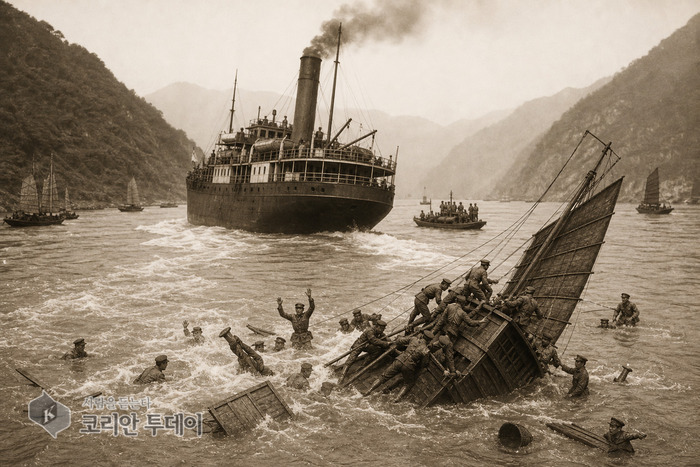
The World Stage
Thousands of miles away on the Yangtze River, it was not gunfire but the river itself that took lives that day. A British steamer, the SS Wanliu, transporting Sichuan warlord Yang Sen’s soldiers, made a sudden sharp turn — and the wake it threw capsized a wooden junk carrying Chinese troops nearby. This incident would become the spark for what history remembers as the Wanhsien Incident, escalating within ten days into an artillery exchange between British gunboats and Chinese warlord forces. In Hunan province, Chiang Kai-shek’s Northern Expedition forces were pressing their advantage against warlord Wu Peifu’s army, having taken control of much of the province through August. In Moscow, Trotsky and Zinoviev’s newly formed United Opposition had spent the summer distributing statements and leaflets in open defiance of Stalin. And just six days earlier, on August 23, news reached even Gyeongseong that Hollywood’s screen idol Rudolph Valentino had died in New York at thirty-one, triggering mourning crowds that overwhelmed the city — though Gyeongseong’s own theater owners had little time to grieve, consumed instead by disputes over the Government-General’s film censorship fees.
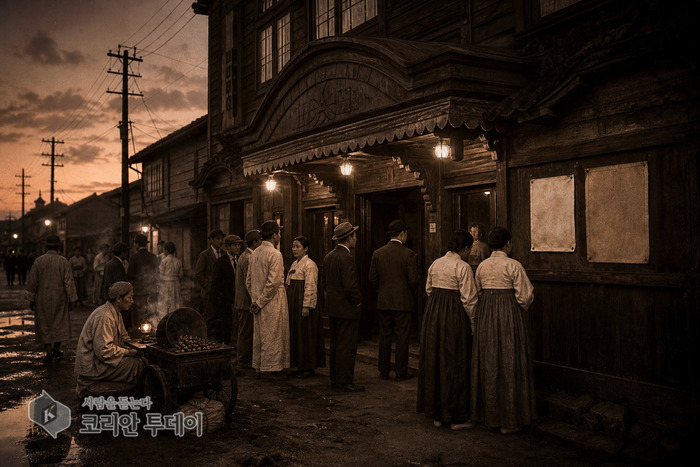
Colonial Parallels
Korea’s predicament in 1926 was not unique on the global map of empire. In British India that same year, the press faced comparable restrictions under sedition and press laws that echoed Korea’s own Peace Preservation Law and Newspaper Law — colonial administrations everywhere seemed to have arrived independently at the same tool: control the newspaper before it could control the streets. In Ireland, barely four years removed from its own war of independence and civil war, communities were still negotiating what public memory of resistance was permitted to look like under a fragile new state. In the Philippines, still under American colonial administration, nationalist leaders faced their own version of the balancing act Koreans knew intimately: how to build a movement for self-rule while operating entirely within the legal and publishing constraints set by an occupying power. What connects these cases is not identical circumstance but a shared colonial logic — the silencing of anniversaries, the policing of print, and the deferral of a people’s right to name their own history out loud.
Person of the Day
Na Do-hyang, who died just three days before this edition’s date, deserves a moment’s attention. Born in 1902, he emerged as one of the most promising voices of early modern Korean fiction, publishing “The Mute Sam-ryong” and “The Waterwheel” — stories that gave working-class Koreans, tenant farmers, and social outcasts a rare literary dignity at a time when much of colonial-era fiction looked elsewhere. He died of illness at twenty-five, cutting short a career many contemporaries believed was only beginning. His death on August 26, 1926 was mourned quietly within Korea’s literary circles even as the nation’s larger political anniversary that same week could not be mourned publicly at all — two silences, one personal and one national, sitting side by side in the same August.
Understanding Daily Life
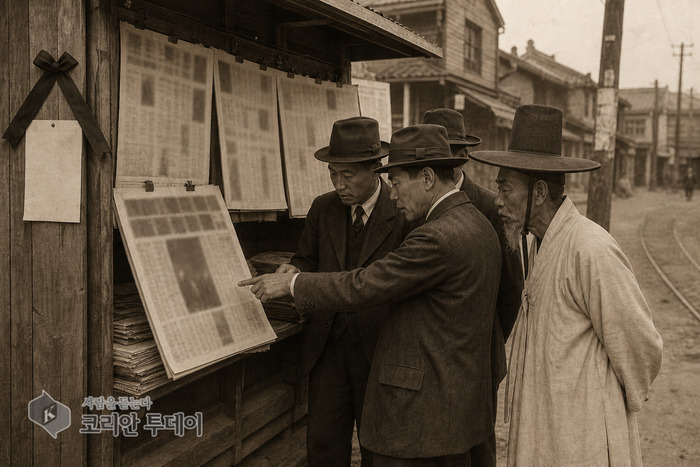
For ordinary Gyeongseong residents, this particular Sunday likely unfolded much like any other: churchgoers filling the alleys toward Sunday services in the cooling morning air, newspaper stands drawing small crowds curious about the Chosun Ilbo censorship case, and by evening, theater marquees carrying both a brief notice of Valentino’s death and a stamped censorship approval slip pinned right beside it. Literary students may have traded quiet words about Na Do-hyang’s passing as they walked home through Jongno at dusk. None of it — the sixteenth anniversary, the court cases, the deaths near and far — could be spoken of as a unified public event. Colonial life fragmented big history into small, disconnected, privately-felt moments.
Century Mirror
A hundred years separate that silent Sunday from ours. In 1926, Koreans could not even say the name of the day their sovereignty was taken. Today, that history is taught, written, filmed, and freely spoken — an ocean of difference measured not in technology but in voice. Where a 1926 newspaper needed government approval stamped onto its film reels, K-dramas and K-pop now travel the world without asking anyone’s permission. The distance between silence and voice is, in the end, the truest measure of a century.
Tomorrow, August 30, 1926 — a Monday — Gyeongseong begins another week. Join us again tomorrow evening at 10:10 PM KST. Good night.
THE KOREAN TODAY × WIA CODE
이 기사의 WIA Code

WIA Code 스캐너로 비추면 인터넷 없이 발행 사실과 위·변조 여부를 확인할 수 있습니다.
휴대폰 기본 카메라로 찍으면 스캐너 안내 페이지가 열립니다 — 기사 바로 열기
움직이는 코드(스트림) 한 장에 기사 전문(사진 포함)이 담겨 있습니다 — WIA Code 스캐너로 약 106초 비추면 폰에 저장되어 인터넷 없이도 읽을 수 있습니다. Stream.mp4 도 여기서 받습니다.
WIA Code · 코리안투데이






Leave a Reply