
100 Years Ago Today
10:10 PM KST (1:10 PM UTC)
“10:10 – As the clock smiles, reflect on a century of history”
A Song That Would Not Stay Quiet
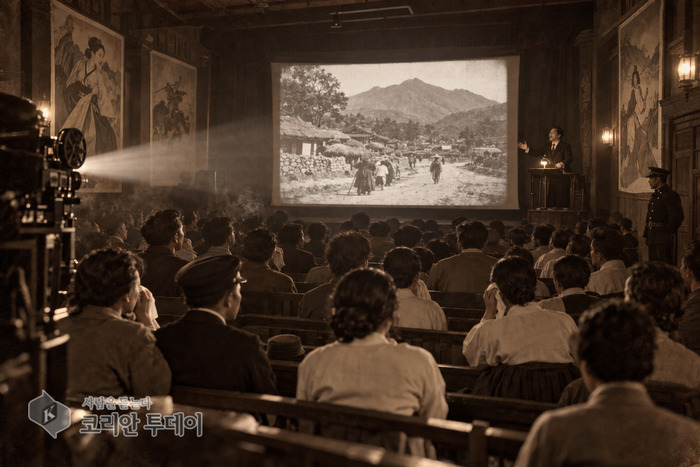
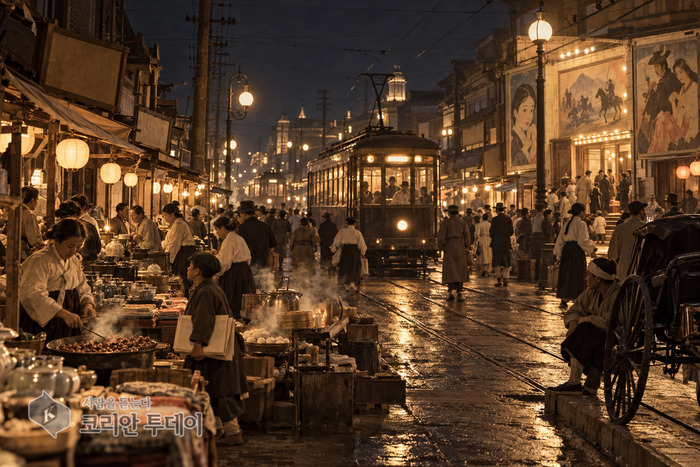
As you wind down your day, imagine a crowded theater in Seoul, then called Gyeongseong. A silent film flickers on the screen, and a narrator speaks the story aloud. Then, when the last scene ends, the audience begins to sing.
The film is Arirang. It opened on October 1, 1926, at the Danseongsa theater on Jongno, the main street. Today, ten days later, it is still drawing crowds. We could not locate the newspaper pages for October 11 itself. So tonight we stay with what is confirmed: the film, the city around it, and a world that did not stand still.
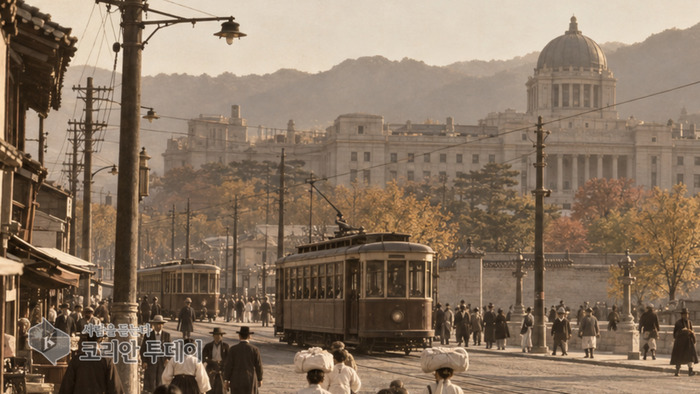
Korea Under Colonial Rule
The film. Na Un-gyu wrote, directed and starred in Arirang. His character, Yeong-jin, is a young man driven out of his mind after being tortured when he was arrested in the March First Movement of 1919. Back in his village he protects his sister Yeong-hui, played by Sin Il-seon, from Oh Gi-ho, a servant who works for the Japanese police. At a harvest festival Yeong-jin strikes Oh dead with a sickle, and in that moment his sanity returns. Japanese police take him away, and the villagers follow him to Arirang Pass, singing. Sources say audiences wept and sang along, and that it became Korea’s first great box-office hit, reaching even mountain villages with no theater.
The building. On that same October 1, the Government-General of Korea held a completion ceremony for its new headquarters inside Gyeongbokgung Palace, the old royal home. To make room, workers tore down the Heungnyemun gate and its corridors, and moved Gwanghwamun, the main gate, eastward. The cost is recorded as 6,751,982 yen. A palace turned into a colonial office, and a film about a captured patriot, on the same day: the coincidence is often retold.
The year. Emperor Sunjong, Korea’s last monarch, died on April 25. On June 10, the day of his funeral, crowds shouted for independence. On May 28 a man named Song Hak-seon tried to attack Governor-General Saito outside Changdeokgung and failed; he was executed the following May. Summer brought a second sweep of arrests of Korean communists. Student strikes rose from 23 in 1921 to 55 in 1926.
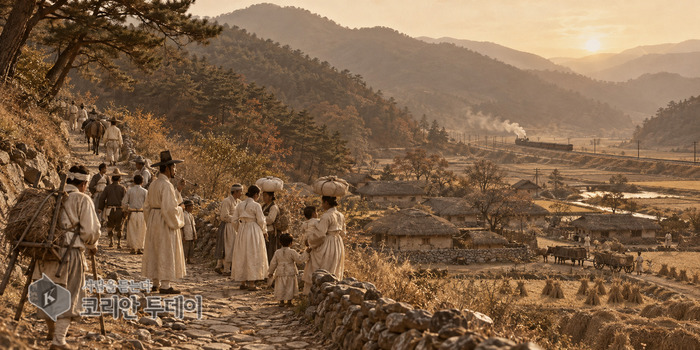
East Asia in Turmoil
China. On October 10, the 15th anniversary of the Wuchang Uprising that toppled the Qing dynasty, Nationalist forces captured Wuchang after a siege of more than a month. It was the last of the three Wuhan cities to fall, after Hanyang and Hankou in early September. The warlord Wu Peifu had already fled north.
Japan. The Wakatsuki cabinet held office. The Taisho Emperor was in long-term poor health, and his son Hirohito had acted as regent since 1921. The emperor would die on December 25.
The World Stage
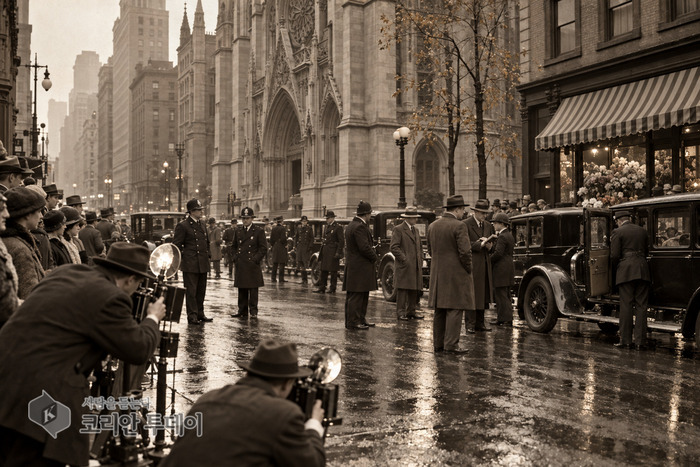
In the United States the St. Louis Cardinals won their first World Series on October 10, beating the Yankees in seven games. The series ended on a caught stealing, when Babe Ruth tried for second base; it remains the only World Series to end that way. The next day in Chicago, Prohibition-era gangster Hymie Weiss was shot dead outside Holy Name Cathedral, with Paddy Murray, as gunmen fired from a nearby rooming house. Accounts differ on who fired. Ahead lay the Imperial Conference in London, opening October 19.
Colonial Parallels
That London conference would produce the Balfour Declaration, naming Britain and its dominions equal and autonomous partners in a “Commonwealth.” Delegates came from Canada, Australia, New Zealand, South Africa, the Irish Free State, Newfoundland and India. Equality was for the dominions. Korea had no seat at any such table. Its people spoke through a film, a funeral, a song.
Person of the Day: Na Un-gyu
Mondays belong to people, and today it is Na Un-gyu, the man who wrote, directed and starred. The theater’s owner, Park Seung-pil, was Korean, and reports say that is why films with an anti-Japanese edge were often shown there. Prices and the official gazette for this date could not be confirmed, so we give none.
Understanding Daily Life
A silent film needed a byeonsa, a live narrator. After each title card the narrator carried on, and audiences laughed and wept at his voice, finding relief for the grief of a lost country. Meanwhile the new government building had been in use since January 1926, a stone landmark in the palace grounds. Specific street scenes for tonight are not documented, so we leave them unwritten.
Century Mirror
| Topic | 1926 | 2026 |
|---|---|---|
| Filmmaking | One man writes, directs and stars; a live narrator gives voice | Specialized crews and global streaming |
| Watching | Go to a theater, or wait for a traveling show | A screen in your hand |
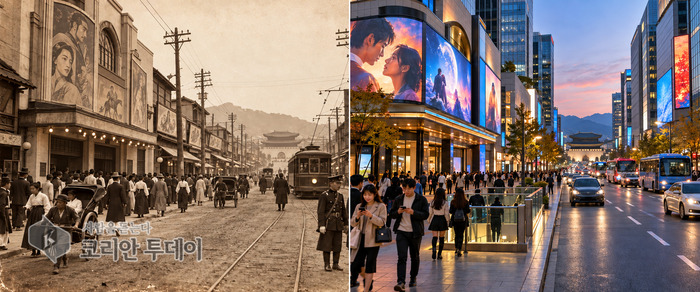
| What survives | The film is reported lost | The song “Arirang” is still sung |
The film is reported lost, yet the song endures, and it connects today’s K-culture to a theater in 1926. Where records are thin, a melody can carry a memory.
Tomorrow’s Preview
Join us tomorrow at 10:10 PM KST for October 12, 1926. Good night.
The Korean Today • global@thekoreantoday.com
© 2026 The Korean Today. Based on historical fact.
THE KOREAN TODAY × WIA CODE
이 기사의 WIA Code

WIA Code 스캐너로 비추면 인터넷 없이 발행 사실과 위·변조 여부를 확인할 수 있습니다.
휴대폰 기본 카메라로 찍으면 스캐너 안내 페이지가 열립니다 — 기사 바로 열기
움직이는 코드(스트림) 한 장에 기사 전문(사진 포함)이 담겨 있습니다 — WIA Code 스캐너로 약 145초 비추면 폰에 저장되어 인터넷 없이도 읽을 수 있습니다. Stream.mp4 도 여기서 받습니다.
WIA Code · 코리안투데이






Leave a Reply