
On the evening of Thursday, August 26, 1926, word spread through Seoul’s literary circles that a 25-year-old novelist had died after a long illness — and Korean fiction lost one of its brightest young voices.
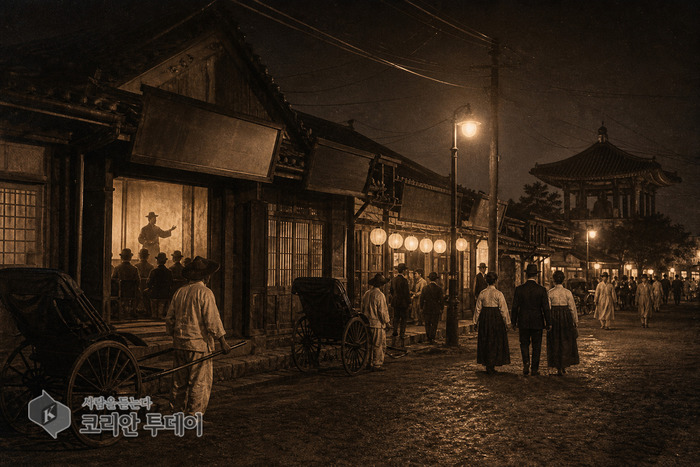
As night falls across the Pacific on this Thursday in 1926, we look back 100 years to Gyeongseong (today’s Seoul).
For International Readers:
Korea in 1926 was 16 years into Japanese colonial rule (1910–1945). Publishing in Korean, and telling Korean stories, was itself a quiet act of cultural survival.
No specific weather record for this date has been confirmed. Given the season — three days past the “cheoseo” (End of Heat) solar term — mornings and evenings would have carried an early autumn chill, though midday likely remained warm.
Source: seasonal/solar-term context; exact weather data not confirmed
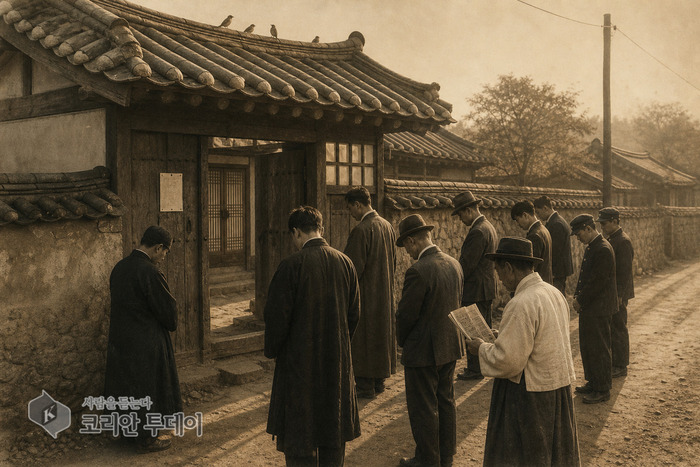
📰 Korea Under Japanese Rule – As Day Ends
Evening Reflection: As this Thursday closed, Seoul’s writers and editors gathered in grief rather than celebration — a reminder that colonial-era Korean literature was built by people who often did not live to see it flourish.
Death of a Young Novelist
Na Gyeong-son [pronunciation: nah gyuhng-son], known by his pen name Na Do-hyang [nah doh-hyang] (羅稻香), died this day at age 25 (24 by Western count). Born March 30, 1902, in Cheongpa-dong, Gyeongseong, he debuted in 1922 with the short story “A Young Man’s Days” in the inaugural issue of the literary journal Baekjo (White Tide), and the same year serialized his novel Hwanhui (Ecstasy) in Dong-A Ilbo — remarkable for a writer not yet twenty.
He went on to write “Mul레방아” (“The Waterwheel”), “Ppong” (“Mulberry”), and his best-known work, “Beongeori Samryong-i” (“Sam-ryong the Mute”), stories of impoverished tenant farmers and rural women that established him as one of colonial Korea’s most promising young writers.
A cold contracted while studying in Tokyo worsened into tuberculosis. He returned home ill and, after a long confinement to his sickbed, never recovered.
Source: Encyclopedia of Korean Culture, Korean-language biographical records (retrospective)
Today’s Headlines in Review
No confirmed front-page headline survives specifically for this date. Still weighing on the Korean press this week: a column titled “Hwoengseol-suseol” [pronunciation: hwehng-suhl-soo-suhl] published in Dong-A Ilbo on August 22 had drawn official ire — its writer, Choi Won-sun, was charged under the Peace Preservation Law, and the paper’s editor-publisher, Kim Chul-jung, under the Newspaper Law.
Source: Dong-A Ilbo company history; Korean independence movement archives
✊ Recorded Resistance
Many of those arrested in June’s Manse Demonstration during King Sunjong’s state funeral remained in pretrial detention at the Gyeongseong District Court this summer — including Kwon O-seol and roughly 130 associates seized while preparing the protest, and the students caught chanting “manse” along the funeral route. Their trials loomed as autumn approached.
Source: Korea History Net (Uri Yeoksa Net); Independence merit records
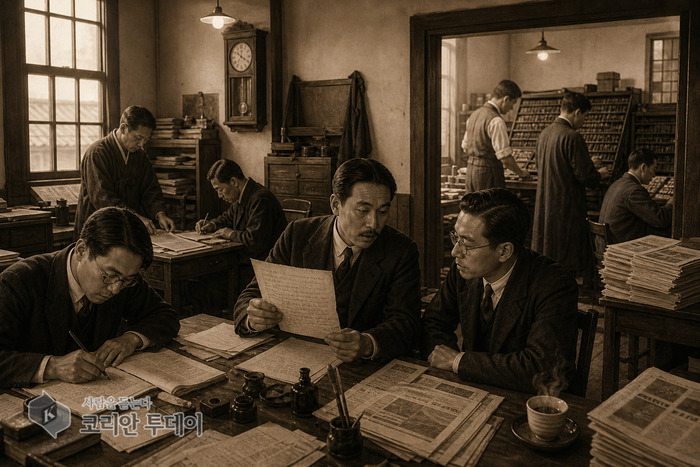
🌏 East Asia in Turmoil
🇨🇳 China – The Northern Expedition
On August 22, the National Revolutionary Army captured Yueyang in Hunan province, securing the whole of Hunan and opening the road north toward Wuhan, still held by warlord Wu Peifu’s forces.
🇯🇵 Japan – An Ailing Emperor
Emperor Taisho, briefly able to walk again in May, had collapsed once more within days and remained convalescing at his Hayama villa. Crown Prince Hirohito had served as regent since 1921.
🇷🇺 Soviet Union / Manchuria
Warlord Zhang Zuolin retained control of Manchuria, where Korean independence bases persisted in the Jiandao/Yanbian region. No specific developments for this date are confirmed.
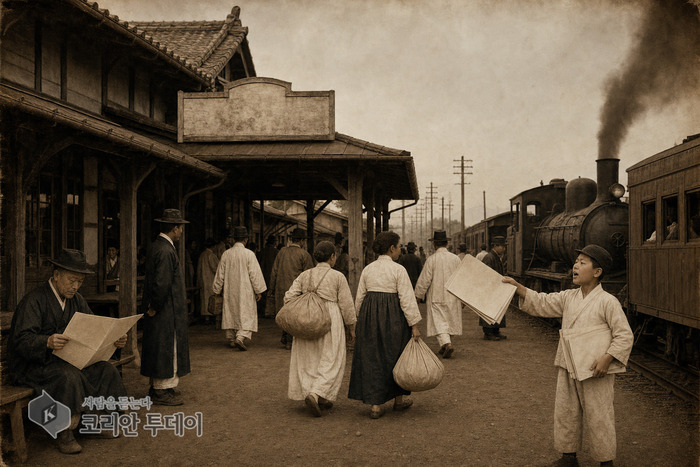
🌍 The World Stage
🇺🇸 United States – The Woman Who Beat the Men
Across the Pacific, New York buzzed with anticipation. Twenty-year-old Gertrude Ederle [pronunciation: eh-der-lee] had, on August 6, become the first woman to swim the 21-mile English Channel — in 14 hours 31 minutes, faster than any man’s previous record. A massive homecoming parade was set for the very next day, August 27, and the city was already preparing for what would become an estimated two-million-strong crowd.
🌐 Europe and Beyond
No specific confirmed reporting from Europe, India, or the Middle East for this exact date.
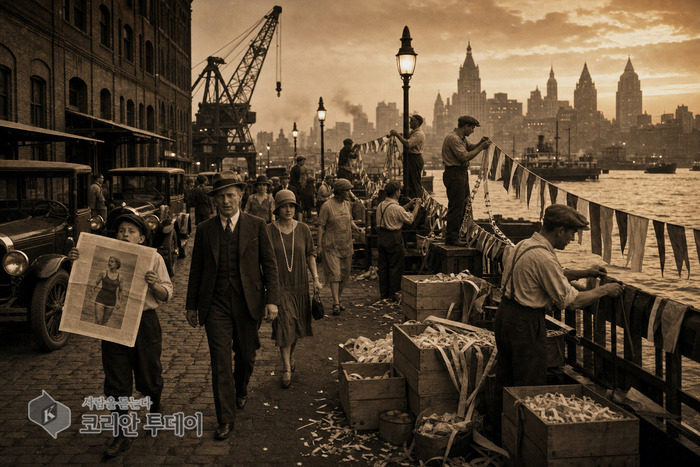
🌐 Colonial Parallels
Na Do-hyang’s death, and the same week’s prosecution of a Dong-A Ilbo columnist and editor, both illustrate a pattern familiar across the colonized world in the 1920s: writing in one’s own language, under one’s own name, was never a neutral act. In British India, the vernacular press faced its own long history of colonial-era press restrictions; in Ireland, decades of British rule had likewise constrained Irish-language publishing and literary expression before independence. Colonial Korea’s young writers worked under comparable pressure — censorship, criminal liability for the “wrong” sentence, and a literary marketplace too thin to sustain even a rising star through a serious illness. These parallels are drawn from general historical context rather than a specific documented link to August 26, 1926.
👤 Person of the Day: Na Do-hyang
Born Na Gyeong-son in 1902 in Cheongpa-dong, Gyeongseong, he wrote under the pen name Na Do-hyang. At nineteen, his serialized novel in Dong-A Ilbo made him a literary sensation. His mature short fiction — especially “Sam-ryong the Mute,” the tragic story of a mute servant, and “The Waterwheel,” about betrayal and poverty among tenant farmers — is still read in Korean literature classrooms a century later. He died at 25, one of a striking number of Korean writers of his generation lost young to tuberculosis and untreated illness in an era with almost no social safety net for the sick, regardless of talent.
🏮 Understanding Daily Life
Morning: Later accounts describe visitors already gathering at Na Do-hyang’s Cheongpa-dong home by early morning; Bosingak’s bell rang over Seoul as on any other day.
Day: Shops along Jongno and Namdaemun opened as usual. Newspaper and magazine offices likely scrambled to prepare obituary coverage, though the specific pages have not been confirmed.
Night: Cafés and restaurants in Myeongdong and Jongno stayed lit late into the evening, and the narrator-performers (“byeonsa”) at Joseon Theater and Dansungsa continued their silent-film narration as usual.
Labor: No specific wage or hours data survives for this date, but low pay and long shifts for Korean textile and dockworkers were a well-documented feature of the period.
🔄 Century Mirror
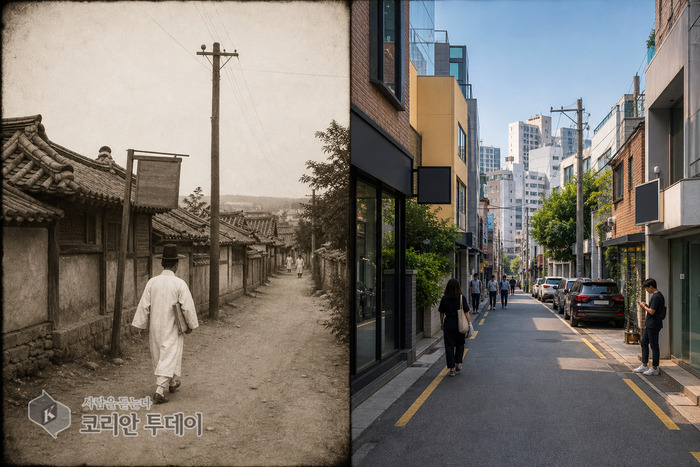
| Category | 1926 | 2025 |
|---|---|---|
| A Writer’s Livelihood | Writers survived on meager royalties alone, unable to afford proper care even for serious illness | Grants, royalties, and copyright systems provide at least a minimal safety net for creative careers |
| Working Hours | 12-hour-plus shifts were common for textile and dock laborers | A statutory 52-hour work week and related labor protections are in place |
| Access to Healthcare | Facilities and medicine for tuberculosis and other infectious disease were severely scarce | National health insurance supports early TB screening and treatment |
Na Do-hyang did not die at 25 for lack of talent — he died because no medical or social safety net existed to save him. A century later, the health insurance and labor protections we take for granted were built, in part, on lessons paid for by lives lost too soon.
Tomorrow’s Preview
Tomorrow evening at 10:10 PM KST, we meet August 27, 1926 — the day New York throws its massive homecoming parade for Gertrude Ederle, while Seoul carries on, still grieving Na Do-hyang.
THE KOREAN TODAY × WIA CODE
이 기사의 WIA Code

WIA Code 스캐너로 비추면 인터넷 없이 발행 사실과 위·변조 여부를 확인할 수 있습니다.
휴대폰 기본 카메라로 찍으면 스캐너 안내 페이지가 열립니다 — 기사 바로 열기

움직이는 코드는 스트림입니다 — WIA Code 스캐너로 약 138초 비추면 기사 전문(사진 포함)이 폰에 저장되어 인터넷 없이도 읽을 수 있습니다.
WIA Code · 코리안투데이






Leave a Reply