
100 Years Ago Today
On a late-summer Saturday in 1926, a man named Park Jeong-sik left his home in Sangju, a quiet inland town in Korea’s Gyeongsang region, and set out for Tokyo. He was not traveling for business or leisure. He was going to claim the remains of his sister-in-law — a Japanese woman who had died, officially by her own hand, in a prison cell three weeks earlier. Her name was Kaneko Fumiko. Her husband was Park Yeol, a Korean anarchist held in the same colonial-era prison system on charges of plotting against the imperial family. As dusk settled over Seoul that evening, newspapers were still murmuring about a photograph — a single image from a courtroom anteroom that had exploded into a scandal reaching the Japanese cabinet itself. Tonight we follow the quieter, harder story behind the headlines: a family’s fight simply to bring a body home.
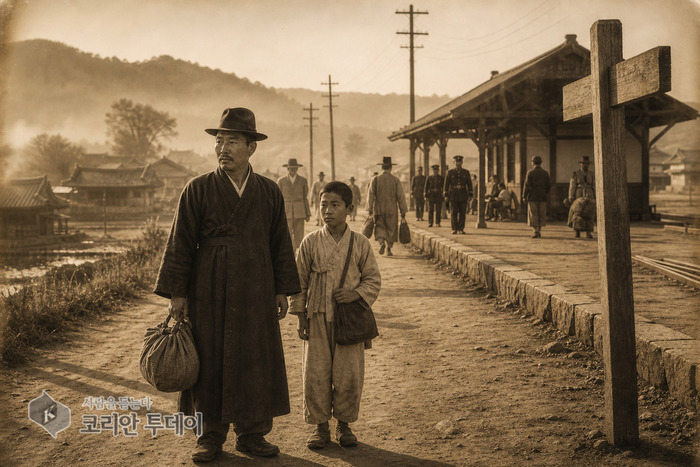
Korea Under Colonial Rule
Kaneko Fumiko died on July 23, 1926, in Utsunomiya Women’s Prison in Japan’s Tochigi Prefecture. She was twenty-three. Prison authorities announced it as suicide by hanging, but doubts lingered among those who followed the case. She and her husband, Park Yeol, had been imprisoned together since 1923 on charges tied to an alleged plot against the imperial family — the so-called Taigyaku Jiken, or “high treason incident.” In April 1925, in an interrogation room during preliminary hearings, the two were photographed sitting close together, reading a book. That single photograph, leaked to Japanese newspapers in July 1926, detonated into what became known as the “Grotesque Photograph Incident.” The presiding judge was forced to resign, and the political fallout eventually contributed to demands that Prime Minister Wakatsuki Reijiro’s entire cabinet resign the following year. It was in the middle of this storm that Fumiko’s body was found. On August 1, police seized her remains from the home of her defense attorney, Fuse Tatsuji, refusing to hand them directly to her family. This is why, on this day — August 14 — Park Jeong-sik and his son left Sangju for Tokyo: to claim his sister-in-law’s ashes with his own hands, rather than let them pass only through police custody.
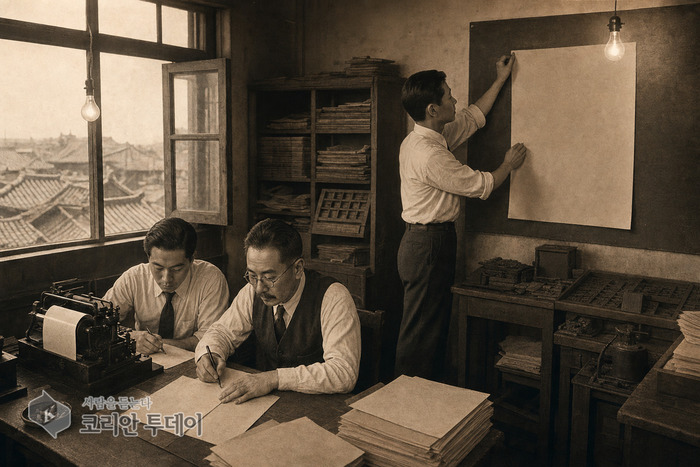
East Asia in Turmoil
Barely two months earlier, on June 10, 1926, some 24,000 students had marched behind the funeral procession of Emperor Sunjong, Korea’s last monarch, turning his state funeral into the June 10th Independence Movement. Colonial police arrested roughly 200 on the spot; across the country that year, 55 schools staged solidarity strikes, and by year’s end police had detained more than a thousand students nationwide. The tremors of that movement had not settled by August. In this climate, the Kaneko Fumiko case carried an unusual resonance among Korean youth: here was a Japanese woman who had stood beside her Korean husband to the end, and a Japanese lawyer, Fuse Tatsuji, who had defended Korean students and independence activists for free since 1919. Their example suggested that conscience could exist even on the far side of the colonizer’s line — a fact Korean newspapers reported carefully, mindful always of the censor’s pen.
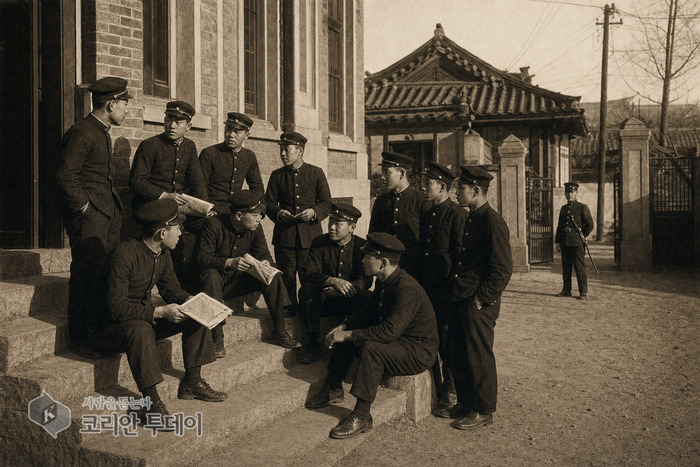
The World Stage
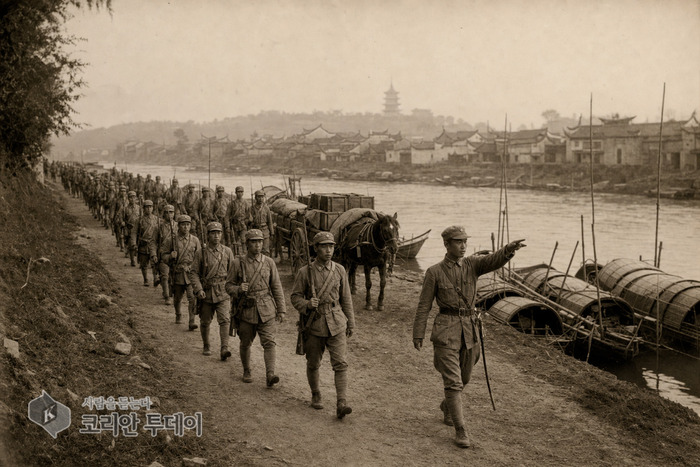
In China, Chiang Kai-shek’s National Revolutionary Army pressed on with the Northern Expedition, having taken Changsha in July and now advancing into Hubei Province, where it clashed directly with the forces of warlord Wu Peifu. Across the Pacific in Mexico, President Plutarco Elias Calles’s anticlerical laws had forced Catholic bishops to suspend all public Mass on August 1; two days later, on August 3, armed uprisings began in the country’s west-central states — the opening days of what would become the three-year Cristero War, in which tens of thousands would die defending the right to worship. In Tokyo, Prime Minister Wakatsuki’s cabinet remained under pressure from the ongoing fallout of the photograph scandal. On three different continents, power and conviction were colliding in three very different ways.
Colonial Parallels
Fumiko’s story sits inside a much wider pattern of empire in the 1920s. In British-ruled India, the colonial government likewise controlled the bodies and legal standing of political prisoners, and sympathetic British lawyers who defended Indian nationalists faced social and professional ostracism much as Fuse Tatsuji did in Japan. In Ireland, the years after the 1921 Anglo-Irish Treaty had left families of executed and imprisoned republicans fighting similar battles over remains, burial rights, and official silence. In the American-administered Philippines, colonial courts likewise held final say over the fate of activists’ bodies and reputations. What connects Sangju in 1926 to Dublin or Delhi is not a shared language or cause, but a shared colonial logic: that even in death, a subject person’s body belonged first to the state, and only afterward — grudgingly, procedurally — to the family that loved them.
Person of the Day: Fuse Tatsuji
Fuse Tatsuji (1880-1953) was a Japanese lawyer who spent much of his career defending the people his own government prosecuted. He represented Korean students arrested after the February 8, 1919 independence declaration in Tokyo. After the 1923 Great Kanto Earthquake, when mobs and police killed thousands of Korean residents in the massacre that followed, Fuse helped shelter survivors and publicly apologized to Korean newspapers on behalf of the Japanese public. He sued the Oriental Development Company on behalf of Korean farmers in Naju who had lost 5.1 million pyeong of land, calling the colonial land survey a fraud dressed up as law. In 1926 he defended Park Yeol and Kaneko Fumiko, and when Fumiko died, he kept her remains in his own home until police confiscated them — then continued pressing until she was finally laid to rest near Park Yeol’s hometown of Mungyeong. In 2004, the Korean government posthumously recognized him with an Order of Merit for National Foundation, an honor rarely given to a citizen of the colonizing nation.
Understanding Daily Life
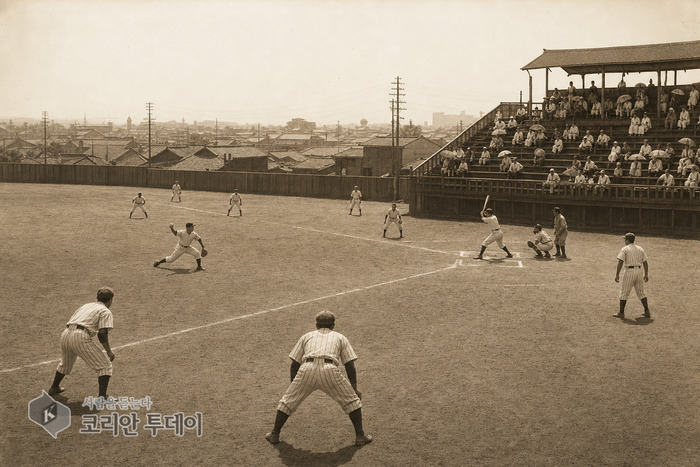
Far from Tokyo’s courtrooms, an ordinary Saturday unfolded in Gyeongseong (colonial-era Seoul). Newspaper boys sprinted through alleyways delivering the morning editions. By midday, crowds gathered near Gyeongseong Stadium, where alumni and current students from four mission and private schools — Baejae, Joongang, Hwimun, and Kyungsin — were warming up for the Dong-A Ilbo-sponsored inter-school baseball league. Toward evening, the name Fuse Tatsuji circulated quietly through the bookshops of Jongno Street, spoken by those who knew what his lawsuits and defenses had meant for Korean plaintiffs with nowhere else to turn. Housewives with market baskets paused at stalls where cotton cloth prices had reportedly dropped. As dusk fell over the cafe district, rumors from Tokyo traveled with the evening customers. In the lingering late-summer heat, the city closed out its day much as any other — even as, far to the east, a brother and his son were crossing toward a very different kind of errand.
Century Mirror
A hundred years ago today, the remains of a woman who died in prison custody could not pass directly into her family’s hands. Police held them; the colonial government stood between grief and burial; only a lawyer’s personal devotion secured even a measure of dignity. Today’s legal systems, however imperfect, generally treat the return of remains to family as a baseline right, and public defense as an institution rather than an act of individual conscience. The distance between 1926 and 2026 is not closed, but it is real.
| Category | 1926 | 2026 |
|---|---|---|
| Return of remains | Routed through police and colonial authorities; delayed | Family return treated as standard legal right |
| Legal defense | Dependent on individual lawyers’ personal risk | Public defense institutionalized |
| Press freedom | Censorship and prosecution under security laws | Constitutionally protected press freedom |
| Cross-national solidarity | Rare, and dangerous to practice | Sustained international human rights networks |
Tomorrow’s Preview
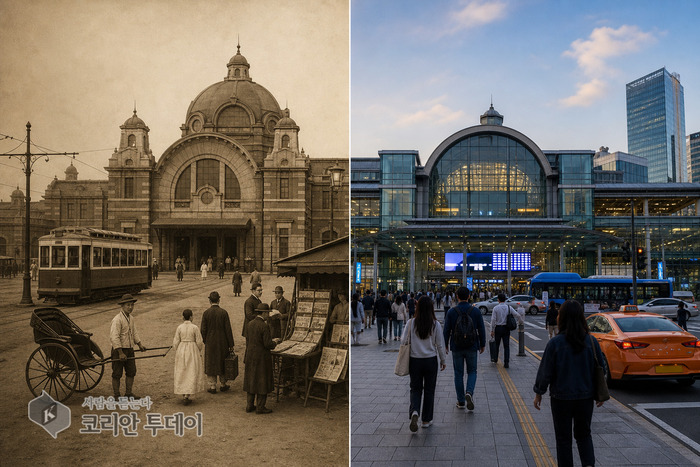
Tomorrow, the brother and his son will still be somewhere over the strait between Korea and Japan, their errand unfinished. It will be some time yet before a handful of ashes finally reaches home soil in Mungyeong. Join us again tomorrow evening at 10:10 PM KST, as the clock smiles once more on the next chapter of a century of history.
THE KOREAN TODAY × WIA CODE
이 기사의 WIA Code

WIA Code 스캐너로 비추면 인터넷 없이 발행 사실과 위·변조 여부를 확인할 수 있습니다.
휴대폰 기본 카메라로 찍으면 스캐너 안내 페이지가 열립니다 — 기사 바로 열기

움직이는 코드는 스트림입니다 — WIA Code 스캐너로 약 135초 비추면 기사 전문(사진 포함)이 폰에 저장되어 인터넷 없이도 읽을 수 있습니다.
WIA Code · 코리안투데이






Leave a Reply