
100 Years Ago Today
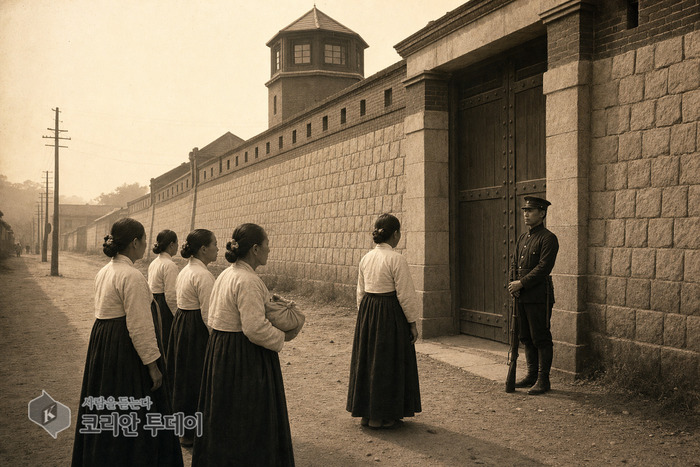
Seoul — then called Gyeongseong — was gripped by late-summer heat on Friday, August 13, 1926. Streetcars rang their bells along Jongno as merchants called out their wares, life carrying on as usual on the surface. But behind the walls of Seodaemun Prison, a different kind of summer was unfolding. Among those still held there were students who had marched and shouted for independence during the funeral procession of Emperor Sunjong on June 10 — and outside the prison gates, their mothers and sisters kept a daily vigil, waiting for a glimpse of the sons and husbands they could barely speak to.
Korea Under Colonial Rule
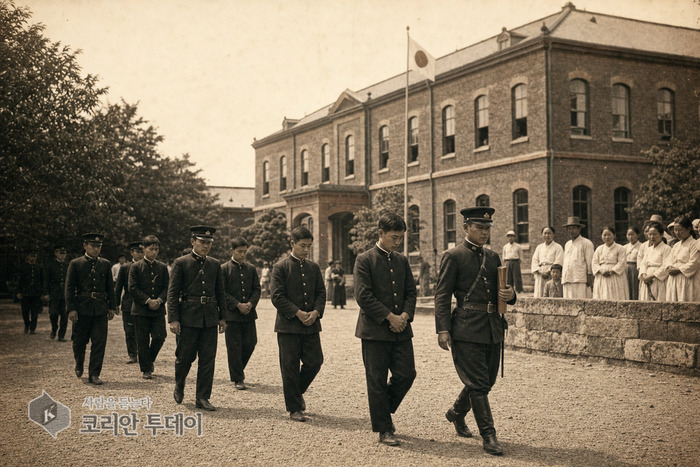
Around the Gyeongseong District Court, the shuffle of footsteps never stopped — students and witnesses called in for endless rounds of interrogation. Eleven students from Chungang and Yonhi colleges, arrested for shouting for independence during Sunjong’s funeral procession, had already been indicted under Ordinance No. 7 and the Publication Law. Presiding judge Eto Itsuo had spent the entire summer questioning them, and the formal trial itself still lay nearly three months away. Each day the students were marched between prison and courthouse, pressing their fingerprints onto statements they had little power to shape; their families could do nothing but walk the same route behind them, at a careful distance.
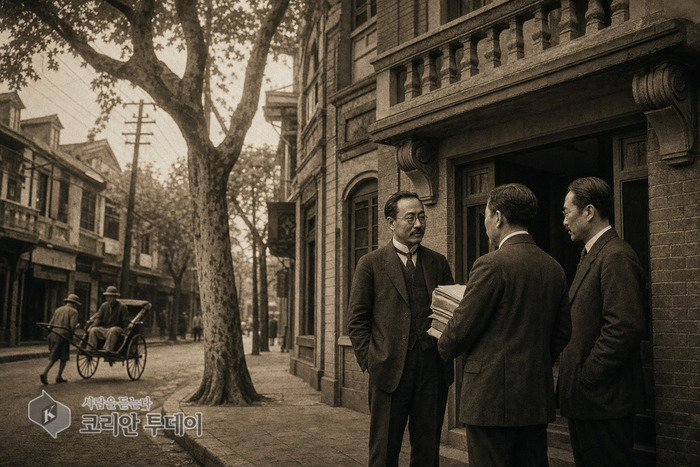
A heavier mood hung over the newsrooms as well. Just that March, the Dong-a Ilbo had been suspended indefinitely for the second time, after printing a telegram the Moscow-based International Peasants’ Council had sent to mark the anniversary of the March First Movement. Since then, editors moved with visible caution, unsure which line might trigger the next crackdown. Later that same month, reporter Choi Won-sun would in fact be indicted for a front-page column titled “Rambling Thoughts,” and publisher Kim Chul-jung alongside him — a warning that the colonial censors were always reading closely, even in the dog days of August.
East Asia in Turmoil
Unrest was not confined to the capital. By this point in 1926, fifty-five separate student strikes had broken out across the peninsula, a wave of restlessness that had never quite settled since Sunjong’s death and the June Tenth Movement. Word trickled in of walkouts at common and high schools across Pyeongan and Jeolla provinces, and the Government-General’s education bureau was watching closely, wary of any spark spreading further.
Farther away, in Shanghai, independence leader Ahn Chang-ho was working without rest. Having returned to the city at the end of May, he threw himself into a movement to unite nationalists, socialists, and anarchists under one banner. On July 8, he delivered an address at Samil Hall on “Our Revolutionary Movement and the Question of the Provisional Government,” and soon after organized a financial relief society to rescue the cash-starved Provisional Government of Korea. He also dreamed of founding an “ideal village” — a self-sufficient base for the independence movement — though the path toward it remained anything but smooth.
The World Stage
Beyond the Yalu River, in China, Chiang Kai-shek’s Northern Expedition was in full motion. Having issued mobilization orders the previous month, the National Revolutionary Army was pushing north through Hunan toward Wuhan in Hubei, clashing repeatedly with the forces of warlord Wu Peifu. Inside the Nationalist Party, factional tensions were also deepening — just ten days earlier, a Central Executive Committee meeting had raised the question of Wang Jingwei’s return to power.
In Britain, the General Strike had ended after nine days back in May, but the coal miners’ lockout dragged into its fourth month, with no resolution between the government and mine owners in sight; the miners themselves remained outside the pits, refusing to accept the wage cuts forced upon them. Across the Atlantic, word arrived that day of the hanging of Richard Reese Whittemore, the notorious leader of a bank-robbing gang that had terrorized the mid-Atlantic states.
Colonial Parallels
Korea’s summer of surveillance and suspended newspapers echoed experiences unfolding elsewhere under empire. In British India, the same years saw swelling non-cooperation movements and repeated press-censorship battles; in Ireland, memories of a hard-won and still-fragile independence were fresh; in the Philippines, calls for self-rule under American administration continued to build. What made colonial Korea distinct was the sheer density of control — a press law, a security law, and an emergency ordinance all applied at once against eleven students barely out of their teens.
Person of the Day
Ahn Chang-ho, born in 1878, had already spent decades moving between Korea, the United States, and China in service of independence. By August 1926, in Shanghai, he was less a single organizer than a bridge-builder — trying to hold together nationalists, socialists, and anarchists who agreed on little except the goal of a free Korea. His economic relief society for the Provisional Government, formed only weeks earlier, reflected a government running on fumes; his unrealized dream of an “ideal village” reflected a movement still searching for solid ground to stand on.
Understanding Daily Life
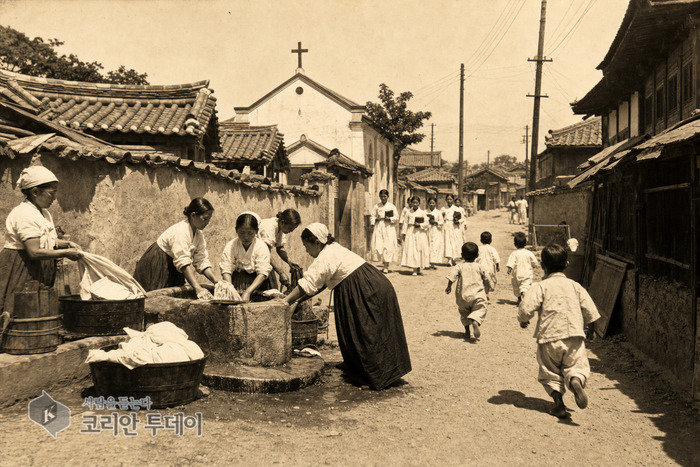
Before dawn, a handful of women were already waiting outside Seodaemun Prison, having taken the first streetcar of the morning to ask after a son or husband. Visits were brief, sometimes reduced to a few traded words before guards called time — yet the women returned to the same spot every day. By midday the heat reached its peak: women gathered at the neighborhood well to do laundry, children darted through alleys chasing patches of shade, and at churches around Jeongdong and Anguk-dong, summer Bible schools were in full swing, girls in white jeogori singing hymns as they walked. Only as dusk fell did the heat finally loosen its grip — street vendors packed up their stalls, cooking smoke rose over low tiled roofs, and the women who had lingered outside the prison all day turned, heavy-footed, toward home.
Century Mirror
A century later, the place once occupied by those women outside the prison gates looks very different. In 1926 Korea, the overwhelming majority of women had never crossed a schoolhouse threshold, and marriage in the late teens was common; the only way to see an imprisoned relative was to wait, in person, outside the prison walls, for however long it took.
| Category | Gyeongseong, 1926 | Seoul, 2026 |
|---|---|---|
| Women’s education | Low enrollment, reliant on private academies | University enrollment on par with or above men |
| Average marriage age | Late teens | Early thirties |
| Prison family visits | In-person waiting only | Video visitation, guaranteed legal counsel |
| Women’s economic participation | Centered on unpaid domestic labor | Majority participate in paid work |
Exact statistics vary by era and source and resist tidy comparison, but the broad arc is unmistakable. The change that unfolded over the following century was one those women, pacing outside the prison walls that August afternoon, could scarcely have imagined.
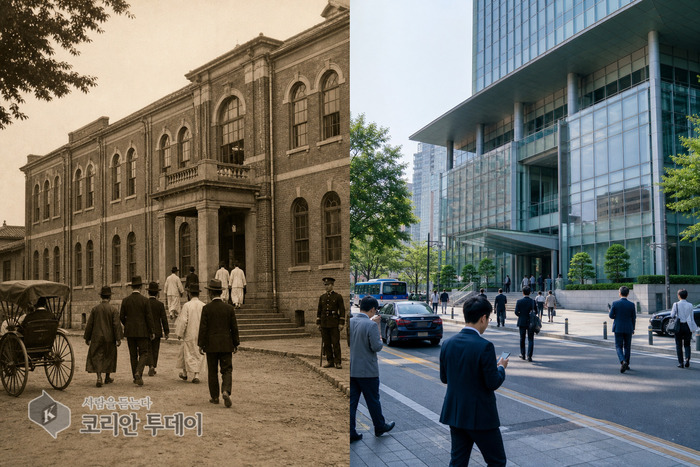
Tomorrow, August 14, 1926, will bring its own news to Gyeongseong. The heat shows no sign of breaking — but neither will the daily walk of the women outside the prison gates. Good night, and see you again tomorrow evening at 10:10.
THE KOREAN TODAY × WIA CODE
이 기사의 WIA Code

WIA Code 스캐너로 비추면 인터넷 없이 발행 사실과 위·변조 여부를 확인할 수 있습니다.
휴대폰 기본 카메라로 찍으면 스캐너 안내 페이지가 열립니다 — 기사 바로 열기

움직이는 코드는 스트림입니다 — WIA Code 스캐너로 약 134초 비추면 기사 전문(사진 포함)이 폰에 저장되어 인터넷 없이도 읽을 수 있습니다.
WIA Code · 코리안투데이






Leave a Reply