
🕙
Good Evening from a Century Ago
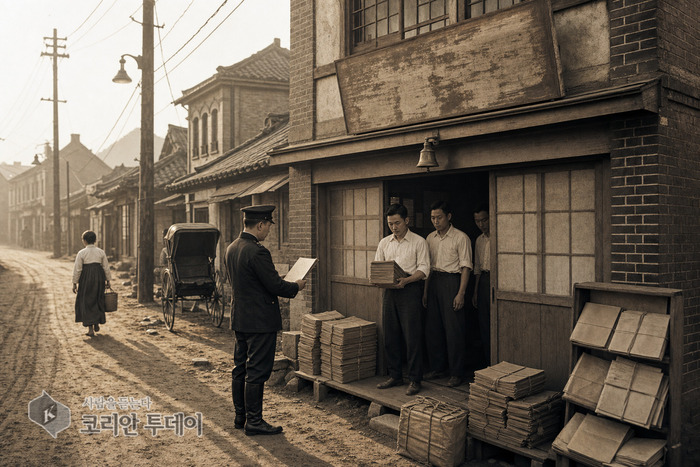
Good evening, and welcome to tonight’s “100 Years Ago Today.” On a quiet Sunday in colonial Seoul — then called Gyeongseong — the most widely read Korean-language magazine of the decade printed its final issue and closed its doors for good. No riots, no headlines shouting from the street corner. Just a magazine, silenced.
Korea Under Colonial Rule
The magazine was called Gaebyeok (개벽, “Great Beginning”), launched in June 1920 by the youth wing of Cheondogyo, a homegrown Korean religious movement. At its peak it printed 7,000 to 9,000 copies per issue and sold most of them — an extraordinary circulation for colonial Korea and, by most accounts, the single most influential general-interest magazine of the early 1920s. Trouble found it immediately: even its debut issue was confiscated over a tiger illustration on the cover and an article titled “Golden Sand, Jade Dust,” and the magazine only made it to newsstands after the offending pages were cut.
According to the Academy of Korean Studies’ Encyclopedia of Korean Culture and the National Institute of Korean History, over its six-year run Gaebyeok was confiscated or banned from sale more than 37 separate times, suspended once, and fined once — a record of state harassment almost unmatched among periodicals of the era. On August 1, 1926, it published its 72nd and final issue. The stated reason was a socialist-leaning article in that issue; the deeper context was the June 10 Independence Movement two months earlier, which had exposed a working alliance between Cheondogyo and socialist organizers that colonial authorities were determined to break up.
East Asia in Turmoil
The shutdown did not happen in a vacuum. Emperor Sunjong, Korea’s last monarch, had died on April 25. When his funeral procession passed through Seoul on June 10, roughly 24,000 students lined the streets and, at several points along the route, broke into shouts of “Korean independence, manse!” while scattering handwritten manifestos — the event now remembered as the June 10 Independence Movement. Alarmed, the Government-General tightened security across the peninsula and, that same April, had already created a new Book Bureau (도서과) inside its police department to pre-screen all publications. Gaebyeok’s closure was, in effect, that new censorship apparatus’s first major scalp.
Bang Jung-hwan, the children’s-rights pioneer who founded Korea’s first children’s magazine and worked closely with Gaebyeok’s publishing house, was himself placed under preventive detention in connection with the June 10 movement, and that year’s Children’s Day event was cancelled because of the state mourning period. Eleven students arrested for the June 10 protests were still awaiting trial; their first hearing would not come until November 2.
The World Stage
Far to the south in Shanghai, Korea’s Provisional Government was in the middle of a leadership transition, while independence leader An Chang-ho pushed his “single national party” movement to unify the fractured exile movement. In China’s Hunan province, Chiang Kai-shek’s Northern Expedition forces had just seized control of the entire province and were pressing toward Wuchang. In Barcelona, an assassination attempt on Spanish dictator Miguel Primo de Rivera failed when a thrown dagger missed his head. In Guadalajara, Mexico, roughly 400 armed Catholics barricaded themselves inside a church, exchanging gunfire with federal troops until they ran out of ammunition. And on the Indonesian island of Bali, Mount Batur was one day away from an eruption that would bury a nearby village.
Colonial Parallels
Korea’s experience was not unique among colonized peoples of the 1920s. In British India, the colonial government had long used press laws to seize nationalist newspapers and prosecute editors — Mahatma Gandhi himself had been tried and imprisoned earlier in the decade for articles published in his journal Young India. Across the empire, from Dublin to Delhi to Gyeongseong, the pattern repeated: a vernacular press finds its voice, a colonial government builds a censorship bureaucracy to contain it, and editors learn to write between the lines — until, sometimes, even that is not enough.
Person of the Day
Bang Jung-hwan (방정환) deserves a name-check tonight. A Cheondogyo youth organizer who founded Korea’s first dedicated children’s magazine, Eorini (“Children”), in 1923, he worked through the same Gaebyeok publishing house that closed today. He is often credited with coining the modern Korean word for “child” as a term of respect rather than diminishment, and with establishing what became Children’s Day. In 1926, the same wave of post-funeral repression that swept up Gaebyeok also swept up Bang himself, held under preventive detention over his June 10 connections — and that year’s Children’s Day celebration never happened at all.
Understanding Daily Life
On an ordinary Sunday in Gyeongseong, the rhythms of daily life continued around the news from the publishing house: churchgoers on their way to Sunday service, newsstands and bookshops seeing their usual foot traffic, street vendors setting up as they always did. What we cannot confirm from surviving newspaper records is the mood inside Gaebyeok’s own offices that particular morning — but it is hard to imagine a staff that had fought off 37 confiscations over six years closing its doors without a heavy heart.
Century Mirror
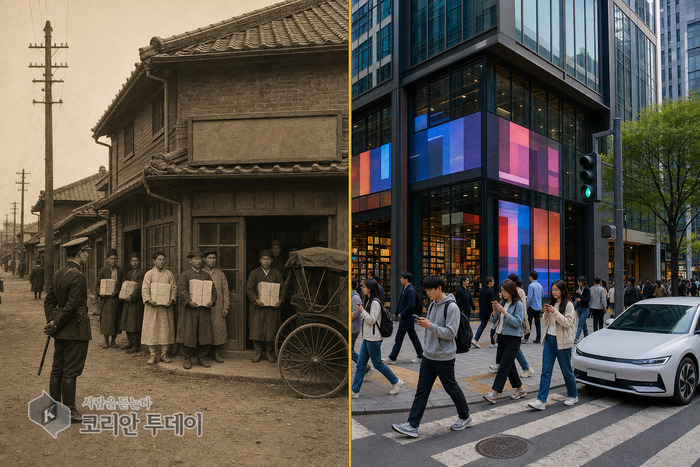
A hundred years ago, keeping one magazine alive meant surviving 37 rounds of state confiscation. Today, the freedom to publish and read without pre-approval is written into Korea’s constitution and taken almost entirely for granted. That gap — between a single confiscated issue and a constitutional guarantee — is the distance an entire generation fought to cross.
Tomorrow’s Preview
Gaebyeok’s presses fell silent, but the people who built it did not disappear with it. Join us again tomorrow evening, at 10:10 PM.






Leave a Reply