
Korea Under Colonial Rule
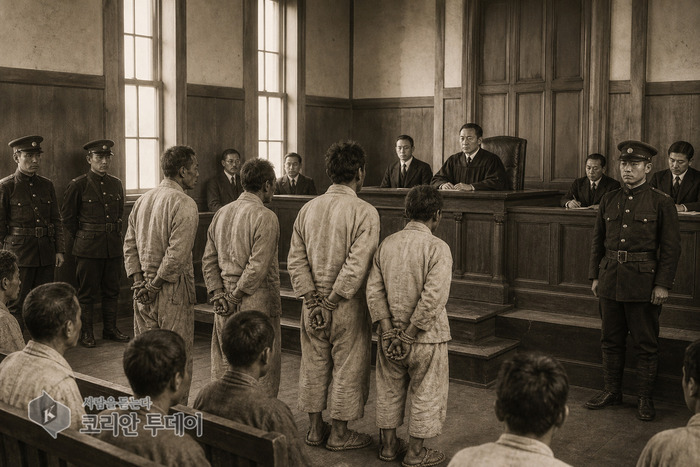
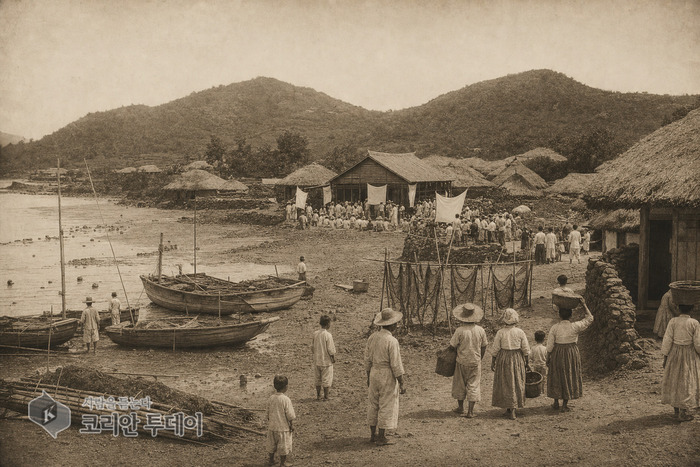
Five days earlier, on August 16, the Gwangju District Court sentenced the leaders of the Jaeundo tenant-farmer uprising to one year and two months in prison. Jaeundo was one of several small islands off Sinan County, South Jeolla Province, where landlords had tried to walk back an earlier settlement reached after the famous 1924 Amtaedo tenancy dispute, pushing rents back up toward fifty percent of the harvest. When tenants refused, the standoff turned into scuffles with police, and organizers were charged with rioting and obstruction of official duty. Their imprisonment marked one more chapter in a wave of tenancy disputes rippling through Korea’s southwestern coast.
Meanwhile in Tokyo, members of the Ilwolhoe society, including An Gwang-cheon and Ha Pil-won, joined the Leninist League this month, giving rise to a new faction within Korea’s fractured socialist movement — one that would come to be known as the ML faction. Exactly which day this news reached the colonial press is not confirmed, but multiple historical sources place the faction’s formation in August 1926.
Ripples Across the Peninsula
The Jaeundo verdict was never just an island story. With roughly three in four Korean farmers working land they did not own, the tenancy disputes spreading from Amtaedo to Jaeundo were shaking loose a grievance felt across the peninsula — one increasingly organized by young activists shaped by socialist ideas.
At the same time, in a Gyeongseong courthouse detention cell, eleven students remained in custody awaiting trial for their role in the June 10 Manse Movement, when crowds had raised the cry for independence during the funeral procession of Emperor Sunjong two months earlier. Their trial would not open until November, but the August air in the capital still carried the movement’s aftershocks.
The World That Day
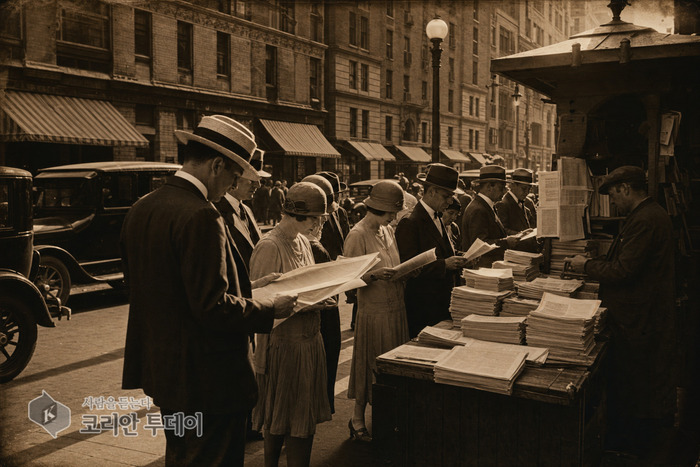
Across the Pacific in New York, Hollywood’s biggest star was fighting for his life. Eight days after emergency surgery for a ruptured appendix, Italian-born actor Rudolph Valentino was struck, that very day, by acute pleurisy in his left lung. His doctors already suspected he would not survive — though, following the custom of the era, they kept the prognosis from the dying star himself. He would pass away two days later, on August 23, at just 31.
In China, Chiang Kai-shek’s National Revolutionary Army was tightening its grip on Hunan province as part of the Northern Expedition, preparing to push north along the Beijing–Hankou railway toward Wuchang. Colonial Korea’s August unfolded in the very same world as revolutionary China and Hollywood’s fading twilight.
24 Hours in Gyeongseong
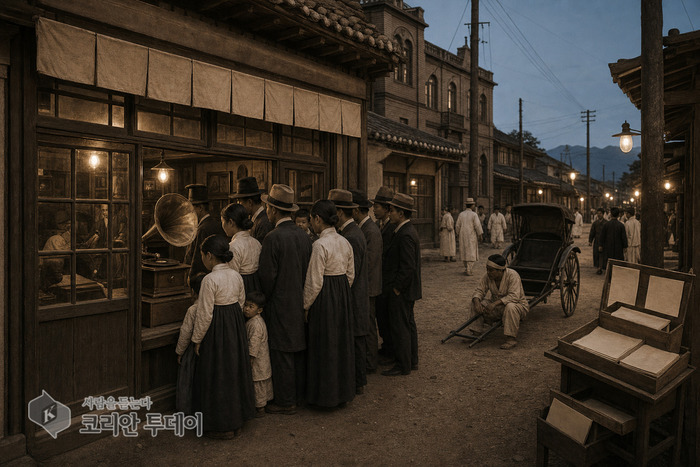
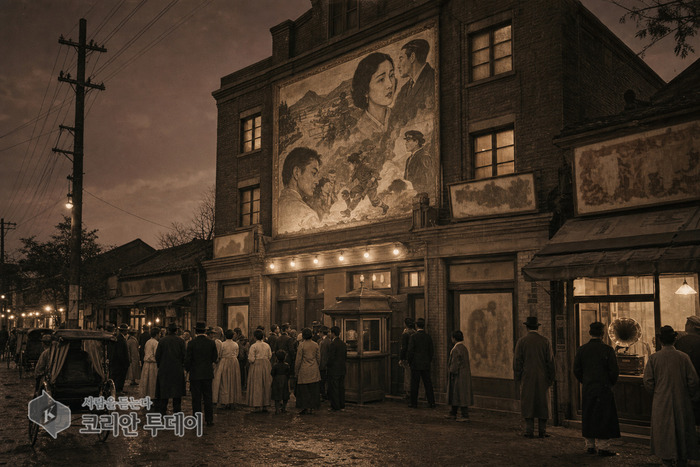
Saturday night in Gyeongseong ran on a different current. Phonograph shops along Jongno stayed busy with customers requesting “In Praise of Death” — the haunting record soprano Yun Sim-deok had cut in Osaka in early August, just before she and playwright Kim Woo-jin vanished together into the Genkai Strait. Rather than fading, the rumors surrounding their deaths only grew, and the song became something close to a national obsession.
The theater district was shifting too. Joseon Theater in Insa-dong lost its co-operator late this month, leaving it searching for new management, while Dansungsa, Umigwan, and Wongaksa carried on with film screenings and traditional theater. Colonial rule had taken the country, but not, it seemed, its appetite for a good song or a good show.
Century Mirror
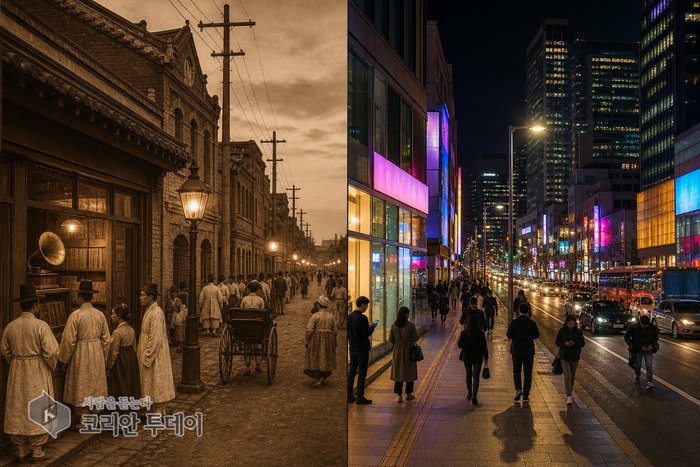
A hundred years apart, the contrast is stark yet strangely familiar. In 1926, a single phonograph record could make an entire neighborhood weep in unison; in 2026, that same emotional pull now travels instantly through streaming algorithms to millions at once. Tenant farmers who once risked prison simply to keep half their harvest now negotiate through courts and cooperatives — echoing, in its own way, the land struggles that unfolded across colonized Ireland and India in that very decade. The tools have changed beyond recognition. The hunger for a song that says what we can’t, and for land that’s truly our own, has not.
THE KOREAN TODAY × WIA CODE
이 기사의 WIA Code

WIA Code 스캐너로 비추면 인터넷 없이 발행 사실과 위·변조 여부를 확인할 수 있습니다.
휴대폰 기본 카메라로 찍으면 스캐너 안내 페이지가 열립니다 — 기사 바로 열기

움직이는 코드는 스트림입니다 — WIA Code 스캐너로 약 134초 비추면 기사 전문(사진 포함)이 폰에 저장되어 인터넷 없이도 읽을 수 있습니다.
WIA Code · 코리안투데이






Leave a Reply