
The “hanbok diplomacy” of designer Kim Young-ja of Kim Young-ja K-Royal Hanbok, who has devoted herself to promoting the beauty of Korean traditional clothing to the world, is drawing growing attention.
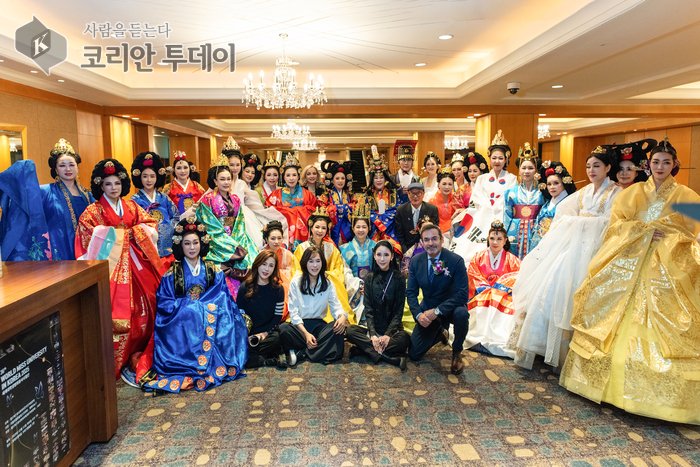 |
A relationship that began at a single event has continued through hanbok fittings, visits to Kim’s research studio, fashion shows, and ultimately an embassy reception. At the center of this story is designer Kim Young-ja, who has transformed hanbok from a traditional garment into what could be described as “a cultural language connecting people with people and nations with nations.”
One of the key figures who has continued this special relationship with Kim is Catalina Bolaños González, wife of the Ambassador of Ecuador to the Republic of Korea.
Catalina has also been active in cultural exchange and social contribution activities through the Association of Spouses of Ambassadors in Seoul (ASAS).
Their First Meeting at World Miss University… A Special Relationship Created Through Hanbok
The two first met at the World Miss University competition.
The Ecuadorian ambassador and his wife attended the event as judges, where they met designer Kim Young-ja. Their encounter naturally led to conversations about Korean traditional culture and hanbok.
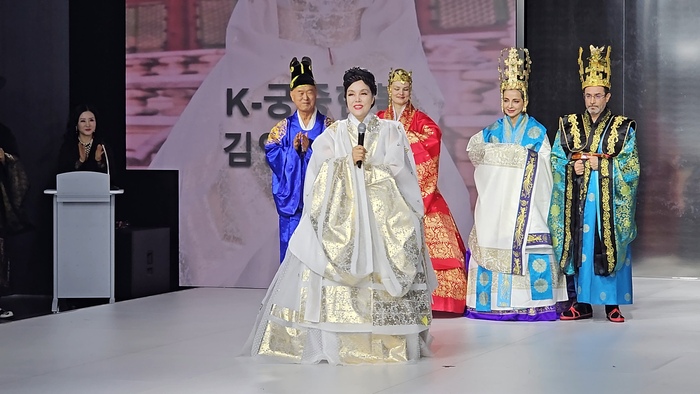 |
Kim, who has devoted decades to the study of Korean traditional clothing, does not simply reproduce garments from the past.
She preserves the traditional lines and structure of Korean attire while adding distinctive colors and a modern aesthetic. Her work is further distinguished by the way she completes each look with traditional hairstyles, accessories, and coordinated styling, turning the entire presentation into a complete artistic work.
Kim has studied traditional clothing from the Three Kingdoms period as well as court dress from the Joseon Dynasty, while also drawing her own designs and creating individual stories for each garment.
Her philosophy of reinterpreting Korean tradition through a contemporary perspective left a strong impression from their very first meeting.
Second Meeting: A Growing Love for Hanbok at the Toechon Research Studio
 |
If their first meeting was an introduction, their second encounter became an opportunity to experience and understand hanbok more deeply.
While preparing for a hanbok show at the Lotte Hotel and fittings for the DDP fashion show, Catalina visited designer Kim Young-ja’s research studio in Toechon, Gyeonggi Province.
There, she was able to closely observe the entire process of creating a hanbok—from fabric selection and color coordination to the lines of the jeogori and skirt, accessories, and traditional hairstyles.
Her interest in hanbok is said to have grown even stronger through this experience.
Kim Young-ja has also gained attention for her distinctive ability to incorporate the colors of different national flags into Korean traditional clothing.
By combining the symbolic colors of each country with the graceful lines of hanbok, Kim goes beyond simply introducing Korean culture. She expresses respect for the culture and identity of the other nation through a single garment.
This approach reflects Kim’s long-standing philosophy of creating “hanbok with a story.”
Third Meeting at the DDP Fashion Show… The Ambassador and His Wife Transform into a Silla King and Queen
Their relationship continued at a fashion show held at Dongdaemun Design Plaza (DDP) in Seoul.
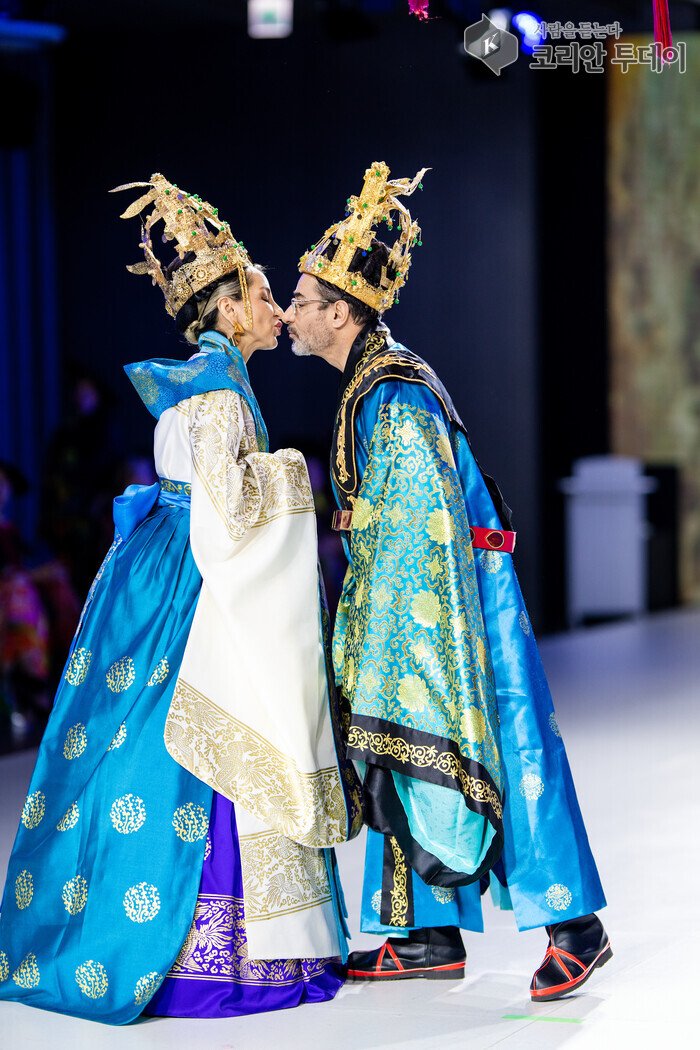
The occasion became even more special when the Ecuadorian ambassador and Catalina appeared on the runway wearing traditional costumes inspired by the king and queen of the Silla Kingdom during Korea’s Three Kingdoms period.
The sight of a foreign ambassador and his wife wearing clothing inspired by Korea’s ancient royal culture left a strong impression on the audience.
It also demonstrated the potential of Korean traditional clothing to transcend nationality and language, bringing people together through culture.
Kim Young-ja’s work does not remain confined to traditional forms.
While preserving the dignity and authenticity of Korean traditional clothing, she incorporates modern sensibilities into color, composition, and styling, creating garments that invite people from around the world to experience hanbok for themselves.
Her presentation of Joseon Dynasty court hanbok, combined with traditional hairstyles and accessories as a unified visual work, has made a particularly strong impression on foreign audiences and models.
Models who have worn Kim’s hanbok have continued to recommend her work to other models, leading to growing interest in participating in her fashion shows and cultural events.
 |
Among those familiar with her work, there is even a saying:
“There may be people who have never worn Kim Young-ja’s hanbok, but there is hardly anyone who wears it only once.”
It is one reason why the affectionate expression “a must-visit place for hanbok” has naturally become associated with her work.
Fourth Meeting: Embassy Visit and Ecuadorian National Day Reception
The relationship that began at World Miss University eventually led to a fourth meeting through an embassy visit and an official reception.
This occasion carried significance beyond simple attendance at a diplomatic event.
What began as an unexpected encounter had continued through hanbok and gradually expanded beyond fashion and cultural exchange into a form of people-to-people cultural diplomacy.
Catalina, in particular, has demonstrated a deep affection for hanbok that is often described as being as passionate as that of Koreans themselves.
Her sincere interest goes beyond the colors and lines of the garments. She has shown a genuine desire to understand the emotions, traditions, and cultural values contained within hanbok.
That sincerity has helped sustain and deepen her relationship with designer Kim Young-ja.
Plans are also being pursued for a hanbok photo shoot at one of Korea’s historic royal palaces.
A project bringing together traditional Korean architecture, hanbok, and the wife of a foreign ambassador is expected to carry special meaning in terms of the globalization of hanbok and international cultural exchange.
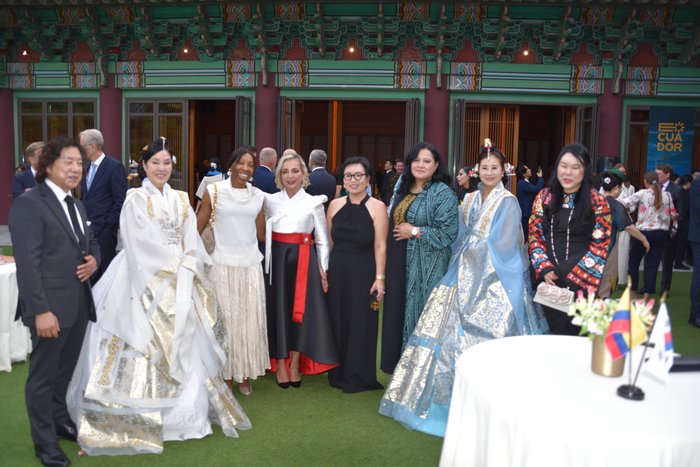
Attendance at the Ecuadorian National Day Reception at the Shilla Hotel Yeong Bin Gwan
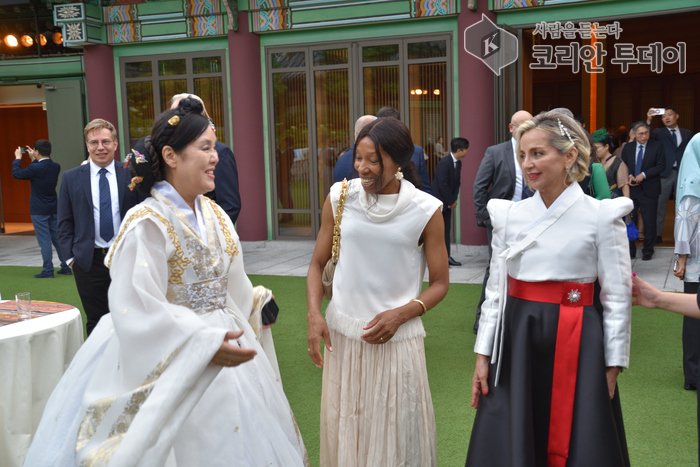
At the Ecuadorian National Day Reception, held at 6 p.m. at the Yeong Bin Gwan of The Shilla Seoul, designer Kim Young-ja attended together with Branch President Lee Byung-moo.
Also in attendance was Min Ji-young, director of the Min Ji-young Art Troupe, who also serves as a board member.
Drawing on her diplomatic experience and insight, Min has played an important bridging role in helping the cultural relationship between the Ecuadorian ambassador and his wife and designer Kim Young-ja continue to develop.
Her participation further strengthened the significance of the occasion as an example of cultural and artistic exchange.
As individuals from different fields come together through hanbok as a shared cultural medium, the possibilities for private-sector cultural diplomacy continue to expand.
“It Is Not Simply About Dressing Someone in Hanbok, but About Helping Them Remember Korea”
What makes designer Kim Young-ja’s work especially noteworthy is that she does not treat hanbok merely as clothing to be provided for special events.
She studies the culture and symbolic colors of each country and incorporates them naturally into Korean traditional clothing, creating garments that carry their own stories.
Her work preserves the essential character of Korean tradition while allowing people from other cultures to connect with and enjoy it in a natural way.
This reflects the balance of tradition, originality, and modern sensibility that Kim has pursued throughout her career.
Kim Young-ja began her journey with hanbok in the 1980s and has spent decades studying and producing Korean traditional clothing.
In particular, she has developed a distinctive expertise in Joseon Dynasty court dress and traditional Korean hairstyling, building a creative world that is difficult to imitate.
Having foreign ambassadors and their spouses personally wear and experience hanbok is very different from ordinary fashion promotion.
When a foreign guest returns home and shares memories of Korea’s colors, lines, traditions, and emotional beauty, that experience itself can become a valuable form of cultural diplomacy and an asset in promoting Korea internationally.
Kim Young-ja K-Royal Hanbok Expands the Global Reach of “Wearable Korean Culture”
 |
As K-pop, K-dramas, and K-food continue to become part of everyday life around the world, hanbok is also expanding its role as a form of K-culture that people want to experience and wear for themselves.
Kim Young-ja’s journey begins not with a massive project, but with touching the heart of one individual.
From the first greeting exchanged with the Ecuadorian ambassador and his wife at World Miss University, to hanbok fittings at the Toechon research studio, the Lotte Hotel hanbok show, the DDP fashion show, the embassy visit, and the Ecuadorian National Day reception, one element has connected every moment.
That connection has always been hanbok.
Kim’s approach of incorporating the symbolic colors of different countries into Korean traditional clothing demonstrates how hanbok can respect the identity of another nation while simultaneously showcasing the beauty of Korean tradition.
It is a powerful example of how Korean traditional clothing can become an effective medium for international cultural exchange.
Hanbok that preserves tradition without being confined by tradition.
Through distinctive design, modern sensibility, Joseon Dynasty court dress, and traditional hairstyling, designer Kim Young-ja has established a creative world of her own.
The journey of K-hanbok that began at the tip of her needle is now moving toward diplomatic and cultural stages around the world.
By introducing the beauty of Korea through a single hanbok, Kim Young-ja’s work is contributing to the globalization of hanbok, private-sector cultural diplomacy, and the promotion of Korea’s national image on the world stage.
—
Kim Young-ja K-Royal Hanbok
Representative / Designer: Kim Young-ja
Address: 2F, Unit 1, Changshin Building, 89-8 Songpa-dong, Songpa-gu, Seoul, Republic of Korea
Email: [spec102030@hanmail.net](mailto:spec102030@hanmail.net)
Website: [www.K-RHA.com](http://www.K-RHA.com)
Related Attendees: Branch President Lee Byung-moo, Min Ji-young, Director of the Min Ji-young Art Troupe
THE KOREAN TODAY × WIA CODE
이 기사의 WIA Code

WIA Code 스캐너로 비추면 인터넷 없이 발행 사실과 위·변조 여부를 확인할 수 있습니다.
휴대폰 기본 카메라로 찍으면 스캐너 안내 페이지가 열립니다 — 기사 바로 열기

움직이는 코드는 스트림입니다 — WIA Code 스캐너로 약 132초 비추면 기사 전문(사진 포함)이 폰에 저장되어 인터넷 없이도 읽을 수 있습니다.
WIA Code · 코리안투데이



Leave a Reply