
Evening Edition — 10:10 PM
Good evening. It is Thursday, July 29, 1926, and as Gyeongseong winds down for the night, a very different kind of storm is breaking eight hundred miles away in Tokyo. A single photograph — smuggled out of a Japanese prison, showing a condemned anarchist embracing his wife — has just become the most explosive document in the Japanese Diet. Tonight, we trace how a prison photo reached across an empire to shake a cabinet, and what it meant for colonial Korea watching from under the censor’s pen.
Korea Under Colonial Rule
The man at the center of the storm was Pak Yŏl [pahk-YUHL], a Korean anarchist who had been arrested in Japan in 1923 for allegedly plotting to assassinate the Japanese crown prince. Convicted of lèse-majesté, he was sentenced to death, later commuted to life imprisonment. His wife, the Japanese anarchist Kaneko Fumiko [kah-neh-koh foo-mee-koh], had married him in prison and shared his fate.
💡 For context: under Japanese law at the time, “lèse-majesté” — crimes against the imperial family — carried the harshest possible penalties, and prisoners convicted of it were typically kept under extreme isolation.
In May 1925, during a preliminary hearing, a photograph was taken of the couple sitting closely together, reading a book. The sitting judge, Tatematsu Kaisei, had apparently permitted it. For over a year the photograph sat quietly in judicial files. Then, on July 29, 1926, it resurfaced — reproduced as an anonymous pamphlet the Japanese press called a “kaimonjo,” or “mystery document” — and detonated into a national scandal.
Opposition parties, the Seiyūkai and Seiyū Hontō, seized on the image immediately. They accused the ruling Wakatsuki cabinet of granting special treatment to a convicted traitor, and printed and circulated the photograph as a weapon against the government. The Japanese Diet was suspended for three days over the uproar. The government moved swiftly to ban further publication of the photograph and related documents — a ban that extended to the colonial Korean press as well, though the precise date and page of Korean-language coverage from this week could not be confirmed in available records. Judge Tatematsu would later submit his resignation; it was accepted on August 11.
East Asia in Turmoil
While Tokyo’s cabinet reeled, southern China was in motion. On July 9, Chiang Kai-shek had been sworn in as commander-in-chief of the National Revolutionary Army in Guangzhou, launching what became known as the Northern Expedition — a campaign to unify China by defeating regional warlords. Backed by Soviet advisor Mikhail Borodin and the fragile alliance between the Kuomintang and the Chinese Communist Party, NRA forces were pushing into Hunan toward Wuhan even as this newspaper went to print. For Korean independence activists in exile in Shanghai, the Nationalist advance was watched with cautious hope — any weakening of the warlord order in China meant more room to maneuver for the Provisional Government.
The World Stage
In Europe, the aftershocks of the previous year’s Locarno Treaties were still settling. Germany’s admission to the League of Nations — the diplomatic reward for accepting its postwar western borders — was expected within months, in September 1926. It was a moment when the great powers spoke the language of reconciliation even as, in Tokyo, a single leaked photograph could still paralyze a sitting government. The contrast underscored how fragile institutional stability could be in the 1920s, whether in Geneva’s assembly halls or the Japanese Diet.
Colonial Parallels
Political scandals involving colonial subjects and questions of “special treatment” were not unique to Japan and Korea. In British India, the trials and treatment of nationalist prisoners — from the Lahore Conspiracy Case defendants to earlier Bengal revolutionaries — regularly became flashpoints in the British Parliament, with opposition MPs accusing the government of either excessive leniency or excessive cruelty depending on their politics. In Ireland, images and reports of republican prisoners’ treatment during and after the War of Independence similarly circulated as propaganda weapons for both sides. What makes the Pak Yŏl photograph case distinct is its double edge: the very “leniency” being attacked — a photograph of two condemned prisoners allowed a shared moment of intimacy — was itself a rare humanizing glimpse of colonial subjects usually rendered only as dangerous criminals in the empire’s press.
Person of the Day
Kaneko Fumiko was twenty-three years old in the summer of 1926. Born in Japan to an unregistered, impoverished family, she spent part of her childhood in colonial Korea living with relatives, an experience she later said opened her eyes to the brutality of Japanese rule over Koreans. Returning to Tokyo, she became an anarchist, met Pak Yŏl, and joined him in forming a radical group later accused of plotting against the imperial family. Convicted alongside him and sentenced to death, then commuted to life imprisonment, she would die in her cell within a year of this photograph’s exposure — a death colonial Korean newspapers would report just two days after this issue went to press. Tonight, she remains a footnote in most histories of the Japanese empire; in 2018, ninety-two years after her death, the South Korean government posthumously recognized her with an Order of Merit for National Foundation for her role alongside Pak Yŏl.
Understanding Daily Life
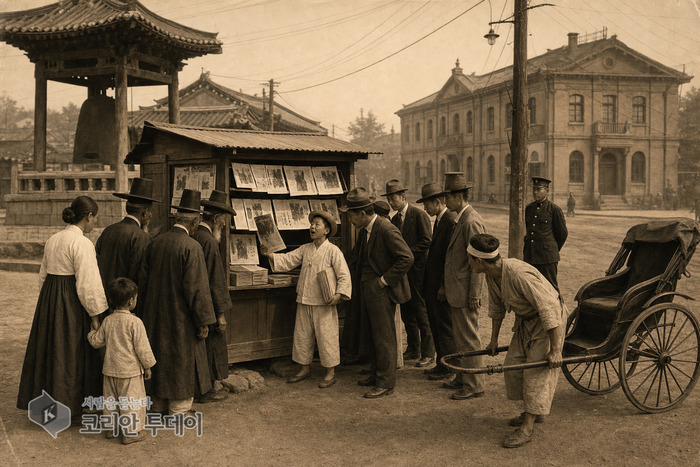
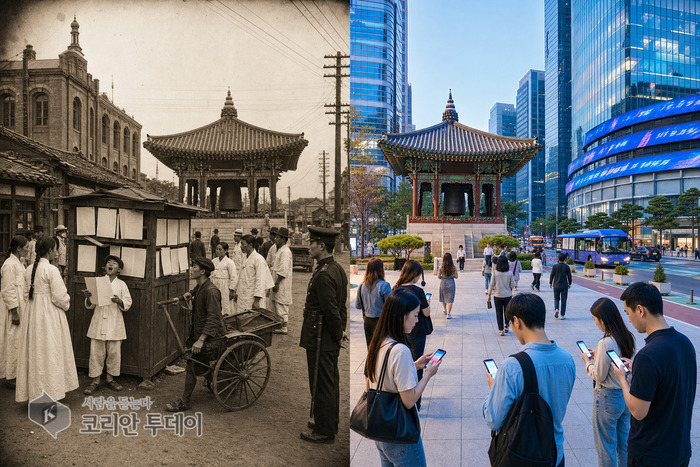
For ordinary Gyeongseong residents this Thursday, the scandal arrived secondhand and incomplete. Newsboys hawked papers on Jongno street corners; rickshaw pullers and print-shop workers exchanged fragments of rumor about a photograph that had toppled — however briefly — a government thousands of miles away. Censorship meant that what reached Korean readers was thin and delayed, pieced together from telegraph dispatches and whispered addition. It would not be until mid-August that Dong-A Ilbo began running detailed, near-daily coverage of the affair. In the meantime, the summer heat, market stalls, and the ordinary rhythms of colonial life continued much as before — a reminder that history often arrives in a colonized society as rumor before it arrives as record.
Century Mirror
A single photograph, suppressed and then leaked, once had the power to freeze a national legislature for three days. A century later, images circulate globally within minutes, immune to any single government’s ban — yet questions of who controls what the public sees, and who benefits from leaking it, remain strikingly familiar. K-dramas and films about the colonial period, from courtroom dramas to prison narratives, continue to draw on exactly this tension: the state’s control of the image, and the individual’s struggle to be seen as human rather than as a category — traitor, criminal, colonial subject.
Tomorrow’s Preview
Tomorrow, July 30, 1926: the rumors from Tokyo keep spreading, even as the censor’s ink tries to hold the line. Join us again tomorrow evening at 10:10 PM KST.






Leave a Reply