
In the port city of Mokpo, oil-mill workers had been on strike for eight months. In Seoul, the tremors of a Communist Party trial held three days earlier still had not settled.
As night falls across the Pacific on Thursday, September 16, 1926, we look back 100 years to Gyeongseong (today’s Seoul) and to Mokpo, a coastal city in South Jeolla province.
For International Readers:
Korea in 1926 was 16 years into Japanese colonial rule (1910-1945). Labor organizing and political dissent were both treated as threats by the colonial state — sometimes the very same people navigated both fronts at once.
No verified weather record for this specific date turned up in our research this time, so we note only the season: mid-September, early autumn on the peninsula.
Source: compiled from secondary research on the 1926 Mokpo oil-mill strike and the 1st/2nd Korean Communist Party incident trials
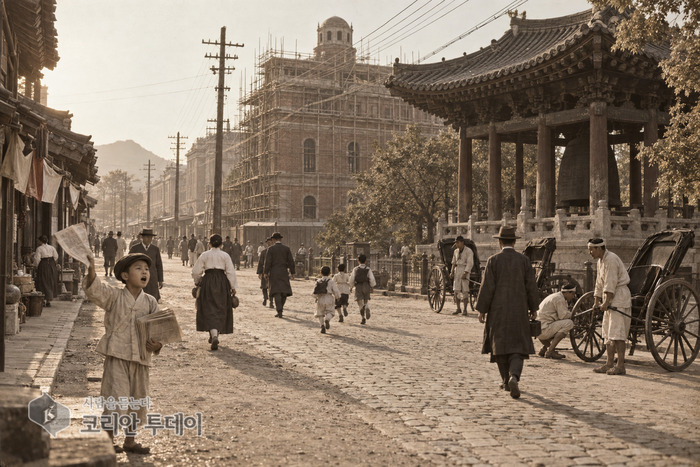
📰 Korea Under Japanese Rule – As Day Ends
Evening Reflection: By this point in September, the strike in Mokpo had outlasted its own momentum several times over — sustained less by any single dramatic event than by workers simply refusing to go back.
Three Days After the Trial
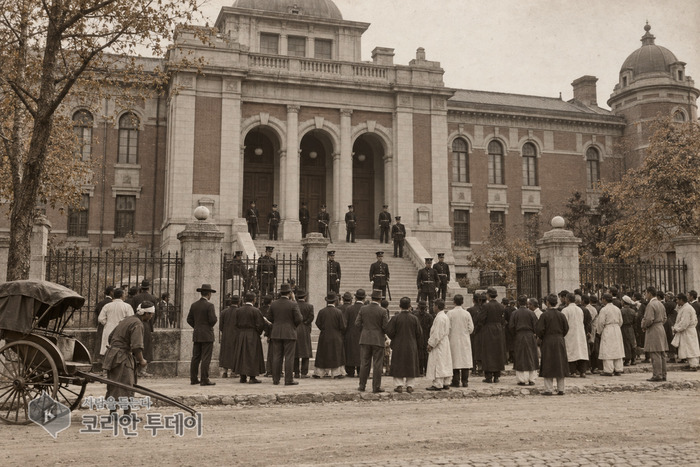
On September 13, the Gyeongseong District Court [gyuhng-sung; pronounced “Keijō” by the Japanese colonial administration] held proceedings tied to the 1st and 2nd Korean Communist Party incidents — cases that had begun with arrests in Sinuiju in November 1925.
We were unable to verify a specific front-page headline text from Korean-language newspapers dated September 16 itself in this round of research. What is well documented is that the case, and its social weight, continued to dominate conversation in Gyeongseong for days afterward.
Source: secondary historical research on the Korean Communist Party trials, cross-referenced with Korean historical databases
🏛️ Government-General of Korea Official Records
No specific gazette content for this date was confirmed. Around this time, however, the Government-General was in the final weeks of construction on its new headquarters building near Gwanghwamun, due for completion the following month.
✊ Eight Months in Mokpo
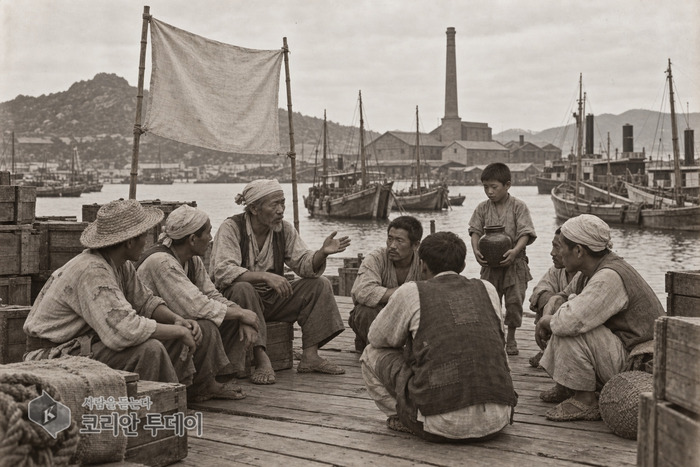
On January 15, 1926, the Mokpo Oil-Mill Workers’ Union held an emergency general meeting and walked out, demanding that the workday be shortened from twelve hours to ten. The company responded by firing the strikers and circulating a blacklist to other factories in the area.
Local labor groups — a free labor union, a printers’ fellowship, a woodworkers’ association — rallied in support. By mid-September the strike had crossed the eight-month mark, sustained under continuing pressure from police and management.
Overseas Korean Newspapers: Labor disputes of this scale were closely watched by Korean expatriate communities in Shanghai and Manchuria, who followed them as part of the broader picture of colonial economic exploitation.
Source: academic research on the 1926 Mokpo oil-workers’ strike (Local History and Local Culture journal); labor history retrospectives
🏭 Thursday Focus: The Labor Landscape
A twelve-hour workday was ordinary across colonial Korean industry in 1926. What made Mokpo notable wasn’t the demand itself — ten hours was hardly radical — but the sheer length of the resistance it took to even ask for it.
Why This Matters for International Readers: The eight-hour movement had already reshaped labor law in much of the industrialized West by the mid-1920s. Colonial Korea’s workers were fighting, years later and with far fewer legal protections, for terms their counterparts elsewhere had already partly secured.
💰 A Day’s Wages and Costs
No verified price data for this specific date was found. We do not estimate figures without source confirmation.
🌏 East Asia After Dark
🇨🇳 China – The Northern Expedition
Context for International Readers: The National Revolutionary Army, allied at this stage with Chinese Communists, had been advancing north from Guangzhou since July 1926, fighting to reunify China against competing warlords.
On September 6 and 7, the NRA captured Hanyang and Hankou, two of the “Three Towns of Wuhan.” By September 16, ten days later, it was still pressing toward Wuchang, the last of the three — which would fall on October 10.
Korean exiles in China, including independence fighters based in Shanghai, followed the Northern Expedition closely as a possible shift in the regional balance of power.
🇯🇵 Japan – Managing an Empire
The Late Taishō Period: Japan in 1926 was in the final months of the Taishō era’s brief democratic flowering, even as colonial administration in Korea grew more entrenched — visible that autumn in the near-complete Government-General headquarters in Seoul, and in the ongoing prosecution of Korean Communist Party members.
🇷🇺 Soviet Union & Manchuria
Manchuria remained the largest hub of Korean exile life outside the peninsula — home to farmers displaced by colonial land policy and to independence movement networks that kept close watch on both the Chinese civil conflict and news from home, including the communist trial in Seoul.
🌍 The World Stage – Evening of September 16, 1926
🗺️ Ordinary Thursday, Extraordinary Century
September 16, 1926 carried no single headline event that reshaped the world. It was, instead, a day of small and specific developments — the kind that only in hindsight reveal how much was quietly in motion.
🇺🇸 United States
Los Angeles County District Attorney Asa Keyes ordered the arrest of five people, including the evangelist Aimee Semple McPherson, on charges of conspiring to corrupt public morals — a case tied to her disputed 1926 disappearance and reappearance.
🇮🇹 Italy & Romania
Italy and Romania signed a Treaty of Friendship, pairing a substantial Italian loan with Romanian oil concessions — a small but telling instance of interwar Europe’s economic diplomacy.
🇯🇵 Japan (Industrial)
Shin-Etsu Chemical Company was founded on this date — a corporation that would grow into one of Japan’s major chemical manufacturers over the following century.
🎭 New York
“Broadway,” a crime drama by George Abbott and Philip Dunning, premiered at the Broadhurst Theatre — part of a booming Jazz Age theater scene an ocean and a colonized peninsula away from Mokpo’s picket lines.
🌐 Colonial Parallels – September 1926
🇮🇳 India Under British Rule
By 1926, Indian labor organizing was gaining ground alongside the independence movement, with textile and railway strikes echoing the same basic demand Mokpo’s workers were making: shorter hours, and the right to say no to unbearable conditions without losing everything.
🇮🇪 Ireland – Rebuilding a Free State
Four years into independence, Ireland was still absorbing the costs of its own civil war. For Korean nationalists watching from Shanghai and Manchuria, Ireland remained proof that even a long occupation could end — a fact that made both the Mokpo strike and the communist trial feel, to their participants, like part of the same unfinished struggle.
👤 Person of the Day – September 16, 1926
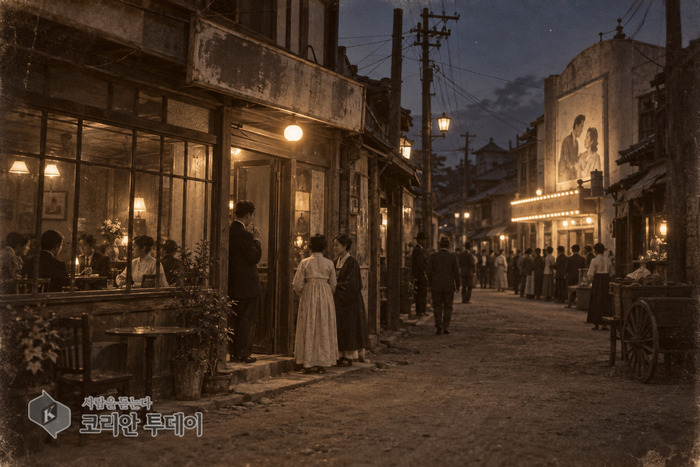
💡 A Note on Sources: No individual striker from Mokpo could be identified by name in this round of research. What follows instead reconstructs the position of a typical oil-mill worker there in September 1926, based on verified facts about the strike’s demands, timeline, and organizational structure.
A Day in Their Life: Eight months without regular wages meant eight months of borrowed rice, informal credit among neighbors, and whatever relief the allied labor and craft associations in Mokpo could scrape together.
The Historical Context: Striking in colonial Korea carried a double risk: the ordinary economic risk of any strike, plus the added danger that labor organizing itself could draw police attention as a political, not just economic, act.
Legacy and Modern Connection: The ten-hour workday these strikers demanded would take decades more to become standard in Korea. Their strike didn’t win outright — but it became one thread in the labor history that modern Korean workplace protections trace back to.
🏘️ Understanding Daily Life – Evening in 1926
🌅 Morning
In Gyeongseong, the Bosingak bell in Jongno marked the start of the day as market vendors opened their stalls at Namdaemun.
☀️ Afternoon
Factories across the peninsula ran their standard long shifts; in Mokpo, the idled oil mill stood as a visible reminder of the standoff.
🌆 Evening
Cafés lit up in Myeongdong, a narrator’s voice carried through Chosun Theater, and near Gwanghwamun the unfinished Government-General building stood dark against the sky.
🪞 Century Mirror – 1926 vs 2026
| Aspect | September 1926 | September 2026 |
|---|---|---|
| Work hours | 12-hour days common; Mokpo workers struck for 10 | Statutory 40-hour week with capped overtime |
| Right to strike | Could mean dismissal and blacklisting overnight | Constitutionally protected labor rights |
| Political belief | Could itself become the subject of a criminal trial | Freedom of conscience is a guaranteed basic right |
🎵 From Picket Lines to Global Stage
The workers who held Mokpo’s picket line for eight months, and the defendants who stood trial in Seoul three days before this evening, shared one thing: they kept going without knowing whether it would matter. A century later, the labor protections and civil liberties their struggles helped seed are part of the ordinary background of Korean life — the quiet inheritance behind the country that now exports K-pop, film, and television to the world.
🌙 As Your Evening Continues…
As you wind down your day on Thursday, September 16, 2026, remember that 100 years ago tonight, a strike with no end in sight was entering its ninth month, and a trial’s aftershocks were still working their way through a colonized capital.
Tomorrow at 10:10 PM KST (1:10 PM UTC): We’ll return with September 17, 1926 — another evening, another step in Korea’s long journey to freedom.
Sleep well, and remember: today’s freedoms were yesterday’s impossible dreams.
🕙100 Years Ago Today
Evening Edition • Published at 10:10 PM KST (1:10 PM UTC)
A project of The Korean Today
Preserving history, one day at a time
© 2026 The Korean Today. All rights reserved.
All historical facts verified through primary and secondary sources where possible; unverified details are marked as such.
THE KOREAN TODAY × WIA CODE
이 기사의 WIA Code

WIA Code 스캐너로 비추면 인터넷 없이 발행 사실과 위·변조 여부를 확인할 수 있습니다.
휴대폰 기본 카메라로 찍으면 스캐너 안내 페이지가 열립니다 — 기사 바로 열기
움직이는 코드(스트림) 한 장에 기사 전문(사진 포함)이 담겨 있습니다 — WIA Code 스캐너로 약 123초 비추면 폰에 저장되어 인터넷 없이도 읽을 수 있습니다. Stream.mp4 도 여기서 받습니다.
WIA Code · 코리안투데이






Leave a Reply