
Good evening. It’s 10:10 PM in Korea as we look back a century, to Saturday, October 10, 1925. On this single day, a newspaper’s presses sat seized in colonial Seoul, a flood-battered city tried to rebuild before winter, an emperor’s palace opened its gates to commoners in Beijing, and three foreign ministers slipped away on a lake steamer in Switzerland to quietly remake Europe. Different corners of the world, one date — all of it verified from the historical record.
Korea Under Colonial Rule
By October 1925, Seoul’s Korean-language press was under open assault. Two months earlier, on September 8, the Chosun Ilbo had published an editorial titled “Korea’s Political Relations with Russia.” The Government-General judged it an incitement against colonial rule and ordered the paper suspended — seizing a rotary printing press the paper had bought only a month before, worth 14,000 won. Editorial writer Shin Il-yong was prosecuted under the Peace Preservation Law; editor-publisher Kim Dong-seong and printer Kim Hyeong-won were charged under the Newspaper Law. As October began, the trial was still unresolved.
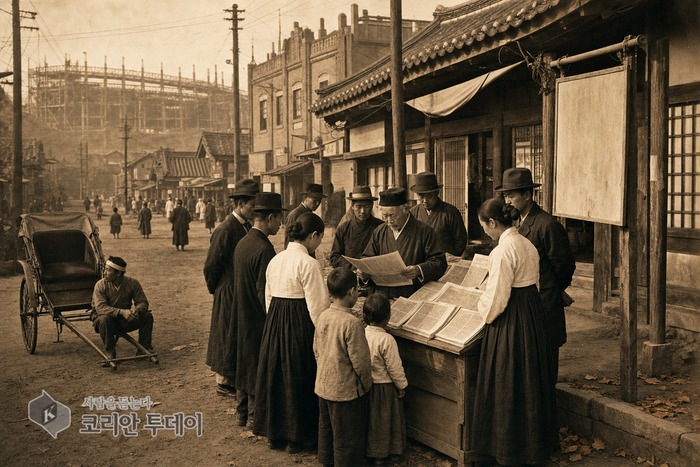
Beyond the courtroom, Seoul was still recovering from catastrophe. That July, the Han River had flooded the capital twice within weeks — the worst flooding Korea had recorded in the twentieth century, displacing more than 40,000 people in the Seoul area alone and killing hundreds nationwide. A relief body, the Joseon Flood Disaster Relief Association, kept raising donations through Korean newspapers and youth groups, but with winter approaching, rebuilding remained slow.
East Asia in Turmoil
Across the Yalu River in Manchuria, Korean independence groups were regrouping under pressure. The Mitsuya Agreement, signed that June between the Government-General and Manchurian warlords, had tightened the net around Korean guerrilla units operating from exile. The Chamnuibu (Righteous Government) had just reorganized its command; within days, on October 14, a new coalition called Sinminbu would hold its founding assembly, naming independence fighter Kim Jwa-jin to head its military department. Meanwhile in southern China, the Nationalist Party’s National Revolutionary Army completed its Second Eastern Expedition, securing full control of Guangdong province.
The World Stage
Two events, unrelated but simultaneous, defined this Saturday abroad. In Beijing, the Forbidden City opened to the public for the first time, reborn as the Palace Museum on the afternoon of Double Ten Day — the fourteenth anniversary of the 1911 revolution that ended imperial rule. In Locarno, Switzerland, French foreign minister Aristide Briand arranged what looked like a birthday cruise for the wife of Britain’s Austen Chamberlain aboard the lake steamer Orange Blossom. Away from reporters and lawyers, Briand, Chamberlain, and Germany’s Gustav Stresemann spent five hours hammering out the terms for Germany’s admission to the League of Nations — groundwork for the Locarno Treaties, to be finalized six days later on October 16.
Colonial Parallels
Korea was hardly alone in living under foreign rule that autumn. In British India, the colonial administration continued to govern under the Raj, with Indian nationalist politics still years from the mass campaigns that would follow. In Ireland — independent since 1922 but still contesting its border — a Boundary Commission was working through 1925 to settle the frontier between the Free State and Northern Ireland, a process that would end in December with the original 1921 line left largely intact. Each case differed in degree, but the pattern recurred across empires: a press restrained, a border imposed, a people’s fate decided by distant offices.
Person of the Day
Shin Il-yong is not a household name, but his editorial cost him his freedom of print. As the writer of the September 8 Chosun Ilbo piece that triggered the suspension, he was charged under the Peace Preservation Law — a statute aimed at anyone deemed to threaten Japan’s “national polity” or private property system. His prosecution, still active in October 1925, marked an escalation: before this affair, colonial censorship of Korean papers had relied mainly on administrative suspension. Afterward, the Government-General increasingly paired suspension with criminal prosecution — a double punishment for the same words.
Understanding Daily Life
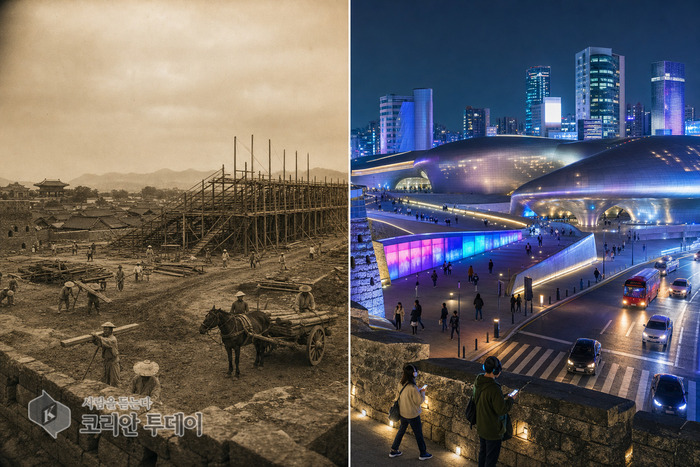
On the old grounds of the Hullyeonwon military training center, between Gwanghuimun and Dongdaemun gates, construction crews were racing toward a deadline. Groundbreaking had come in May; by this Saturday the framework of Gyeongseong Stadium was visible — a sports ground with a soccer field, running track, baseball diamond, tennis courts, and swimming pool, billed as the largest athletic complex in East Asia. It was due to open in five days, on October 15. Along Jongno, students browsed new titles at the booksellers’ row, and as dusk fell, lamps came on one by one in the windows of the street’s cafés.
Century Mirror
A hundred years separate a seized printing press from a constitutionally protected press; a locked imperial palace from a museum open to any visitor, in Beijing as in Seoul; a 25,800-seat stadium under construction from stadiums holding more than double that today. The distance between 1925 and 2025 is not just years — it is the difference between a right withheld and a right assumed.
Tomorrow — Sunday, October 11, 1925 — we look back on the week that was. Good night from a century ago.
THE KOREAN TODAY × WIA CODE
이 기사의 WIA Code

WIA Code 스캐너로 비추면 인터넷 없이 발행 사실과 위·변조 여부를 확인할 수 있습니다.
휴대폰 기본 카메라로 찍으면 스캐너 안내 페이지가 열립니다 — 기사 바로 열기

움직이는 코드는 스트림입니다 — WIA Code 스캐너로 약 57초 비추면 기사 전문(사진 포함)이 폰에 저장되어 인터넷 없이도 읽을 수 있습니다.
WIA Code · 코리안투데이






Leave a Reply