
Evening Edition
100 Years Ago Today
Wednesday, August 4, 1926
10:10 PM KST (1:10 PM UTC) – As you wind down your day, reflect on a century of history
Hook Opening
Good evening, and welcome to 100 Years Ago Today. On the surface, Wednesday, August 4, 1926, looked like any other late-summer day in colonial Gyeongseong (Seoul). But hours earlier, before dawn, something happened far out on the water that no one in the city yet knew about — an event that would soon dominate every newspaper in Korea.
Korea Under Colonial Rule
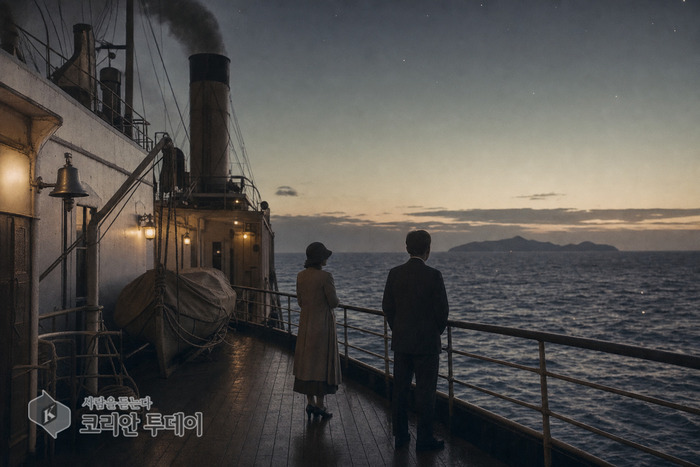
At around 4 a.m. that morning, a ferry called the Tokuju-maru, sailing the regular Gwanbu (Shimonoseki-Busan) line from Japan to Korea, was passing near Tsushima Island in the Korea Strait. A woman in Western dress and a middle-aged man reportedly embraced on deck and jumped into the sea together. They were not ordinary passengers: the woman was Yun Sim-deok, the first Korean graduate of the Tokyo Music School and Korea’s pioneering soprano; the man was Kim Woo-jin, a playwright and leading figure in Korea’s new theater movement.
The news did not reach Gyeongseong that same day — the ship simply continued to Busan and the disappearance was reported afterward. A few days later, the newspaper Dong-A Ilbo ran the story under the headline “A Love-Suicide of a Young Man and Woman Amid the Rough Waves of the Korea Strait,” devoting nearly a full page to it. According to that account, the ship left Shimonoseki at 11 p.m. on August 3 and the incident occurred near Tsushima around 4 a.m. on August 4. Importantly, no witness ever confirmed seeing the jump directly, and no suicide note was found. The word “love-suicide” (jeongsa) was the press’s own framing, not a confirmed fact.
East Asia in Turmoil
In China, Chiang Kai-shek’s National Revolutionary Army was pressing on with the Northern Expedition, driving warlord forces out of Hunan and Hubei and advancing toward Changsha and Wuhan. In colonial Korea, the aftermath of Emperor Sunjong’s funeral two months earlier still lingered: at the Seoul District Court, interrogations of students arrested during the June 10 Independence Movement continued.
The World Stage
Across the Pacific, Mexico was sliding toward crisis. President Plutarco Elías Calles’s anticlerical decree, the so-called Calles Law, had just taken effect, provoking armed believers to occupy a church in Guadalajara to defend it — an early spark of what would soon become the Cristero War. It was a reminder that 1926 was a year of upheaval well beyond Korea’s borders.
Colonial Parallels
Yun Sim-deok’s path — winning one of only a handful of government scholarships to study in the imperial capital — echoes a pattern common across colonized societies of the era. In British India, a small elite of “England-returned” students carried outsized prestige and outsized scrutiny back home. In Ireland, young writers and performers who trained in London or on the Continent often found their private lives turned into public morality tales by a press eager to police colonial subjects’ behavior. Yun and Kim’s story fits this mold: two of the colony’s most visible young artists, their deaths instantly recast by the newspapers as a cautionary tale about “modern” youth, love, and morality — a spectacle that said as much about colonial anxieties as about the two people involved.
Person of the Day: Yun Sim-deok
Born in 1897, Yun Sim-deok trained as a teacher before being selected as one of the Government-General’s rare state-sponsored students sent to Japan. She studied at Aoyama Gakuin and then the Tokyo Music School, becoming its first Korean student. Returning to Korea, she moved in the same circles as Kim Woo-jin’s traveling theater troupe and became one of colonial Korea’s most visible “new women.” That same summer, while passing through Osaka, she is said to have recorded a song titled “In Praise of Death” (Sa-ui Chanmi), with lyrics she wrote herself over a borrowed European melody. Released after her disappearance, the record became an unexpected sensation, its title taking on a haunting significance no one had intended when it was made.
Understanding Daily Life
For most students and young professionals in 1926 Gyeongseong, a government scholarship to Tokyo was a once-in-a-generation opportunity, awarded to only a handful of people each year. New theater troupes like the one Kim Woo-jin helped lead gave young Koreans a way to encounter modern literature, music, and ideas about romantic love that clashed openly with older norms of arranged marriage — Kim himself was already married when he met Yun. That tension between old obligations and new aspirations sat at the heart of why their story struck such a nerve.
Century Mirror
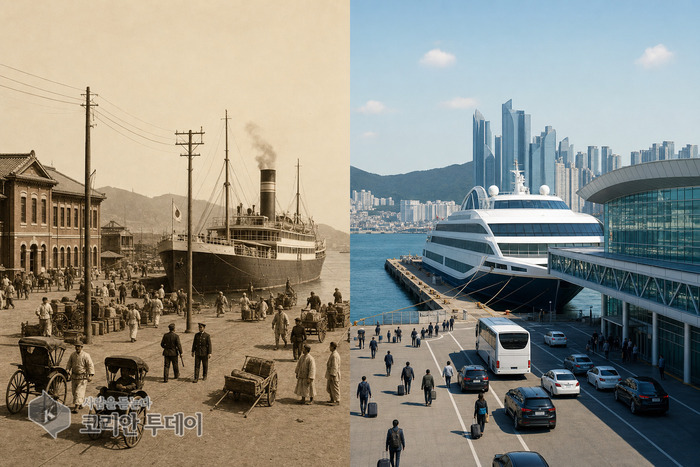
A hundred years ago, overseas study was a rare privilege reserved for a few dozen government-selected students a year; today, hundreds of thousands of Koreans study abroad freely each year. A hundred years ago, a woman’s private life could be turned into national scandal overnight; today, Korean women artists — from K-pop to opera — perform on the world’s biggest stages on their own terms. The distance between those two worlds is the whole story of this project.
Tomorrow’s Preview
Tomorrow, August 5, 1926, Korea’s newspapers will finally break this story wide open. Join us tomorrow evening at 10:10 PM KST for the next chapter of 100 Years Ago Today.
THE KOREAN TODAY × WIA CODE
이 기사의 WIA Code

WIA Code 스캐너로 비추면 인터넷 없이 발행 사실과 위·변조 여부를 확인할 수 있습니다.
휴대폰 기본 카메라로 찍으면 스캐너 안내 페이지가 열립니다 — 기사 바로 열기

움직이는 코드는 스트림입니다 — WIA Code 스캐너로 약 43초 비추면 기사 전문(사진 포함)이 폰에 저장되어 인터넷 없이도 읽을 수 있습니다.
WIA Code · 코리안투데이






Leave a Reply