
Hook Opening
Good evening, and welcome to “100 Years Ago Today.” On the morning of Thursday, August 5, 1926, readers in colonial Seoul (then called Gyeongseong) unfolded their newspapers to a story that stopped the city cold. Two nights earlier, on a ferry crossing the Genkai Strait between Japan and Korea, a rising soprano and a promising playwright had vanished together. Korea was still just past the hundredth day of national mourning for Emperor Sunjong, the last monarch of the Korean Empire, who had died that April. Onto that grief, one more sorrowful story was laid.
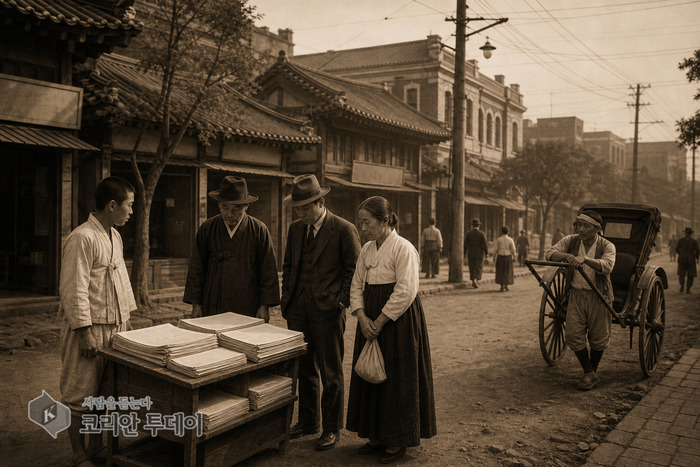
Korea Under Colonial Rule
The Dong-a Ilbo, one of colonial Korea’s leading Korean-language newspapers, ran the story under the headline “A Double Suicide of Young Man and Woman Amid the Rough Waves of the Genkai Strait.” In the early hours of August 4, aboard the regular ferry Tokushu-maru sailing from Shimonoseki to Busan, two passengers disappeared from the deck. The ship’s passenger register listed not their real names but aliases. In their cabin, they left behind only a short note asking that their belongings be sent home.
The missing woman was Yun Sim-deok, a soprano and one of the first generation of Korean women to study music abroad on a government-sponsored scholarship, trained at the Tokyo Music School. Days earlier, in a recording studio in Osaka, she had cut a record of a song set to a familiar waltz melody, meditating on the fleetingness of life — it would later be titled “In Praise of Death” (사의 찬미). The man who vanished with her was Kim Woo-jin, a playwright and pioneer of modern Korean theater, eldest son of a wealthy landowning family from Mokpo, who had studied English literature at Waseda University in Tokyo. He was already married and a father.
Search parties combed the strait for days but never recovered any trace of the pair. As word spread that the two had known each other closely since their student days in Tokyo, the streets of Gyeongseong buzzed with little else.
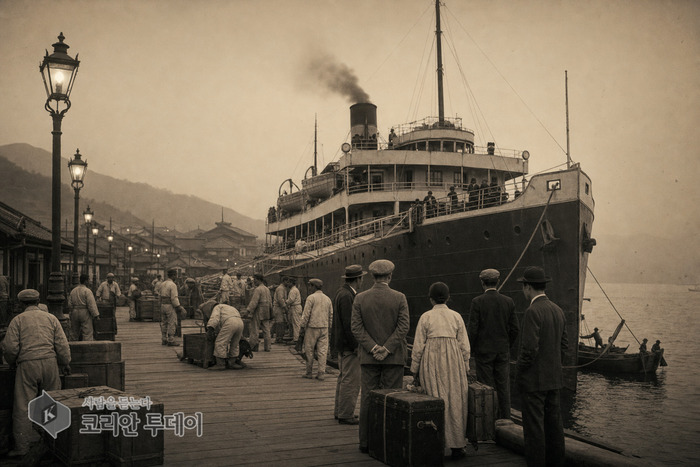
East Asia in Turmoil
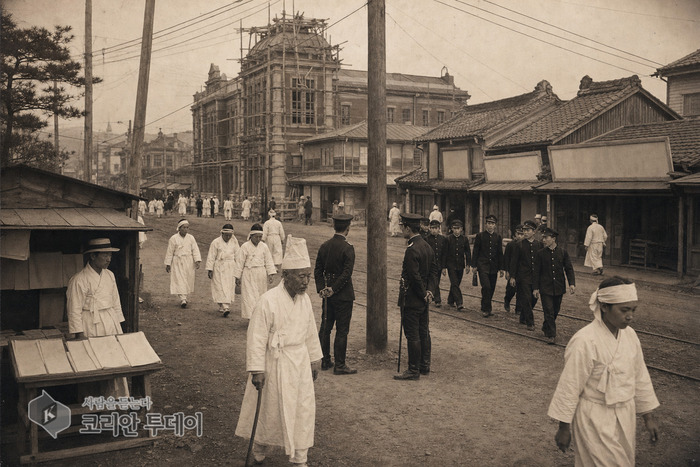
The tragedy landed on a Korea already reeling. Just past the hundred-day mark of mourning for Emperor Sunjong, memories were still raw from June 10, the day of his state funeral procession, when Korean students had unfurled banners and shouted for independence in the streets of Gyeongseong — the event that would become known as the June 10th Movement. More than 210 people were arrested in Seoul alone, with roughly a thousand students implicated nationwide; eleven of them were formally indicted and scheduled to stand trial that autumn. Colonial police surveillance remained tight through the summer as the investigation continued.
The World Stage
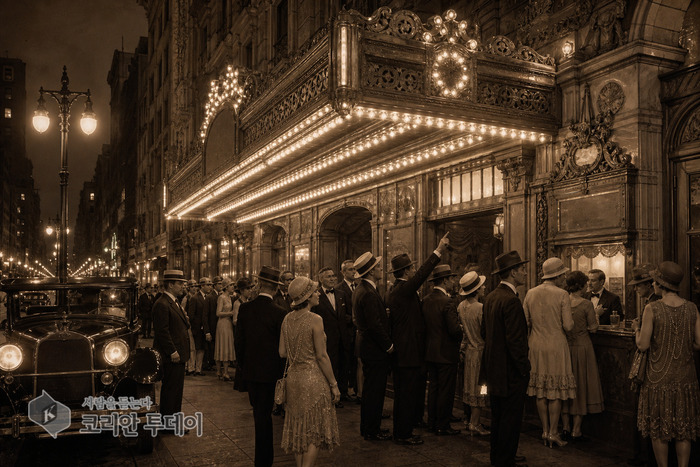
Across the Pacific and the Atlantic that same day, cinema history was being made. In New York, Warner Bros. premiered “Don Juan,” the first feature film to use their new Vitaphone sound-on-disc system, synchronizing recorded music and effects with the picture for the first time on a mass scale. Until then, the “sound” of a film had meant whatever a live orchestra in the theater chose to play. That night marked a hinge point toward the era of films that carried their own voice.
Readers in Gyeongseong had no way of knowing that change would eventually reach their own theaters. Elsewhere that week, political upheaval was unfolding in Greece, and in Europe a young swimmer was preparing her attempt to cross the English Channel. Korea sat heavy with mourning and loss; the rest of the world kept moving, at its own uneven pace, toward a new age.
Colonial Parallels
Korea in 1926 was hardly alone in living under the weight of empire and its rigid social codes. Across the British Empire — in India, still decades from independence, and in an Ireland only recently split into a Free State and a still-contested North — colonial subjects likewise faced a double bind: political rule from a distant capital, layered on top of traditional family and marriage structures that left little room for individual choice, especially for women and for anyone already bound by an arranged marriage. A gifted singer and a married playwright falling in love outside sanctioned bounds was not just a private tragedy; in colonial societies worldwide, the collision between personal desire and inherited social order was often unbearably public, and unbearably final.
Person of the Day: Yun Sim-deok
Born in Pyongyang and educated at Ewha, Yun Sim-deok became one of the first Korean women to study voice formally abroad, earning a government scholarship to Tokyo Music School — an extraordinary achievement for a Korean woman under colonial rule. She returned home as a celebrated soprano, one of the country’s first modern concert singers, at a time when a public stage career for a woman was itself a quiet act of defiance. Only days before she disappeared, she had recorded “In Praise of Death” in Osaka. Released posthumously that autumn, the record became one of colonial Korea’s biggest-selling releases, and the song is still performed and remembered a century later.
Understanding Daily Life
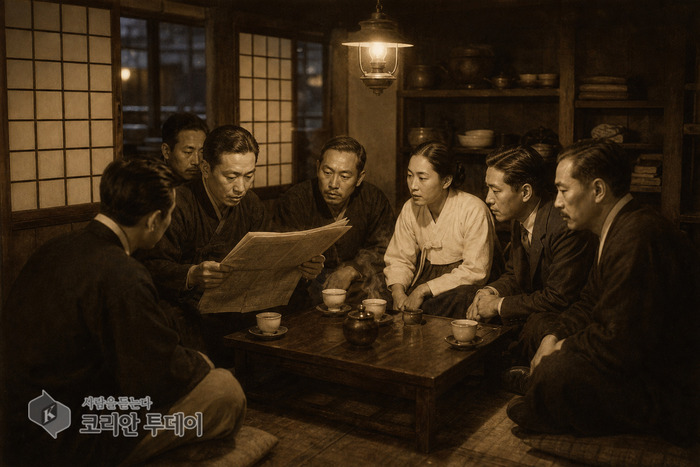
In teahouses along Jongno, patrons spread newspapers across their tables and talked of little else. Students moving between music academies and theater troupes traded whispered laments. Even in factories and shops, where twelve-hour days left scant room for anyone else’s troubles, the story passed from mouth to mouth. Opinion split: some mourned the couple’s choice; others said the era itself had driven them to it. A woman could study abroad and win fame for her voice, and a man of standing could champion a new, modern Korean theater — yet neither could freely choose whom to love if the arrangement fell outside marriage and family lines already set in place.
Century Mirror
A hundred years on, it is difficult to imagine two people taking their own lives because they could not choose their own future together. Women studying abroad and building professional careers, and relationships that cross the lines of a prior marriage, no longer carry anything close to that same social weight. And yet “In Praise of Death” is still sung today — a hundred-year-old echo of a very real sorrow, carried forward long after the empire that shaped it has vanished.
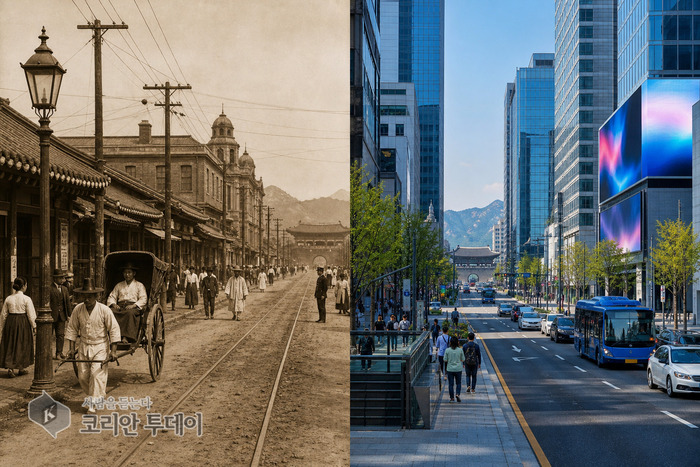
| Category | 1926 | 2026 |
|---|---|---|
| Freedom to marry | Matches arranged by family; a new relationship for a married person was social scandal | Individual choice; divorce and remarriage widely accepted |
| Women’s careers | Government-sponsored study abroad open to only a handful of women | Study abroad and professional careers commonplace |
| Speed of news | One newspaper, spread by word of mouth over days | Real-time, nationwide within minutes |
Tomorrow’s Preview
Tomorrow, across the English Channel, a young swimmer will be fighting rough water toward a record of her own. Gyeongseong carries tonight’s sorrow into another day. Join us tomorrow evening at 10:10 PM KST for another story from a century ago.
THE KOREAN TODAY × WIA CODE
이 기사의 WIA Code

WIA Code 스캐너로 비추면 인터넷 없이 발행 사실과 위·변조 여부를 확인할 수 있습니다.
휴대폰 기본 카메라로 찍으면 스캐너 안내 페이지가 열립니다 — 기사 바로 열기

움직이는 코드는 스트림입니다 — WIA Code 스캐너로 약 138초 비추면 기사 전문(사진 포함)이 폰에 저장되어 인터넷 없이도 읽을 수 있습니다.
WIA Code · 코리안투데이






Leave a Reply