
Hook Opening
Good evening, and welcome to “100 Years Ago Today.” On Friday, August 6, 1926, two very different stories about the sea were unfolding an ocean apart. In colonial Korea, the search across the Genkai Strait for soprano Yun Sim-deok and playwright Kim Woo-jin entered its third day and still found nothing — no bodies, no wreckage, nothing but silence. In place of new facts, Korea’s newspapers began printing something else: a flood of letters from their own readers, arguing bitterly over how a nation still in mourning ought to judge two vanished artists. And on the far side of the globe, in the cold water off the coast of France, a twenty-year-old American woman was about to make headlines of an entirely different kind.
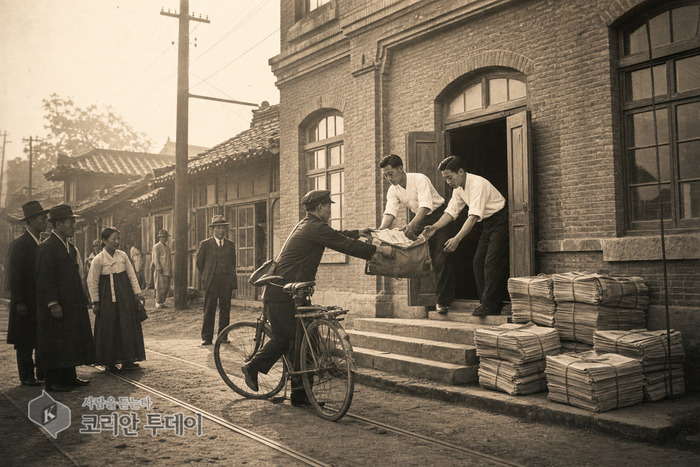
Korea Under Colonial Rule
Three days after Yun Sim-deok and Kim Woo-jin vanished from the deck of a Korea-Japan ferry in the early hours of August 4, search parties combing the Genkai Strait still had nothing to show for it. With the facts of the case exhausted, the Dong-a Ilbo and other papers turned instead to their readers, inviting the public to weigh in on what the newspapers themselves called a matter “young Korean men and women needed to thoroughly debate.” The response was immediate, and unsparing.
One letter, titled “Strike Them From the Ranks of Koreans,” set the couple’s deaths beside another death still fresh in the public mind: that of Kaneko Fumiko, a Japanese anarchist who had been sentenced to death that spring alongside her husband, the Korean independence activist Park Yeol, before both sentences were commuted to life imprisonment by imperial order. Kaneko had died under murky, still-unexplained circumstances in a Japanese prison only two weeks earlier, on July 23. The letter’s writer demanded to know how a death given in service of a nation could possibly be weighed on the same scale as a death chosen out of forbidden love.
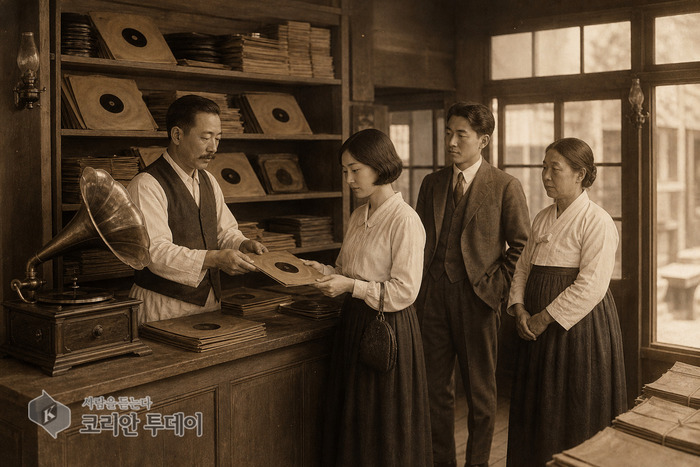
Other readers pushed back just as forcefully, laying the blame instead on an era that gave an accomplished, foreign-educated woman and an already-married man no lawful way to choose each other. The debate would not stay contained to a single day’s paper — editors kept the letters column open, and it was clear the argument had only begun. Meanwhile, in record shops around the city, a small but growing number of customers had started asking after a song Yun Sim-deok had recorded in Osaka in the days before she disappeared: “In Praise of Death,” new Korean lyrics of quiet resignation set over a European waltz melody. It had not even been formally released yet, and already it was spreading by word of mouth.

East Asia in Turmoil
Elsewhere in the news that week, the Government-General of Korea unveiled a new twelve-year plan to pour more than 300 million yen into expanding the colony’s rice production, with a large share of the increased harvest earmarked for export to Japan. Between a lost king, hundreds of students still facing trial for the June 10th independence protests, and now two vanished artists, colonial Korea’s summer felt heavy with loss even as the machinery of empire ground steadily on around it. In southern China, Chiang Kai-shek’s National Revolutionary Army continued its Northern Expedition, pushing through Hunan province toward the strategically vital city of Wuhan in a campaign that would, within weeks, bring it into direct battle with the forces of the warlord Wu Peifu.
The World Stage
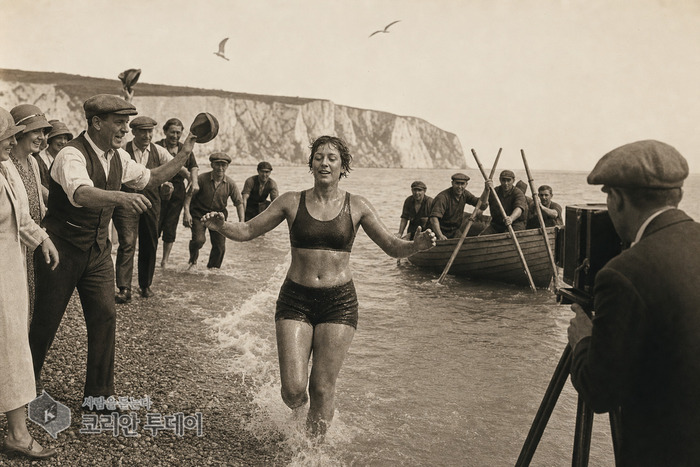
At dawn that same day, off the coast of France, Gertrude Ederle waded into the water at Cape Gris-Nez, her body coated in sheep grease against the cold, and began swimming for England. Fourteen hours and thirty-four minutes later — after fighting six-foot waves, shifting tides, and swarms of jellyfish — she waded ashore near Dover, becoming the first woman ever to swim the English Channel. Her time beat the existing men’s record by nearly two hours, a margin that stunned sportswriters on both sides of the Atlantic. In Japan, meanwhile, Emperor Taishō remained gravely ill at his villa in Hayama, his health quietly failing after years under his son’s regency — a monarch’s decline unfolding in the same year, and in some ways the same key, as Korea’s own royal mourning.
Colonial Parallels
The argument playing out in Korea’s newspapers that week — over what a woman was and was not permitted to want for herself — echoed far beyond the peninsula. That same year, in Ireland, Éamon de Valera broke from Sinn Féin’s boycott of the new Free State parliament to found a rival party, Fianna Fáil, arguing that the fight for full independence had to be carried on inside the very institutions the old movement had refused to recognize — a reminder that colonized and newly post-colonial societies alike were, that same summer, still working out which rules of the old order to keep and which to break. In British India, still governed from London under a newly arrived viceroy, reformers were waging comparable battles over whether a modern, educated woman could claim a public life without forfeiting her respectability. Kaneko Fumiko’s own death, invoked so pointedly in the Korean letters column, was itself a case study in how empire policed women who stepped outside its expectations, whatever nation they claimed — political prisoner or private lover, the scrutiny fell hardest on women who tried to choose their own path.
Person of the Day: Gertrude Ederle
Born in New York City in 1905 to German immigrant parents, Gertrude Ederle had already won one gold and two bronze medals at the 1924 Paris Olympics before setting her sights on the Channel. Her first attempt, in 1925, ended when her trainer pulled her from the water, fearing she was drowning — a decision she always insisted was premature. She trained relentlessly for a second attempt, refining a two-piece swimsuit of her own design to cut drag through the water. When she finally reached English soil on August 6, 1926, reporters asked how she felt. “It can be done,” she reportedly said. Her record would stand as the women’s benchmark for the Channel crossing for the next 35 years, and her feat, delivered on the very day the search for Yun Sim-deok was entering its third fruitless day, offered a striking counterpoint: proof that a woman going alone into open water did not have to end in loss.
Understanding Daily Life
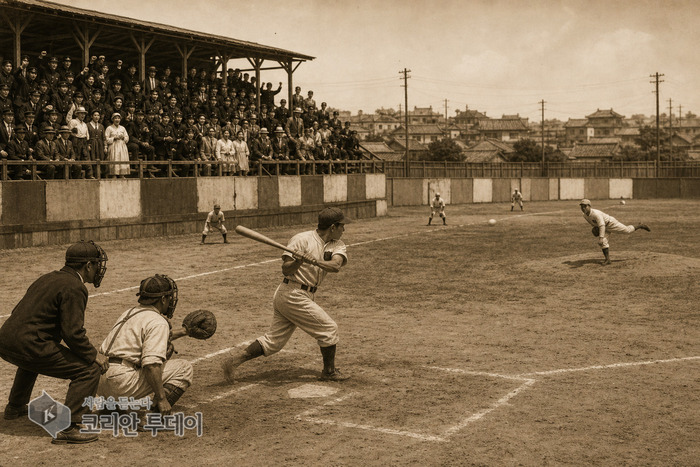
In teahouses down the back lanes of Jongno that Friday evening, patrons clustered around spread-out newspapers, and the conversation kept circling back to one theme: the lives Korea’s “new women” — educated, publicly visible, and increasingly independent — were and were not allowed to lead. A woman could train abroad, take the stage, and build a name for herself, and still find that choosing whom to love outside the bounds of an arranged or existing marriage brought swift public condemnation. Not far away, at Gyeongseong Stadium, students and alumni from four of the city’s leading schools — Baejae, Chungang, Hwimun, and Gyeongsin — squared off in a keenly followed baseball league match, bats cracking and crowds cheering even as, in the stands and on the walk home, talk drifted back again and again to the strait. As dusk settled over the city and lamps came on one by one along the shopping streets, the unfamiliar strains of a waltz melody drifted out from record-shop doorways into the alleys.
Century Mirror
A hundred years on, a woman swimming alone across an ocean to set a world record is no longer front-page astonishment — it is simply sport. And it has become almost unimaginable that two people would end their lives because society gave them no lawful way to love each other. Yet the distance between the woman who conquered the English Channel that day and the woman who was lost in the Genkai Strait two days earlier still poses a question worth sitting with: why did one sea hand back a record, and the other take a life?
| Category | 1926 | 2026 |
|---|---|---|
| Women’s achievement | A woman’s long-distance swim or study abroad was a rare, exceptional event | Women’s professional sport and careers are unremarkable and routine |
| Press coverage of death | Suicide and scandal splashed across front pages, fought out in reader letters | Reported carefully, under suicide-prevention reporting guidelines |
| Love and marriage | A married person’s new relationship invited public condemnation | Divorce and remarriage are respected as personal choices |
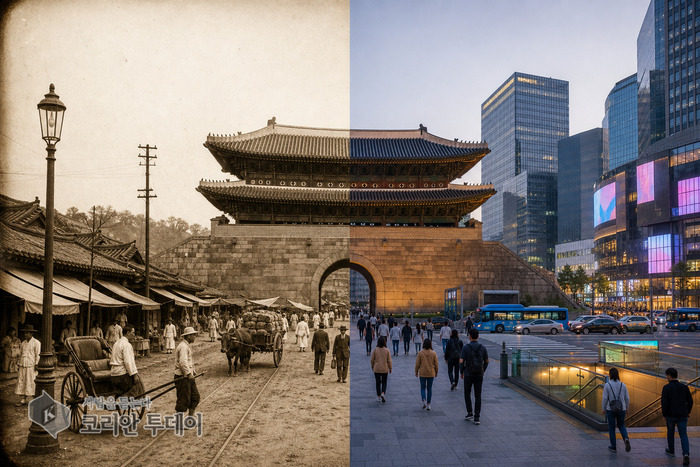
Tomorrow’s Preview
Tomorrow, Korea’s newspapers will still be unable to let go of the story from the strait, and the argument in the letters column shows no sign of cooling. Join us tomorrow evening at 10:10 PM KST for another story from a century ago.
THE KOREAN TODAY × WIA CODE
이 기사의 WIA Code

WIA Code 스캐너로 비추면 인터넷 없이 발행 사실과 위·변조 여부를 확인할 수 있습니다.
휴대폰 기본 카메라로 찍으면 스캐너 안내 페이지가 열립니다 — 기사 바로 열기

움직이는 코드는 스트림입니다 — WIA Code 스캐너로 약 149초 비추면 기사 전문(사진 포함)이 폰에 저장되어 인터넷 없이도 읽을 수 있습니다.
WIA Code · 코리안투데이






Leave a Reply