
Hook Opening
Good evening, and welcome to “100 Years Ago Today.” On Saturday, August 7, 1926, the search across the Genkai Strait for soprano Yun Sim-deok and playwright Kim Woo-jin entered its fourth day without a body, a note, or a single witness — and this time, it was a record shop window, not the search boats, that carried the story forward. That morning, shops around Seoul finally hung out a formally released disc for sale: “In Praise of Death,” the last song Yun Sim-deok ever recorded. Thousands of miles away in England, nine race cars lined up on a track in Surrey for a contest that would make history of an entirely different kind.
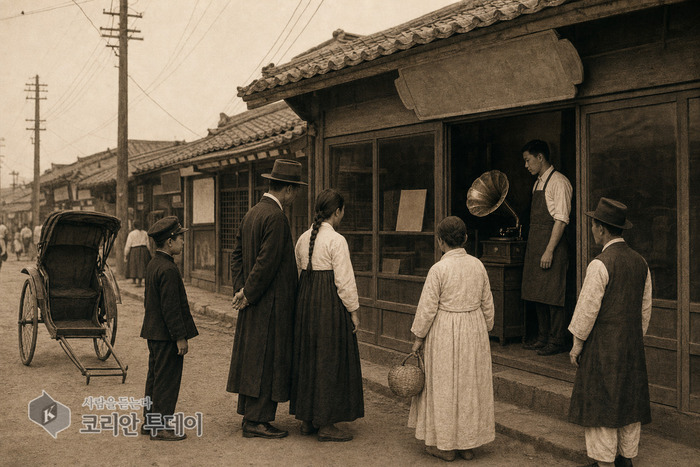
Korea Under Colonial Rule
Four days after Yun Sim-deok and Kim Woo-jin vanished from the deck of a Korea-Japan ferry, harbor police in both Busan and Shimonoseki quietly stopped adding new personnel to the search, and newspapers described the effort as effectively winding down. No bodies, no note, and no witness ever surfaced.
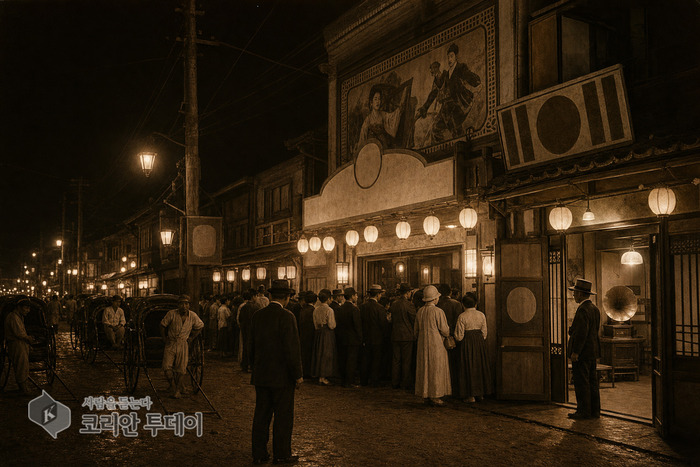
The story’s center of gravity shifted instead to record shops. “In Praise of Death” — the song Yun Sim-deok had recorded in Osaka in her final days, Korean lyrics she reportedly wrote herself set over a European waltz melody — went on formal sale in Korea for the first time. Few households owned a phonograph, but more people each day were simply stopping outside shop windows to listen to whatever was playing inside.
Voices from the literary and theater world began to speak up as well. Several writers who had worked alongside Kim Woo-jin in Korea’s new-theater movement sent tributes to the newspapers. Where the reader letters of the past few days had argued over whether the couple’s deaths were right or wrong, these pieces struck a different note: simple grief that Korean theater had lost a rare talent far too soon.
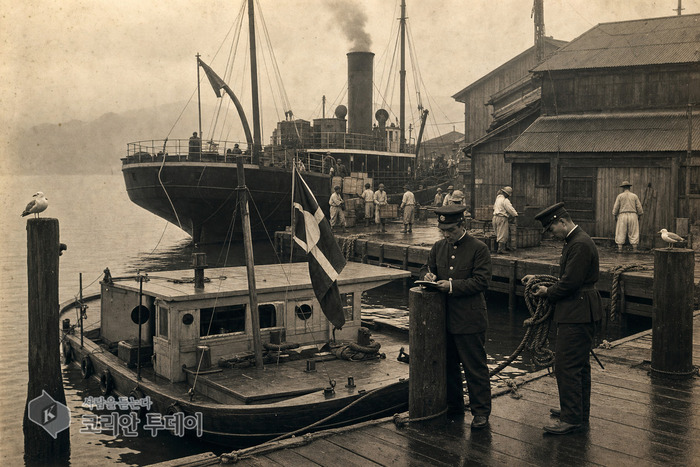
East Asia in Turmoil
In Mokpo, Kim Woo-jin’s hometown in South Jeolla province, the news landed with particular weight. His family was among the wealthiest landowners in the region, with holdings that included the Sangseong trading company, and word that the eldest son of a prominent local house had died in the strait — leaving behind a wife and children — spread quickly through Mokpo and the local papers of the surrounding countryside. Meanwhile, debate continued over the Government-General’s newly announced twelve-year plan to spend more than 300 million yen expanding rice production, with worried voices in the provinces noting that much of the increased harvest was bound for Japan rather than Korean tables. Between a nation still mourning its last king, the students still facing trial for the June 10th protests, two vanished artists, and now a rice policy that would reshape the countryside, colonial Korea’s summer carried more than its share of weight.
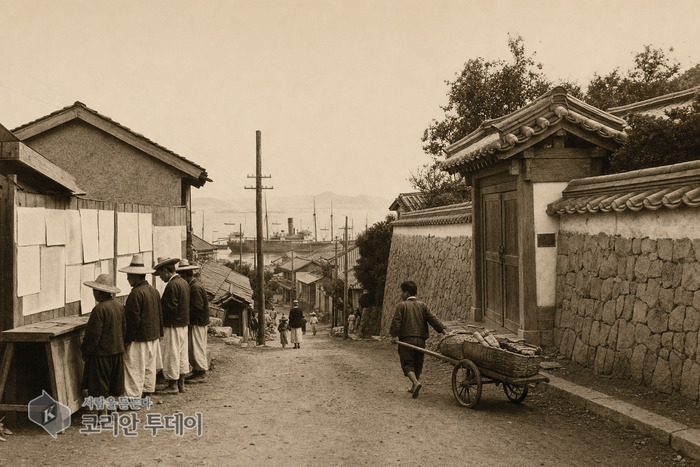
The World Stage
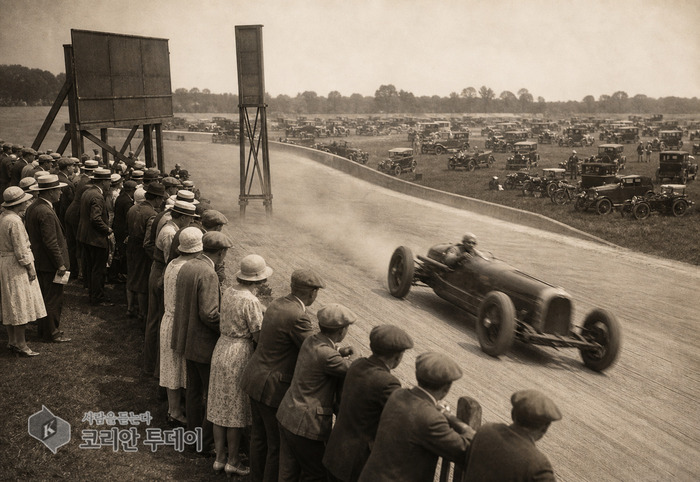
That same day, an entirely different kind of energy filled the Brooklands circuit in Surrey, England, where the Royal Automobile Club staged Britain’s first-ever Grand Prix. Nine cars took the start in front of a large crowd, and after more than four hours of racing across 110 laps, victory went to the French pairing of Louis Wagner and Robert Sénéchal in a Delage 15-S-8, with Britain’s own Malcolm Campbell finishing second in a Bugatti. The heat from the cars’ exhaust routing reportedly turned the cockpits into ovens under the August sun, forcing Wagner to stop repeatedly to cool his feet. In Japan, Emperor Taishō remained gravely ill at his villa in Hayama, and in southern China, Chiang Kai-shek’s National Revolutionary Army kept pushing north through Hunan province toward Wuhan. One race chased a record measured in hours and laps; elsewhere, other clocks — a monarch’s failing health, an army’s advance, a search called off without an answer — ran on at their own, slower and heavier pace.
Colonial Parallels
The twelve-year rice expansion plan unveiled that week fit a pattern familiar across the colonized world: an imperial power investing in a subject territory’s agricultural output primarily to feed the metropole. In French-ruled Vietnam, the Mekong Delta’s rice frontier was being pushed outward through the very same decade for export to France and its other colonies, even as local peasants saw little benefit from the expanded yields. In British-ruled Ireland, decades of policy had likewise geared much of the island’s agricultural output toward English markets, a grievance still cited by nationalists arguing that political independence meant little without economic self-determination. Colonial economies, whatever flag flew over them, tended to answer the same question — grow more, for whom — in the same way: for the empire first.
Person of the Day: Kim Woo-jin
Born in 1897 in Jangheung, South Jeolla province, Kim Woo-jin grew up the eldest son of a wealthy landowning family based in nearby Mokpo, groomed from childhood to inherit his father’s business empire. Instead, he left for Japan to study English literature at Waseda University, where he immersed himself in Western drama — Ibsen, Strindberg, expressionist theater — and returned to Korea determined to build a modern Korean stage to match it. He wrote plays, essays on dramatic theory, and poetry, and became one of the central figures pushing Korean theater away from melodrama and toward psychological realism. He was also, by the time he met Yun Sim-deok in Tokyo, already married with children, bound by an arranged marriage he had never chosen. Colleagues who eulogized him this week remembered a writer of real ambition for Korean theater, cut short at 29 by a decision the record shops of Seoul were now, in their own way, keeping alive one playback at a time.
Understanding Daily Life
Saturday evening brought unusually large crowds to the theater districts of Jongno and Myeongdong. Lines formed outside the Joseon Theater and Dansungsa, where audiences came to hear the benshi narrators who provided live commentary for silent films, and even there, conversation kept drifting back to the strait. Walking the back alleys, one could hear the same waltz melody drifting from several record-shop doorways at once — “In Praise of Death” seemed to be playing everywhere. At the restaurants, word spread that gisaeng entertainers had already adopted the song as a favorite. A handful of young writers from the new-theater movement gathered at a Myeongdong teahouse to remember Kim Woo-jin. Across the brightly lit streets, the same melody kept repeating quietly, alley after alley, deeper into the night.
Century Mirror
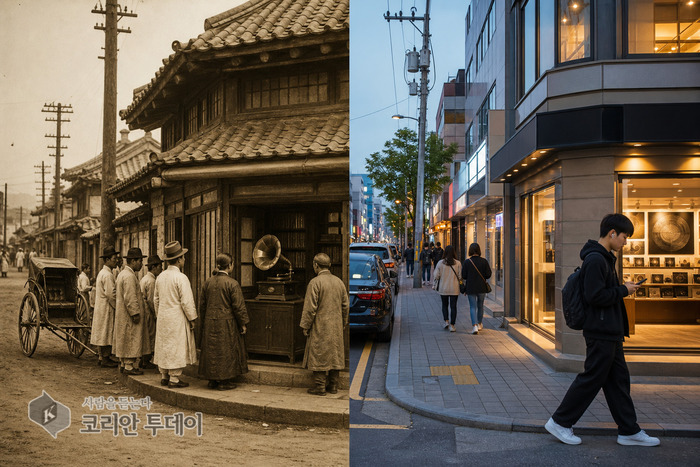
A hundred years on, a song no longer needs a line outside a record shop to spread — a single tap puts the same track in front of anyone, anywhere, the moment it drops. Motorsport, too, has grown from a nine-car experiment on a Surrey track into a global industry watched live by hundreds of millions. What hasn’t changed as much is the instinct to carry a person through a song after they are gone — to let a melody hold what words about a death cannot quite say.
| Category | 1926 | 2026 |
|---|---|---|
| How a song spreads | Word of mouth outside record shops; formal release lagged days behind recording | Streaming makes a release available worldwide the instant it drops |
| Motor racing | Nine cars at Britain’s first-ever Grand Prix, a fledgling sport | A global industry broadcast live to hundreds of millions |
| Reporting an artist’s death | Public debate fought out in newspaper reader letters, private life laid bare | Reported under suicide-prevention guidelines that protect the deceased’s privacy |
Tomorrow’s Preview
Tomorrow is Sunday, the day Korea’s papers traditionally step back to survey the week as a whole — and the song from the strait will very likely still be drifting through Seoul’s back alleys. Join us tomorrow evening at 10:10 PM KST for another story from a century ago.
THE KOREAN TODAY × WIA CODE
이 기사의 WIA Code

WIA Code 스캐너로 비추면 인터넷 없이 발행 사실과 위·변조 여부를 확인할 수 있습니다.
휴대폰 기본 카메라로 찍으면 스캐너 안내 페이지가 열립니다 — 기사 바로 열기

움직이는 코드는 스트림입니다 — WIA Code 스캐너로 약 139초 비추면 기사 전문(사진 포함)이 폰에 저장되어 인터넷 없이도 읽을 수 있습니다.
WIA Code · 코리안투데이






Leave a Reply