
Evening Edition
Five Days Into the Genkai Strait Mystery, Only Rumors Fill the Silence
August 8, 1926 (Sunday) · Gyeongseong · 10:10 PM KST (1:10 PM UTC)
As you wind down your Sunday evening, imagine Gyeongseong five days into a mystery no one could solve. On the night of August 3, a soprano and a playwright vanished from the deck of a ferry crossing the Genkai Strait. Tonight, their bodies still have not been found — and the whole peninsula is talking about it.
Korea Under Colonial Rule
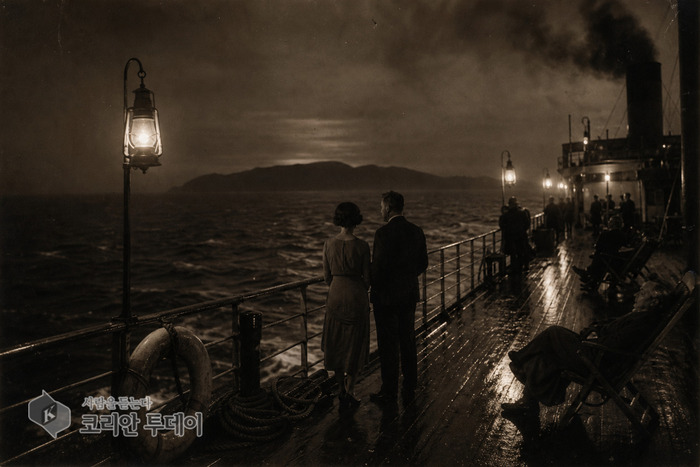
It began at 11 p.m. on August 3, when the ferry Deoksu-maru left Shimonoseki bound for Busan, carrying passengers across the strait that separated colonial Korea from imperial Japan. Around 4 a.m. on August 4, as the ship passed near Tsushima Island, a woman in Western dress and a middle-aged man were seen embracing on deck — and then they were gone, into the sea. The crew stopped the ship and searched the surrounding water. They found nothing.
The woman was Yun Sim-deok, widely regarded as Korea’s first professional soprano. The man was Kim Woo-jin, a playwright and co-founder of the Society of Dramatic Arts. Newspapers in Gyeongseong — the Dong-a Ilbo among them — have carried the story every day since, and today, five days on, still no trace of either has surfaced. In the vacuum left by that silence, rumor has rushed in: that the deaths were staged, that the couple bribed a crew member and fled through China to Europe, that a record company profited most from the tragedy and had a hand in it. None of this is confirmed. All of it is being repeated as though it were fact.
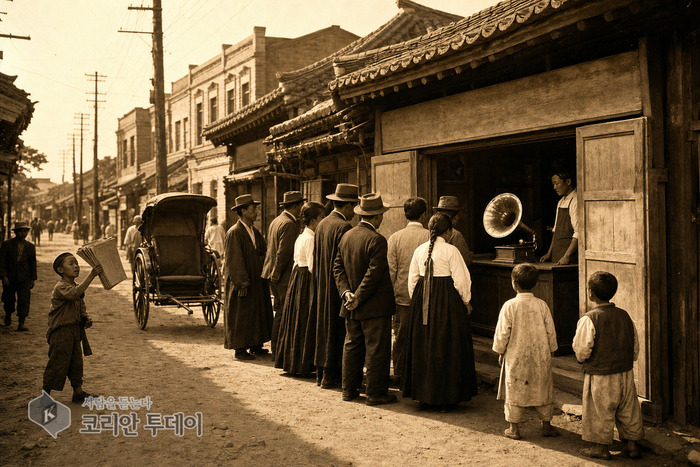
Adding to the strangeness: just days before she disappeared, Yun had recorded a song in Japan — “In Praise of Death,” a melody by Ivanovici set to lyrics she wrote herself. Since news of her disappearance spread, demand for the record — the first Korean-language record ever pressed in Japan — has reportedly surged. A voice presumed lost at sea is, this week, the most-heard voice in Korea.
East Asia in Turmoil
The story is not confined to Gyeongseong. Kim Woo-jin’s family in Mokpo, prominent landowners, and Yun Sim-deok’s own family in Gyeongseong are both said to be waiting for news that may never come. Public sympathy has been complicated by one fact freely discussed in the papers: Kim was already married. What might otherwise have stayed a private tragedy has become a very public referendum on modern love, marriage, and morality.
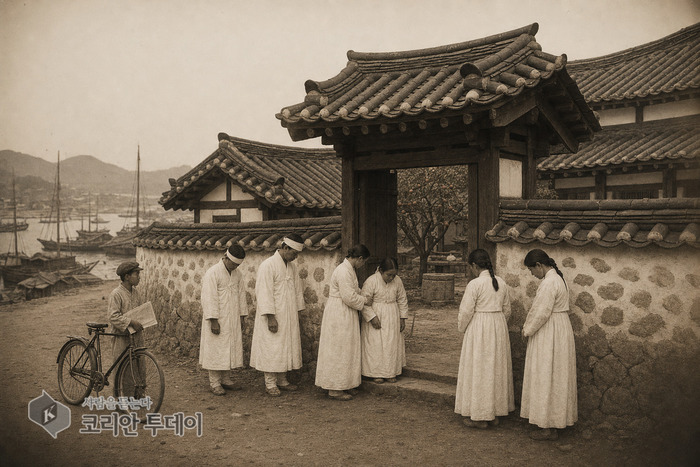
Meanwhile, a very different kind of story has been unfolding with far less public excitement: colonial police have spent the past two months arresting members of what is being called the second underground Korean Communist Party, following the June 10 mourning-day protests tied to the funeral of the last emperor, Sunjong. Thousands are said to have been questioned nationwide, among them Kwon O-seol, who helped organize the June protests. A country still not fully out of mourning for its last monarch now finds its attention split between a state crackdown it may not fully hear about, and a celebrity tragedy it cannot stop talking about.
The World Stage
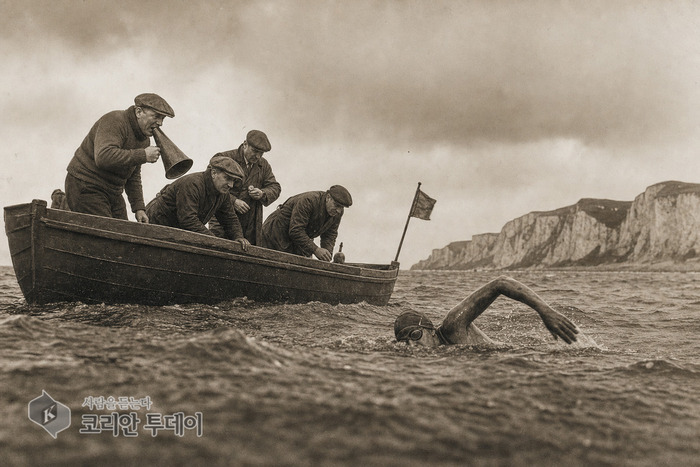
Two days before the Genkai Strait disappeared into headlines here, a very different kind of history was being made across the world. On August 6, American swimmer Gertrude Ederle became the first woman to swim the English Channel, covering the 35 miles from Cape Gris-Nez, France, to England in 14 hours and 31 minutes — nearly two hours faster than any man’s previous record. Newspapers worldwide carried the story of a woman who conquered a sea and came home a hero.
In China, the Northern Expedition launched from Guangzhou in July continued to advance through August. The National Revolutionary Army, having taken Changsha the previous month, pushed into Hubei province and won a string of victories against the forces of warlord Wu Peifu, with Wuhan reportedly next in its sights. One woman crossed a sea and made headlines for surviving it. On the same strait, two Koreans crossed into the same sea and made headlines for vanishing into it.
Colonial Parallels
Colonial subjects everywhere in 1926 knew this particular kind of headline — a private tragedy turned into public spectacle, refracted through newspapers that themselves operated under censorship. In British India and in Ireland, scandal and celebrity coverage served a similar function: something to talk about that colonial subjects were, unlike politics, actually free to discuss without fear of arrest. It is not a coincidence that a love story dominated conversation in a week when political arrests were happening largely out of public view.
Person of the Day
Yun Sim-deok trained in music in Tokyo as one of colonial Korea’s rare government-sponsored students abroad, returning home to become known as Korea’s first soprano — a title that made her both a source of national pride and a target of gossip in a society still uneasy about women on public stages. Her younger sister, Yun Seong-deok, was a pianist who would go on to teach music for decades. Kim Woo-jin, born in 1897 to a wealthy landowning family in Jangseong and raised largely in Mokpo, studied English literature at Waseda University in Tokyo before returning to found one of Korea’s earliest modern theater movements. Whatever happened on that ferry deck, both had already left a mark on Korean culture before this week made them famous for a different reason entirely.
Understanding Daily Life
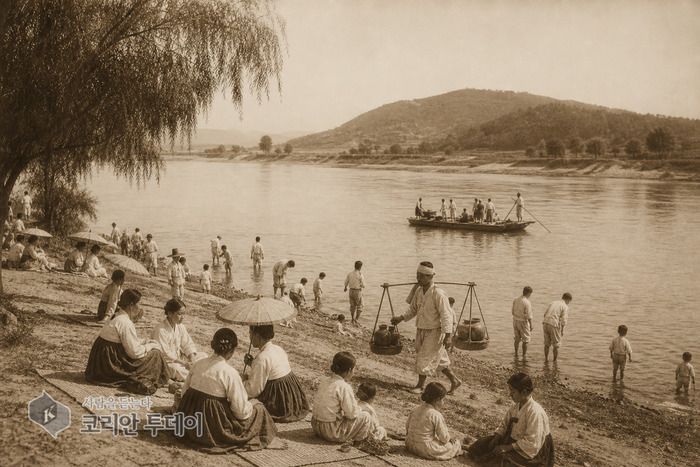
For ordinary Gyeongseong residents, this Sunday looked much like any other on the surface: churches in Jeongdong and along Jongno filled for morning service, street vendors called out the day’s papers, families sought relief from the late-summer heat along the Han River in the afternoon. But underneath the routine, one topic dominated every conversation. Record shops along Jongno reportedly saw a rush of customers asking to hear “In Praise of Death” played aloud — a song written by a woman who, five days earlier, vanished into the sea it seemed to mourn in advance.
Century Mirror
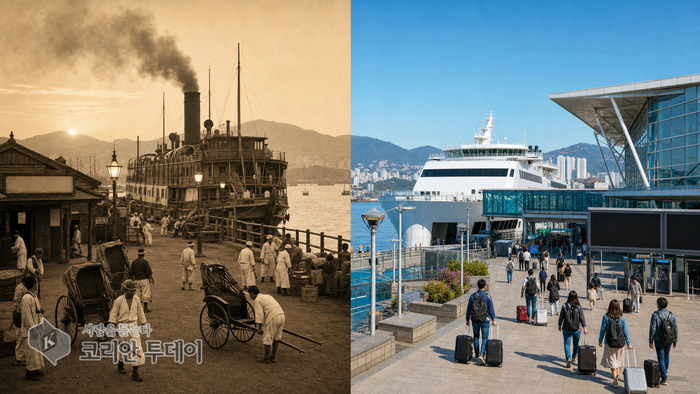
A hundred years on, the shape of a scandal has not changed as much as the speed of it. In 1926, a disappearance took days to become a nationwide sensation, carried by newspaper extras and word of mouth, kept alive by a phonograph record spinning in shop windows. In 2026, the same story would trend within minutes, verified or debunked by video evidence within hours rather than months — or, in some cases, never confirmed at all, the same way Yun and Kim’s fate remains, to this day, formally unresolved. What has not changed is this: an unconfirmed story, told compellingly enough, can travel farther and last longer than the confirmed one.
Tomorrow, Gyeongseong will likely wake to the same unanswered question. No bodies. No confirmation. Just a record still turning. Good night from 1926 — see you tomorrow evening, 10:10 PM KST.
THE KOREAN TODAY × WIA CODE
이 기사의 WIA Code

WIA Code 스캐너로 비추면 인터넷 없이 발행 사실과 위·변조 여부를 확인할 수 있습니다.
휴대폰 기본 카메라로 찍으면 스캐너 안내 페이지가 열립니다 — 기사 바로 열기

움직이는 코드는 스트림입니다 — WIA Code 스캐너로 약 130초 비추면 기사 전문(사진 포함)이 폰에 저장되어 인터넷 없이도 읽을 수 있습니다.
WIA Code · 코리안투데이






Leave a Reply