
[100 Years Ago Today] August 15, 1926 – Twelve Days Into the Genkai Strait Mystery, a Nation Still Searches for Answers
Hook Opening
It was Sunday, August 15, 1926, and Gyeongseong — colonial-era Seoul — woke to a story that refused to end. For eleven straight mornings, newspaper boys had shouted the same two words on street corners: Genkai Strait. Twelve days earlier, in the predawn hours of August 4, a young woman in a Western dress and a married playwright had, according to witnesses aboard a Japan-Korea ferry, embraced each other on the open deck and vanished into the sea. No bodies had been recovered. No confirmed explanation had emerged. And so, on this quiet Sunday — church bells ringing across Jeong-dong, market stalls opening in Jongno — Koreans under Japanese colonial rule turned once again to their newspapers, hungry for an ending that would not come.
This was more than gossip. It was arguably the first modern celebrity tragedy in Korean history, unfolding in real time across the pages of Dong-A Ilbo and Chosun Ilbo, at a moment when the very idea of private romantic choice was still new, still shocking, still being negotiated in a society under foreign occupation. Half a world away, journalists were asking questions about the same colonial system: in Tokyo, a judge had just resigned over photographs of a Korean political prisoner. In China, an army was marching to unify a fractured nation. In Mexico, a priest would be executed by firing squad this very day. None of these stories were connected by fact. All of them were connected by the same forces reshaping the world in 1926: empire, faith, gender, and the hunger of a new mass press for a story it could not yet let go.
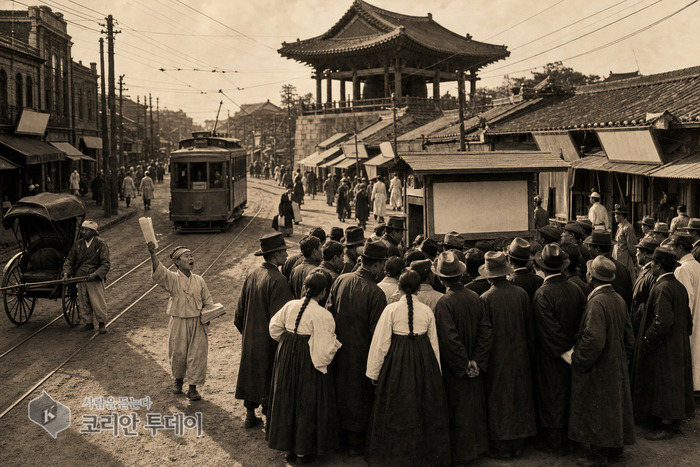
Korea Under Colonial Rule
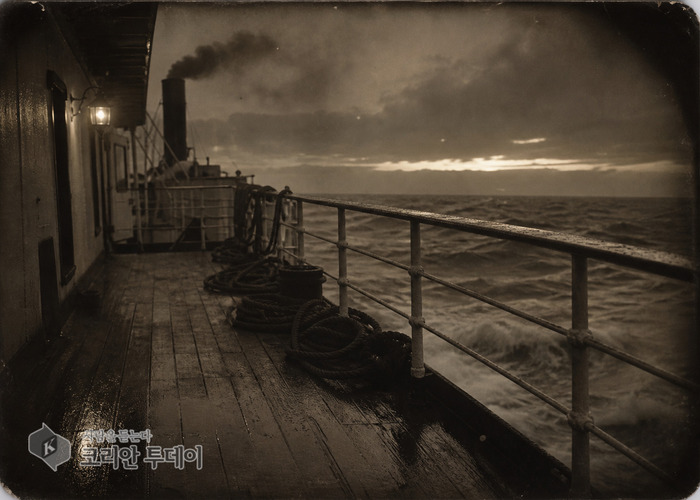
Twelve days had now passed since the ferry Tokuju-maru, sailing the overnight route between Shimonoseki, Japan, and Busan, Korea, became the site of what Korean newspapers were calling a jeongsa — a “love-death,” a double suicide born of impossible romance. The woman was Yun Sim-deok, Korea’s first government-sponsored soprano, trained in Tokyo, a celebrity whose voice had already made her one of the most recognizable Korean women of the decade. The man was Kim Woo-jin, a playwright and literary reformer — and, crucially, already married, with children waiting for him in his hometown.
According to passenger manifests and witness accounts reported in the days after August 4, the two had embraced on the open deck in the predawn hours and gone into the water together. What followed was twelve days of a nation’s obsession: newspapers raced to reconstruct their final hours, publishing rumors of a shared inn stay in Shimonoseki, an alleged farewell letter left for Kim’s family, and theories — never verified — that the pair had staged their deaths to escape to a new life together, unrecorded and unrecoverable. Not a single body had been recovered from the strait’s notoriously strong currents, and by mid-August, some Korean readers had begun openly wondering whether recovery was even possible, or whether official searches had quietly stopped.
What is verifiable, a century later, is this: the ferry sailed its scheduled route on August 4, Yun and Kim’s names disappeared from the passenger record before Busan, and Dong-A Ilbo broke the story the following day, August 5. Everything else — the embrace, the letter, the theories of escape — survives only as reported rumor, repeated and amplified by competing newspapers hungry for circulation. Historians today still debate how much of the “Genkai Strait tragedy” was verified fact and how much was collective myth-making by a colonial-era press discovering, in real time, the commercial power of celebrity scandal.
One consequence was undeniable, if not precisely measurable: Yun Sim-deok’s final recording, a mournful ballad titled “In Praise of Death” (“Sa-ui Chanmi”), reportedly saw a surge in phonograph sales across Gyeongseong in the days following her disappearance — though, as with so much of this story, no precise sales figures survive in the record. For a colonized population living under near-total press censorship from the Government-General, the Genkai Strait story offered something rare: a drama that was entirely, unmistakably Korean, playing out in the language of love, choice, and tragedy — territory the censors had little practiced interest in policing.
East Asia in Turmoil
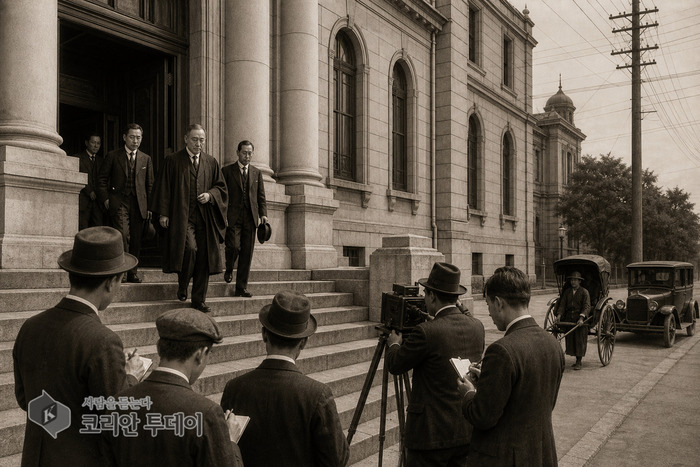
While Gyeongseong pored over shipping news from the Genkai Strait, a very different story was consuming political circles four hundred miles away in Tokyo. Park Yeol, a Korean anarchist held in Japanese custody on charges connected to an alleged plot against the imperial family, had been in prison alongside his partner and fellow activist, Kaneko Fumiko, since their arrest years earlier. Photographs had begun circulating — reportedly taken by the presiding judge, Tatematsu Kaisei — showing the couple looking relaxed, even affectionate, utterly unlike the popular image of condemned traitors.
The images ignited a political firestorm in Japan. Critics accused the judiciary of coddling a Korean radical; supporters of Park and Kaneko saw evidence that the case against them had been thinner, and their treatment more humane, than the government wished the public to believe. On August 11, Judge Tatematsu resigned his post over the scandal — a resignation Korean newspapers reported with unusual attention, since Park Yeol was one of the very few Korean political prisoners whose name reliably made Japanese front pages.
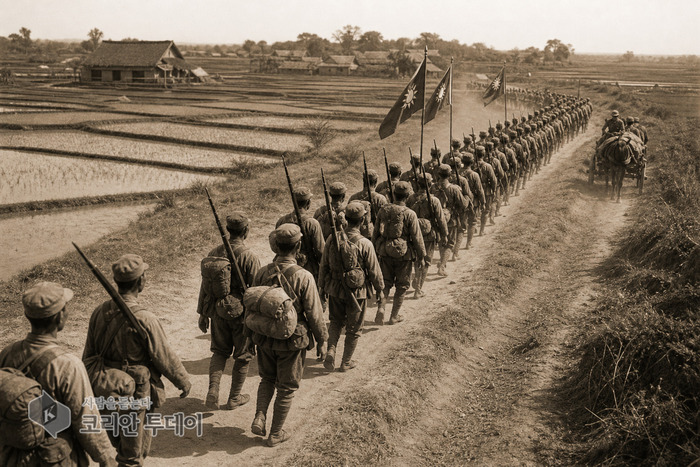
Further north and west, a war of unification was gathering pace. Chiang Kai-shek’s National Revolutionary Army had launched the Northern Expedition in July, pushing out of Guangdong province with Soviet backing and Chinese Communist Party cooperation, aiming to break the grip of regional warlords and unite China under a single government. By mid-August, Nationalist forces were advancing through Hunan province toward the strategically vital tri-city of Wuhan on the Yangtze River — a campaign that would take another two years to complete, reshaping the balance of power across East Asia and, eventually, Korea’s own neighborhood.
The World Stage
Farther from Korea’s immediate orbit, but no less significant to the currents of 1926, two very different governments were tightening their grip on dissenting institutions. In Mexico, President Plutarco Elías Calles had spent the summer enforcing strict anti-clerical laws that banned foreign priests, closed religious schools, and required clergy to register with the state — measures the Catholic Church refused to accept. On August 14, government agents arrested Father Luis Batiz Sáinz in the state of Zacatecas as part of a broader roundup of resistant clergy. According to later accounts, he was executed by firing squad the following day, August 15 — this very Sunday — one of the opening casualties in what would soon erupt into the Cristero War, a bloody three-year conflict between the Mexican state and Catholic rebels.
In Britain, the great General Strike of May had ended months earlier, but its root cause — a bitter dispute between coal mine owners and the Miners’ Federation over wages and hours — had never been resolved. Through the summer of 1926, more than a million British miners remained locked out of the pits, sustained by strike funds, charity, and stubborn solidarity, while Prime Minister Stanley Baldwin’s government held to its position that owners and workers must settle the dispute themselves. Different continents, different grievances — yet all were expressions of the same global moment: old orders reasserting authority, and ordinary people absorbing the cost.
Colonial Parallels
Korea’s experience under Japanese rule in 1926 did not exist in isolation. Across the world that August, other peoples were negotiating their own relationships with foreign or authoritarian power, each in strikingly different registers. In British-ruled India, colonial censorship of the vernacular press remained a constant irritant, not unlike the restrictions Korean newspapers navigated daily under the Government-General’s Publication Law. In both colonies, editors learned to write around what could not be printed directly, developing an entire vocabulary of implication and allusion that readers understood but censors could rarely prosecute.
In Ireland, four years after the founding of the Irish Free State, the wounds of civil war were still raw, and the new government was consolidating an identity shaped by centuries of British rule — a process Korean nationalists watched with interest as one possible model for a post-colonial future they hoped, one day, to build themselves.
Mexico’s persecution of Catholic clergy that same week offers a different kind of parallel: not a foreign empire ruling a colonized people, but a modernizing state asserting control over a rival institution — the Church — that commanded loyalties the government could not fully co-opt. Japan’s Government-General in Korea faced a structurally similar anxiety toward Christian missionary schools and churches, monitoring them closely as potential incubators of nationalist sentiment, much as Calles’s government feared parish priests as rallying points for resistance. What unites these otherwise unconnected stories is not a shared cause but a shared era: the 1920s were, across much of the globe, a decade in which state power tested how far it could reach into private belief, private speech, and private life.
Person of the Day: Yun Sim-deok
If one figure captured the imagination of Koreans on this particular Sunday, it was Yun Sim-deok — not present to defend her own story, yet inescapably its central character. Born in 1897 in Pyongyang, Yun trained as a singer at the Tokyo Music School, becoming, by the early 1920s, Korea’s first professionally trained soprano and one of the country’s first true celebrities in the modern, mass-media sense — a woman known not for her family or her marriage, but for her own talent and her own voice.
Her relationship with playwright Kim Woo-jin, a married man and a fellow member of Korea’s small, tightly connected circle of Tokyo-educated artists and reformers, had reportedly been an open secret for years before August 1926. What made her final act — if that is indeed what occurred — so seismic wasn’t only the tragedy itself, but what it represented: a Korean woman, at the height of her fame, apparently choosing death over a life constrained by social convention, marriage law, and the limits placed on women of her era.
Her final recording, “In Praise of Death,” recorded shortly before the voyage, gave her mythology a soundtrack — a mournful setting of a Romanian folk melody with newly written Korean lyrics reflecting on the emptiness of life. A century later, Yun Sim-deok remains a fixture of Korean popular memory, the subject of films, novels, and stage musicals that continue to ask the question colonial-era readers asked on this Sunday in 1926: what really happened in the dark water of the Genkai Strait?
Understanding Daily Life
For most residents of Gyeongseong, August 15, 1926 unfolded as an ordinary Sunday layered over an extraordinary story. Church bells rang across the city’s Christian neighborhoods that morning, and worshippers filed out afterward still trading theories about the Genkai Strait mystery on the church steps. By midday, the markets of Jongno and its side alleys filled with the usual Sunday trade: vendors selling produce, fabric, and household goods, newspaper boys weaving through the crowd shouting headlines about “the latest on the strait mystery.” Colonial-era Gyeongseong ran on a mix of traditional and imported rhythms — electric trams clattered down the main avenues past both tile-roofed hanok and newer brick buildings, rickshaw pullers waited at street corners, and shop signs mixed Korean script with Japanese characters, a visual reminder of the dual authority governing daily life.
As the afternoon wore into evening, Jongno’s cafés and tea houses — a relatively recent import from Tokyo and the West, and a favorite gathering place for Korea’s young, educated “modern boys” and “modern girls” — filled with patrons debating the ethics and authenticity of Yun and Kim’s disappearance late into the night. Notably absent from any of this discussion was the Government-General’s official gazette, which that week carried only routine notices — personnel appointments, price announcements, administrative circulars — without a single reference to either the Genkai Strait mystery or the Park Yeol photograph scandal. The gap between the colonial state’s official silence and the private press’s obsessive coverage was, in its own way, as telling as either story.
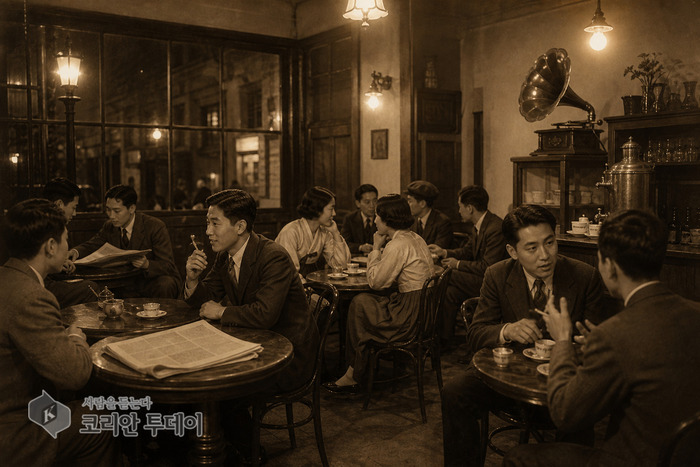
Century Mirror
A hundred years separate that Sunday from this one, and the distance shows up in unexpected places. The ferry route between Busan and Shimonoseki still operates today, still carrying passengers across the same strait — the crossing takes roughly the same eight hours it did in 1926, though travelers in 2026 can also fly the route in about an hour. Some things resist a century of technological change.
What has changed almost beyond recognition is the speed at which a story like theirs would spread today. In 1926, it took a full day for word of the ferry-deck disappearance to reach Gyeongseong’s newspaper desks, and nearly two weeks for the story to exhaust itself in print, still unresolved. In 2026, a comparable disappearance would be reported, debated, and picked apart by millions within hours.
The deeper continuity may be less about technology than about appetite. A society hungry for a story about love, transgression, and mystery in 1926 looks remarkably like a society doing the same thing on any platform in 2026 — the format has changed from newsprint to notification, but the pull of an unresolved human drama has not. The Genkai Strait remains what it was a century ago: a body of water that took two well-known Koreans and never gave them back, leaving behind only a song, a legend, and a question neither era has ever fully answered.
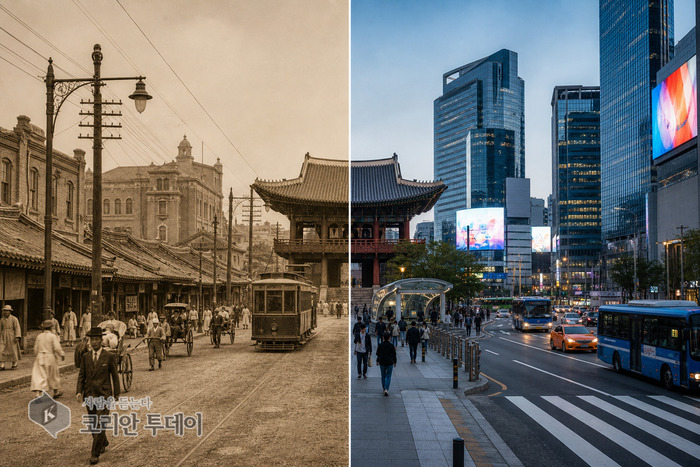
Tomorrow, August 16, marks the thirteenth day since the Genkai Strait swallowed its still-unconfirmed mystery, and Gyeongseong’s newspapers show no sign of letting the story rest. In Tokyo, the fallout from the Park Yeol photograph scandal will likely continue to ripple through the courts. As this quiet Sunday evening settles over the city, one thing is certain: 1926 is not finished with its secrets yet. We’ll be back tomorrow evening at 10:10 PM KST to see what the thirteenth day brings.
THE KOREAN TODAY × WIA CODE
이 기사의 WIA Code

WIA Code 스캐너로 비추면 인터넷 없이 발행 사실과 위·변조 여부를 확인할 수 있습니다.
휴대폰 기본 카메라로 찍으면 스캐너 안내 페이지가 열립니다 — 기사 바로 열기

움직이는 코드는 스트림입니다 — WIA Code 스캐너로 약 151초 비추면 기사 전문(사진 포함)이 폰에 저장되어 인터넷 없이도 읽을 수 있습니다.
WIA Code · 코리안투데이






Leave a Reply