
As Germany Took a Seat at the League of Nations, Mokpo’s Workers Marked Eight Months on Strike
It’s 10:10 PM KST (1:10 PM UTC) as we settle into the evening of September 9, 1926, a Thursday. 🕙 In colonial Gyeongseong, the day had opened over half-finished brick walls, a courtroom still buzzing over yesterday’s press trial, and, far to the south in Mokpo, a strike now eight months old. Across the sea in Geneva, a defeated empire had just taken a seat among the victors.
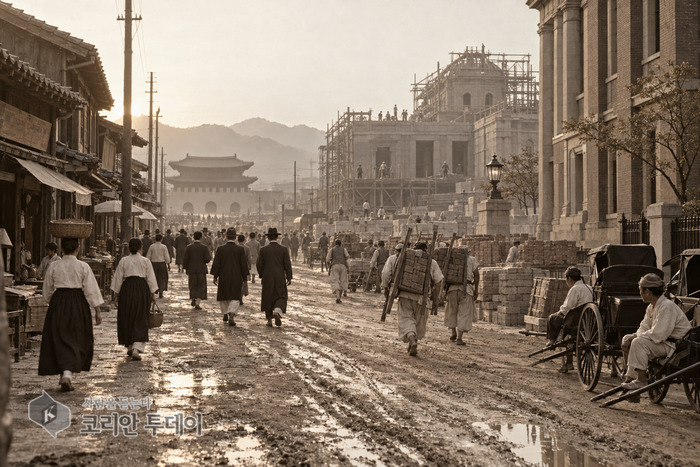
Korea Under Colonial Rule
On September 8, the day before, Gyeongseong District Court held the prosecution hearing in the Dong-A Ilbo press case. Columnist Choi Won-soon [choy won-soon] was charged under the Security Law, and editor-publisher Kim Chul-jung [kim chul-joong] under the Newspaper Act, over an August 22 column titled “Hoengseol-Suseol.” Prosecutors demanded eight months’ imprisonment for Choi and six months for Kim — a demand, not yet a verdict; the final ruling would not come until October 4, when Choi received six months. The paper had only recently returned to print after an earlier suspension, so the press corps was watching closely.
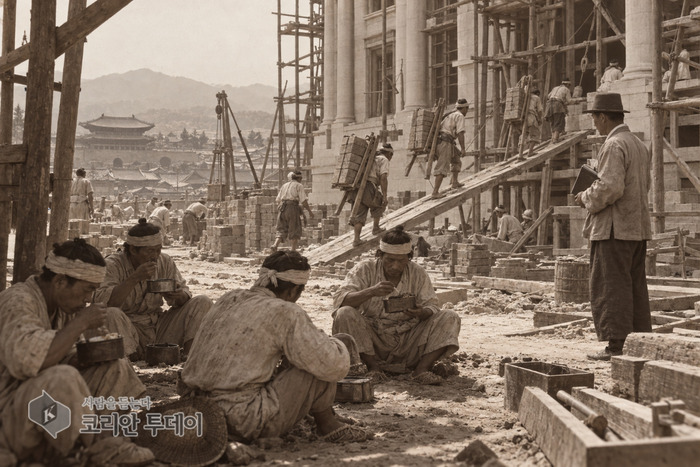
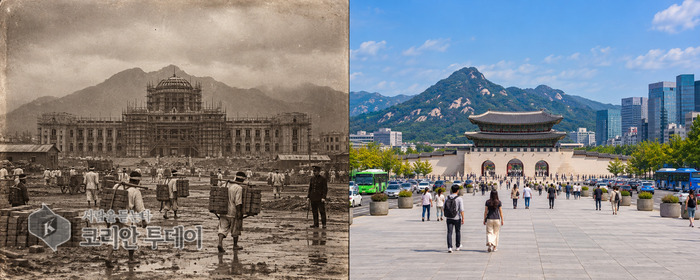
Meanwhile, at the Gwanghwamun site, construction of the new Government-General building was entering its final weeks. The colonial administration had already moved in on January 4, 1926, though the formal dedication ceremony was scheduled for October 1. Day laborers, paid by the day with no security beyond it, kept carrying brick after brick toward that deadline.
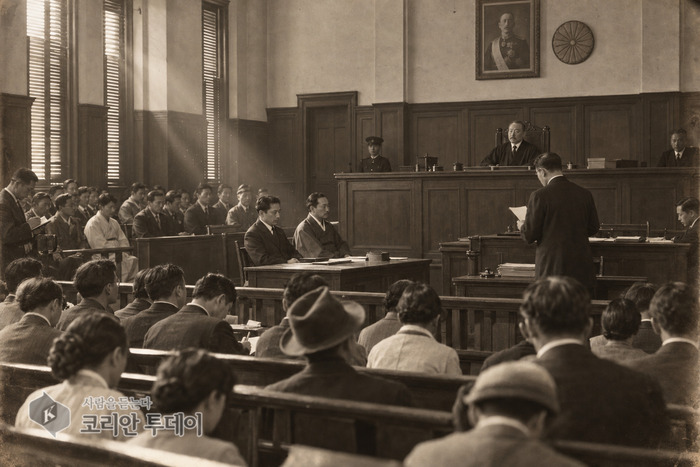
East Asia in Turmoil
South of the capital, in the port city of Mokpo, workers at an oil-pressing factory were marking their eighth month on strike, having walked out on January 18. The dispute would not end until September 30, when management agreed to a 10–15% wage increase. On this particular Thursday, no end was in sight. Records from the period count 81 labor disputes across Korea in 1926 alone, concentrated in Seoul, Pyongyang, and Busan. Recovery efforts also continued after a typhoon struck the southern provinces just three days earlier, reopening wounds barely healed since the catastrophic floods of 1925.
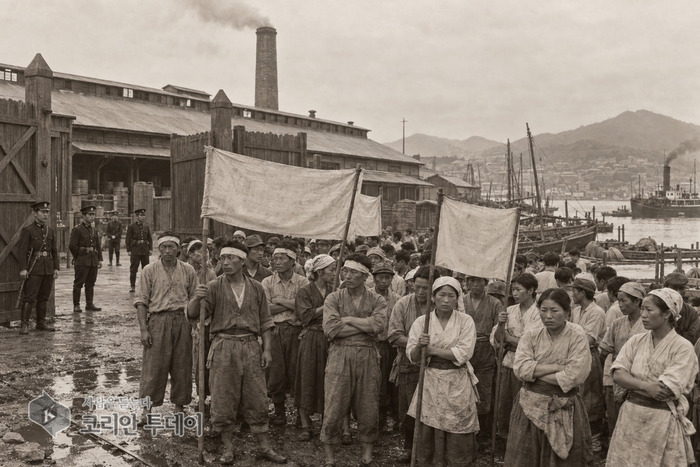
The World Stage
Across the ocean, a far bigger story was unfolding. On September 8, the League of Nations Assembly in Geneva unanimously admitted Germany as a member — and immediately granted it a permanent seat on the Council, the body’s inner circle of great powers. Eight years after starting a world war, Germany now sat beside the victors. Foreign Minister Gustav Stresemann’s landmark address to the Assembly was scheduled for two days later. Almost simultaneously, Athens told a very different story: on September 9 itself, the Republican Guard rose up against orders to disband, and government troops crushed the revolt, reportedly with casualties on both sides. One nation gained a chair in Geneva; another saw gunfire in its own capital.
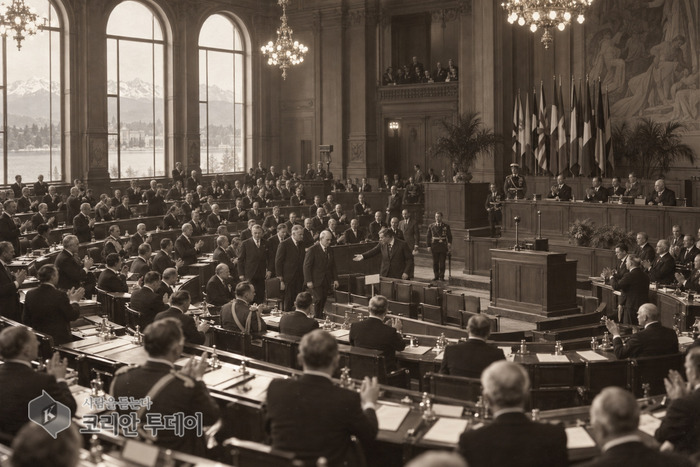
Colonial Parallels
Korea’s struggle in 1926 was not unique. Across the colonized world — British India, still years from Gandhi’s mass campaigns of the 1930s; Ireland, newly independent yet still politically raw; the American-administered Philippines — colonial subjects everywhere navigated the same basic arithmetic: whose labor built whose buildings, and whose courts judged whose words. Mokpo’s factory gate and Gyeongseong’s courtroom were local instances of a global pattern.
Person of the Day
Choi Won-soon, the journalist facing prosecution, was one of many colonial-era writers who tested the limits of what could be printed. His column had already cost him a demanded eight-month sentence; by the time his case wound through appeal to Korea’s High Court in February 1927, the charge would ultimately be dismissed — but not before more than a year of legal uncertainty over a single newspaper column.
Understanding Daily Life
For an ordinary laborer in 1926 Korea, a day’s wage hovered around one won — roughly 100 jeon, according to surviving colonial-era labor records. At the Gwanghwamun construction site, workers ate lunch in whatever shade the scaffolding offered and kept hauling brick until dusk. By one estimate, the destitute made up about 11% of the population in 1926, a share that would nearly triple by the early 1930s.
Century Mirror
A hundred years on, the shape of the fight looks familiar even if the numbers don’t translate directly: workers holding out for months over a wage increase, a press pushing against the limits of what it could say, a government building rising while day laborers underneath it had no security of their own. Mokpo’s eight-month strike ended not in defeat but in a modest raise — a small, hard-won victory that still resonates in labor stories today.
Tomorrow’s Preview
Tomorrow, Stresemann would rise to address the League of Nations Assembly, and in Mokpo, the strike would still have three weeks left to run. Join us again tomorrow evening at 10:10 PM KST.
THE KOREAN TODAY × WIA CODE
이 기사의 WIA Code

WIA Code 스캐너로 비추면 인터넷 없이 발행 사실과 위·변조 여부를 확인할 수 있습니다.
휴대폰 기본 카메라로 찍으면 스캐너 안내 페이지가 열립니다 — 기사 바로 열기
움직이는 코드(스트림) 한 장에 기사 전문(사진 포함)이 담겨 있습니다 — WIA Code 스캐너로 약 144초 비추면 폰에 저장되어 인터넷 없이도 읽을 수 있습니다. Stream.mp4 도 여기서 받습니다.
WIA Code · 코리안투데이






Leave a Reply