
[100 Years Ago Today] September 10, 1926 – As Stresemann Took the Geneva Podium, Gyeongseong Fought Censorship to Save Compatriots
Good evening. As you wind down your day, step back with us exactly one century, to Friday, September 10, 1926. In colonial Korea’s capital of Gyeongseong (present-day Seoul), a newspaper published a quietly devastating appeal it could not fully explain. On the other side of the world, in Geneva, a German foreign minister rose to speak before the assembled nations of the earth. One story was muffled by censorship; the other was broadcast to the world. Both unfolded on the same Friday, a century ago today.
Korea Under Colonial Rule
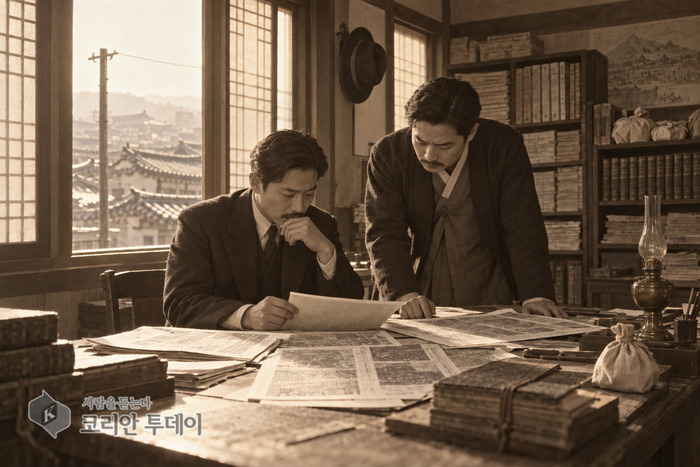
Two days earlier, on September 8, the Dong-a Ilbo — one of colonial Korea’s leading Korean-language newspapers — organized the “Relief Association for Disaster-Stricken Koreans,” a fundraising drive to send relief money to Korean compatriots suffering hardship in Japan. On September 10, the paper ran a piece titled “For Our Compatriots Dying in Catastrophe,” which contained this striking line: “Even the little news that reaches our ears, we must swallow back, clutching our bursting hearts, forbidden by the authorities to speak of it.” Colonial censorship still would not permit the full truth — believed to concern the lingering aftermath of the catastrophe that had struck the Kanto region three years earlier — to be printed in a Korean newspaper.
That same week, at the Gyeongseong District Court, journalist Choi Won-sun and publisher Kim Cheol-jung stood trial over a newspaper column published on August 22. On September 8, prosecutors demanded an eight-month prison term for Choi and a six-month term for Kim. It was hardly an isolated case: only six months earlier, in March, the Dong-a Ilbo itself had been placed under an indefinite suspension order for printing a telegram from Moscow’s international peasant union marking the anniversary of the March First Movement. Newspapers in colonial Korea lived permanently on thin ice.
East Asia in Turmoil
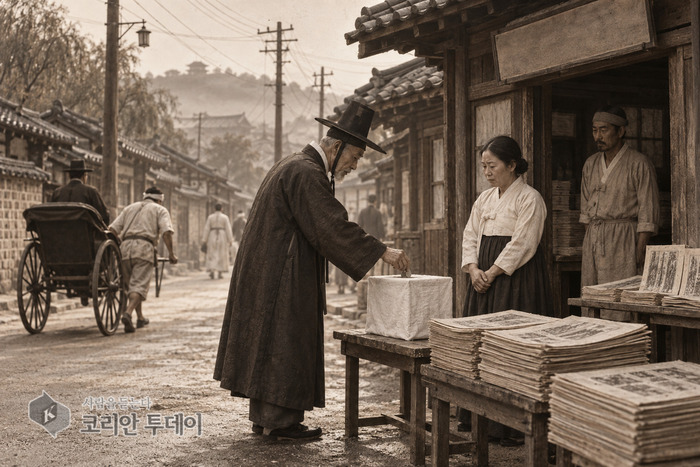
The machinery bearing down on Korea’s press was not unique to Gyeongseong. Across the Government-General’s territory, newspaper branch offices in provincial towns carried the same collection boxes and faced the same legal weapons — the Security Law and the Newspaper Law — used against Choi and Kim. Japan’s own government exercised tight control over what its colonial administration allowed to reach print, whether the subject was disaster relief across the strait or dissent at home. Meanwhile, in China, a fractured republic continued to be pulled between rival warlord factions and a nascent Nationalist movement, a reminder that press freedom and political stability were scarce commodities across much of East Asia that autumn.
The World Stage
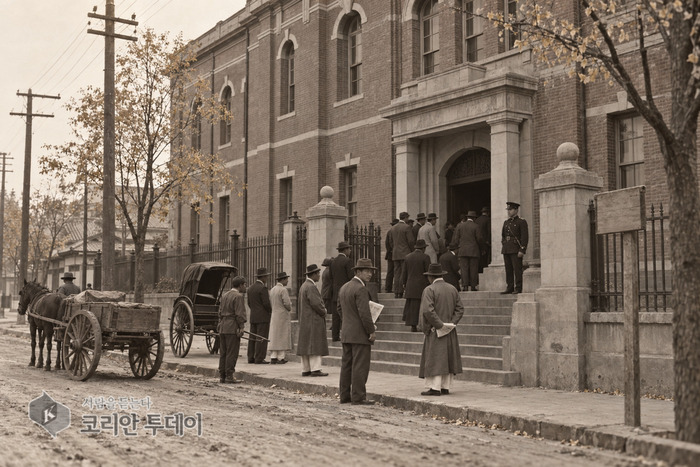
In Geneva, the League of Nations Assembly was in session. Two days after Germany secured a permanent seat on the League’s Council, German Foreign Minister Gustav Stresemann [pronunciation: SHTRAY-zeh-mahn] took the podium on September 10 and declared: “Germany today advances into a company of states, with some of whom she has lived in untroubled friendship for many decades, others of whom were allied against her in the World War.” French delegate Aristide Briand answered in kind, telling the Assembly that nations no longer needed to prove their strength through arms. 💡 *Historical irony: just eight years after the guns of the First World War fell silent, wartime enemies now sat side by side in the same chamber.*
Elsewhere that day, lighter headlines competed for attention: Norma Smallwood of Tulsa, Oklahoma was crowned Miss America, and the United States won the International Lawn Tennis Challenge — the tournament we know today as the Davis Cup.
Colonial Parallels
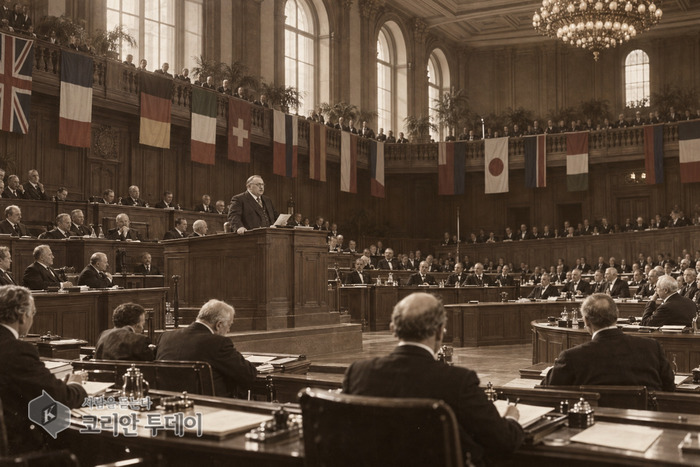
Korea’s press was not alone in fighting censorship under empire. In British India of the 1920s, the colonial government wielded press ordinances and sedition laws strikingly similar to Korea’s Security and Newspaper Laws, jailing editors for printing nationalist sentiment. In Ireland, only a few years removed from its own war of independence, newspapers were still finding their footing in a fragile new Free State, having spent decades under British press restrictions. Across empires, the pattern repeated: a colonized press straining against laws written to keep its own people’s suffering unspoken.
Person of the Day
Choi Won-sun was a Dong-a Ilbo journalist whose brief newspaper column, published on August 22, 1926, was enough to bring the machinery of colonial law down upon him. By September 8, prosecutors were demanding eight months in prison. He would eventually be convicted, appeal, have his sentence reduced, and finally be acquitted on further appeal the following year — but on September 10, 1926, none of that was yet known. He was simply a reporter waiting, like his readers, to see how much the law would let him say.
Understanding Daily Life
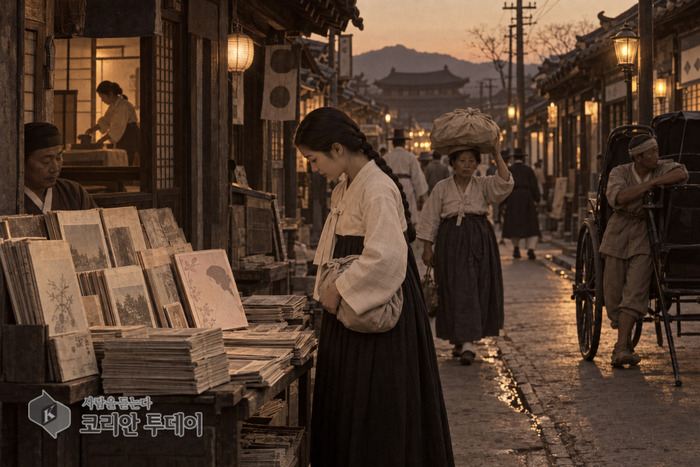
On newsstands that week sat the September issue of Sinyeoseong (“New Woman”) magazine, a periodical covering childcare, hygiene, courtship, marriage, and family life for both schoolgirls and housewives — one of the few Korean publications to address women across such a broad readership. No one yet knew it, but this September issue would be its last before the magazine went on hiatus the following month. As dusk fell over Gyeongseong’s residential lanes, households returned to their evening routines — the rhythmic knock of laundry-beating blocks echoing through alleyways — a quieter counterpoint to the day’s newspaper headlines about censorship and diplomacy.
Century Mirror
| 1926 | 2026 | |
|---|---|---|
| Press | Publication required Government-General approval; censorship silenced “catastrophes that could not be spoken” | Press and publication freedom guaranteed under Article 21 of the Constitution; prior censorship banned |
| Women’s media | A handful of magazines like Sinyeoseong barely survived, folding under financial strain | Countless online platforms carry women’s voices in real time, worldwide |
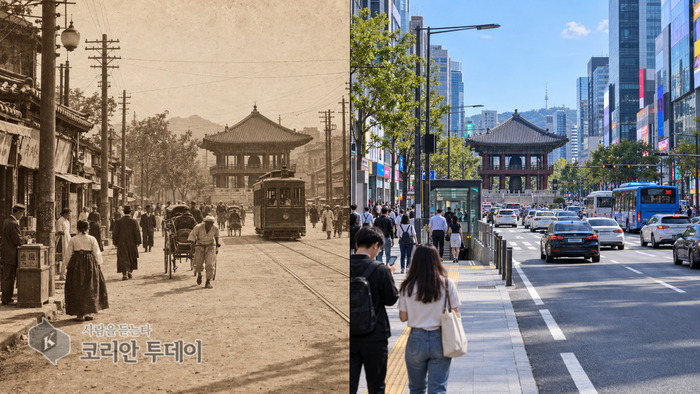
A century ago, a newspaper could print barely half of what it wanted to say. Today, that constraint has been lifted many times over — anyone can speak. Whether every voice deserves the same trust it once took courage to earn, however, remains a very different homework assignment for our own century.
Tomorrow’s Preview
Tomorrow is Saturday, September 11, 1926. What might be playing at the theaters along Jongro, and what will Gyeongseong’s evening streets have to say? We’ll turn another page of the century-old newspaper tomorrow. Good night.
THE KOREAN TODAY × WIA CODE
이 기사의 WIA Code

WIA Code 스캐너로 비추면 인터넷 없이 발행 사실과 위·변조 여부를 확인할 수 있습니다.
휴대폰 기본 카메라로 찍으면 스캐너 안내 페이지가 열립니다 — 기사 바로 열기
움직이는 코드(스트림) 한 장에 기사 전문(사진 포함)이 담겨 있습니다 — WIA Code 스캐너로 약 153초 비추면 폰에 저장되어 인터넷 없이도 읽을 수 있습니다. Stream.mp4 도 여기서 받습니다.
WIA Code · 코리안투데이






Leave a Reply