
[100 Years Ago Today] September 15, 1926
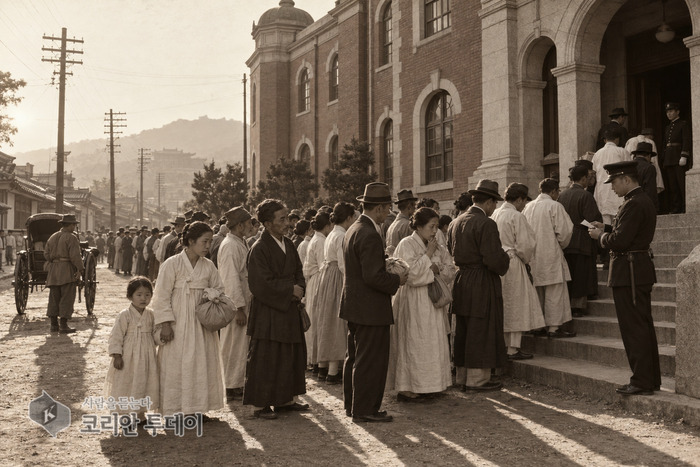
As you wind down your day, step back exactly one century, to a Wednesday morning in Japanese-occupied Korea. Before dawn on September 15, 1926, a crowd already lined the street outside the Gyeongseong District Court. Inside, the trial of the Korean Communist Party case entered its third day. A few blocks away, near Gwanghwamun gate, construction crews raced to finish the colonial Government-General’s new headquarters — sixteen days remained before its dedication.
Korea Under Colonial Rule
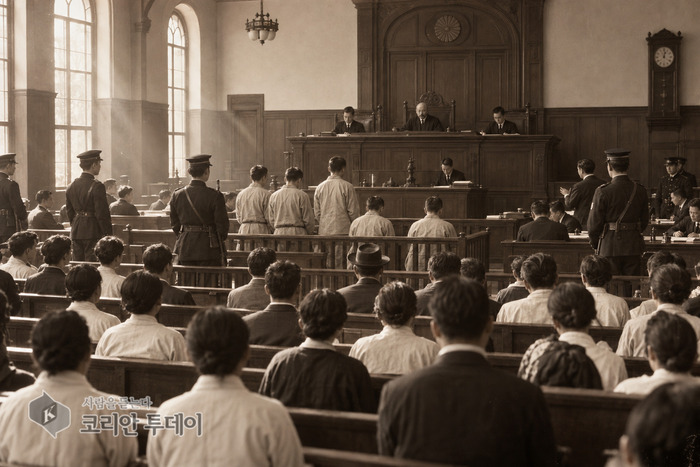
The courtroom was packed again. This was the trial colonial authorities called the Korean Communist Party Incident — part of what history records as the First and Second Korean Communist Party Cases. Three months earlier, the funeral of Emperor Sunjong had become the spark for the June Tenth Movement, a wave of protest against Japanese rule. In the crackdown that followed, nearly a hundred members of the Hwayohoe-affiliated Korean Communist Party were arrested under the Peace Preservation Law, a statute written specifically to criminalize organized political dissent.
Families and comrades lined up before dawn outside the courthouse, hoping for one of the limited admission tickets police distributed to control the crowd. Defense attorneys argued the charges were disproportionate. The court proceeded regardless.
Even the press wasn’t safe. Weeks earlier, a single newspaper column in the Chosun Ilbo had triggered criminal charges against both its writer and its publisher, under the colonial Newspaper Law and Security Law. As of this Wednesday, both men were still awaiting sentencing.
East Asia in Turmoil
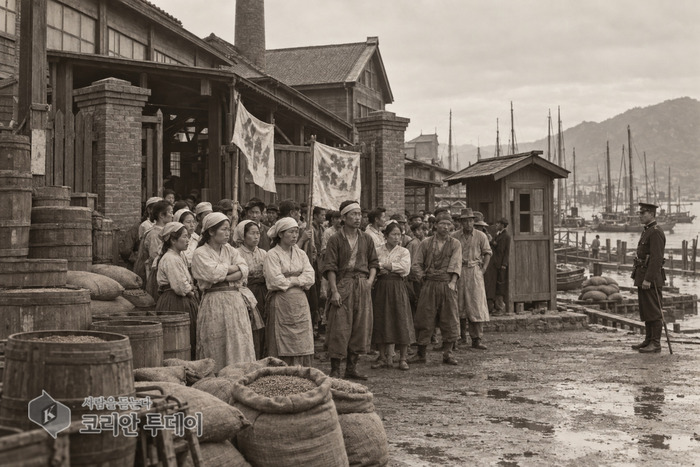
The crackdown reached far beyond Seoul. Hwayohoe-affiliated organizers had chapters across the peninsula, and the arrests rippled outward. In Mokpo, on Korea’s southwestern coast, oil-factory workers remained on strike — a labor dispute stretching past its eighth month since January. Behind the scenes, a struggling newspaper, the Sidae Ilbo, was quietly changing ownership amid financial collapse, a shift that would soon reshape Korea’s press landscape.
The World Stage
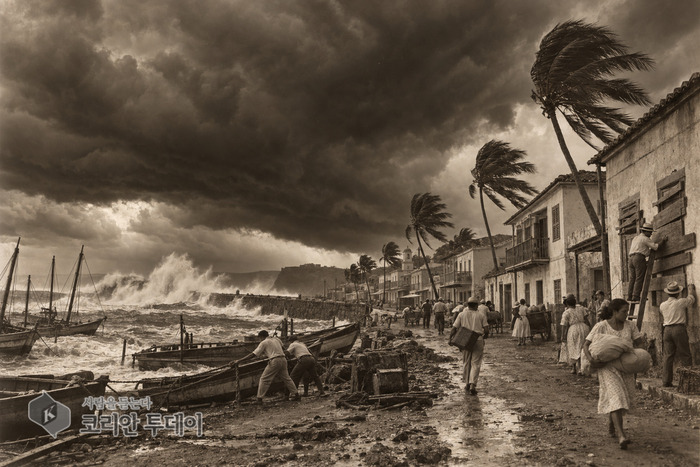
Across the Pacific and the Atlantic, the world kept moving. Days earlier, Germany had been admitted as a permanent member of the League of Nations Council, reshaping postwar European diplomacy. In Italy, news was still spreading of an assassination attempt on Benito Mussolini four days prior. And in the Caribbean, a massive hurricane — later named the Great Miami Hurricane — passed Puerto Rico this very day, its course bending toward the Bahamas, three days before it would devastate Miami, Florida.
Colonial Parallels
Korea’s experience in 1926 echoed across other colonized nations. In British India, the Indian National Congress pressed for self-rule under laws that, much like Korea’s Peace Preservation Law, criminalized organized dissent. In Ireland, still raw from the 1922 Anglo-Irish Treaty and civil war, the press likewise operated under wartime-era restrictions. In the Philippines, under American administration, nationalist leaders faced their own versions of surveillance and selective prosecution. Colonial rule, whatever flag it flew, relied on the same toolkit: censorship laws, show trials, and the criminalization of assembly.
Person of the Day
Among the nearly one hundred defendants that week were young intellectuals barely out of their teens — students who had joined study circles reading forbidden political texts in secret, only to face years in prison under a law written explicitly to suppress such ideas. Their names rarely survive in the record with dignity intact; colonial court documents reduced them to case numbers.
Understanding Daily Life
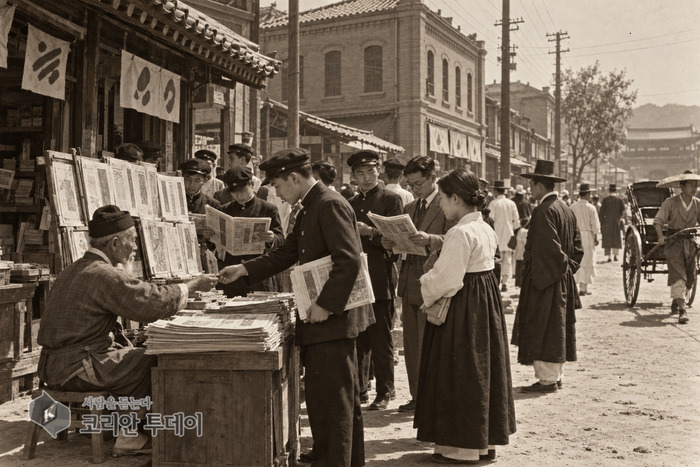
On an ordinary Wednesday, Seoul’s schools opened as always, though the mood inside was anything but ordinary — some students recognized former classmates among the defendants. By midday, young readers crowded Jongno’s bookshops and newsstands, queuing for papers carrying trial coverage. As dusk fell, lawyers and family members walked home from the courthouse in silence, already bracing for the next day’s session.
Century Mirror
A century ago, a single newspaper column could land a writer in prison, and mere membership in a study group could mean years behind bars. Today, freedom of the press and freedom of assembly are constitutional guarantees, not privileges granted at the discretion of a colonial police force. The courtroom doors that young defendants walked through in 1926 — watched, ticketed, and controlled — stand in stark contrast to today’s open, public trials.
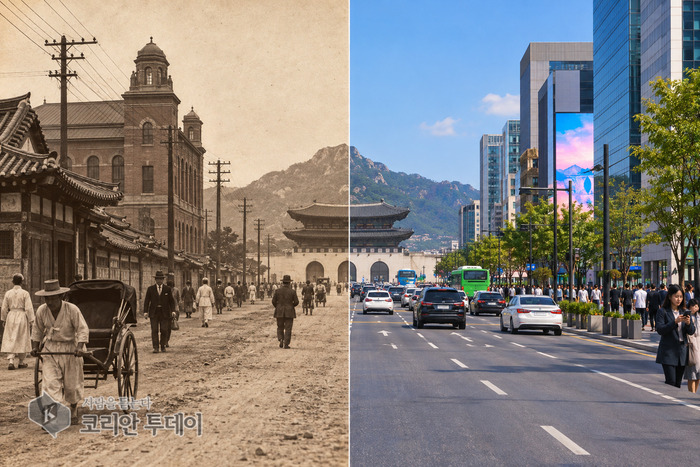
Tomorrow, September 16, the trial resumes, and the countdown to the Government-General building drops to fifteen days. Join us again tomorrow evening at 10:10 PM KST.
THE KOREAN TODAY × WIA CODE
이 기사의 WIA Code

WIA Code 스캐너로 비추면 인터넷 없이 발행 사실과 위·변조 여부를 확인할 수 있습니다.
휴대폰 기본 카메라로 찍으면 스캐너 안내 페이지가 열립니다 — 기사 바로 열기
움직이는 코드(스트림) 한 장에 기사 전문(사진 포함)이 담겨 있습니다 — WIA Code 스캐너로 약 151초 비추면 폰에 저장되어 인터넷 없이도 읽을 수 있습니다. Stream.mp4 도 여기서 받습니다.
WIA Code · 코리안투데이






Leave a Reply