
Korea Under Colonial Rule
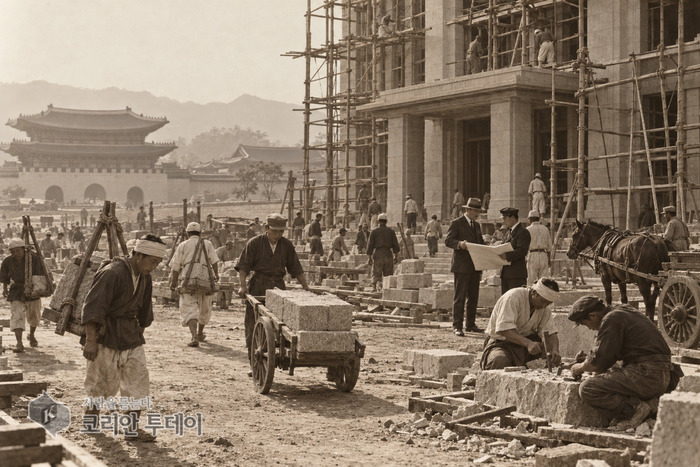
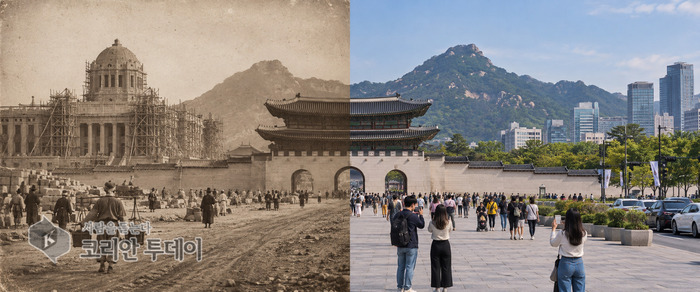
Inside Gwanghwamun Gate, construction crews were still finishing the stone facade of the Government-General’s new headquarters. The building’s frame had gone up the previous December, and offices had already opened there on January 4 — but the formal inauguration ceremony was set for October 1. That made September 18 exactly thirteen days out. Hammers rang out behind Geunjeongjeon Hall late into the afternoon.
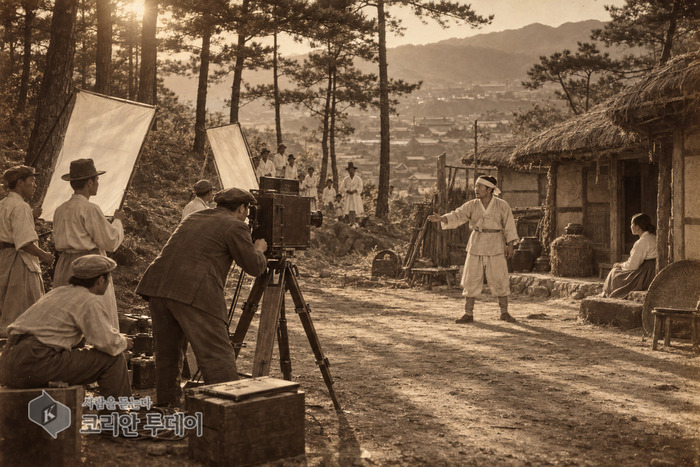
Across town, on a hillside in Anam-dong, an entirely different kind of construction was underway. Chosun Kinema Productions, financing the shoot with 1,200 won, was four months into filming a movie that would become a legend of Korean cinema: Arirang. Na Woon-gyu wrote it, starred in it, and directed it — but the credited director listed on the film was a Japanese name, Sumori Shuichi, a workaround to slip past colonial censors. The premiere was set for the same day as the capitol’s inauguration: October 1, at Dansungsa Theater in Jongno.
Ten days earlier, on September 8, the Gyeongseong District Court had handed down a verdict in the Chosun Ilbo censorship case. A column titled “Idle Talk,” published August 22, had drawn charges under the Security Ordinance; its writer, Choi Won-soon, received eight months in prison, while the paper’s editor and publisher, Kim Chul-joong, was fined. A heavy price for a single column.
East Asia in Turmoil
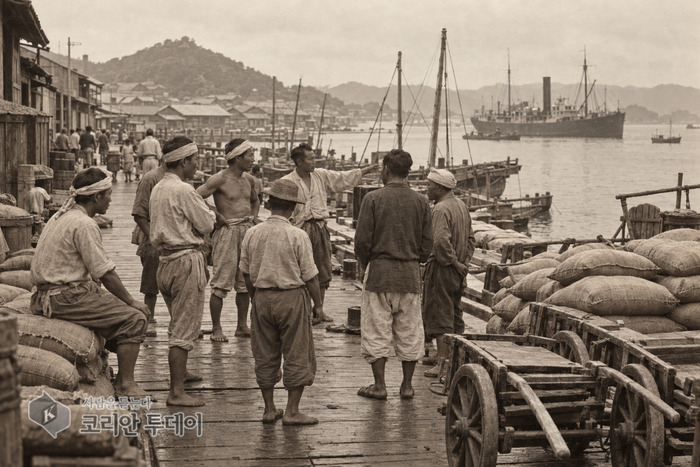
Beyond the peninsula, southern Korean workers were still on strike: dockworkers in Mokpo had been out for eight months, their wage demands unmet since spring. In a Gyeongseong preliminary hearing room, students arrested for shouting for independence during the June 10 funeral procession for the last emperor were still being questioned — eleven of them indicted since June 25, with no formal trial date yet set.
In China, Chiang Kai-shek’s National Revolutionary Army was in the middle of its Northern Expedition. Hanyang had fallen on September 6, Hankou the next day, and only Wuchang still held out under siege — the last piece of the “Wuhan tri-cities” still to fall.
The World Stage
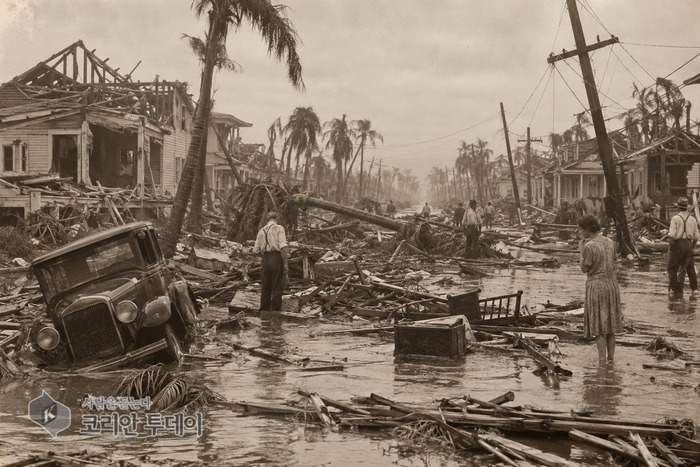
The day’s biggest headline came from Florida. Before dawn on September 18, a major hurricane made landfall near Miami with winds estimated at 131 to 155 miles per hour. Around 6 AM, the storm’s eye passed directly over downtown, and the wind fell calm for roughly 35 minutes — long enough that unprepared residents, having never experienced a hurricane’s eye, stepped outside, thinking it was over. By 7 AM the second half of the storm struck from the opposite direction, driving a storm surge onto Miami Beach. When levees around Lake Okeechobee failed, the death toll climbed further. The American Red Cross ultimately counted 372 dead, more than 6,000 injured, and 25,000 people left homeless.
In Europe, the Locarno Treaties had entered into force just four days earlier, on September 14, guaranteeing Germany’s western borders. Germany had joined the League of Nations with a permanent Council seat on September 8, and just the day before, French Foreign Minister Aristide Briand and his German counterpart Gustav Stresemann had met informally in Thoiry, Switzerland — two former enemies edging toward reconciliation.
Colonial Parallels
Gyeongseong’s counted-down inauguration was, in its way, a familiar colonial ritual. That same autumn, British India was gearing up for Central Legislative Assembly elections under a limited franchise designed by London, not Delhi. The Irish Free State, four years into self-government after centuries of British rule, was still negotiating what full sovereignty would look like. In the Philippines, under an American colonial governor-general, a local legislature debated laws that Washington could still veto. From Seoul to Dublin to Manila, 1926 was a year of colonized peoples building institutions whose final authority still sat somewhere else.
Person of the Day: Na Woon-gyu
On this Saturday, the man who would become the most important figure in early Korean cinema was still an anonymous name to Seoul audiences. Na Woon-gyu was writing, acting in, and directing Arirang simultaneously, while a Japanese name fronted the credits to get the film past the censor’s desk. Within two weeks, when the film opened at Dansungsa, that anonymity would end — Arirang is remembered today as the film that gave colonial-era Korean cinema its own voice.
Understanding Daily Life
Saturday evening in Gyeongseong had its own rhythm. Construction laborers at the capitol site collected their day’s wages and scattered toward home, hands cracked from a day of stone-cutting. On the Anam-dong hillside, the film crew kept shooting until the light faded — film stock was precious, so every take mattered. Along Jongno, bookshops and theater fronts drew Saturday strollers; newsboys hawked evening editions through the alleys; a gramophone hummed faintly from a café. Trams rang their bells through streets full of people heading home after a week’s work.
Century Mirror
A century later, the stone building rising behind Gwanghwamun that Saturday would go on to serve as South Korea’s central government offices, then a national museum — before being demolished in 1995. The silent film shot on a hillside with a borrowed director’s name, by contrast, opened a door that never closed: today, Korean film and television reach global audiences instantly, streamed the same day worldwide. The building didn’t survive the century. The story on the film did.
THE KOREAN TODAY × WIA CODE
이 기사의 WIA Code

WIA Code 스캐너로 비추면 인터넷 없이 발행 사실과 위·변조 여부를 확인할 수 있습니다.
휴대폰 기본 카메라로 찍으면 스캐너 안내 페이지가 열립니다 — 기사 바로 열기
움직이는 코드(스트림) 한 장에 기사 전문(사진 포함)이 담겨 있습니다 — WIA Code 스캐너로 약 133초 비추면 폰에 저장되어 인터넷 없이도 읽을 수 있습니다. Stream.mp4 도 여기서 받습니다.
WIA Code · 코리안투데이






Leave a Reply