
Thursday, September 23, 1926 · Gyeongseong (Seoul), Colonial Korea
Hook Opening
Good evening. Two days after Chuseok, Korea’s harvest moon festival, the streets of Gyeongseong still carried the last warmth of summer into an early autumn evening. Two stories were running side by side in the Korean-language press that week: a colonial government building racing toward completion, and a strike, eight months old, in a port city four hundred kilometers to the south. Neither story would make headlines in the empires that ruled the world that week — but both tell us something the bigger headlines never could.
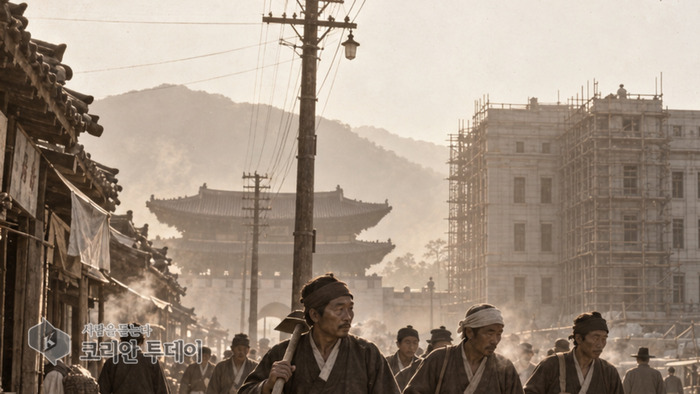
Korea Under Colonial Rule
In Mokpo, a port city on Korea’s southwestern coast, roughly 170 workers at oil-pressing factories — plants that crushed soybeans and cottonseed into oil — had walked out on January 15, 1926. Their demands were plain: cut the workday from twelve hours to ten, and raise wages. What began as a small band calling itself the “Resolution Corps” grew into a broader network, the “Peddlers’ Corps,” drawing support from labor and civic groups across the region.
By September 23, that strike had run for eight months — an extraordinary length for a labor dispute in 1920s colonial Korea. Company management alternated between concessions and pressure; police arrested organizers one by one. Each arrest thinned the ranks further, and some workers drifted away under the strain. Yet the strike had not fully collapsed. Later labor historians would point to it as one of the longest and most organizationally sophisticated Korean strikes of the decade — notable not because it won outright, but because it endured.
Meanwhile, in Seoul’s district court, hearings continued in the case against members of the Korean Communist Party, whose organization had been uncovered earlier that year, leading to roughly a hundred arrests nationwide. Courtroom traffic stayed heavy through the autumn.
A note on sourcing: the exact front-page layout of that day’s newspapers has not been independently verified in this research pass. The above is reconstructed from secondary historical sources — labor history archives, the Mokpo Cultural Center, and Korea’s National Institute of Korean History database.
By September 23, that strike had run for eight months — an extraordinary length for a labor dispute in 1920s colonial Korea. Company management alternated between concessions and pressure; police arrested organizers one by one. Each arrest thinned the ranks further, and some workers drifted away under the strain. Yet the strike had not fully collapsed. Later labor historians would point to it as one of the longest and most organizationally sophisticated Korean strikes of the decade — notable not because it won outright, but because it endured.
Meanwhile, in Seoul’s district court, hearings continued in the case against members of the Korean Communist Party, whose organization had been uncovered earlier that year, leading to roughly a hundred arrests nationwide. Courtroom traffic stayed heavy through the autumn.
A note on sourcing: the exact front-page layout of that day’s newspapers has not been independently verified in this research pass. The above is reconstructed from secondary historical sources — labor history archives, the Mokpo Cultural Center, and Korea’s National Institute of Korean History database.
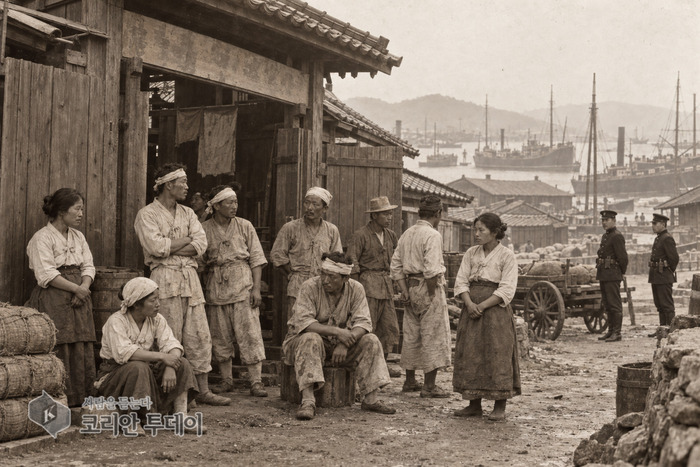
East Asia in Turmoil
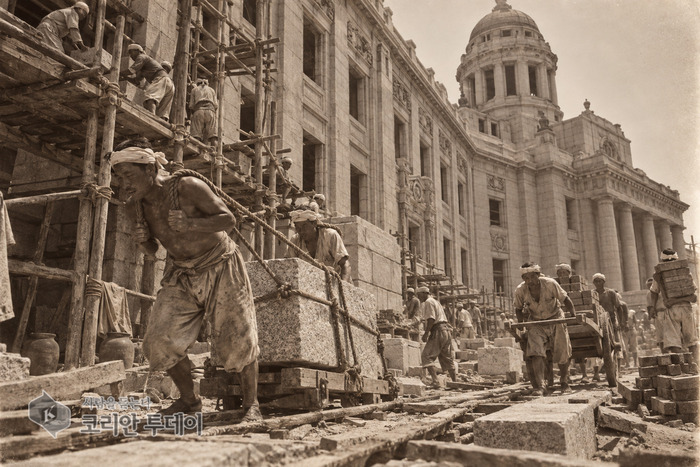
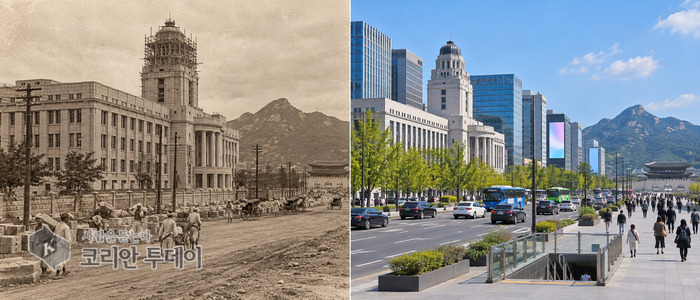
Eight days remained before the completion ceremony of the Government-General’s new headquarters in Seoul — a four-story granite-and-marble building topped by a 50-meter tower, under construction since 1916. The government had already been operating out of the building since January; the formal ceremony was scheduled for October 1, to coincide with the anniversary of the start of colonial administration.
The symbolism was hard to miss: as the machinery of colonial rule neared its architectural culmination in the capital, workers in Mokpo were still fighting, eight months in, for a ten-hour day. Day laborers hauling brick and stone on the construction site itself worked for wages no more secure than the Mokpo strikers’ — when the building was finished, so was their livelihood.
Two hundred kilometers to the west, China’s Northern Expedition was also at a turning point. Nationalist forces under Chiang Kai-shek had seized Hankou and Hanyang in early September, driving toward the strategic Wuhan tri-cities. But on September 21 — just two days earlier — warlord Sun Chuanfang’s reinforcements had reached Nanjing, stalling the Nationalist advance. The outcome of the campaign for central China remained very much undecided.
The symbolism was hard to miss: as the machinery of colonial rule neared its architectural culmination in the capital, workers in Mokpo were still fighting, eight months in, for a ten-hour day. Day laborers hauling brick and stone on the construction site itself worked for wages no more secure than the Mokpo strikers’ — when the building was finished, so was their livelihood.
Two hundred kilometers to the west, China’s Northern Expedition was also at a turning point. Nationalist forces under Chiang Kai-shek had seized Hankou and Hanyang in early September, driving toward the strategic Wuhan tri-cities. But on September 21 — just two days earlier — warlord Sun Chuanfang’s reinforcements had reached Nanjing, stalling the Nationalist advance. The outcome of the campaign for central China remained very much undecided.
The World Stage
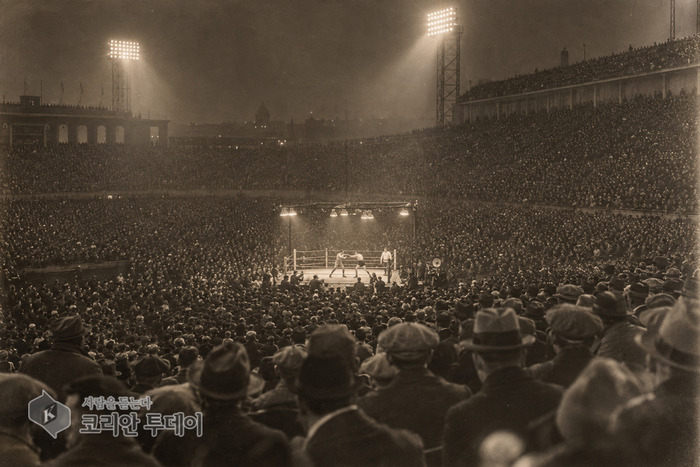
Across the Pacific, in Philadelphia, the evening of September 23 brought one of the most-discussed sporting upsets of the decade. More than 132,000 spectators packed Sesquicentennial Stadium to watch Jack Dempsey — the reigning heavyweight boxing champion, fighting for the first time in over three years — lose his title to challenger Gene Tunney. American papers would call it the “Upset of the Decade.” It was, by the standards of the era, one of the largest live sporting crowds ever assembled, and it dominated wire coverage that reached even colonial newspapers in Asia within days.
It is a small irony of history that the same day John Coltrane, who would grow up to reshape 20th-century jazz, was born in Hamlet, North Carolina — a birth that made no headlines anywhere, colonial or otherwise, in 1926.
It is a small irony of history that the same day John Coltrane, who would grow up to reshape 20th-century jazz, was born in Hamlet, North Carolina — a birth that made no headlines anywhere, colonial or otherwise, in 1926.
Colonial Parallels
Korea’s labor unrest in 1926 was not an isolated phenomenon. In British India that same year, textile and railway workers were organizing under the newly formed All India Trade Union Congress, testing the same basic demand — shorter hours, higher wages — against a colonial administration far larger than Japan’s in Korea. In the Philippines, under American rule, sugar and dock workers in Manila and the provinces pressed similar claims through a labor movement that colonial authorities monitored closely but rarely crushed outright, wary of American domestic scrutiny.
What set the Mokpo strike apart was its endurance under a colonial police apparatus with comparatively fewer restraints on direct intervention — arrests of strike leaders were swift, and there was no metropolitan public opinion back in Japan pressuring restraint, the way British newspapers occasionally checked colonial excess in India. Eight months of survival, under those conditions, was itself a form of resistance.
What set the Mokpo strike apart was its endurance under a colonial police apparatus with comparatively fewer restraints on direct intervention — arrests of strike leaders were swift, and there was no metropolitan public opinion back in Japan pressuring restraint, the way British newspapers occasionally checked colonial excess in India. Eight months of survival, under those conditions, was itself a form of resistance.
Person of the Day
No single striking worker’s name survives in the sources reviewed for this piece — a gap that is itself telling about whose stories colonial-era archives preserved and whose they did not. So today’s “person of the day” is necessarily a composite: a Mokpo oil-press worker, one of the roughly 170 who walked out in January and, eight months later, was still choosing — day after day — not to go back. They would have started before dawn on a normal working day, hauling sacks of soybean or cottonseed into a press house that ran on human muscle as much as machinery, twelve hours at a stretch, for a wage that historians of the period generally describe as barely subsistence. By September, many of that worker’s colleagues had already been arrested or had drifted back to work out of necessity. Whoever remained on strike lines that Thursday was, by any measure, someone with little left to lose and a great deal of resolve.
Understanding Daily Life
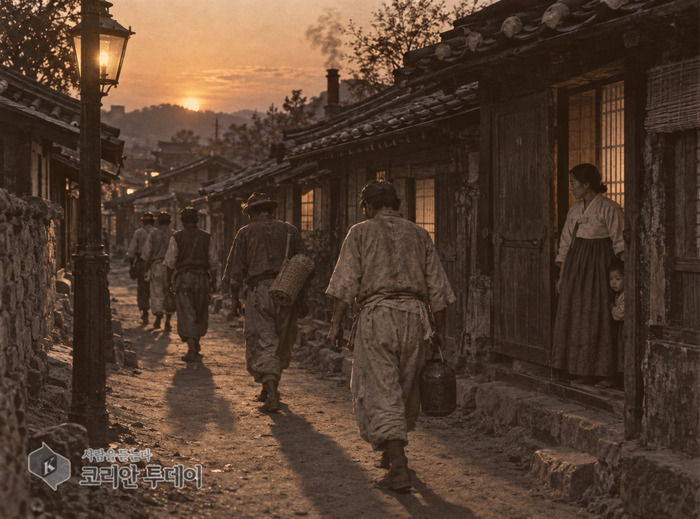
For most residents of Gyeongseong on an ordinary Thursday in late September 1926, the day began before sunrise. Laborers on the Government-General construction site were among the first to move through the streets, heading toward Gwanghwamun to put in a day’s work on a building whose finish date — and their own last paycheck from it — was now visibly approaching. Through the day, brick and granite moved hand to hand up scaffolding that would soon come down for good.
By dusk, workers made their way home through narrow lanes to rented rooms, carrying whatever news had traveled up from the south that day. Word of the Mokpo strike’s eighth month would have reached at least some of them — not as breaking news, but as a familiar, ongoing story, the kind that gets discussed in passing rather than shouted about.
By dusk, workers made their way home through narrow lanes to rented rooms, carrying whatever news had traveled up from the south that day. Word of the Mokpo strike’s eighth month would have reached at least some of them — not as breaking news, but as a familiar, ongoing story, the kind that gets discussed in passing rather than shouted about.
Century Mirror
| Category | Korea, 1926 | Korea, 2026 |
|---|---|---|
| Standard workday | 12 hrs → demand for 10 hrs (Mokpo oil-press workers) | 52-hour workweek (statutory) |
| Worker organization | Informal “corps” — grassroots, ad hoc | Industry-wide unions, national federations |
| Means of leverage | Strike and public appeal | Collective bargaining, labor commissions |
What Mokpo’s workers held onto for eight months, at real personal cost, was a number that today looks unremarkable: ten hours. The strike did not end in outright victory. But the ground it held did not simply vanish — it became part of the foundation the next generation of Korean labor organizing stood on.
Tomorrow’s Preview
Tomorrow, the Government-General’s new headquarters will be seven days from its completion ceremony. The Mokpo strike, and the courtroom proceedings in Seoul, will still be unresolved. Join us again tomorrow evening at 10:10 PM KST.
THE KOREAN TODAY × WIA CODE
이 기사의 WIA Code

WIA Code 스캐너로 비추면 인터넷 없이 발행 사실과 위·변조 여부를 확인할 수 있습니다.
휴대폰 기본 카메라로 찍으면 스캐너 안내 페이지가 열립니다 — 기사 바로 열기
📱 스트림 코드 보기
움직이는 코드(스트림) 한 장에 기사 전문(사진 포함)이 담겨 있습니다 — WIA Code 스캐너로 약 135초 비추면 폰에 저장되어 인터넷 없이도 읽을 수 있습니다. Stream.mp4 도 여기서 받습니다.
WIA Code · 코리안투데이






Leave a Reply