
EVENING EDITION · SEPTEMBER 25, 1926 (SATURDAY)
Six Days Before the New Building
Good evening. It’s 10:10 PM KST, September 25, 1926 — a Saturday in colonial Seoul, then called Gyeongseong. As the city wound down its week, the new Government-General building rising beside Gyeongbokgung Palace stood six days from completion. Inside the Gyeongseong District Court, two heavy cases — one political, one about a newspaper column — were still working their way toward verdicts.
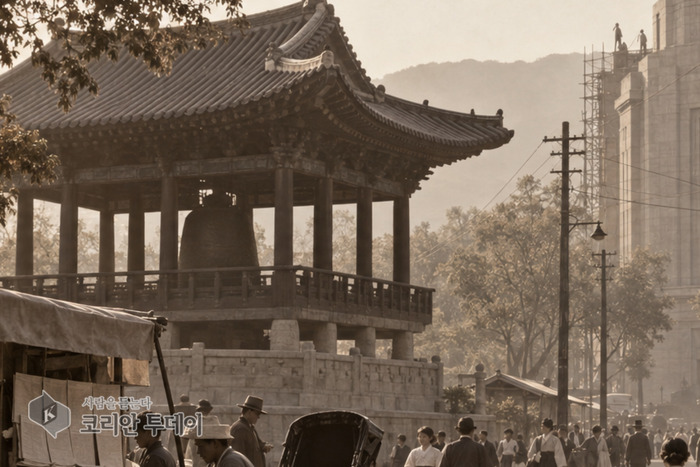
Korea Under Colonial Rule
The court’s docket that autumn carried two cases that captured the mood of the colony. The first involved members of the Korean Communist Party and the Koryo Communist Youth League. Arrests that began in Sinuiju in November of the previous year continued through additional roundups on June 6 and September 8, 1926; the preliminary examination closed on August 31, and a related hearing was documented on September 13. The second case concerned the Dong-A Ilbo newspaper. A column titled “Musings” (“Hoengseolsuseol”), published August 22, led to charges against its writer, Choi Won-sun, under the Security Law, and against its editor-publisher, Kim Cheol-jung, under the Newspaper Law. At the September 8 hearing, prosecutors sought an eight-month prison term for Choi and a six-month term for Kim. Neither case had reached a final verdict by this date — sentencing details remain to be confirmed in the historical record.
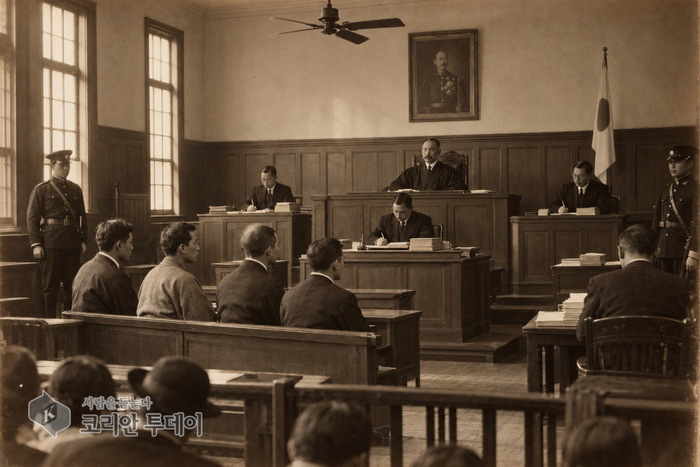
East Asia in Turmoil
Outside the capital, hardship continued in the provinces. In Mokpo, on the southwestern coast, workers at oil-pressing factories remained on strike — a dispute that had begun in January and, as of a September 9 report, had already stretched eight months; by late September it was entering its ninth. Workers demanded higher wages and shorter hours, organizing a “death-defying squad” to resist the company’s attempt to bring in replacement labor from outside the region. While Seoul’s courts weighed matters of ideology, workers hundreds of miles south were fighting over their daily livelihood.
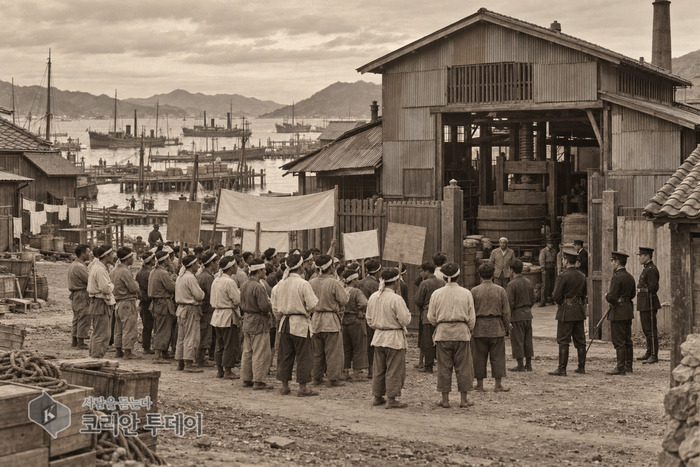
The World Stage
Half a world away, the League of Nations, meeting in Geneva, opened the Slavery Convention for signature on this very day — an international agreement to abolish slavery and the slave trade in all their forms. In the United States, Henry Ford formally announced the five-day, eight-hour work week at the Ford Motor Company, keeping wages unchanged while trimming hours — a policy he would later frame as opening “the way to still greater prosperity.” And in China, the National Revolutionary Army under Chiang Kai-shek, having taken Hanyang and Hankou earlier that month, continued its siege of Wuchang as part of the Northern Expedition — a campaign entangled with foreign gunboats on the Yangtze.
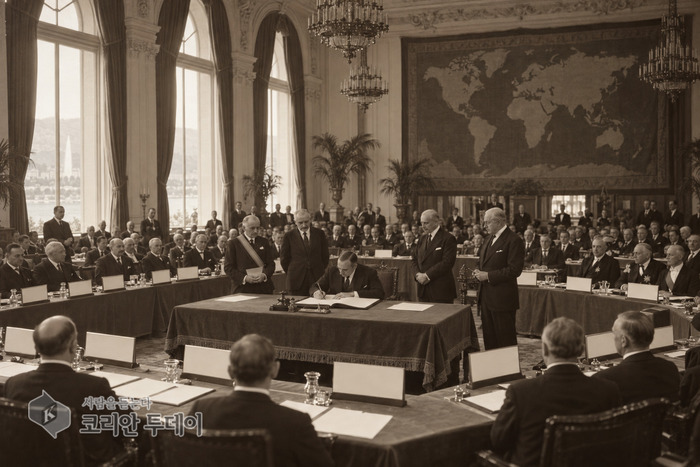
Colonial Parallels
The pattern in Mokpo — workers organizing self-defense squads against imported strikebreakers — echoed labor struggles unfolding across the colonized world in the 1920s, from British India’s textile mills to Ireland’s post-independence labor unrest. What set colonial Korea apart was the layering of two forms of control at once: the courtroom targeting political dissent, and the factory floor suppressing economic demands, often under the same colonial administration.
Person of the Day
Choi Won-sun, the Dong-A Ilbo columnist facing prosecution that week, represented a recurring figure of the era: the Korean-language journalist who tested the limits of what colonial censors would tolerate. His case, still pending as of September 25, was one of many where a single newspaper column became a legal battle over what could and could not be said in print.
Understanding Daily Life
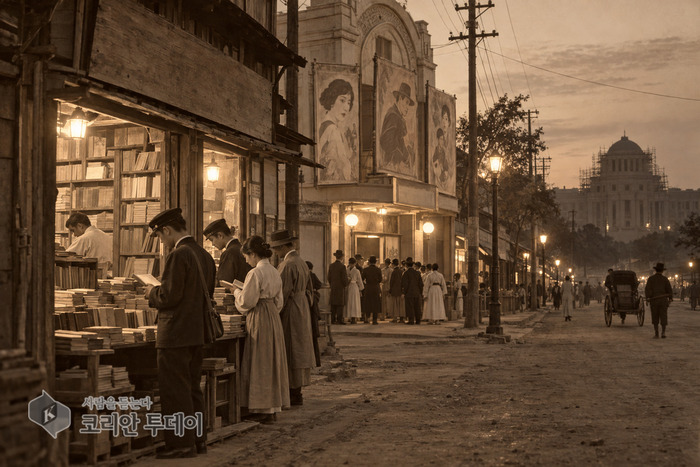
On a Saturday evening, ordinary life in Gyeongseong carried on. Students browsed the bookshops along Jongno; theatergoers filled the district’s cinemas and playhouses for the weekend. Toward Gwanghwamun, the granite mass of the new Government-General building took shape against the dusk, its formal dedication ceremony planned for the following week, timed to the anniversary of colonial rule. Most residents knew the new building only through newspaper reports — a monument rising in their midst that they would enter, if at all, as visitors to power rather than participants in it.
Century Mirror
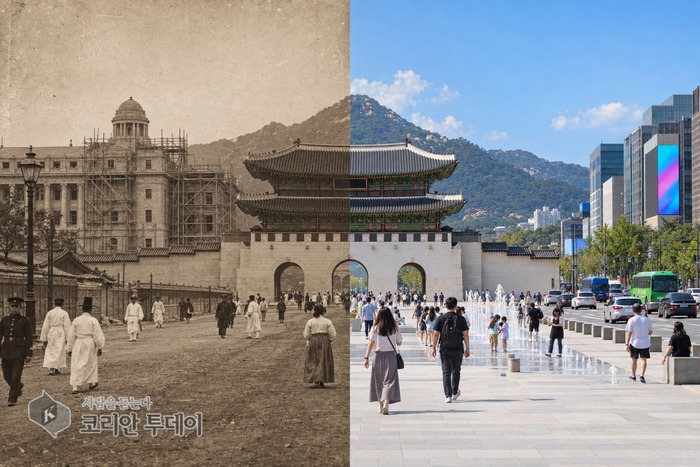
A century later, the ground where that building once stood has been returned to the public as Gwanghwamun Square. The five-day work week Ford announced that day is now standard across much of the world; the slavery convention signed that day laid groundwork for international human rights law still being refined. Buildings rise and fall, but the daily rhythms of work, rest, and reading in the same streets persist.
Tomorrow’s Preview
Tomorrow, September 26 — a Sunday — the countdown to the new building’s completion drops to five days. The court cases, the Mokpo strike, and the news from Geneva and Wuchang all continue. 🕙 Until then, good night from a century ago.
THE KOREAN TODAY × WIA CODE
이 기사의 WIA Code

WIA Code 스캐너로 비추면 인터넷 없이 발행 사실과 위·변조 여부를 확인할 수 있습니다.
휴대폰 기본 카메라로 찍으면 스캐너 안내 페이지가 열립니다 — 기사 바로 열기
움직이는 코드(스트림) 한 장에 기사 전문(사진 포함)이 담겨 있습니다 — WIA Code 스캐너로 약 140초 비추면 폰에 저장되어 인터넷 없이도 읽을 수 있습니다. Stream.mp4 도 여기서 받습니다.
WIA Code · 코리안투데이






Leave a Reply