
September 28, 1926, a Tuesday, and by the lunar calendar the 22nd day of the eighth month. A week had passed since Chuseok, and Gyeongseong had settled back into its weekday rhythm. Only three days remained before the grand dedication of the Government-General’s new headquarters, scheduled for October 1. The streets carried a current of anticipation. Inside the Gyeongseong District Court, however, the mood was heavier — two unresolved cases, one tied to the outlawed Korean Communist Party and one to a newspaper column, still occupied the docket.
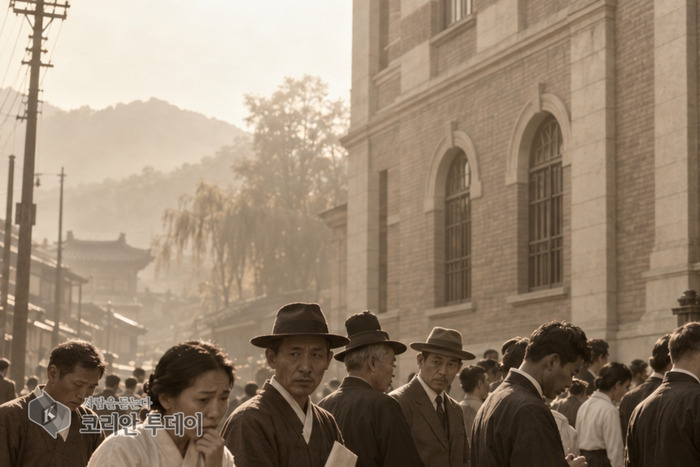
Korea Under Colonial Rule
At the Gyeongseong District Court that day, the preliminary hearing into June’s Korean Communist Party roundup continued without resolution. Ahead of the June Tenth Movement — the mass protest staged during the funeral procession of the last Korean emperor, Sunjong — colonial police had uncovered the plan in advance and arrested more than one hundred people, including party leader Kang Dal-yeong. Three months later, on this Tuesday, the case known as the “Second Korean Communist Party Incident” still had not moved from preliminary hearing to formal trial. Newspapers reported on the case’s progress in brief whenever new developments surfaced, but no trial date had yet been set.
A second case sat on the same docket. A column titled “Hoengseolsuseol” (Rambling Talk), published in the Dong-a Ilbo on August 22, had drawn prosecution: its writer, Choi Won-sun, was charged under the Peace Preservation Law, while the paper’s editor and publisher, Kim Cheol-jung, was charged under the Newspaper Law. At a September 8 hearing, prosecutors sought an eight-month prison term for Choi and a six-month term for Kim. For Kim, this was a second brush with the law that year — the Dong-a Ilbo had already been suspended indefinitely in March, its legal fallout still unresolved when this new charge arrived. No record confirms that a verdict had been handed down by September 28.
Neither case advanced that day, but newspaper court columns kept both squarely in view, a reminder that the machinery of colonial justice moved slowly and deliberately.
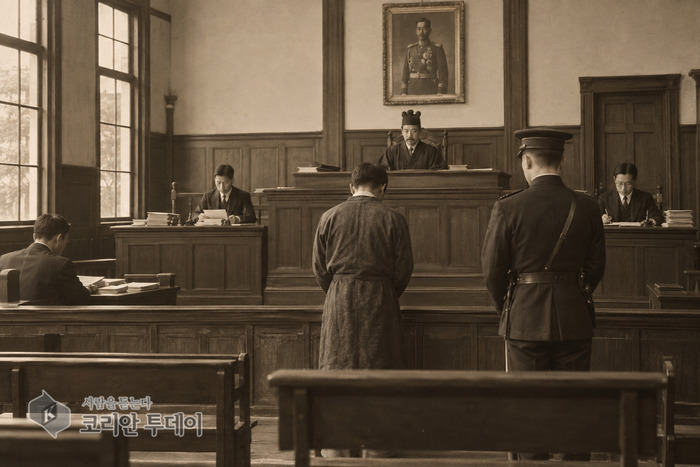
East Asia in Turmoil
The shadow of the Communist Party case reached well beyond Gyeongseong. In the months after the June Tenth Movement, student strikes had spread through schools in Sunchang, Gunsan, Ulsan, Pyongyang, and Hongseong, and that unrest had not fully subsided by late September. Youth groups and students in the provinces followed news of the Gyeongseong hearings closely, watching for any sign of when the preliminary hearing might finally conclude.
Meanwhile, preparations for the new Government-General building’s dedication, now three days away, moved steadily forward. Built over nearly a decade on the grounds of Gyeongbokgung Palace, the new headquarters was set to open on October 1, the anniversary of the start of Japanese colonial administration. Notices about the ceremony and its accompanying celebrations circulated through the city. In the same city, in the same week, the completion of a building that symbolized colonial rule stood alongside the ongoing prosecution of those who had resisted it.
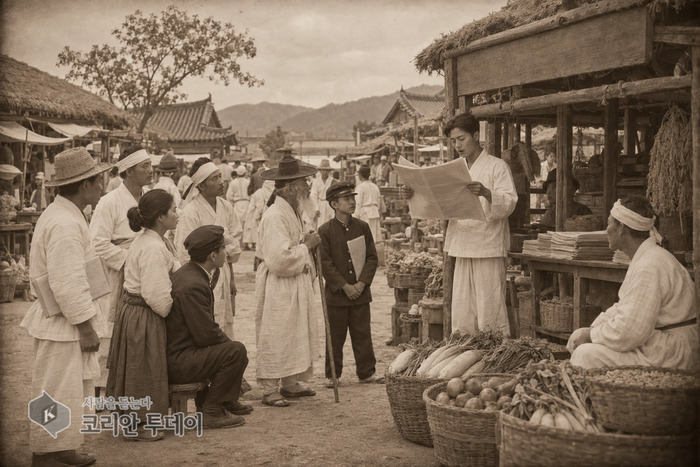
The World Stage
In China, the Northern Expedition’s revolutionary armies continued pressing toward Wuhan. The siege of Wuchang, underway since late August, had still not been broken, and Wu Peifu’s forces had been pushed back into Hubei province. Wuhan’s actual fall was still more than ten days away.
In Japan, Emperor Taisho’s health had again taken a turn for the worse. Following a collapse in May, his condition had seemed to stabilize for a time, but by September it had deteriorated once more, and the emperor remained in convalescence (the exact date of this September relapse is not confirmed in available records). Crown Prince Hirohito had by then served as regent for five years, and the machinery of Japanese state affairs continued to run under that regency.
Colonial Parallels
The pairing of a colonial monument’s completion with the prosecution of dissent was not unique to Korea in 1926. In British India, the Rowlatt-era framework of preventive detention and press restriction still shadowed nationalist politics even as Lucknow and Calcutta saw new municipal buildings and infrastructure celebrated as marks of imperial progress. In Ireland, the aftermath of the Civil War had left the Free State government managing its own tensions between consolidating new institutions and prosecuting former combatants. And in the American-administered Philippines, the colonial press likewise operated under sedition statutes that could criminalize commentary seen as undermining public order — a legal architecture with clear echoes of Korea’s Peace Preservation Law and Newspaper Law. Across each of these colonial and post-colonial settings, the same tension recurred: a governing power showcasing its permanence through architecture and ceremony, while the courts quietly processed those who questioned that permanence.
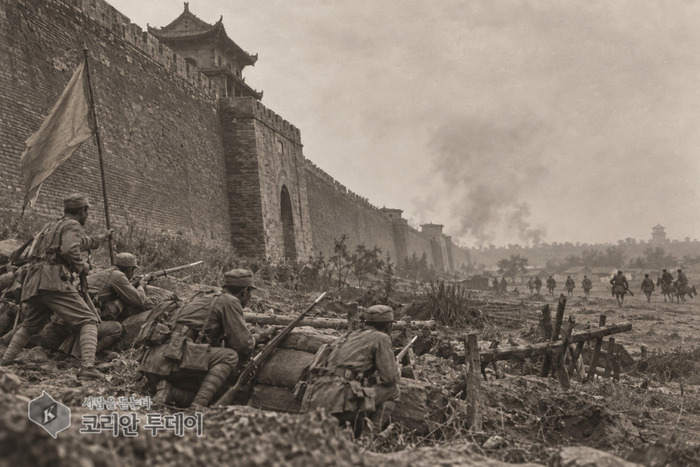
Person of the Day
Choi Won-sun, the journalist facing prosecution that week, was a working newspaperman at the Dong-a Ilbo whose brief column had become a legal liability under the Peace Preservation Law. Column writing at a colonial-era Korean newspaper was rarely a safe occupation: papers like the Dong-a Ilbo had already weathered multiple suspensions by the Government-General, and individual writers bore direct criminal exposure for what appeared under their names. Choi’s case, still pending as September closed, illustrates a daily reality for Korean journalists of the period — that reporting or commenting on colonial affairs could carry the same legal risk as organized political dissent.
Understanding Daily Life
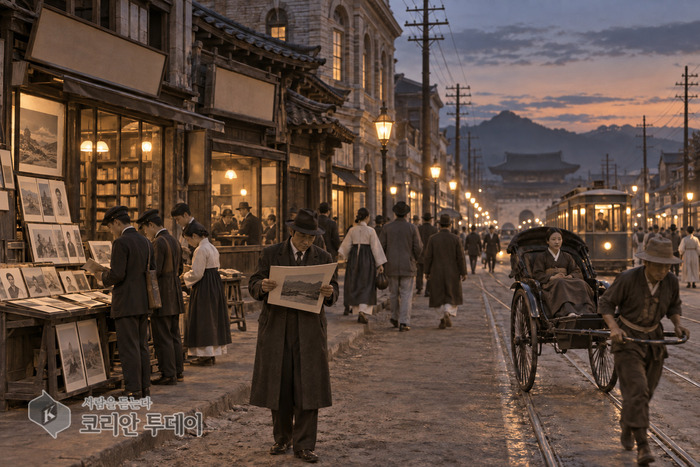
On a Tuesday morning in Gyeongseong, a line of people gathered outside the Gyeongseong District Court, hoping for seats in the gallery — family members of the Communist Party defendants mixed with reporters waiting for the session to open. By midday, Jongno street looked much like any other Tuesday: students browsed newly arrived magazines at the bookstalls, and cafes and teahouses already held their regular afternoon crowd. As dusk fell, crowds began gathering outside the theaters. Even amid the city’s excitement over the approaching dedication ceremony, those carrying newspaper extras with court updates wore heavier expressions.
Century Mirror
| Category | 1926 | 2026 |
|---|---|---|
| Trial procedure | Closed preliminary hearings; a single judge decided whether to indict | Judicial review of warrants and open trials as standard practice |
| Press control | Newspaper Law and Peace Preservation Law allowed prior censorship and suspension | Prior censorship is banned; press freedom is constitutionally guaranteed |
| Court access | Limited gallery access, mostly family and press | Citizen participation trials and expanded online broadcast of proceedings |
The anxious families waiting in the alley outside the Gyeongseong District Court a century ago likely felt something close to what families waiting outside courtrooms feel today. What has changed is that, in 1926, there was no way to even know when the hearing might end.
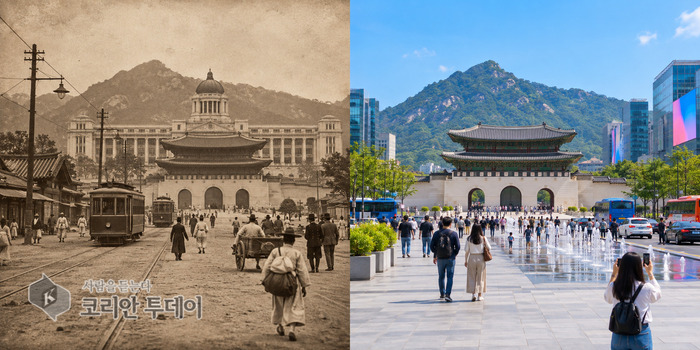
Two days remain until the dedication ceremony. Tomorrow, September 29, Gyeongseong will move one day closer to October 1 — the court cases and the building’s final preparations both carrying on unresolved. Join us again tomorrow evening at 🕙 10:10 PM KST.
THE KOREAN TODAY × WIA CODE
이 기사의 WIA Code

WIA Code 스캐너로 비추면 인터넷 없이 발행 사실과 위·변조 여부를 확인할 수 있습니다.
휴대폰 기본 카메라로 찍으면 스캐너 안내 페이지가 열립니다 — 기사 바로 열기
움직이는 코드(스트림) 한 장에 기사 전문(사진 포함)이 담겨 있습니다 — WIA Code 스캐너로 약 132초 비추면 폰에 저장되어 인터넷 없이도 읽을 수 있습니다. Stream.mp4 도 여기서 받습니다.
WIA Code · 코리안투데이






Leave a Reply