
100 Years Ago Today
Saturday, October 2, 1926 · Gyeongseong (Seoul) · Evening Edition
🕙 10:10 PM KST (1:10 PM UTC) – As the clock smiles, reflect on a century of history
1. A Stone Palace and a Reel of Film
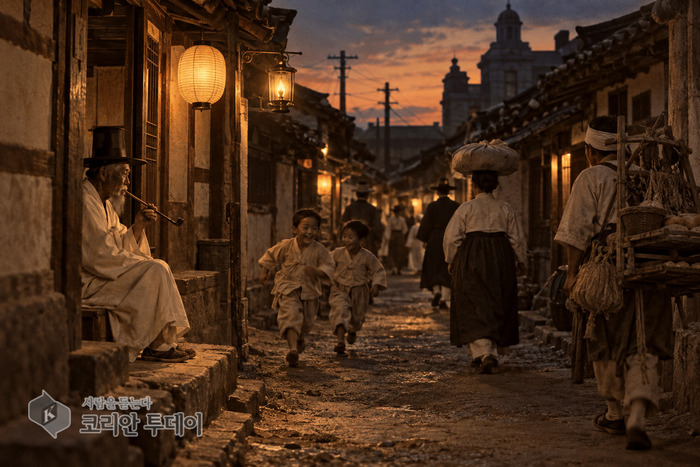
As you wind down your day, go back one hundred years. It is Saturday, October 2, 1926, in Seoul, then called Gyeongseong. We could not find a confirmed weather record for this day, so we will not invent one.
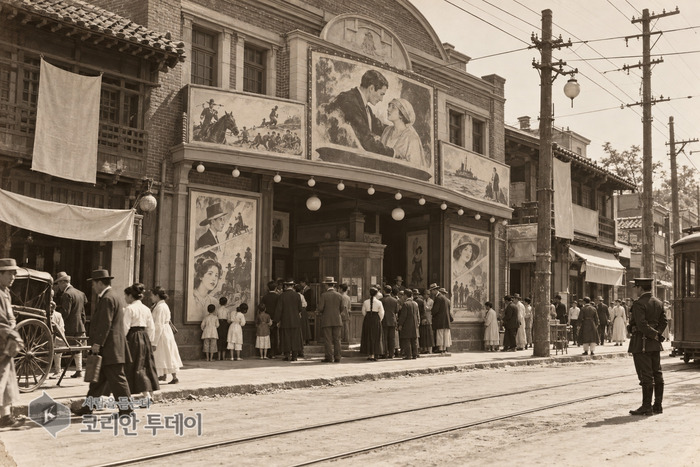
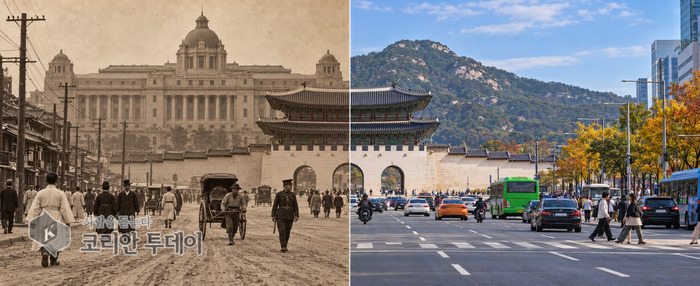
What we do know is what happened the day before. October 1 was the colonial government’s annual “Administration Commemoration Day.” On that day the new Government-General building, ten years in construction on the grounds of Gyeongbokgung Palace, was formally dedicated. On the same day, at the Dansungsa theater on Jongno, a young filmmaker’s silent film premiered: Na Un-gyu’s Arirang. Today is the second day of both stories.
2. Korea Under Colonial Rule
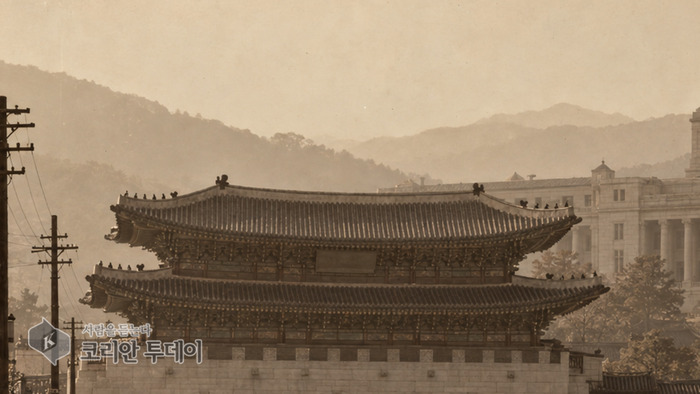
According to accounts of the dedication, the entire staff gathered in the central hall of the new building on October 1, and a celebratory banquet followed in the afternoon at Gyeonghoeru Pavilion inside the palace. For many Koreans, a colonial office rising in the courtyard of their royal palace was a heavy symbol.
The building also threatened Gwanghwamun, the palace’s main gate, which stood in front of it. The government announced a plan to demolish the gate. Intellectuals in Korea, and some in Japan as well, objected. The demolition was dropped, and in 1927 the gate was instead moved toward the east side of the palace. That outcome lies in the future of this day, and we could not confirm how the newspapers of October 2 covered it.
Arirang was written, directed, and starred in by Na Un-gyu, then in his mid-twenties, who played a young man driven mad. Accounts say he had printed 10,000 flyers and planned a marching band parade from Jongno past the Government-General site to the theater, but that on opening day, at dawn, Jongno police seized the flyers over the lyrics they considered subversive. Accounts also say the audience rose to sing along with the song at the end. These details come from later writings and vary between them; we have not verified them against contemporary newspapers.
3. The Peninsula in a Tense Year
Four months earlier, on June 10, 1926, the funeral day of Emperor Sunjong, crowds shouted for independence on Seoul’s streets in what is remembered as the June 10th Movement. In the spring, the newspaper Dong-A Ilbo had been suspended for a second time, between March and April. It was a year in which the colonial authorities pressed hard on speech and print.
Against that background, October brought both a new seat of colonial power and a Korean-made film that audiences came to see. The two scenes, side by side in one city, explain the autumn of 1926 better than either alone.
4. The World Stage
In Poland, Józef Piłsudski became Prime Minister on October 2, appointed by President Ignacy Mościcki, after his May coup. In England, an Air Union Blériot 155 airliner caught fire in the air and crashed at Leigh, Kent, killing all seven aboard. It is recorded as the first in-flight fire in airline history.
In China, the Nationalist Northern Expedition was in full swing. The Wuhan cities of Hanyang and Hankou had fallen in early September, and walled Wuchang remained under siege. It would fall eight days after this issue’s date plus two: on October 10.
5. Colonial Parallels
Korea in 1926 was one of several places where a distant government held power over a population that did not choose it. In 1922, Ireland had gained the status of a dominion with its own parliament, a political settlement unavailable to Korea. We note this only as a point of contrast; a full comparison would need sources beyond what we gathered for this day.
6. Person of the Day: Na Un-gyu
Na Un-gyu (1902-1937) wrote, directed, and starred in Arirang. The film made him a figure of Korean cinema history. Today the original film is not known to survive, which makes the surrounding accounts, and the song itself, all the more important.
7. Understanding Daily Life: Saturday Culture and Architecture
This is a Saturday issue, which usually turns to culture and architecture. Records of everyday prices, weather, or audience numbers for this day were not found, so we describe only two places that stood in the same city: a new government building in a palace courtyard, and a theater on Jongno. In size there is no comparison. A century later, it is the film shown in the theater that people remember longer.
8. Century Mirror
| Item | 1926 | 2026 |
|---|---|---|
| In front of the palace | Government-General building dedicated | The building has been demolished and Gwanghwamun restored |
| Cinema | Arirang opens at Dansungsa | Centennial screenings and events were held |
| The work itself | Reels circulated in theaters | The original film is not known to survive |
The great stone building is gone. The song carried by a film that vanished has been sung for a hundred years, from a Seoul theater to K-culture stages around the world.
9. Tomorrow’s Preview
Tomorrow is Sunday, October 3, 1926. Tomorrow evening at 10:10, we meet again.
Sources: records and articles on the Government-General building dedication; articles and papers on the Arirang premiere (2005-2026); Wikipedia, “October 1926”; works on the Northern Expedition. Original newspaper pages for October 2, 1926 were not directly verified for this edition.
THE KOREAN TODAY × WIA CODE
이 기사의 WIA Code

WIA Code 스캐너로 비추면 인터넷 없이 발행 사실과 위·변조 여부를 확인할 수 있습니다.
휴대폰 기본 카메라로 찍으면 스캐너 안내 페이지가 열립니다 — 기사 바로 열기
움직이는 코드(스트림) 한 장에 기사 전문(사진 포함)이 담겨 있습니다 — WIA Code 스캐너로 약 128초 비추면 폰에 저장되어 인터넷 없이도 읽을 수 있습니다. Stream.mp4 도 여기서 받습니다.
WIA Code · 코리안투데이






Leave a Reply