
Hook Opening
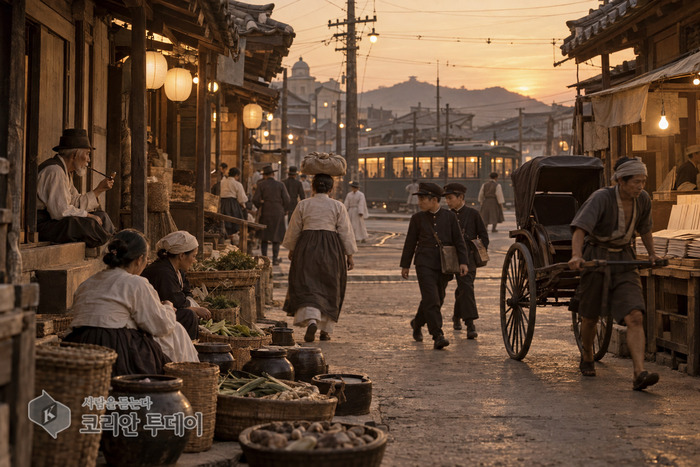
As you wind down your day, picture Seoul, then called Gyeongseong, on a Wednesday in early October 1926. Five days earlier, the colonial government had opened a vast new headquarters in front of Gyeongbokgung Palace. Six days earlier, a silent film called Arirang had opened at a theater a short walk away. One building announced who ruled Korea. The other let Koreans see their own sorrow on screen. Both were still the talk of the city. No newspaper we could find pins down this particular day, and we have no verified weather or prices, so tonight we stitch together what is confirmed.
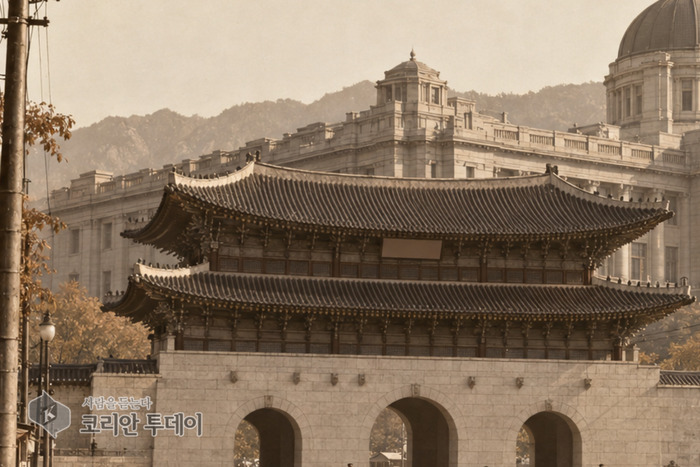
Korea Under Colonial Rule
On October 1 the new Government-General Building was inaugurated on the site of Heungnyemun Gate inside Gyeongbokgung. Staff gathered in its central hall, and a celebratory banquet followed at Gyeonghoeru Pavilion. Construction had begun in June 1916, so the project took a decade.
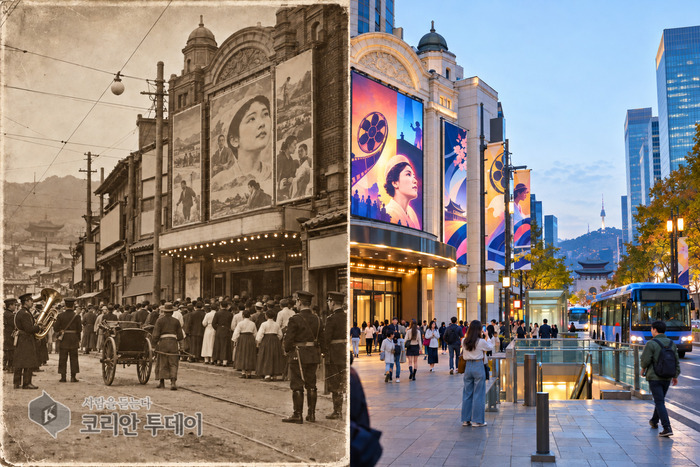
That same day, at the Danseongsa theater on Jongno, Na Un-gyu’s Arirang premiered. He had written, directed, and starred in it. According to accounts, he planned to distribute 10,000 leaflets and lead a brass band in a parade, but Jongno Police Station confiscated every leaflet, calling the song lyrics inappropriate. The theater filled anyway. Whether the crowd on this sixth day was as large, we cannot say, because no attendance figure has been found.
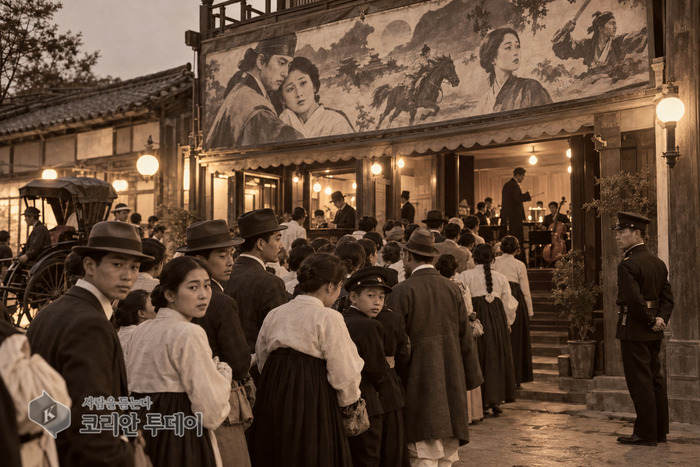
East Asia in Turmoil
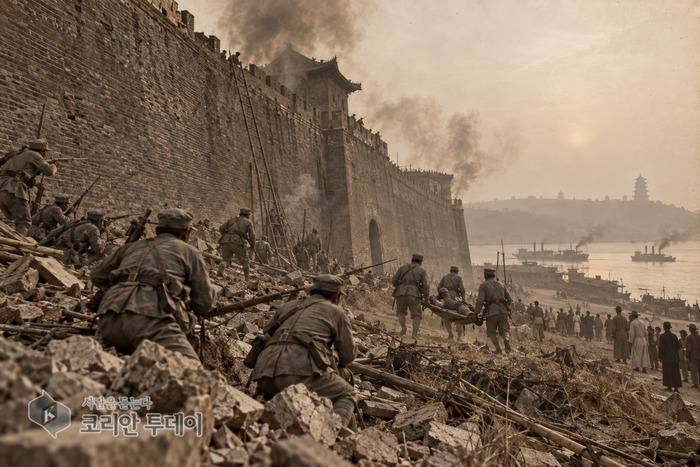
Four months earlier, on June 10, students had shouted for independence during the funeral of Emperor Sunjong. About 210 were arrested in Seoul and over a thousand nationwide. Courts that autumn kept hearing press-offense and Communist Party cases. In China, Chiang Kai-shek’s National Revolutionary Army was on its Northern Expedition. After taking Hankou and Hanyang in early September, it had Wuchang under siege. The city would fall on October 10, four days after this date.
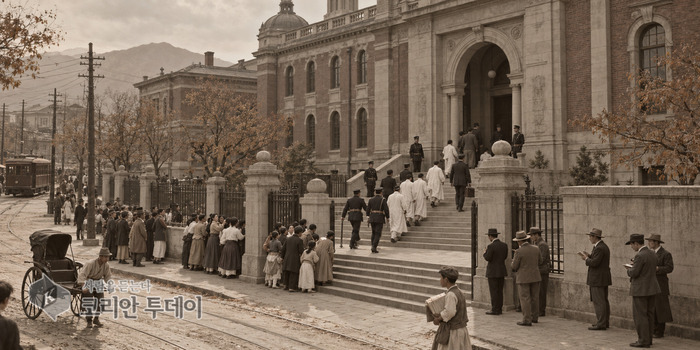
The World Stage
On October 5, Japan’s first radio orchestra, the New Symphony Orchestra under Hidemaro Konoye, gave its inaugural concert. In Moscow, Mikhail Bulgakov’s Days of the Turbins premiered at the Moscow Art Theatre the same day. On October 6 in the United States, Babe Ruth became the first player to hit three home runs in a World Series game, as the Yankees beat the St. Louis Cardinals 10-5. Because of the time difference, a Seoul reader would have learned of it a day later. In Pittsburgh, a 1794 blue law was being enforced to ban Sunday sports.
Colonial Parallels
Korea was not alone in using culture as a quiet form of resistance. In Ireland, the independent Free State was still sorting out its identity, and Éamon de Valera founded the Fianna Fáil party that spring. In India, communal riots in Calcutta in the spring of 1926 showed how colonial rule strained society. In Korea, the censor’s pencil went after song lyrics. A folk melody, it turned out, could say what a speech could not.
Person of the Day: Na Un-gyu
Na Un-gyu (1902-1937) is widely considered the most important filmmaker of early Korean cinema. Arirang was his directorial debut, the second production of Joseon Kinema. The theme song was created with the Danseongsa orchestra. Silent films of the time were accompanied by live music and a narrator, the byeonsa, so every showing was a little different.
Understanding Daily Life
Wednesday in Gyeongseong meant open schools, according to a late-September report, and for students who had lived through June, a quiet but heavy autumn. We found no report of school life on this exact day, so any picture of students passing Jongno in the morning or queuing at the theater at dusk remains an educated guess, not a documented fact.
Century Mirror
The leaflets were seized, but the song was not. On October 1, 2026, a declaration was read at Danseongsa at noon, followed by a parade with a band through Jonggak, Gwanghwamun, and Changdeokgung, then back to the theater. The old Government-General Building, by contrast, is gone. Today Arirang is a song the whole world connects to Korea, a cultural story that sits easily beside K-pop and K-drama.
Tomorrow’s Preview
Tomorrow, October 7, a new faith called Caodaism will be proclaimed in Saigon, and the BBC will broadcast its first evening-prayer service from Westminster Abbey. Join us at 10:10 tomorrow evening.
THE KOREAN TODAY · 100 Years Ago Today
THE KOREAN TODAY × WIA CODE
이 기사의 WIA Code

WIA Code 스캐너로 비추면 인터넷 없이 발행 사실과 위·변조 여부를 확인할 수 있습니다.
휴대폰 기본 카메라로 찍으면 스캐너 안내 페이지가 열립니다 — 기사 바로 열기
움직이는 코드(스트림) 한 장에 기사 전문(사진 포함)이 담겨 있습니다 — WIA Code 스캐너로 약 152초 비추면 폰에 저장되어 인터넷 없이도 읽을 수 있습니다. Stream.mp4 도 여기서 받습니다.
WIA Code · 코리안투데이






Leave a Reply