
Korea Under Colonial Rule
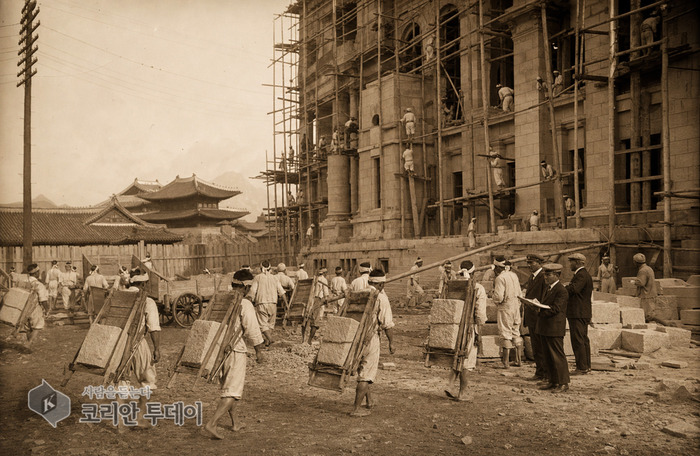
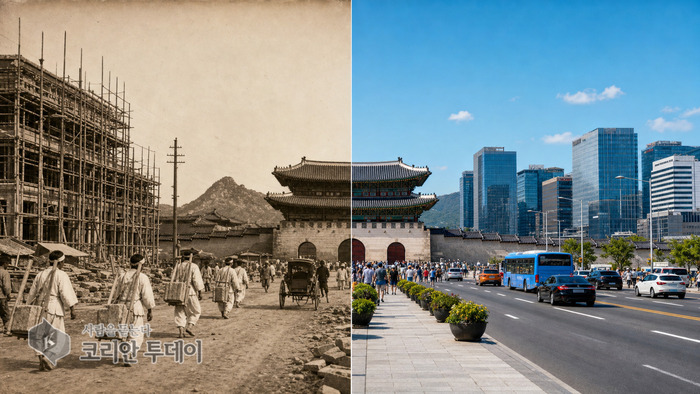
On the site where Heungnyemun, the inner gate of Gyeongbok Palace, had once stood, laborers were putting the finishing touches on a massive new colonial capitol building. Construction had begun a decade earlier, in 1916, passing through a cornerstone ceremony in 1920 and a roof-raising ceremony in 1923. By this Thursday in September 1926, stonemasons, carpenters, and plasterers were racing to finish staircases and colonnades ahead of the completion ceremony scheduled for October 1 — timed to coincide with the anniversary of the start of Japanese colonial administration. Korean day laborers, paid by the day, carried building materials on A-frame backpacks called jige and stood for hours atop bamboo scaffolding. The colonial government promoted the building as a symbol of its authority; the hands that actually built it belonged to people who earned just enough each evening to eat that night and the next morning.
Meanwhile, the legal aftermath of the June 10 Movement — the wave of “Manse” (long live Korea) protests that erupted along the funeral procession route of the last Korean emperor, Sunjong, on June 10 — was still unresolved. Of roughly a thousand people detained that day, eleven students had been formally indicted under the Public Peace Preservation Law and the Publication Law, and were awaiting trial, with court proceedings scheduled for November. Two scenes shared the same September sky over Seoul: a monumental government building nearing completion, and a handful of students still waiting, months later, to learn their fate.
East Asia in Turmoil
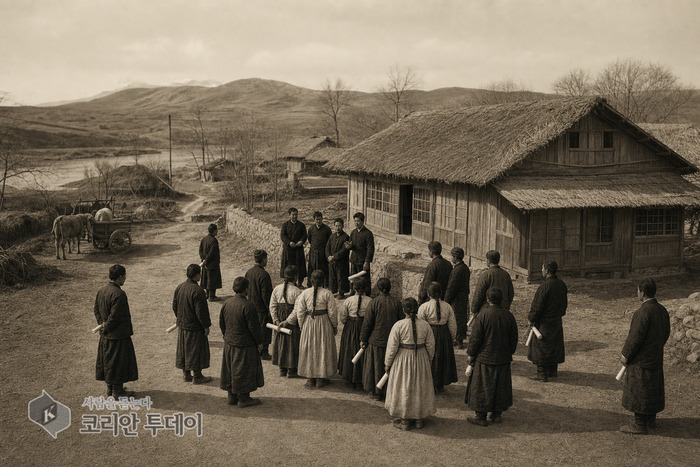
Far from Seoul, in Manchuria, Korean exiles were pursuing a different kind of construction — political unity. Since April, groups such as the Goryeo Revolutionary Party, founded by independence activist Yang Gi-tak, had joined a broader movement, gathering momentum from July onward, to merge Korea’s scattered resistance factions into a single nationalist party. Talks to unify Manchuria’s three rival Korean administrative bodies — known as Jeongeuibu, Chamuibu, and Sinminbu — were also gaining steam around this time. Newspapers inside colonial Korea, bound by strict censorship, could not report these developments in detail, so word traveled by rumor and letter instead. While Seoul’s laborers raised the walls of empire, Koreans beyond the border were trying to raise something else: a unified front.
The World Stage
The day before, on September 1, France had proclaimed the creation of the Republic of Lebanon under its mandate, carving a parliamentary state out of territory many Arabs still considered part of a unified Syria — one more redrawing of borders in a world still reorganizing itself after the First World War. In China, Chiang Kai-shek’s National Revolutionary Army was tightening the Northern Expedition. Forces were closing in around Wuchang in early September, and within days — on September 4 — Chiang would push his troops across the border into Jiangxi province, widening a campaign that would capture the three cities of the Wuhan area by October. From the streets of colonial Seoul to the riverbanks of Wuhan, old orders were cracking open across Asia almost simultaneously.
Colonial Parallels
Colonial Korea’s forced-labor construction sites had counterparts across the empires of the era. In British India, day laborers on public works projects were paid similarly meager daily wages with no safety guarantees, while nationalist organizing simmered under strict surveillance — not unlike the situation in Manchuria. In French-mandate Lebanon, declared a republic that same week, local political structures were being built by the colonial power’s design rather than by popular will, echoing how Seoul’s new capitol was erected to project Japanese authority rather than serve Korean interests. Across three continents, 1926 was a year when subject peoples built the very structures — physical and political — that were used to govern them.
Person of the Day
No single laborer’s name survives in the historical record from this particular day — a silence that is itself telling. The men who carried stone for the Government-General building, and the women who worked ten-hour shifts at rice mills and textile plants nearby, appear in colonial-era photographs and administrative records only as anonymous figures, counted in totals rather than named individuals. Historians studying Korea’s 1920s labor force note that most construction workers on major colonial projects were itinerant, moving from site to site as work became available, with no job security and no formal contracts — a pattern of invisibility that this newsletter tries, in its own small way, to correct.
Understanding Daily Life
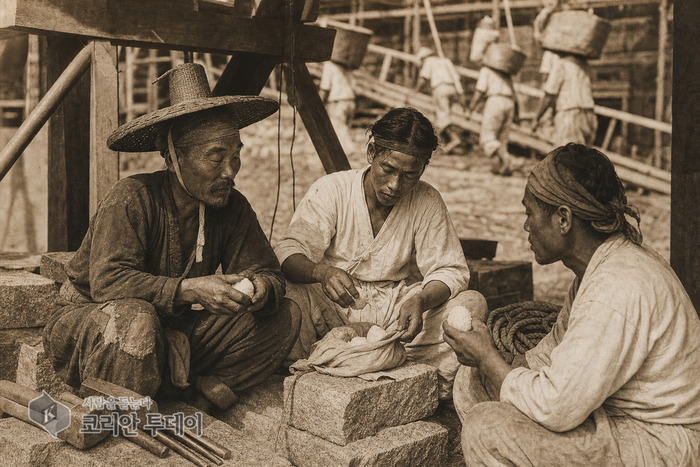
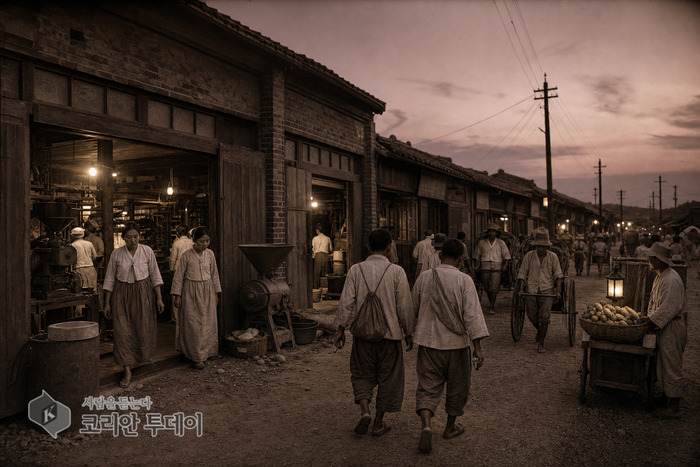
Before dawn, laborers gathered outside the Gwanghwamun construction site to be assigned to work crews for the day. Through the heat of a still-lingering summer, they ducked into the shade beneath scaffolding for brief respites, eating little more than a rice ball or a lump of barley for lunch. Conditions were similar at Jongno’s rice mills and textile factories, where female workers stood at machines for more than ten hours a shift. Only at dusk did laborers receive their day’s wages in cash, money that had to stretch to cover dinner that night and rice the next morning. The grandeur rising above Gwanghwamun was built, quite literally, one exhausted day at a time.
Century Mirror
A century later, the site of that colonial capitol has been cleared away entirely, and Gyeongbok Palace has been restored to something resembling its original form. Where day laborers once queued before sunrise for cash wages with no legal protections, South Korea’s construction workers today are covered by minimum wage law, mandated safety equipment, and legally capped working hours — an imperfect system, but a fundamentally different one. The physical evidence of the 1926 building is gone, but the question it raises — who builds a nation’s institutions, and on what terms — still echoes through modern labor debates, and through the global reach of Korean culture that grew from the same soil.
Tomorrow’s Preview
Tomorrow, September 3, 1926 — a Friday — another day in colonial Seoul awaits. Join us tomorrow evening at 10:10 PM KST.
THE KOREAN TODAY × WIA CODE
이 기사의 WIA Code

WIA Code 스캐너로 비추면 인터넷 없이 발행 사실과 위·변조 여부를 확인할 수 있습니다.
휴대폰 기본 카메라로 찍으면 스캐너 안내 페이지가 열립니다 — 기사 바로 열기
움직이는 코드(스트림) 한 장에 기사 전문(사진 포함)이 담겨 있습니다 — WIA Code 스캐너로 약 120초 비추면 폰에 저장되어 인터넷 없이도 읽을 수 있습니다. Stream.mp4 도 여기서 받습니다.
WIA Code · 코리안투데이






Leave a Reply