
By Columnist Kim Mi-hee
What to Prepare Before the Massage
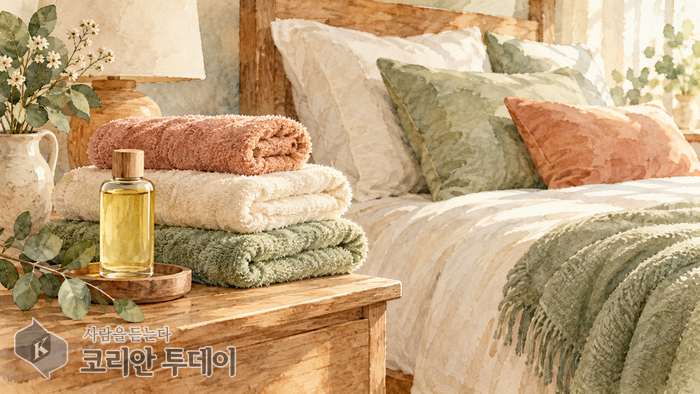
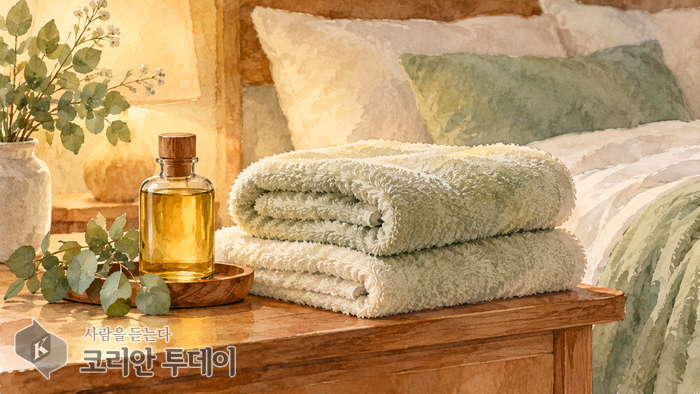
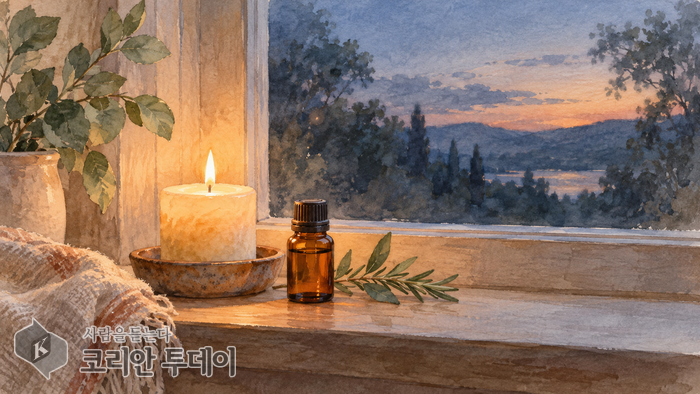
The first thing I do on the job isn’t with my hands. It’s setting the mood. I switch off the overhead light, leave a single lamp on, and lay out two or three soft towels ahead of time. Older adults get chilled easily and tense up quickly at unfamiliar touch, so I’ve come to feel it matters to signal ‘now it’s time to rest’ before my hands ever make contact. Often, once everything is ready, I can see them already half at ease.
People caring for someone at home often start in a rush, squeezing it into a busy day out of a sense that ‘I should do this for them.’ But if you suddenly take your parent’s arm with hands still cold from washing the dishes, they’ll flinch and tense up instead. You started with the best intentions, and now you both feel awkward. That’s why, before I begin, I soak my hands in warm water or rub them together until they’re properly warm, and only then do I reach out.
You don’t need much oil. A coin-sized amount in your palm, warmed by rubbing your hands together, is plenty. If you’d like to use aromatherapy oil, always dilute it heavily in a plant-based oil, and dab a little on the inside of the wrist first to make sure the skin is fine before you start. Ask first whether they like the scent; if it feels like too much, unscented lotion works just as well. I hope you’ll remember that the heart of massage is the touch, not the fragrance.
Step One, Hands and Arms: Starting Where It Feels Most Familiar
I always start with the hands. Hands have spent a lifetime shaking and holding other hands, so they accept another person’s touch more readily than any other part of the body. Touch the shoulders or legs out of nowhere and the body startles, but wrap their hand in yours first and you can feel them open up, as if thinking, ‘Ah, this person is taking care of me.’ The order itself becomes the first step toward trust.
Here’s how it goes. First, place their hand between your two hands and simply hold it while you count to ten. Next, use your thumbs to slowly spread the palm outward from the center in small circles, then gently stroke each finger one at a time from base to tip. After that, sweep the whole palm of your hand in a long stroke from the wrist up toward the elbow, then ease off and glide lightly back down. Repeat this three or four times.
The key thing to remember is the feeling of ‘stroking,’ not ‘pressing.’ Older adults have thin skin that bruises easily, so I don’t knead or press hard. The weight of your own hand resting lightly is all the pressure you need. Every so often, ask, ‘Does this feel all right?’ That brief exchange often puts them at ease as much as the massage itself.
Step Two, Shoulders and Back: Where the Day’s Weight Settles
Once the hands and arms have relaxed, I move on to the shoulders. People who spend long hours lying down or sitting in a wheelchair often have very stiff shoulders and necks. Not being able to move your body freely builds up more tension than you might think. So a touch that cradles the shoulders can bring not only physical comfort but also the reassurance that ‘I’m not alone.’
There’s a scene I come across often on the job. When I help someone roll onto their side, their back is damp with sweat or marked with creases from the sheets. If I cover their back with a warm towel for a moment, then lift it away and begin, their body accepts the touch far more comfortably. For someone who can sit up, it’s also fine to prop a pillow behind them and do this while they’re seated. Rather than forcing a change in position, the first priority is finding the position that’s most comfortable for them.
The movements are simple. Rest both palms on the shoulders and slowly stroke from the neck out toward the tips of the shoulders, about five times. Then, using your whole palm, make long strokes from top to bottom along both sides of the spine. The rule is never to press directly on the spine itself, but to work around it. Finally, leave both hands resting quietly on the shoulders and take three or four breaths together. That creates a stillness that makes it easy to move on to the next step.
Step Three, Feet and Calves, Then Finishing by Tucking Them In
Last come the feet and calves. They carry the weight of a body that has made it through the day, and many older adults tell me their feet feel cold and heavy by evening. The feet are the farthest part of the body, which also makes them hard to look after on your own. So having someone carefully hold your feet can be a deeper comfort than you might expect.
Before I touch the feet, there are things I always check. Are there any wounds or cracked skin? Is any area more swollen than usual, or a different color? Is there anywhere that hurts when pressed? If I see anything like that, I leave that area alone and let the medical staff or caregiver in charge know first. I always try to hold to this line: massage is a caring touch that brings comfort to the body, not a way to fix something that hurts.
If nothing looks unusual, hold the foot in both hands for a moment to share some warmth, then use your thumbs to slowly stroke the sole from the heel toward the toes. Gently wrap and release each toe one at a time, and stroke the calf softly upward with your whole palm, from the ankle toward the knee. When you’re done, gently wipe away any leftover oil with a dry towel, and pull a warm blanket all the way down over their toes. I consider this ‘tucking in’ part of the massage routine. I believe rest is only complete when the warmth lingers after the hands have gone.
Today’s Heart-Care Practice
★☆☆Today: Rub your hands together until they’re nice and warm, then place one of your parent’s hands between yours and simply hold it while you slowly count to ten. Then use your thumbs to draw five small circles from the center of the palm outward. It’s fine if you don’t have oil. The warmth of your hands alone can help them feel at ease.
★★☆One step further: Warm a coin-sized amount of oil or lotion in your palm, then repeat three or four times: ① wrap their hand in yours → ② stroke each finger one at a time → ③ make a long stroke from wrist to elbow and glide lightly back down. Do the same for the other arm. Every so often, ask, ‘Does this feel all right?’ When the order stays the same, they can anticipate your next touch, which can help their body let go of tension.
★★★When you have time: Dim the lights, set out a towel, and go through the full routine in order: hands and arms → shoulders and back → feet and calves. For each area, use ‘stroking,’ not ‘pressing,’ moving slowly outward from the center of the body or from bottom to top. To finish, wipe away any leftover oil with a dry towel and pull the blanket down over their toes. If you do it at about the same time every day, in the same order, it can become a small ritual that closes the day and a comfortable rest for you both.
Avoid any area with wounds, bruises, swelling or skin problems, or anywhere that hurts when touched. If they have a chronic condition or you notice any change from their usual state, consult their medical team first. Always dilute aromatherapy oil and test a small amount on the skin before use; if the scent is unpleasant for them, unscented lotion is perfectly fine.
For more heart-care stories, visit the Korea Self-Healing Association.
Kim Mi-hee — aromatherapist, social worker, certified care worker, and hospital companion manager — draws on her own experience caring for aging parents to write practical, useful guidance for caregivers in the same situation. The Korean Today, Nam-Incheon.
#WiaSsamMindCareSignals #KimMiHeeColumn #KoreanTodaySouthIncheon #RelaxationMassage #CareWorker #CaringForParents #HealingTouch #AromaSelfCare
[ Reporter Kim Mi-hee: incheonsouth@thekoreantoday.com ]
Become a Local Ambassador Apply as Branch Director The Korean Today — Nam-Incheon
 |
THE KOREAN TODAY × WIA CODE
이 기사의 WIA Code

WIA Code 스캐너로 비추면 인터넷 없이 발행 사실과 위·변조 여부를 확인할 수 있습니다.
휴대폰 기본 카메라로 찍으면 스캐너 안내 페이지가 열립니다 — 기사 바로 열기
움직이는 코드(스트림) 한 장에 기사 전문(사진 포함)이 담겨 있습니다 — WIA Code 스캐너로 약 40초 비추면 폰에 저장되어 인터넷 없이도 읽을 수 있습니다. Stream.mp4 도 여기서 받습니다.
WIA Code · 코리안투데이


Leave a Reply