
Monday, August 23, 1926 · The Solar Term of Cheoseo · Gyeongseong Edition
🕙 10:10 PM KST (1:10 PM UTC) · Evening Edition
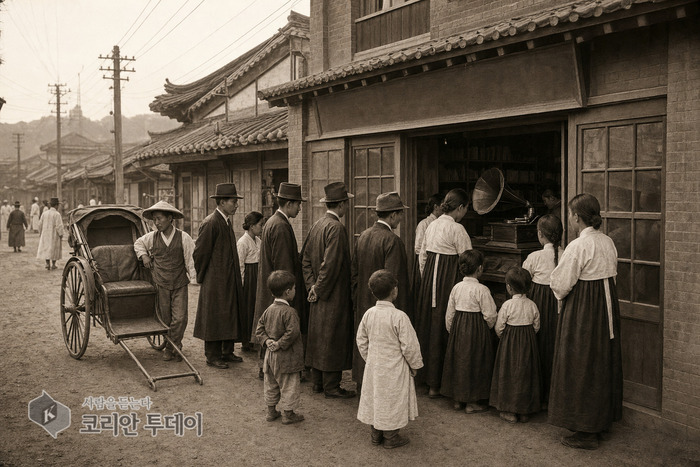
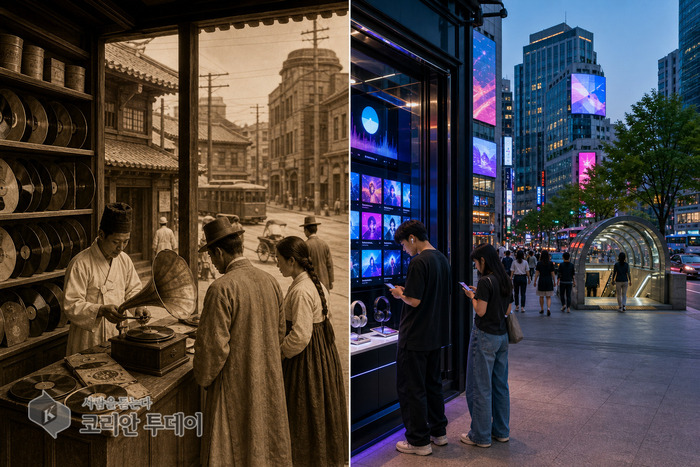
Good evening. As you wind down your day, step back with us to a Monday when the Korean calendar marked Cheoseo, the solar term meaning “the heat breaks.” In colonial Gyeongseong, the air had cooled just slightly overnight. But what stopped passersby outside the gramophone shops on Jongno wasn’t the weather. It was a voice: that of soprano Yun Sim-deok, dead twenty days, still singing.
Korea Under Colonial Rule
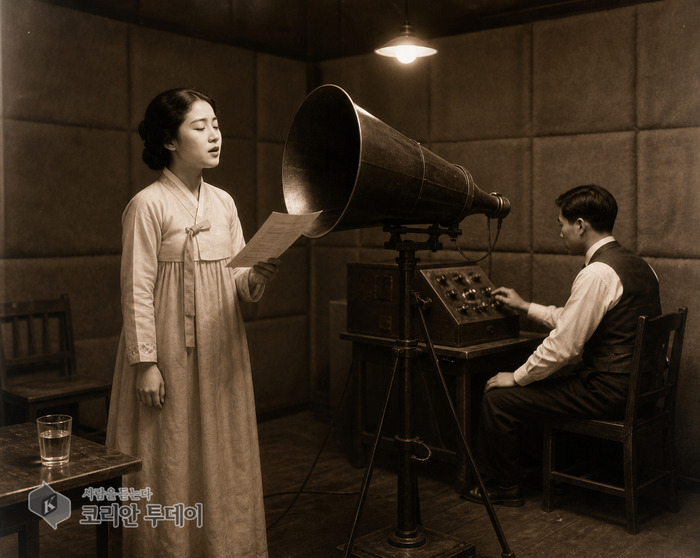
Before dawn on August 4, 1926, Yun Sim-deok, Korea’s first professionally trained soprano, and playwright Kim Woo-jin vanished from a ferry crossing the Genkai Strait between Shimonoseki and Busan. Their bodies were never recovered. Rumors of a double love-suicide, jeongsa, swept the peninsula through the summer.
Three days before she disappeared, Yun had recorded one final song at a studio in Osaka: “In Praise of Death,” her own Korean lyrics set to Ivanovici’s “Waves of the Danube.” That record reached Gyeongseong shops in late August — sources differ on the exact release day — and by this Monday, her voice was audible from record stalls across Jongno and Bonjeong. Curiosity mixed with grief; disapproval of the “new woman” and free love mixed with genuine mourning.
Colonial Parallels & the Peninsula
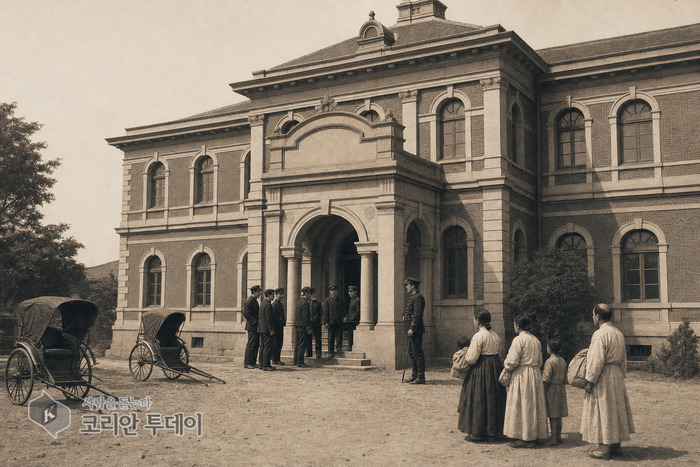
A different tension held the streets around the Gyeongseong District Court. Since June 10 — the day of Emperor Sunjong’s state funeral, when students launched the June 10th Movement in a wave of independence protests — eleven defendants indicted on June 25 for violating publication and public-order laws had spent the summer under interrogation. Their trial would not open until November; August was still a season of depositions.
Similar patterns of colonial censorship and student resistance were playing out across the empire that decade — from British India to French-ruled Vietnam — wherever a funeral, a festival, or a single printed line could become the spark for a street protest.
The World Stage
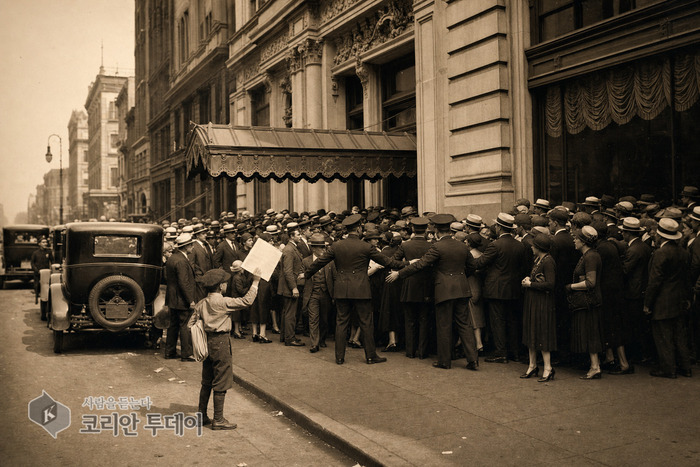
Across the Atlantic, in New York, silent-film idol Rudolph Valentino died shortly after noon this day, at age 31, from complications following emergency surgery for a ruptured ulcer. His death would trigger one of the era’s most extraordinary outpourings of public grief — riots outside the funeral home, fainting fans, rumors of suicides among his admirers.
The day before, wire reports from Greece told of a bloodless coup: General Georgios Kondylis had ousted dictator Theodoros Pangalos. Power and fame, it seemed, could both dissolve overnight that summer — a Hollywood idol’s life, a European strongman’s regime.
Understanding Daily Life in Gyeongseong
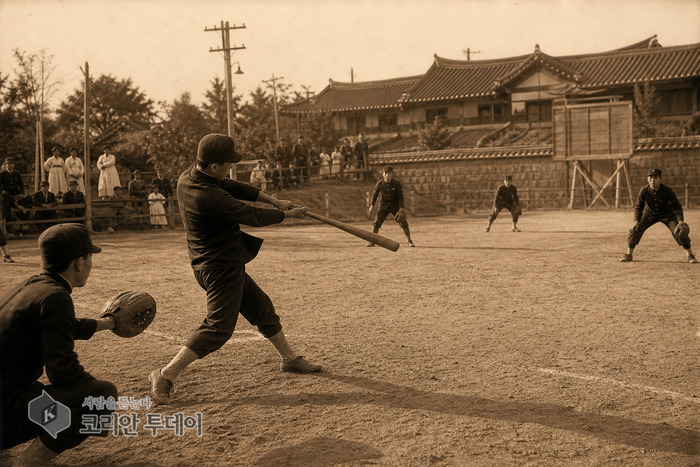
Not every corner of the city was in mourning. The Dong-A Ilbo’s four-school baseball league — fielding alumni and students from Baejae, Jungang, Hwimun, and Kyungshin — had begun that month, and schoolyards rang with a very different kind of noise than the gramophone shops. Students walked to class in the cooler morning air; market vendors called out through midday; by dusk, the smell of dinner drifted through the alleys. As Cheoseo passed, the cicadas grew quieter, and people began talking about the coming harvest.
Century Mirror
| 1926 | Category | 2026 |
|---|---|---|
| A gramophone record spreads shop to shop over weeks | How a song travels | A streaming single reaches the world in hours |
| Speech policed under colonial publication law | Freedom of expression | Constitutionally protected, still fiercely contested |
| Flood news arrives days late, by courier and print | Disaster reporting | Real-time alerts and satellite monitoring |
A century separates the pace at which Yun Sim-deok’s last song traveled from mouth to mouth and the speed at which a single today circles the globe. What hasn’t changed, perhaps, is how readily people lean on a song when grief and love collide.
Tomorrow, we return to August 24, 1926. As the last of the summer heat lifts from Gyeongseong’s streets — good night, and see you tomorrow.
THE KOREAN TODAY × WIA CODE
이 기사의 WIA Code

WIA Code 스캐너로 비추면 인터넷 없이 발행 사실과 위·변조 여부를 확인할 수 있습니다.
휴대폰 기본 카메라로 찍으면 스캐너 안내 페이지가 열립니다 — 기사 바로 열기

움직이는 코드는 스트림입니다 — WIA Code 스캐너로 약 142초 비추면 기사 전문(사진 포함)이 폰에 저장되어 인터넷 없이도 읽을 수 있습니다.
WIA Code · 코리안투데이






Leave a Reply