
[Day 55] A Seal Pledged to Borrow Troops
March · *The Woman Beneath the Moonlight* | about 3 min read
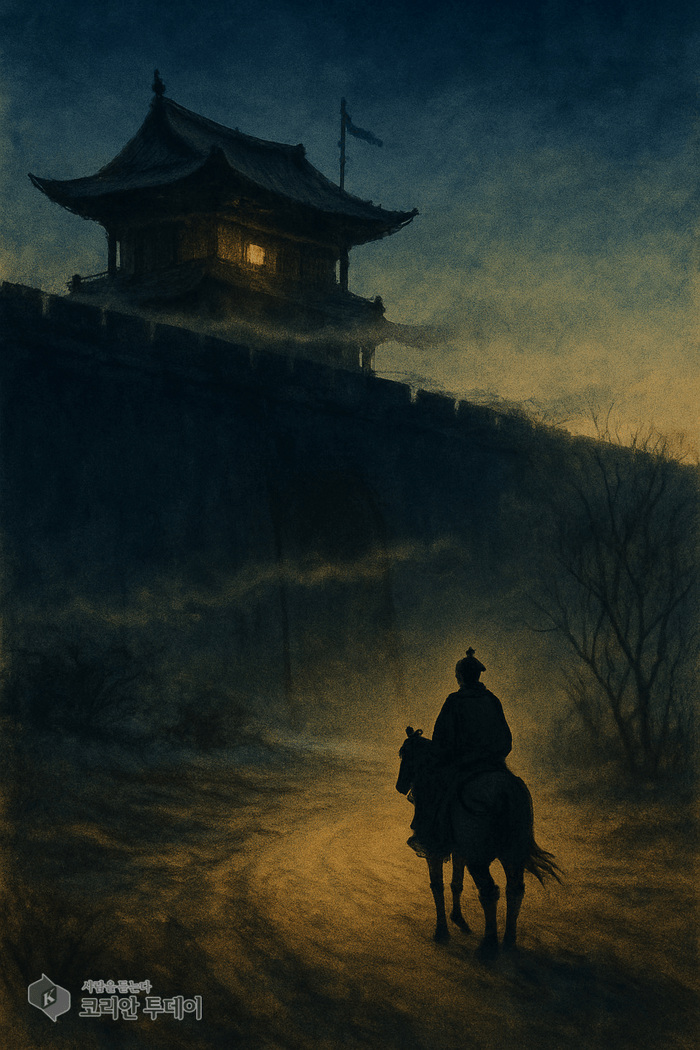
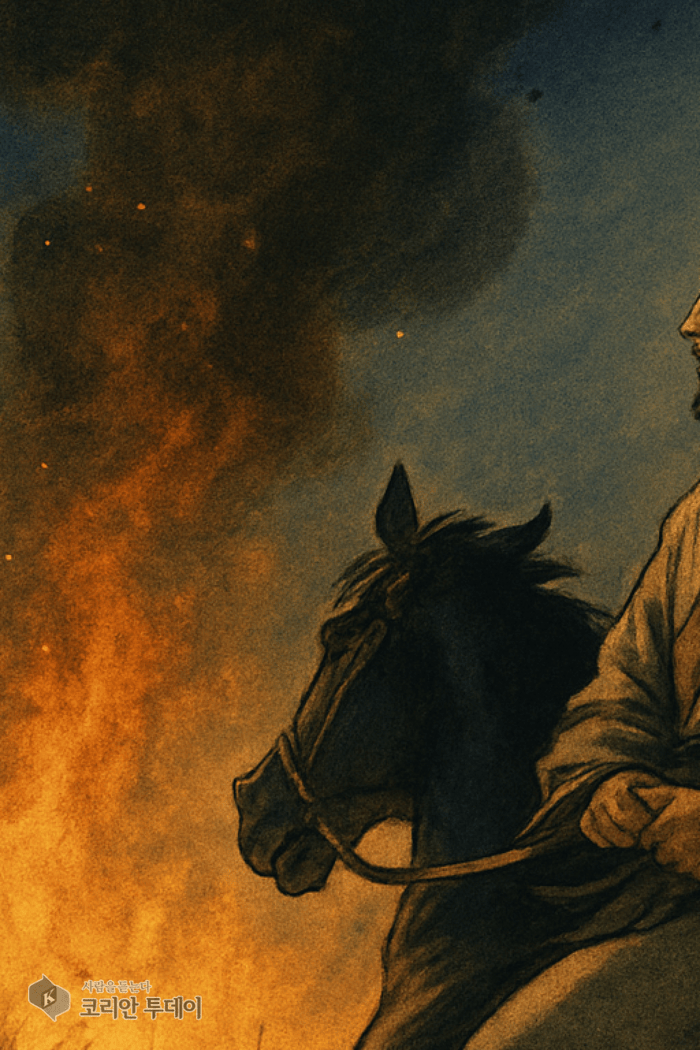
At about the hour when the edict and the secret letter of Xudu were being laid quietly inside a drawer at Xuzhou, a young man of Jiangdong (江東) was reining his horse before the gate of Shouchun (壽春) in the north.
The young man’s name was Sun Ce (孫策), style Bofu (伯符). He was the eldest son of the fierce general of Jiangdong, Sun Jian (孫堅). A year earlier, his father had sunk beneath an arrow of Liu Biao (劉表), and since then a long span of time had passed in which Sun Ce had leaned his body beneath the roof of Yuan Shu (袁術) at Shouchun.
Beneath that roof, Sun Ce had folded his arms and spent many long days. Yuan Shu had not kept his promises. He had said he would grant Sun Ce the seat of Grand Administrator of Jiujiang (九江太守), then invested Chen Ji (陳紀) instead. He had said he would grant the seat of Grand Administrator of Lujiang (廬江太守), then invested Liu Xun (劉勳) instead. A year had passed, and not a single piece of land had been placed in Sun Ce’s hand.
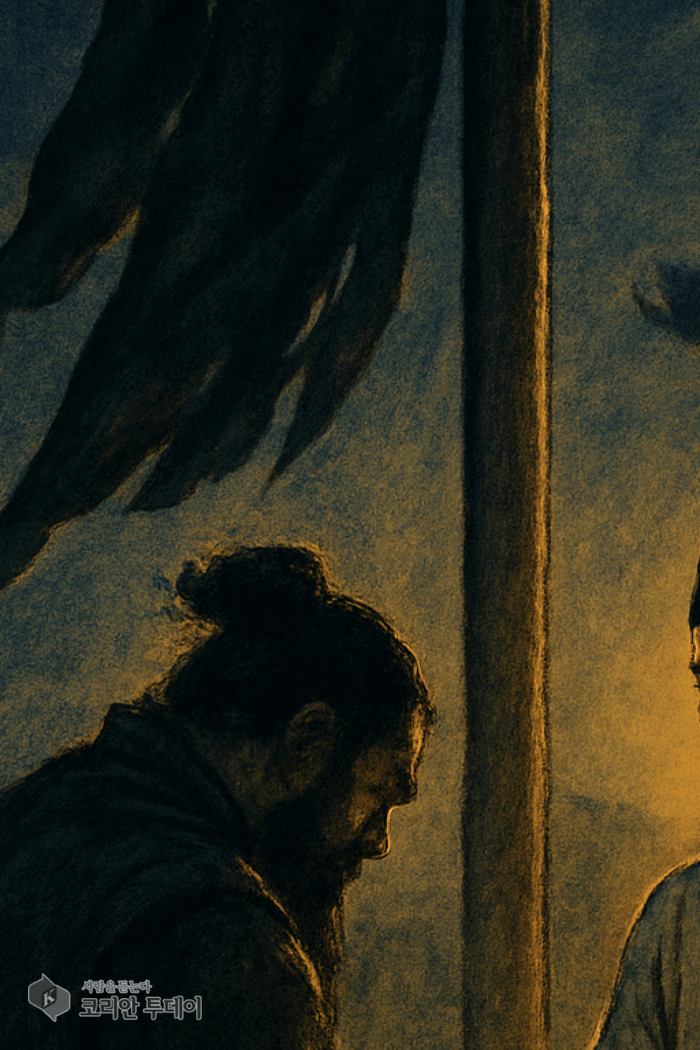
There was an evening when word drifted up that an assassin had been sent to avenge Sun Ce’s father. Standing upon a tower of Shouchun, Sun Ce looked toward the sky of Jiangdong and swallowed his tears. Two field captains, Zhu Zhi (朱治) and Lü Fan (呂範), stood at his side. Zhu Zhi spoke low. “My Lord. Will you fold your arms and live beneath this roof of the north? Jiangdong is Your Lordship’s home. Your father’s old soldiers are still scattered beneath the towns of Jiangdong. Cross the river.”
Sun Ce asked back low. “To cross the river, one must first have soldiers. Where shall I borrow them?”
Lü Fan laid out a low plan. “My Lord. Is there not a fragment of the jade seal (玉璽) in Your Lordship’s bosom — the Seal of the Transmitted State (傳國璽) that your late father drew up from a well inside Luoyang? Yuan Shu is nourishing within his chest the dream of emperorship. Lay that jade before Yuan Shu’s eyes and borrow three thousand soldiers upon it as a pledge. After you have crossed the river, you may come back to reclaim the jade, or you may choose not to. That is a decision to be made after Jiangdong has been taken.”
Sun Ce’s eyes grew deeply wet. He reached into his bosom and withdrew his hand again. His father’s last breath was still pressed upon the surface of that jade. To lay that single surface upon Yuan Shu’s table was of the same grain as to lay his father’s last breath into Yuan Shu’s hand. After swallowing a long breath, Sun Ce answered low. “A pledge, not a gift. I shall borrow only three thousand soldiers and cross the river; after I have taken Jiangdong, I shall reclaim this jade into my bosom again. Let that promise be written down with a letter of pledge (質書).”
Lü Fan bowed his head deeply. “The first line of the pledge-letter, I shall write myself.”
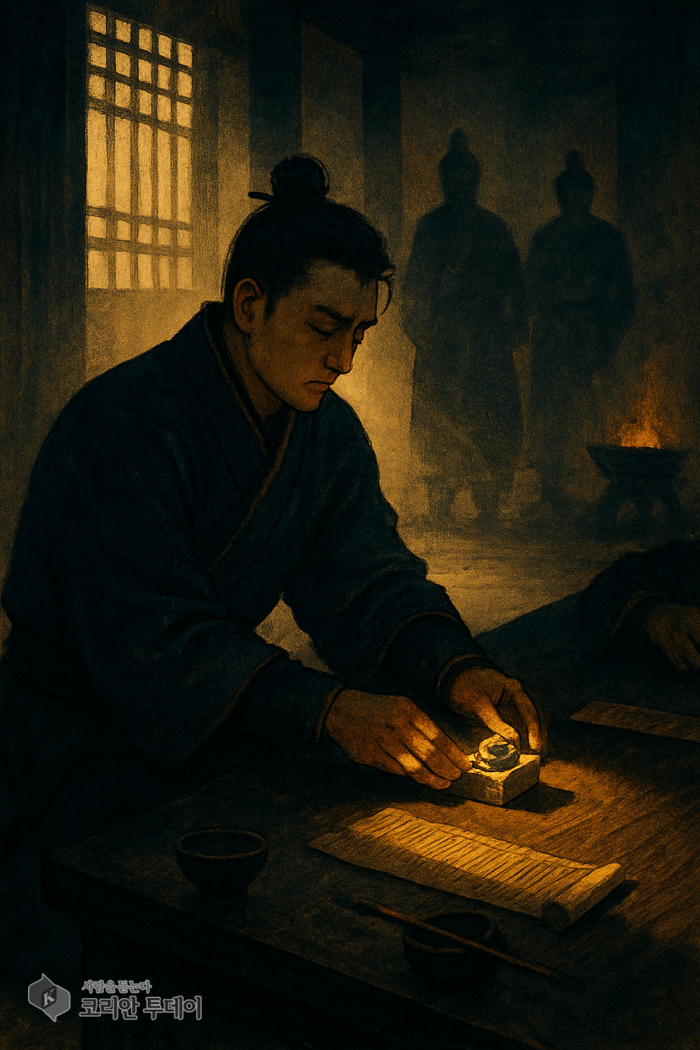
That night, a letter of pledge was written. Upon its first line was laid: “Sun Ce of Jiangdong entrusts to Lord Yuan of Shouchun a single fragment of the Seal of the Transmitted State, a relic of his late father, as pledge. He borrows three thousand soldiers and five hundred horses; he shall cross the river and settle Jiangdong. On the day Jiangdong is settled, the jade shall return into Sun Ce’s bosom.”
The next morning, Sun Ce stood before Yuan Shu. The jade in his bosom was laid quietly upon the table. Yuan Shu’s eyes opened deep. The dream of emperorship was reflected upon that single fragment. Sun Ce spoke low. “My Lord. I wish to borrow, upon this fragment as pledge, three thousand soldiers and five hundred horses. After Jiangdong is settled, I shall come back to reclaim this fragment.”
After a long silence, Yuan Shu laughed low. “Good. For as long as this single fragment remains upon this table, I shall grant three thousand soldiers and five hundred horses. The victory or defeat of Jiangdong shall be your share.” The letter of pledge passed through two hands and was pressed with the seals of both men. The fragment of jade entered into Yuan Shu’s table.
Sun Ce, stepping out through the gate of Shouchun, lifted his head toward the sky. It was an evening on which his father’s single breath had, for a moment, departed from his bosom. Zhu Zhi and Lü Fan stood at his left and right. Three thousand soldiers and five hundred horses were drawn up outside the city gate. The road toward Jiangdong was, this night, opening for the first time.
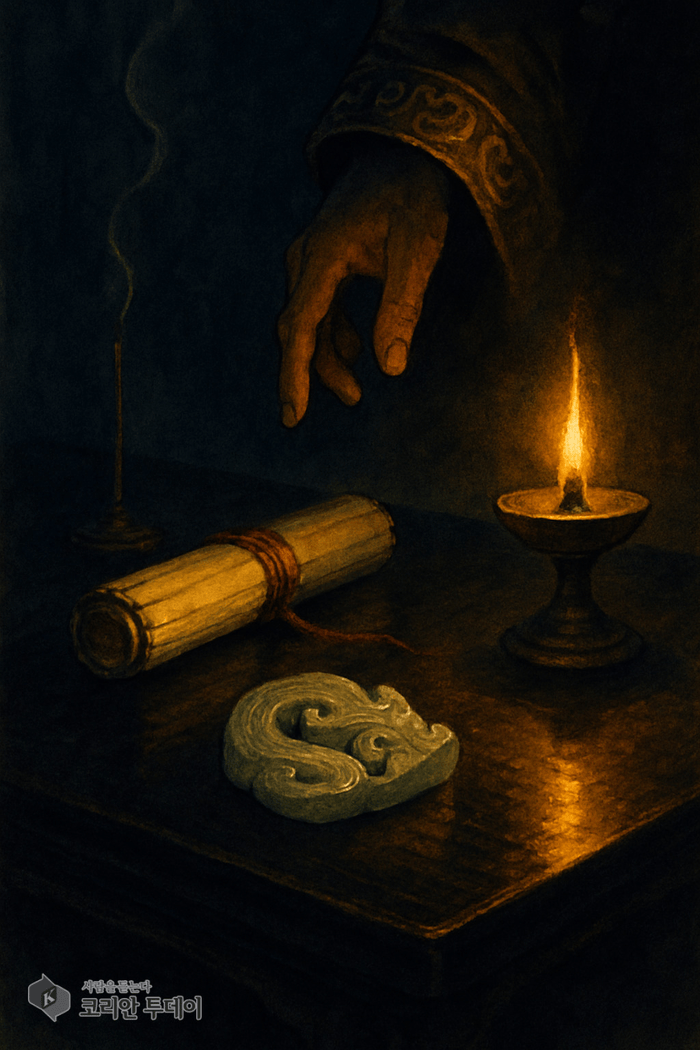
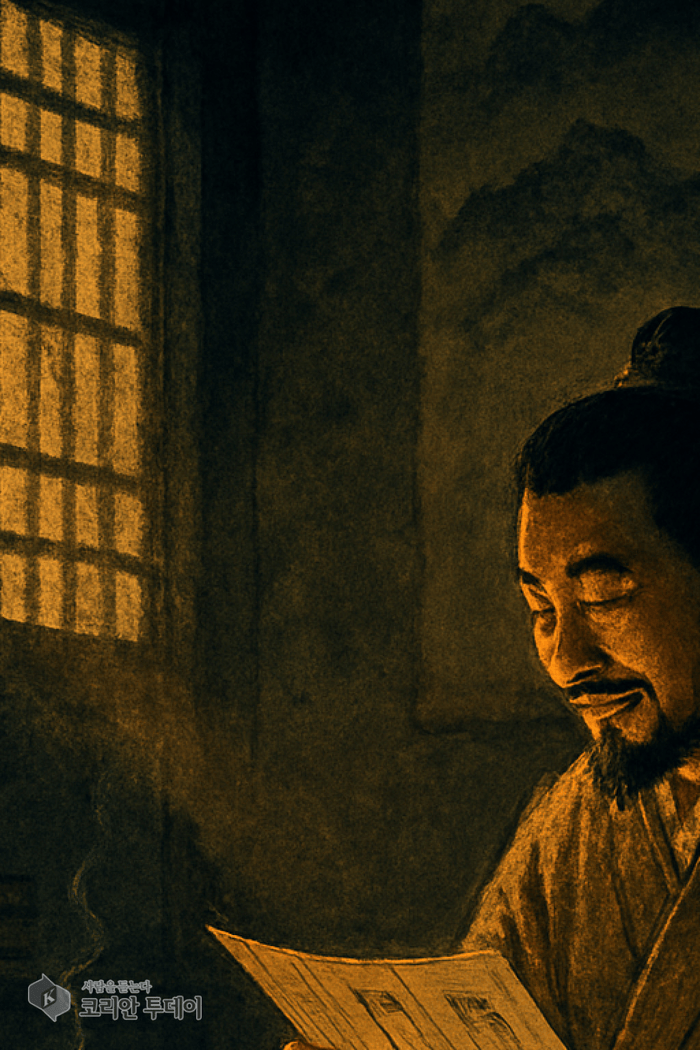
Inside the city, behind him, the jade fragment lay upon Yuan Shu’s table under a single lamp. Yuan Shu, long after the young man had gone, drew a finger across the carved dragon of the jade and felt, beneath the skin of the stone, a cold that did not belong to any jade of his own collection. The cold was — he did not know it then — the last grain of a dead man’s breath still pressed upon the seal. In the months to come, Yuan Shu would press that breath into the shape of a dream; the dream would, within three years, undo him. But tonight, the dream had only just been laid upon a table.
Outside the walls, the three thousand men began to move. Sun Ce gave no long speech to them. A young general who has laid his father’s last breath upon another man’s table rarely makes long speeches in the hour of departure. He rode at the head; Zhu Zhi and Lü Fan rode at the flanks; the men rode in silence. Somewhere in the first rank a soldier coughed; a horse shifted its gait; and the column was quietly out upon the road. Behind them, the gate of Shouchun closed by a single degree, as if to measure the distance a young man’s bosom had just grown from its old lodging.
The fifty-fifth night of Book 2 deepened quietly above a table of Shouchun. The three characters Chabyeongsae (借兵璽, the jade that borrows soldiers) were planted as a seed: a jade, carrying a father’s last breath pressed upon its surface, ceded its seat upon the table to a letter of pledge, and upon that seat the numbers of three thousand soldiers and five hundred horses returned as the single number of a single paper. On the evening of Day 54, a secret letter had been laid inside a drawer; this night, a jade was laid upon a table.
—
“✒️ A Word from the Commentator — Dr. Yeon Samheum
There is an evening on which a single relic, long laid inside one person’s bosom, is laid upon another person’s table as a pledge. In the instant that single fragment is set down, a father’s last breath is transferred along with it to the seat of that table. Inside your own bosom this evening, is there perhaps a single relic that must be laid as pledge? Might you look, quietly, into the weave of that laying?


Leave a Reply