
[Day 20] To the Lords of All Under Heaven
January · *Stars Gather* | about 3 min read

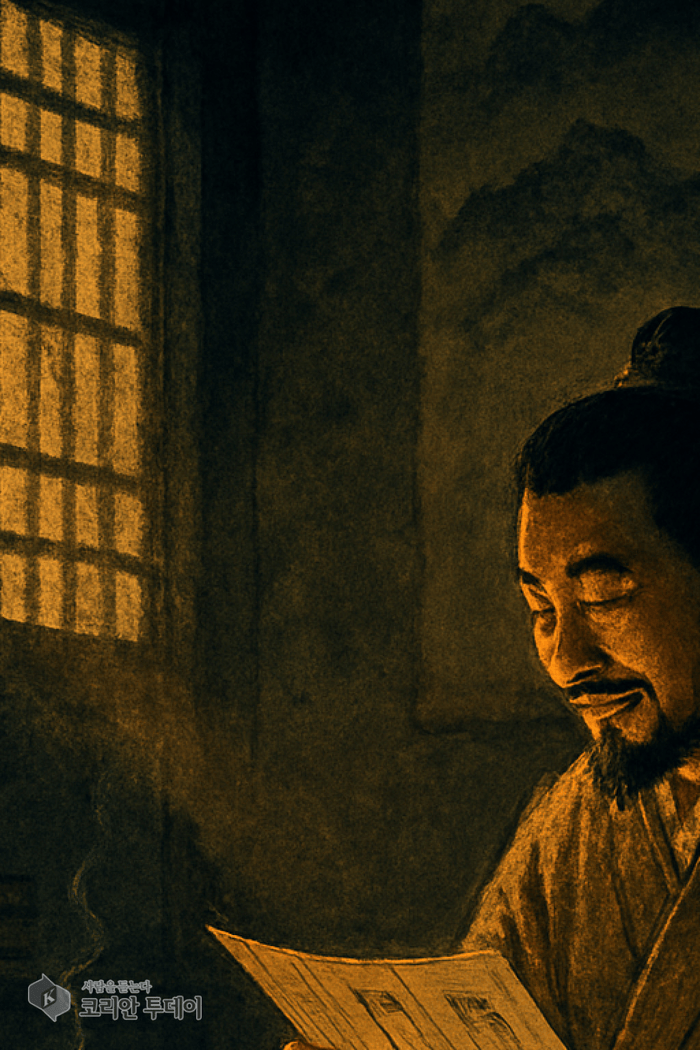
On the morning the proclamation (檄文) left Chenliu, Cao Cao entrusted one letter to each of his retainers. In all, seventeen letters. They were copies of a single letter, yet the name of each recipient had been written in separately, one by one. As he wrote each name, the tip of Cao Cao’s brush paused briefly. From those pauses a single thread unwound in each direction, reaching out beyond the courtyard of Chenliu that morning.
The first letter went to Yuan Shu (袁術), General of the Rear (後將軍) and grand administrator of Nanyang (南陽). The second to Han Fu (韓馥), governor of Jizhou (冀州); the third to Kong Zhou (孔伷), governor of Yuzhou (豫州); the fourth to Liu Dai (劉岱), governor of Yanzhou (兗州); the fifth to Wang Kuang (王匡), grand administrator of Henei (河內); the sixth to Zhang Miao (張邈), grand administrator of Chenliu (陳留); the seventh to Qiao Mao (喬瑁), grand administrator of Dongjun (東郡).
The tip of Cao Cao’s brush paused a little longer before the eighth name: Liu You (劉繇), grand administrator of Shanyang (山陽). The ninth was Bao Xin (鮑信), Chancellor of Jibei (濟北). The tenth, Kong Rong (孔融), grand administrator of Beihai (北海). The eleventh, Zhang Chao (張超), grand administrator of Guangling (廣陵). The twelfth, Tao Qian (陶謙), governor of Xuzhou (徐州).
The thirteenth was Ma Teng (馬騰), grand administrator of Xiliang (西涼). The fourteenth, Gongsun Zan (公孫瓚), grand administrator of Beiping (北平). The fifteenth, Zhang Yang (張楊), grand administrator of Shangdang (上黨). The sixteenth, Sun Jian (孫堅), Marquis of Wucheng (烏程侯) and grand administrator of Changsha (長沙).
Before the seventeenth name, Cao Cao’s fingertips came to the longest pause of all. Yuan Shao (袁紹), Marquis of Qixiang (祁鄉侯) and grand administrator of Bohai (渤海).
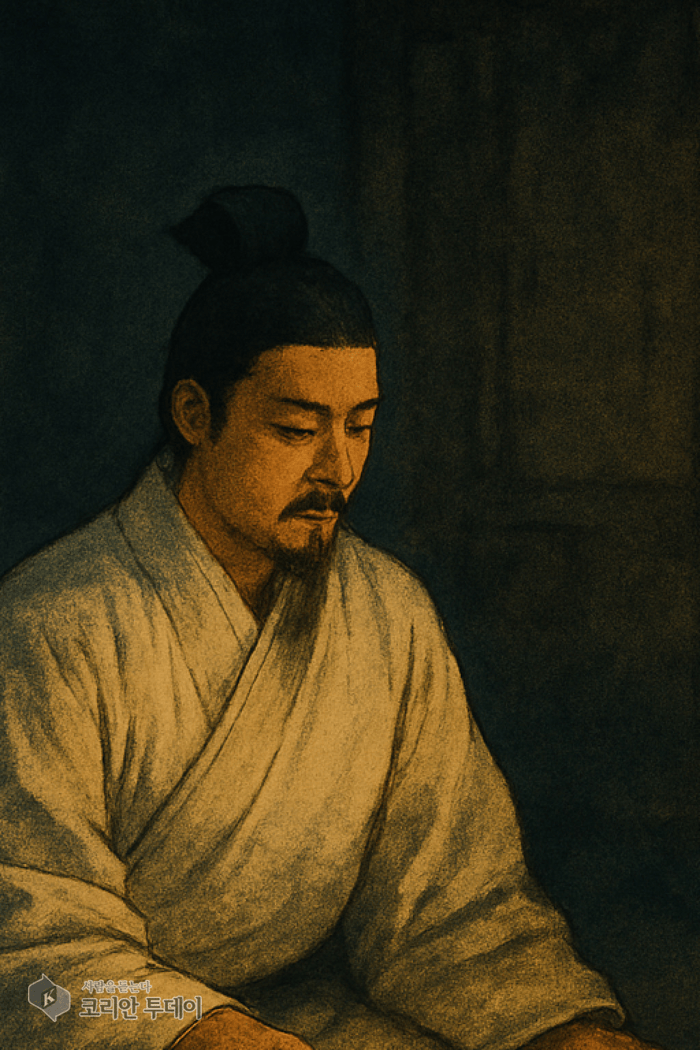
As the brush descended upon Yuan Shao’s name, Cao Cao laughed quietly to himself. This was the very man he had met at Minister Wang Yun’s house in Luoyang. Even in those past days in the Luoyang hall, when Cao Cao laughed at the weeping ministers with the line “What will weeping alone accomplish, old one?”, this was the man who had stayed long in silence to one side. Today Cao Cao wrote the style Benchu (本初) above his name once more. As that style settled upon the paper, one wing of an age folded and opened again.
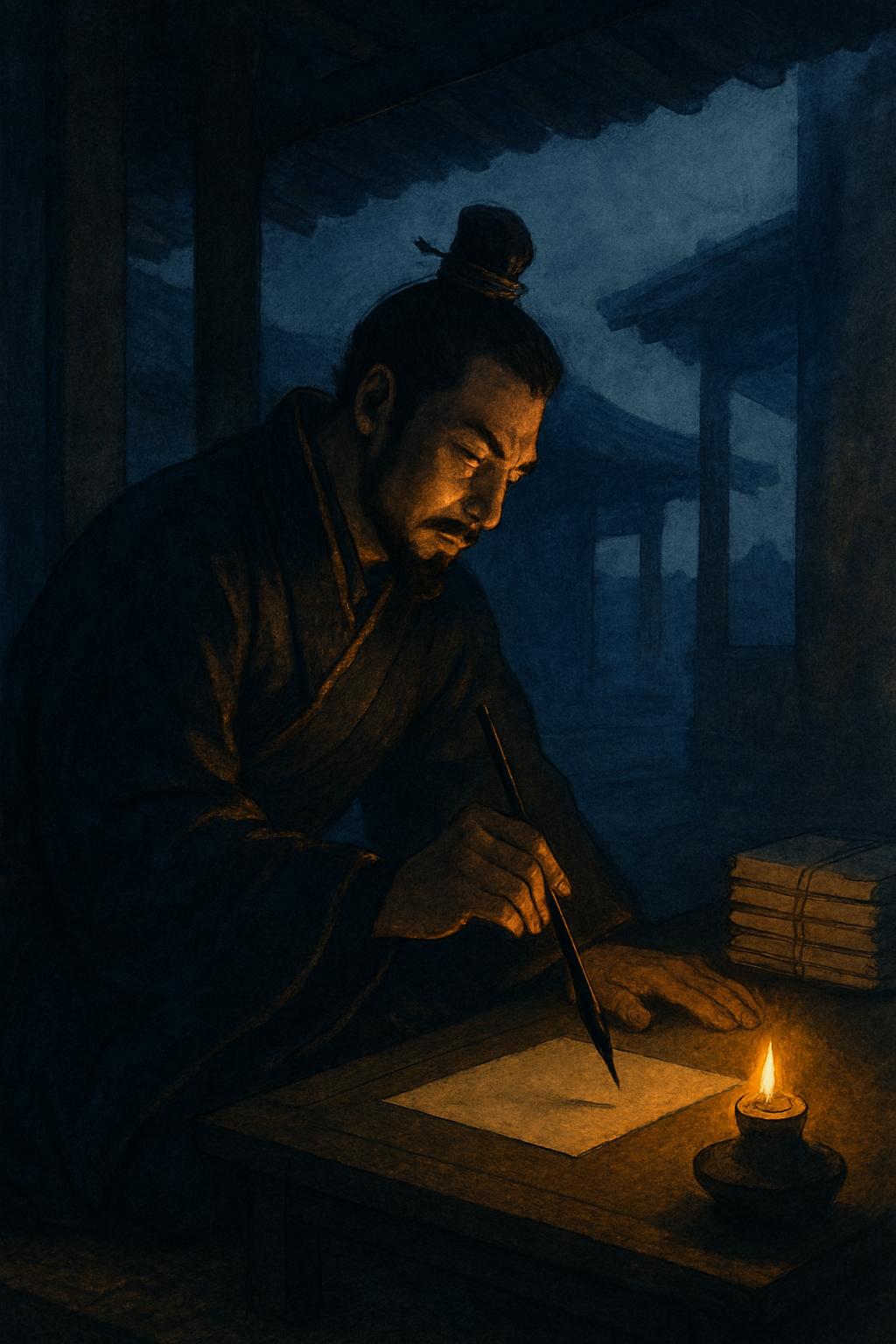
The body of the proclamation was short. Cao Cao did not write at length. Writing that moves people, he had learned in thirty-five years, does not move by being long.
“Cao and the rest respectfully declare to all under heaven by the great righteousness. Dong Zhuo has deceived Heaven and covered the Earth, has destroyed the state and murdered the ruler, has defiled the palace and harmed the people; he is wolfish and unkind, and his crimes have heaped up. Now, bearing the Son of Heaven’s secret edict, we shall gather a great righteous militia, sweep the Central Plains (華夏), and cut down every vicious band. May you raise righteous soldiers together, wash the common anger together, uphold the Royal House, and save the living people. On the day this proclamation reaches you, rise swiftly and carry it out.”
Seventeen messengers left the courtyard of Chenliu. Seven ran northward, six southward, three westward, one eastward. A single writing had split into seventeen strands that morning. Within that courtyard, where each strand loosened in its own direction, the tip of Cao Cao’s brush settled quietly.
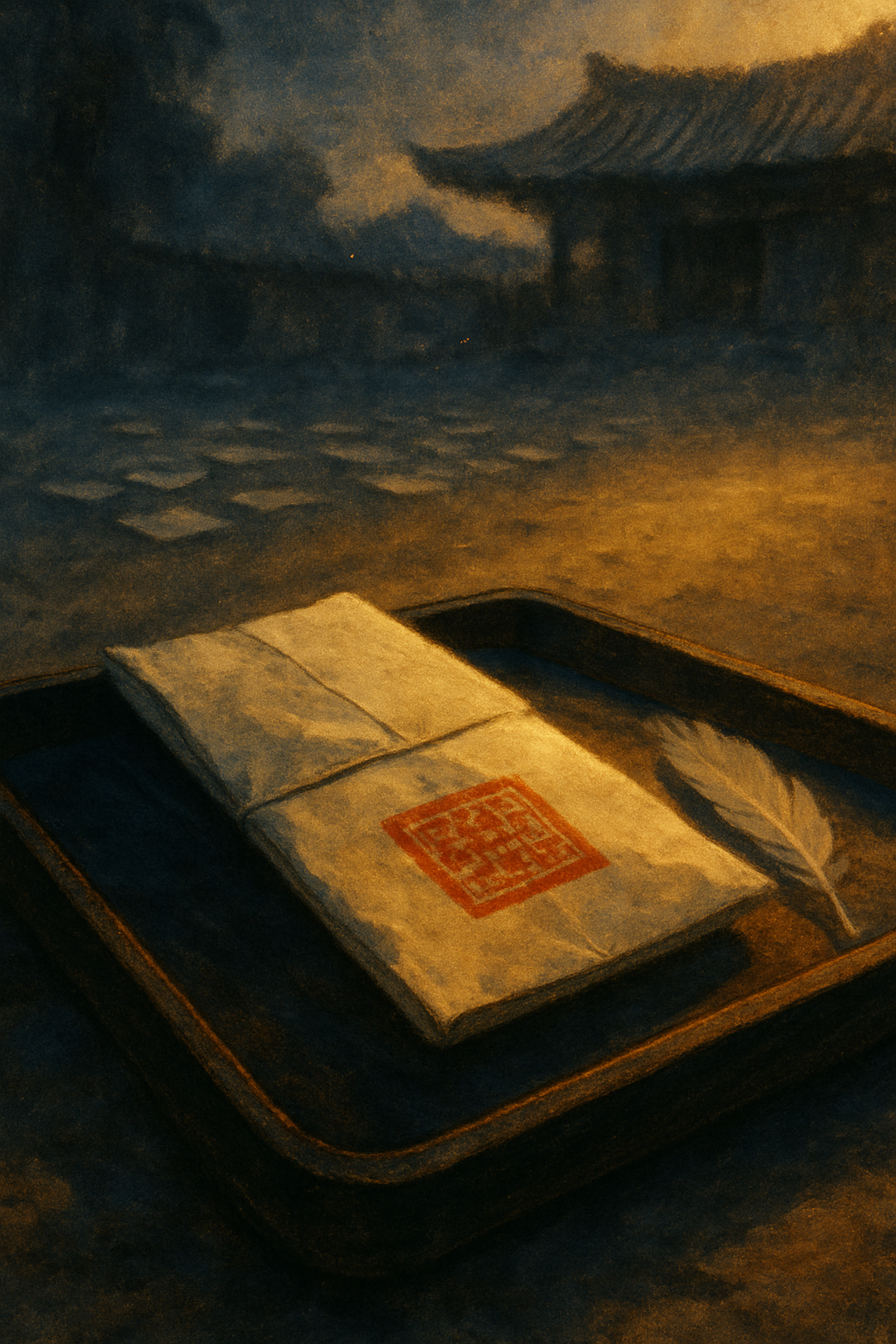
Some time later, the seventeen strands of string returned, each bearing a reply. Yuan Shu assented; Han Fu assented; Kong Zhou, Liu Dai, Wang Kuang, Zhang Miao, Qiao Mao, Liu You, Bao Xin, Kong Rong, Zhang Chao, Tao Qian, Ma Teng, Gongsun Zan, Zhang Yang, and Sun Jian each sent a line of assent. Last of all, a reply stamped with the great seal of Yuan Shao returned. Within that paper a single line was written: Yuan Shao would take the seat of the chief (盟主).
Among the seventeen replies, one came not from a seated lord of a province but from a small guest-army under Gongsun Zan’s flag. A brief appended line noted that three sworn brothers of a small band — surnamed Liu, Guan, and Zhang — wished to attend the gathering beside the cavalry of Beiping. The name Liu Bei had not yet been written large upon the paper of the court; yet on the paper of this reply, it stood beside that of Gongsun Zan. Cao Cao’s eye rested briefly on that appended line. Then his brush moved on to the next.
The twentieth morning of Book 1 opened quietly upon the tip of a brush in the courtyard of Chenliu. The three characters Totakgyeok (討卓檄, the proclamation to strike Dong Zhuo) were planted as a seed: the posture in which a single writing splits into seventeen strands, and gathers itself again into the seal of a single chief. The two characters on Day 19’s white banner of Suuigi had, this morning, extended into seventeen strands of returning replies.
—
📌 Knowing Apart — History (正史) vs Romance (演義)
🟢 The Records of the Three Kingdoms (Wei Shu, Biography of Emperor Wu 武帝紀, and Biography of Yuan Shao 袁紹傳) plainly records that in early 190 CE, the lords of Guandong (關東) formed an allied army to strike Dong Zhuo. 🟢 That Yuan Shao (袁紹, grand administrator of Bohai) was raised as the chief (盟主), and that Cao Cao joined as General of the Striking Force (奮武將軍), is likewise recorded in the histories. 🟡 Pei Songzhi’s (裴松之) commentary notes that several variant lists of the specific lords who joined this allied army coexist. The list of seventeen in this commentary follows the list given in Romance. 🟠 Romance of the Three Kingdoms chapter 5 dramatizes the specific list of the “Eighteen Paths” (十八路) of lords and the specific text of Cao Cao’s proclamation. This commentary follows the frame of that adaptation, and places in focus the single string of seventeen strands gathering again into the seal of a single chief. 🔴 The three-character creation Totakgyeok (討卓檄) and the mirror reading by which a single writing splits into a single strand in each direction and gathers again inside a single seal are reconstructions of this commentary. The character-creation line has reached, today, its twentieth seat.
“✒️ A Word from the Commentator — Dr. Yeon Samheum
There is a morning on which one writing splits into seventeen strands, each running in the direction of a single thread, and then gathers back inside one seal. It is a seat in which a writing moves not because it is long, but because the grain of its writing settled low. Upon the tip of your own brush this morning, is there perhaps the grain of a writing that has settled low? Might you look, quietly, into the weave of that settling?
🌍 That Year, on the Other Side of the Earth…
In the winter of 190 CE, at an office of a frontier province of Italy under Rome’s Commodus, it is said that a frontier commander circulated seventeen public letters to the generals of each legion. A single writing split into seventeen strands, and each strand departed, then gathered itself back into the seal of a single supreme commander. The Latin phrase litterae publicae (public letters) was, it is said, inscribed at the margin of that winter’s record of the office. On the morning when, at the eastern edge, seventeen letters of the proclamation left the courtyard of Chenliu, at the western edge a single writing was likewise splitting into seventeen strands.
📅 Tomorrow, Day 21: Pour Me One Cup
“The allied army of the Eighteen Paths of lords gathered upon a plain north of Luoyang. Guan Yu stood before Yuan Shao’s seat and asked for one cup of wine.” — Sam H. Yeon, Ph.D.
Commentary — Yeon Samheum, the Commentator · Sam H. Yeon, Ph.D. · 延三欽博士


Leave a Reply