
[Day 53] The First Morning at Xuchang
March · *The Woman Beneath the Moonlight* | about 3 min read

On the morning after Emperor Xian’s carriage reached Xuchang, the first court of the new capital was held upon the main hall of Xudu (the capital, Xuchang). The Son of Heaven’s throne, moved here beyond the ashes of Luoyang, rested between the new pillars of Xudu.
Below the steps of the hall, Cao Cao’s armor stood in order. Cao Cao ascended to the seat of the Grand General (大將軍) and took his place beside the Son of Heaven. To his left and right, the four counselors Xun Yu (荀彧), Cheng Yu (程昱), Guo Jia (郭嘉), and Xun You (荀攸) bowed their heads low, one after another. The hundred officials lined up in two files along the stairs below.
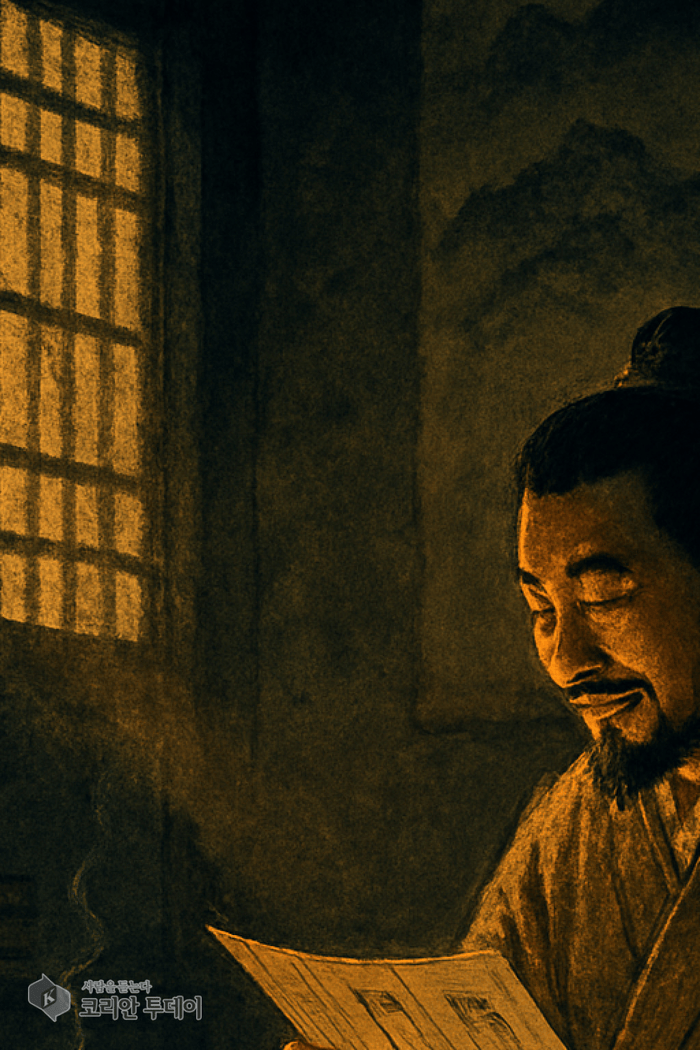
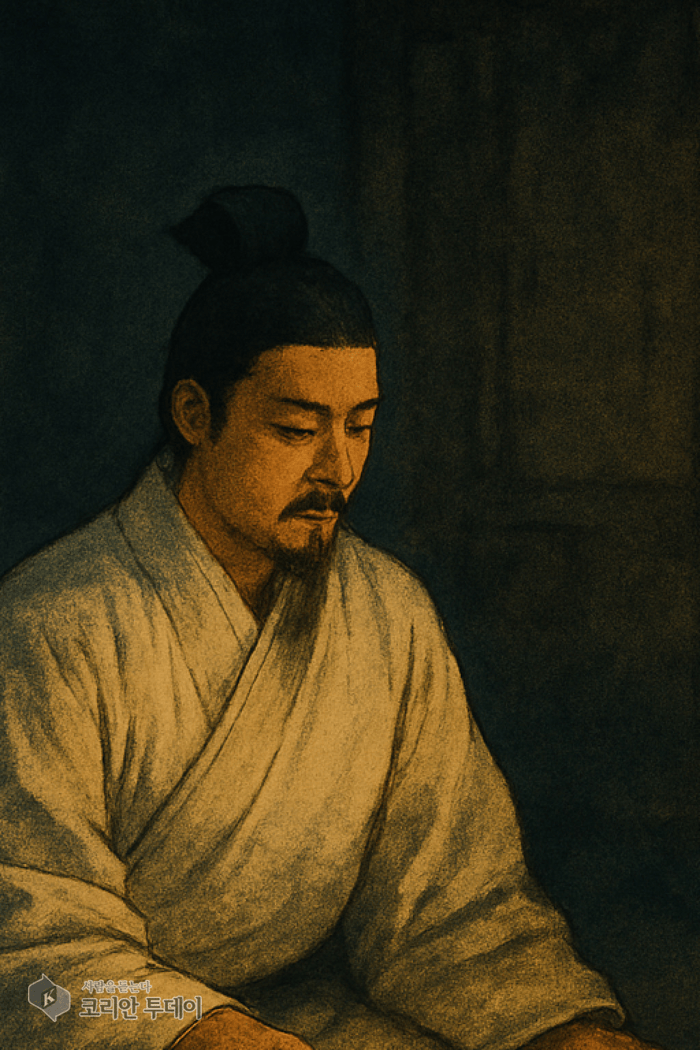
Upon the throne, Emperor Xian drew a low and even breath. For a year an Emperor’s body had drifted upon the road; now, in the quiet of this main hall, that body was laid at a seat of its own for the first time. A servant’s hand took up a single edict and raised it before the throne. Upon the seal-space of the edict, the imperial jade seal had been pressed. The first line of the edict that Xun Yu had written down the night before was, this dawn, passing through the Son of Heaven’s hand to the hundred officials below.
“Chancellor Cao Mengde is raised to the rank of Grand General (大將軍), and is invested with the title Marquis of Wuping (武平侯).” Cao Cao bowed his head deeply. Behind his bowed back, the hundred officials bent low together. The first edict of the first court of Xudu had settled upon one man’s shoulders.
The second line of the edict followed. “Xun Yu is appointed Palace Attendant (侍中) and Director of the Imperial Secretariat (尙書令).” Xun Yu bowed his head deeply. The first line his own brush had written down the night before was this morning settling, first of all, upon his own body. The one who writes the first line of a plan is the first to carry its first weight upon his own shoulder. A grain of recognition passed through Xun Yu’s chest in the quiet.
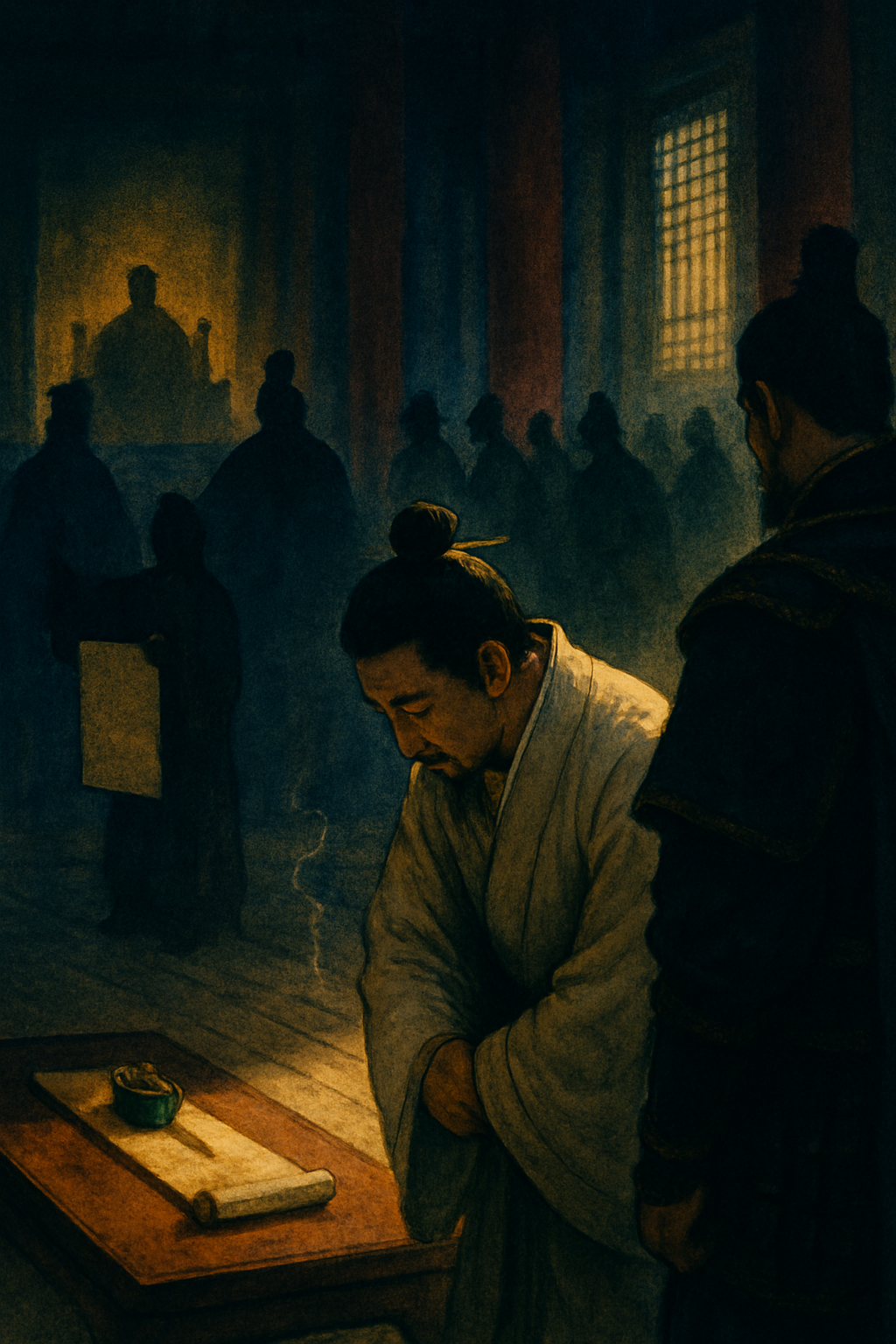
The edict went on. The eight generals — Cao Hong, Cao Ren, Xiahou Dun, Xiahou Yuan, Yue Jin, Li Dian, Yu Jin, and Xu Huang — each received the name of an office. Cheng Yu rose as Chancellor of Dongping (東平相); Guo Jia as Libationer of the Excellency of Works (司空祭酒); Xun You as Military Counselor (軍師); Liu Ye as Deputy of the Excellency of Works (司空掾曹). Dong Zhao (董昭) was made Prefect of Luoyang (洛陽令); Man Chong (滿寵) was made Prefect of Xuchang (許都令). Each time a name was called, that man’s head bowed low. The main hall of Xudu fell quietly beneath the shade of Cao Cao’s single name.
After the court ended, Cao Cao took Xun Yu’s hand. “Wenruo. The first line you wrote down last night has come down thus, this morning. From today, through the long days of court ahead, please open the way before my step, at the head.” Xun Yu bowed his head quietly. A corner of the first morning of Xudu rested inside the clasped hands of those two.
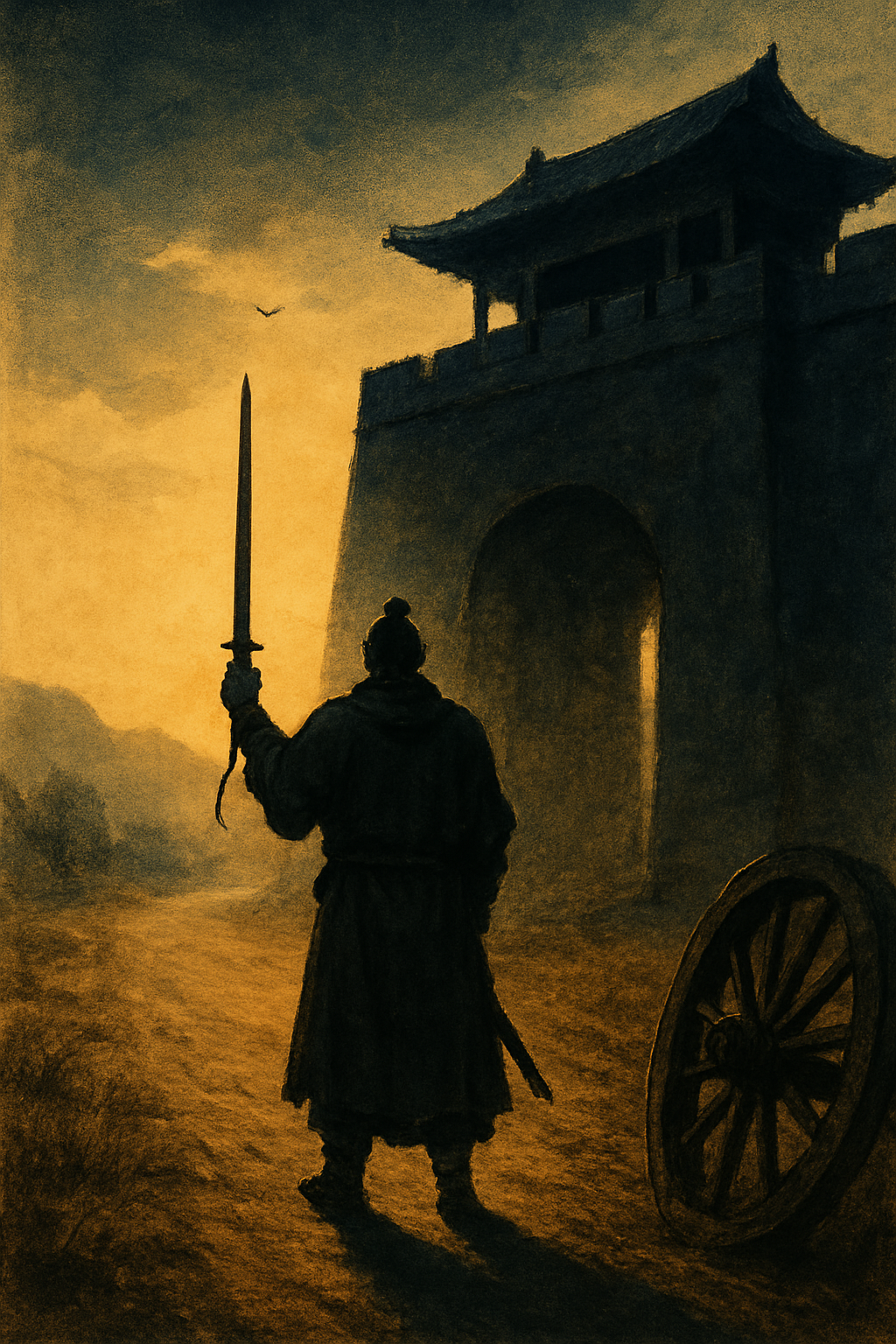
Meanwhile, outside the gate of Xudu, the sword of Dong Cheng (董承), who had escorted the imperial carriage the eight hundred li from Luoyang, pointed speechless toward the empty air. His own merit had not been called, this morning, in any line of the edict. That his name — the name that had rolled the wheels of the imperial carriage eight hundred li through famine and rain — had been laid at no seat of the first court of Xudu, settled quietly inside Dong Cheng’s chest. That single knot of breath in Dong Cheng would, a season from now, become the first thread of a girdle-robe passed from one emperor to one hand.
Dong Cheng did not speak of the knot to anyone that morning. A captain who has escorted an Emperor through the ashes of his own capital is not much given to speech in the hour when other men receive their seats. He watched a small bird cross the air above the palace wall and did not turn his head to follow it. The robe that would one day leave his hand, and the finger upon which its blood would one day be pricked, were this morning still folded inside a chest in his own house: a silk his wife had been mending for weeks, unaware it had already begun to carry the first thread of a chronicle it had never asked to carry.
Inside the hall, the new seats settled one by one into the quiet. Cao Hong took the seat of a general and looked neither left nor right; Xiahou Dun’s single eye moved once across the rafters and rested upon the beam above Cao Cao’s head; Xu Huang, whose name had only three weeks earlier been spoken at the gate of Yangcheng beneath the hand of Man Chong’s persuasion, stood in the line of the eight generals and received the name of his office without changing the set of his face. Each of these men was, this morning, receiving a seat that had been waiting years for him; and each was, this morning, aware in his own way that the seat had been shaped not only by his own deeds but by the first line of one brush in one tent on one night.
The fifty-third morning of Book 2 opened quietly upon the main hall of Xudu. The three characters Heodojo (許都朝, the first court of Xudu) were planted as a seed: the breath on which the new throne of an Emperor, the first bow of a Grand General, and the speechless sword of an old escort lay at a single seat. Day 52’s first line of Bongnyeongil (奉令一) rested, this morning, upon the seal-space of one jade.
—
“✒️ A Word from the Commentator — Dr. Yeon Samheum
There is a seat on which the first line a person has written down in the night lands, the next morning, first of all upon that same person’s shoulder. The one who writes the first line of a court’s edict is the one who first receives that court’s first weight upon his own body. Upon your own shoulder this morning, is there perhaps a first line your own brush wrote last night now descending? Might you look, quietly, into the weave of that descent?
THE KOREAN TODAY × WIA CODE
이 기사의 WIA Code

WIA Code 스캐너로 비추면 인터넷 없이 발행 사실과 위·변조 여부를 확인할 수 있습니다.
휴대폰 기본 카메라로 찍으면 스캐너 안내 페이지가 열립니다 — 기사 바로 열기

움직이는 코드는 스트림입니다 — WIA Code 스캐너로 약 46초 비추면 기사 전문(사진 포함)이 폰에 저장되어 인터넷 없이도 읽을 수 있습니다.
WIA Code · 코리안투데이


Leave a Reply