
Good evening. It’s October 7, 1925 — a Wednesday — and as you wind down your day, three continents were quietly writing history at once. In Seoul, a census tally kept growing and a newspaper’s silence kept stretching. In Switzerland, statesmen sat down for a third day of talks that would reshape Europe. And in Pittsburgh, baseball delivered both a triumph and a tragedy on the very same afternoon.
Korea Under Colonial Rule
Ten days earlier, colonial Korea had undergone its first modern, simultaneous population census — the Simple National Census of 1925, conducted at midnight on October 1st. By early October, the tallies were still rolling in: the peninsula’s population was recorded at roughly 19.52 million people, counted village by village, household by household, for the first time on a single unified date.
But the bigger story on Seoul’s streets was a silence. On September 8th, the Government-General had suspended Chosun Ilbo indefinitely, objecting to an editorial titled “The Political Relationship Between Chosun and Russia.” Editor Kim Dong-seong and publisher Kim Hyeong-won faced charges under the Newspaper Law; the editorial’s author, Shin Il-yong, faced the far heavier charge of violating the Peace Preservation Law. By October 7th, the paper had been silenced for twenty-nine straight days, with no announced date for its return.
Meanwhile, the physical scars of summer lingered. Four typhoons and weeks of flooding — the “Eulchuk Great Flood” — had killed more than 600 people and destroyed bridges and levees across the country. Two months later, repairs were still very much underway.
East Asia in Turmoil
Across the Tumen River in northern Manchuria, scattered Korean independence forces — fractured since the Free City Incident — were quietly regrouping. Leaders including Kim Jwa-jin were preparing for a general assembly just over a week away, one that would formalize what became known as Sinminbu, a new administrative and military body for Koreans in exile.
The World Stage
In Locarno, Switzerland, delegates from Britain, France, Germany, Italy and Belgium were in their third day of negotiations over a treaty guaranteeing Germany’s western borders. Austen Chamberlain, Aristide Briand and Gustav Stresemann were at the table; the talks would run until October 16th and eventually produce what history remembers as the Locarno Treaties — a fragile peace that briefly eased postwar Europe’s tensions.
Colonial Parallels
Korea was hardly alone in living under foreign administration in 1925. In British India, the census and control apparatus that colonial Korea’s own count echoed had long been a tool of governance rather than mere record-keeping. In Ireland, newly independent but still negotiating its border and its identity, newspapers too knew the sting of official suppression. Press censorship — the very mechanism silencing Chosun Ilbo — was a familiar colonial-era tool from Dublin to Delhi to Seoul: control the count, control the story, control the people.
Person of the Day
In a solitary cell, a young anarchist named Park Yeol was confronting his own historical moment. Charged with high treason alongside his partner Kaneko Fumiko for allegedly plotting against the imperial family, Park had been held since June. Around this time in October, he reportedly entrusted preliminary hearing documents and photographs to an acquaintance, expressing hope that his convictions might one day be understood — while asking that the photographs themselves remain private. His case would become one of the most watched political trials of the colonial period.
Understanding Daily Life
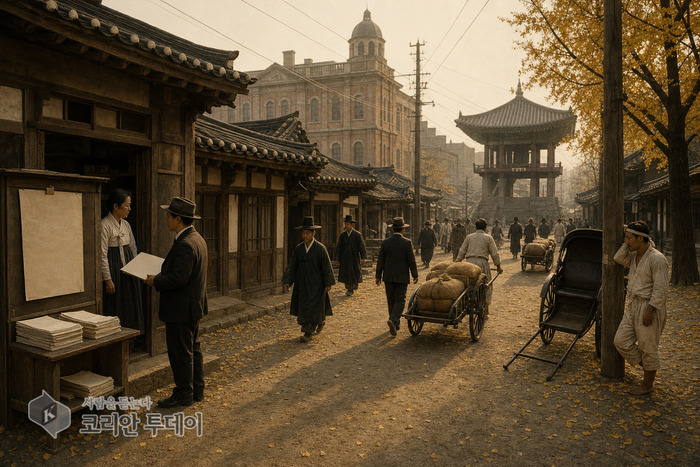
For most Koreans, October 7th looked far less dramatic. Schoolchildren in uniform walked familiar alleys to class; bookshops did brisk business in new-term textbooks. In America that same day, over 41,000 fans packed Pittsburgh’s Forbes Field for Game 1 of the World Series — a Washington Senators win behind pitcher Walter Johnson. But baseball’s joy was shadowed by loss: legendary pitcher Christy Mathewson, weakened by tuberculosis linked to wartime gas exposure, died that same afternoon at age 45. It was, for American sports fans, a day of triumph and grief intertwined.
Century Mirror
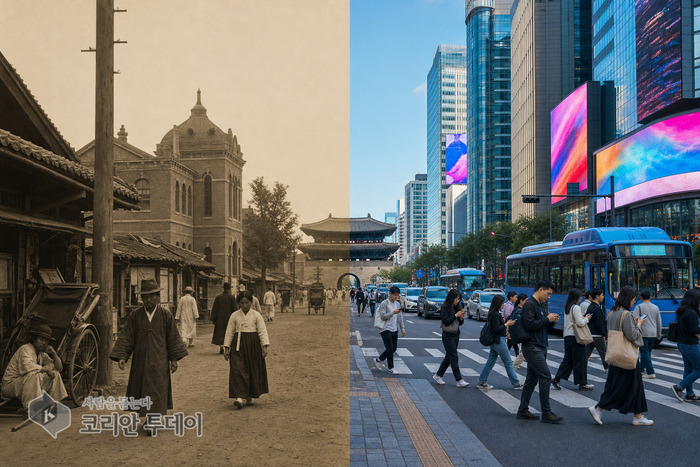
A hundred years ago, attending school in Korea was the exception, not the rule, and lessons were split between Korean and Japanese under colonial policy. Today, universal education is taken for granted. Where rice harvests once determined whether a household ate well through winter, modern Korea enjoys food security and global cuisine on every corner. The quiet arithmetic of a census — how many people, where, doing what — has given way to a nation counted not just in numbers, but in opportunity.
The census tally kept climbing. Chosun Ilbo’s silence continued. In Locarno, the talking went on. Join us tomorrow evening at 10:10 PM KST for another day, a century ago.






Leave a Reply