
Hook Opening
Good evening, and welcome to 100 Years Ago Today. As the streets of colonial Gyeongseong (Seoul) settled into a humid summer evening on Friday, July 30, 1926, a quiet, unofficial rumor was moving faster than any headline: a Japanese woman married to a Korean independence activist had been found dead in a prison cell, and the colonial government had just banned the photograph that proved it.
Korea Under Colonial Rule
The woman was Kaneko Fumiko, a Japanese anarchist and the wife of Korean anarchist-independence fighter Park Yeol. Arrested together with Park in the chaotic days after the 1923 Great Kanto Earthquake, she had been convicted of plotting against Emperor Hirohito and sentenced to death, later commuted to life imprisonment in April 1926. On July 23, she was found dead — strangled — inside Utsunomiya Prison. Prison authorities called it suicide; her defense lawyer, Fuse Tatsuji, along with fellow anarchists from the Heukuhoe and Buryeongsa groups, refused to accept that account. Around the same time, a photograph of Park and Kaneko sitting together began circulating unofficially in Tokyo. On July 29, the Government-General banned its publication in newspapers and magazines — a ban that would not be lifted until the following January. In Gyeongseong, papers were still treating the news as unconfirmed rumor rather than a confirmed front-page story. What made her case resonate so deeply was not only the manner of her death but who she had chosen to become: at her first public trial in February, she appeared in a white jeogori and black chima and identified herself by her Korean name, Park Mun-ja. In March, she formally registered her marriage to Park Yeol at a Tokyo ward office, entering his family register as his wife — a Japanese woman who had, on paper, become Korean, and who died without ever setting foot on Korean soil.
East Asia in Turmoil
Colonial Korea itself was still unsettled. Students who had marched during the funeral procession of the last Korean emperor, Sunjong, on June 10 were still awaiting trial. The Government-General’s education bureau had already barred indicted students from Keijo Imperial University, and dozens at Chungang and Paejae schools remained under indefinite suspension. In Jeonju, the aftershocks of a student strike that had expelled a Japanese principal and dismissed 54 students had not yet settled.
The World Stage
Across the sea in China, Chiang Kai-shek had declared the Northern Expedition on July 9 before 50,000 troops in Guangzhou, launching a campaign to reunify a China fractured by warlords — a war that would not conclude for two more years. In Japan, newspapers were split over how to interpret the death of a woman condemned for treason against the throne.
Colonial Parallels
Kaneko Fumiko’s story sits within a broader pattern of the 1920s: women across colonized and occupied societies risking their legal identity, and sometimes their lives, for political causes larger than themselves — from women jailed alongside nationalist husbands in British India to those supporting the Irish republican movement. What set her case apart was the deliberate, legal act of crossing an ethnic and imperial boundary through marriage itself, at a moment when Japan’s own laws rarely recognized such unions as anything but administrative footnotes.
Person of the Day
Kaneko Fumiko was 23 years old. Born into poverty in Japan and largely self-educated, she became one of the few women tried for treason against the Japanese emperor, and one of even fewer to legally take a Korean name and family register before her death. Decades later, in 2018, the South Korean government posthumously awarded her a national honor for her role in the independence movement — recognition that arrived 92 years after her uncertain death in Utsunomiya Prison.
Understanding Daily Life
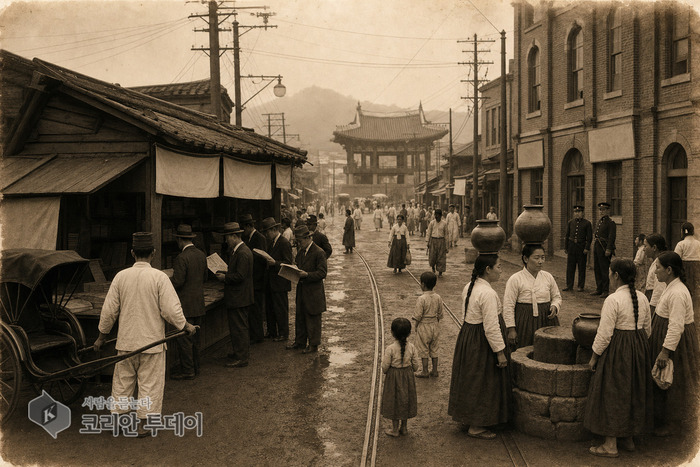
Along the well-side gathering spots of Gyeongseong, where women drew water and traded news each morning and evening, Kaneko’s story passed in hushed, careful tones. For a society that placed heavy weight on a wife’s duty to her husband’s family, the account of a Japanese woman who had taken a Korean name, a Korean husband’s register, and finally an uncertain death in his cause, was both foreign and strangely resonant.
Century Mirror
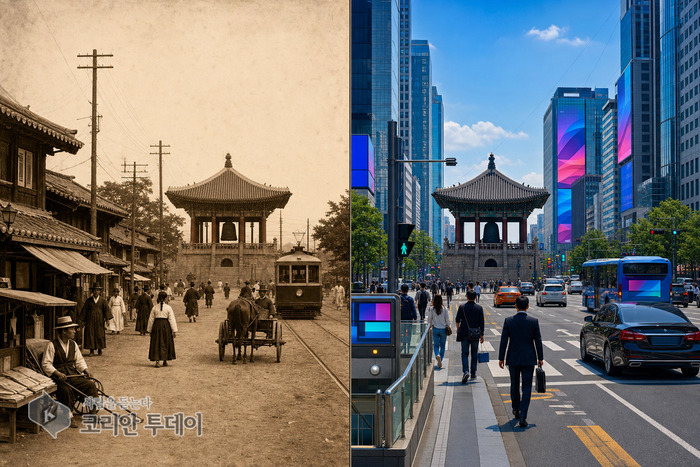
A century ago, a Korean woman could share a prison sentence with her husband but rarely see her own name printed under her own words. Today, women fill front pages under their own bylines, and cross-border marriages are recognized as equal partnerships under the law, not one-way transfers into a husband’s household register.
Tomorrow’s Preview
Tomorrow, July 31, Gyeongseong’s newspapers would begin printing Kaneko Fumiko’s death more openly. As you close out your evening, 🕙 we’ll meet again tomorrow at 10:10 PM KST.
THE KOREAN TODAY × WIA CODE
이 기사의 WIA Code

WIA Code 스캐너로 비추면 인터넷 없이 발행 사실과 위·변조 여부를 확인할 수 있습니다.
휴대폰 기본 카메라로 찍으면 스캐너 안내 페이지가 열립니다 — 기사 바로 열기

움직이는 코드는 스트림입니다 — WIA Code 스캐너로 약 55초 비추면 기사 전문(사진 포함)이 폰에 저장되어 인터넷 없이도 읽을 수 있습니다.
WIA Code · 코리안투데이






Leave a Reply