
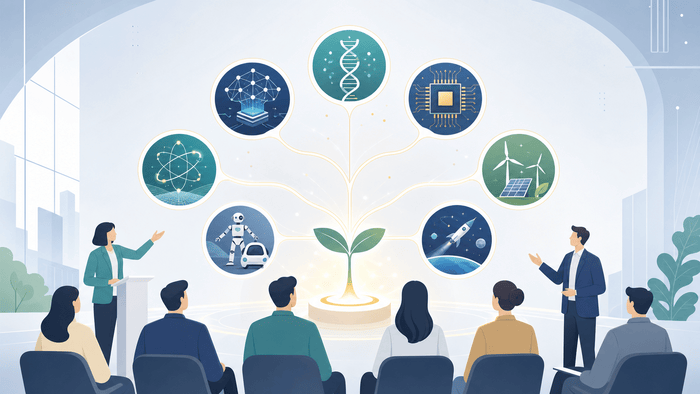
The government is launching the ‘7 SEED Projects’ to nurture seven future advanced-technology fields — including small modular reactors (SMR), nuclear fusion, quantum, space and aviation, and advanced biotechnology — into national growth engines. The Ministry of Science and ICT (Deputy Prime Minister and Minister of Science and ICT Bae Kyung-hoon) held the ‘Future Growth Engine 7 SEED Briefing’ jointly with related ministries at the Chungmu Hall of Cheong Wa Dae on August 12, and announced its promotion plan.
 [코리안투데이] Models of a marine SMR, a quantum computer and a lunar orbit satellite on display at the Future Growth Engine 7 SEED Briefing venue © 장형임 기자 |
At the briefing, private-sector experts spoke on the importance of energy technology and supply chains and the need to secure advanced technologies, after which the Ministry of Science and ICT presented its project promotion plan under the theme ‘The Engine of Future Pioneering: Advanced Technology.’ On display at the venue were models of a marine SMR, a quantum computer and a lunar orbit satellite, reflecting the government’s determination to develop and commercialize advanced technologies at an early stage.
‘SEED’ stands for Strategic Emerging Engines for Disruptive innovation — future growth engines that require strategic investment for disruptive innovation. The government judges that sustainable growth cannot be guaranteed by widening the gap in current mainstay industries alone, and it plans to sow the seeds of advanced technology now and cultivate them over the long term to secure the next generation of growth sources 10 to 20 years from now. In addition to three mega-projects such as semiconductors, it intends to pursue the 7 SEED projects to complete an ‘irreplaceable Republic of Korea.’
The 7 SEEDs are broadly divided into three domains. The first is ‘future clean energy,’ aimed at simultaneously resolving the surging power demand driven by the spread of AI and the challenge of carbon neutrality; the second is ‘next-generation frontiers,’ which push back the limits humankind has yet to reach; and the third is ‘advanced supply chains’ for critical minerals and materials, parts and equipment that form the foundation for a great leap forward.
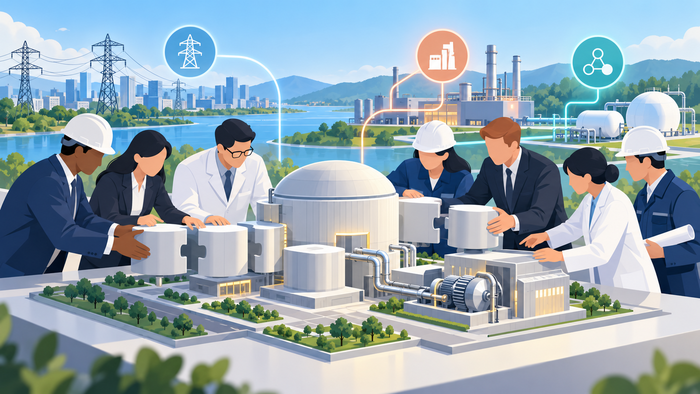
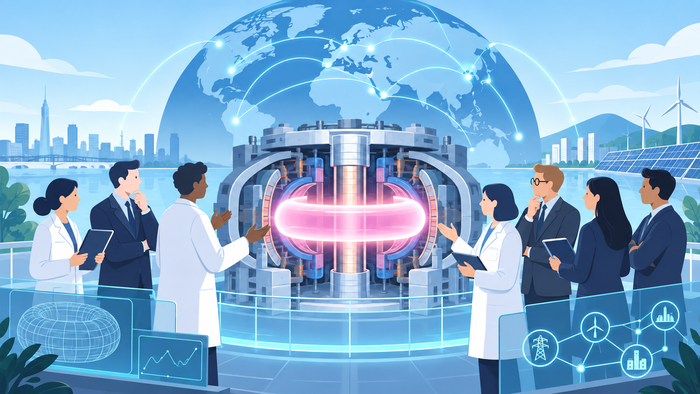
In the clean energy field, SMRs, nuclear fusion and breakthrough renewable energy were selected. Light-water SMRs will be commercialized by 2035, while non-light-water types will begin construction in the 2030s. The government will begin detailed design through public-private cooperation from 2027, and for non-light-water types it will establish a special purpose company (SPC) from the early stages of development to seize the global market. It will complete a technology-neutral, performance-based regulatory framework by 2030 to lower regulatory risk as well. For nuclear fusion, design and control will be automated through an ‘AI virtual fusion reactor’ and a demonstration infrastructure will be built in Naju; a Korean-type innovative fusion reactor will be built by 2035, with power generation targeted for the end of the 2030s. In renewable energy, the government will pursue the commercialization of perovskite tandem cells with efficiency of 35 percent or more, ultra-large wind turbines of 20MW and above, large-scale water electrolysis demonstration for clean hydrogen, and localization of GW-class HVDC.
In the next-generation frontier field, quantum, space and aviation, and advanced biotechnology are targets for cultivation. In quantum, the goal is to secure a domestic quantum computer of the 100-qubit class capable of error correction by 2029, and to pursue a ‘K-Quantum Foundry’ based on the nation’s semiconductor capabilities to rise to first place in the world in quantum-chip manufacturing capacity within 10 years. Space and aviation will begin with the launch of a lunar orbit communications satellite in 2029, followed by the country’s first privately led lunar lander (700kg class) in 2030 and an 1,800kg-class lander in 2032, while a Korean-type low-Earth-orbit satellite communications network will be completed by 2035 to prepare for 6G communications. In advanced biotechnology, the government will build AI-bio infrastructure such as cancer-specialized AI models, autonomous laboratories and a bio-foundry by 2030, and commercialize a brain-computer interface (BCI) product enabling text input and machine control by thought alone by 2035.
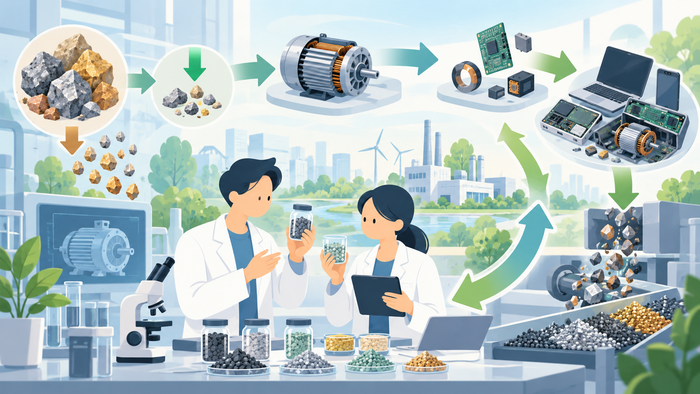
The final SEED — critical minerals and materials, parts and equipment — was announced by the Ministry of Trade, Industry as an ‘Advanced Supply Chain Ecosystem Strategy.’ The re-resourcing rate of 10 critical minerals will be raised to 20 percent by 2030, the stockpiling of items that cannot be produced domestically will be expanded from 24 to 29 types, and stockpile volumes from up to 180 days to 365 days. The Saemangeum stockpiling base will begin operation in 2028. Some 10 trillion won in research and development will be invested over five years in items requiring capability strengthening, of which 5 trillion won will be allocated to ’15 Grow-Together Projects’ linking anchor firms and partner firms, supporting the full cycle from technology development to global market entry.
To ensure the projects’ success, the government will strengthen the fundamental capacity of industry, academia and research together through expanded support for basic university research, the introduction of block funding, structural reform in step with the abolition of the PBS at government-funded research institutes, the revitalization of deep-tech startups, and the introduction of investment-type R&D. As its promotion structure, it will form a public-private ‘(provisional) Future Pioneering Task Force’ centered on the Deputy Prime Minister, and review the roadmap and progress at the Science and Technology-related Ministers’ Meeting. It also plans to overhaul laws and regulations that hinder innovative and challenge-oriented R&D and the commercialization of new technologies.
The 7 SEED Projects are significant in that they target the landscape of energy, security and industry that will be directly tied to citizens’ lives 10 to 20 years ahead, rather than immediate results. They represent a plan to nurture, at the national level and over the long term, advanced technologies spanning power supply, security assets, new medicines and everyday communications, with the aim of offering future generations new opportunities for challenge.
지역 홍보대사 신청 기자양성과정 신청 코리안투데이 지부장 신청 코리안투데이 인천강화
THE KOREAN TODAY × WIA CODE
이 기사의 WIA Code

WIA Code 스캐너로 비추면 인터넷 없이 발행 사실과 위·변조 여부를 확인할 수 있습니다.
휴대폰 기본 카메라로 찍으면 스캐너 안내 페이지가 열립니다 — 기사 바로 열기

움직이는 코드는 스트림입니다 — WIA Code 스캐너로 약 21초 비추면 기사 전문(사진 포함)이 폰에 저장되어 인터넷 없이도 읽을 수 있습니다.
WIA Code · 코리안투데이


Leave a Reply