
[Day 81] The Neck of Che Zhou
March · *The Woman Beneath the Moonlight* | about 3 min read
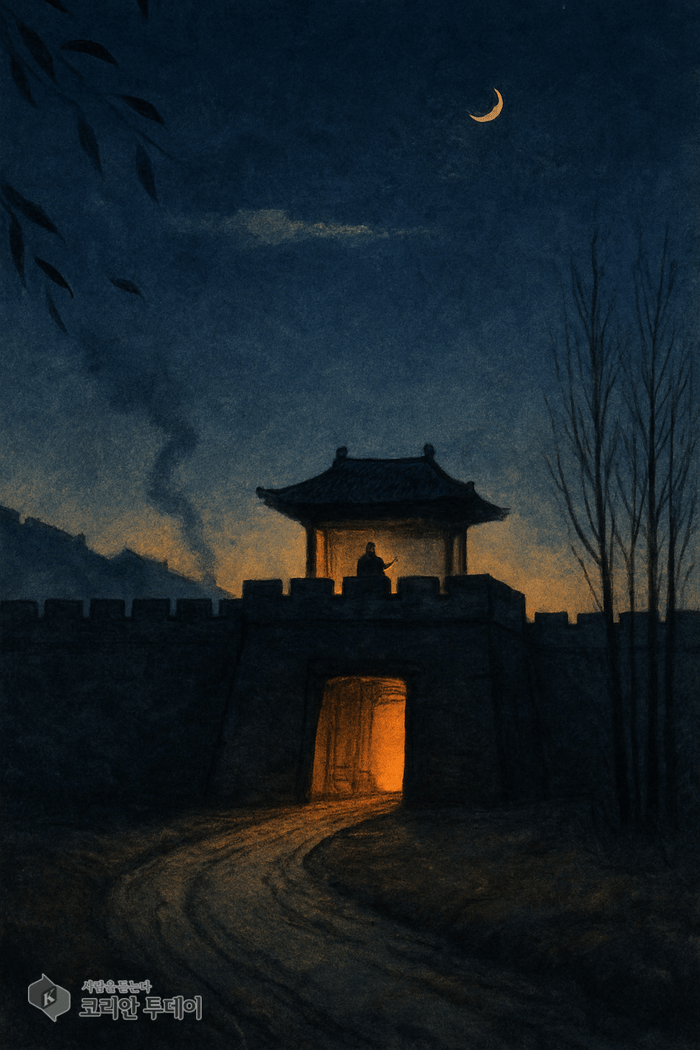
On the evening after Liu Bei’s (劉備) two younger brothers had laid a resolve together in the back room of the old guesthouse, the neck of Che Zhou (車冑) was laid beneath Guan Yu’s (關羽) Green-Dragon Crescent Blade.
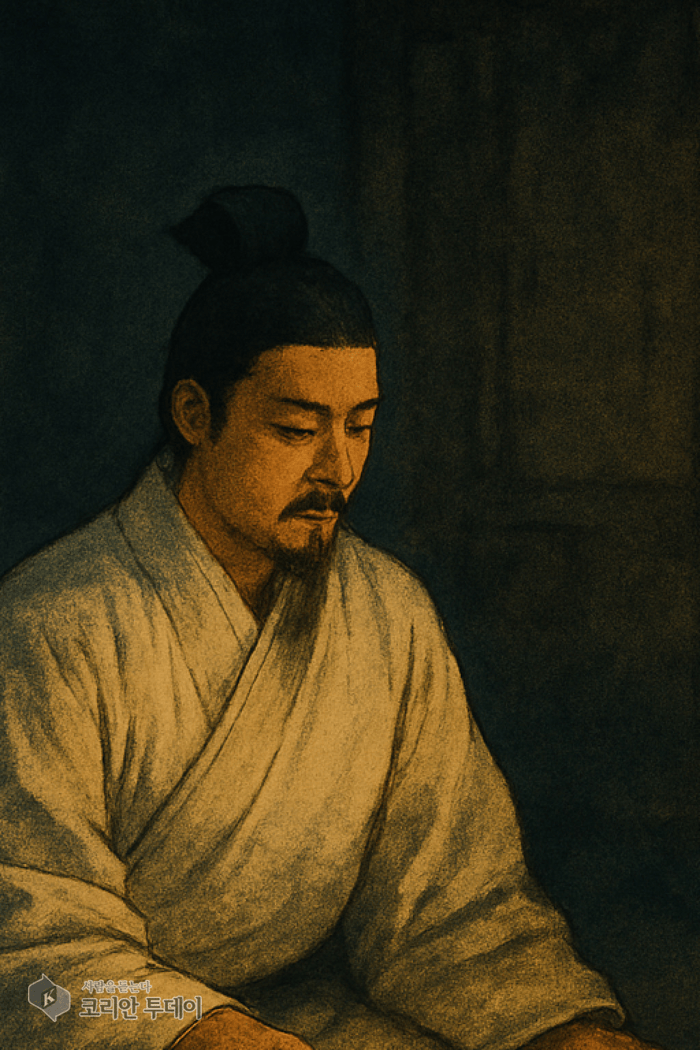
Within those few days, Chen Deng (陳登) entered Liu Bei’s back room a second time. He spoke low. “Lord Liu. Che Zhou is a hand of General Cao’s. To lay this walled city beneath your grain, Che Zhou must first be cut. Yet if that cutting is laid beneath another hand rather than your own, the weight of later days is lightened.”
Liu Bei nodded deeply. “Whose hand is that other hand?” Chen Deng answered low. “The hand of Guan Yunchang (關雲長).” Liu Bei looked at Guan Yu. Guan Yu bowed low. “Elder brother. Lay this evening’s work beneath my hand alone.”
The next evening, Guan Yu entered Che Zhou’s residence with a cup of warmed wine (煮酒) within his bosom. “Governor Che. Word from Xudu has reached me late this evening; I have come to share a cup over it.” Che Zhou gave a low, small smile. “Lord Guan. News from Xudu is most welcome. Please come in.”
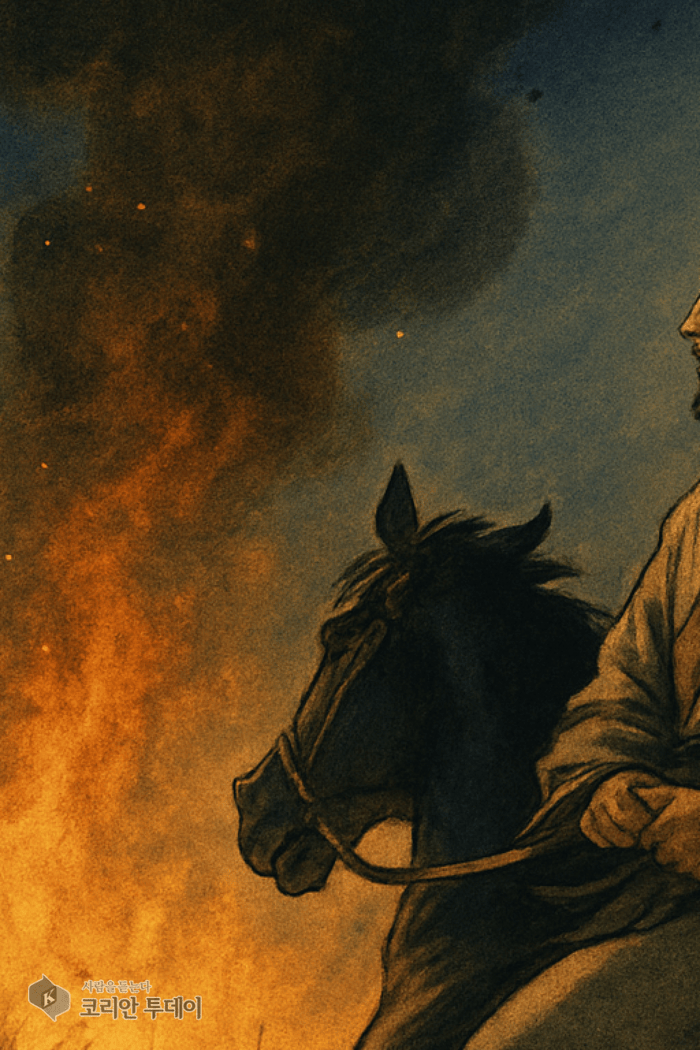
The two men sat facing each other. One cup tilted; another cup tilted. In the instant the second cup was set upon the table, Guan Yu lifted the haft of the Green-Dragon Crescent Blade. “Governor Che. This evening’s matter is not the matter of Xudu, but the last line of the grain of Han.” The blade of the Crescent touched Che Zhou’s neck. Che Zhou’s breath was laid low upon the table.
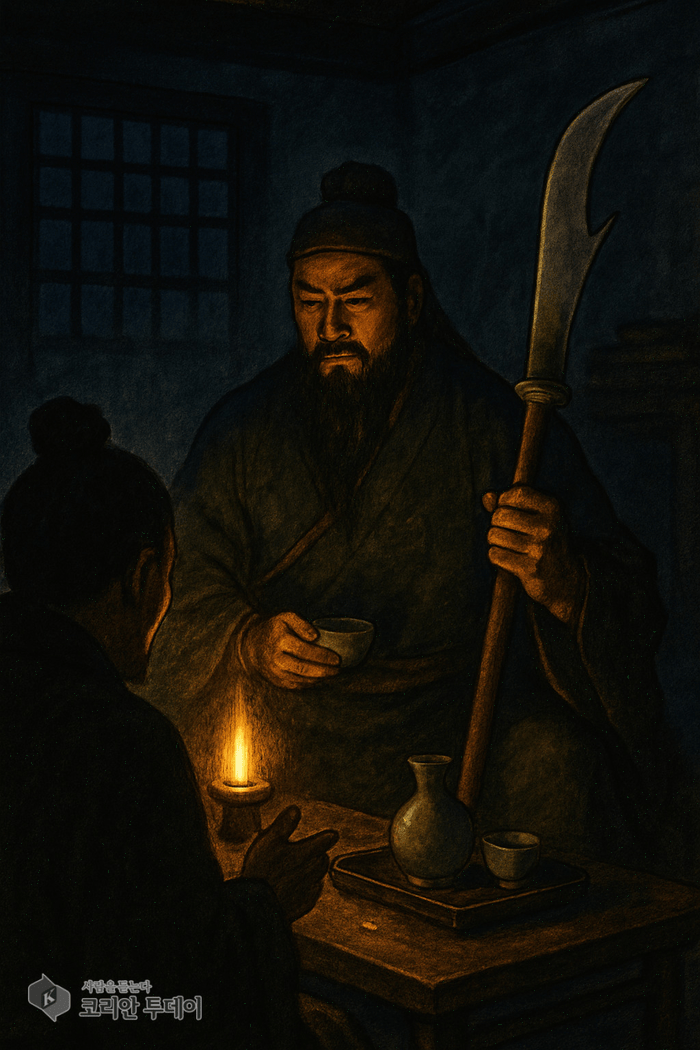
Guan Yu wrapped Che Zhou’s neck in a cloth and carried it into Liu Bei’s tent. Liu Bei swallowed a deep sigh. His mouth let slip a low word. “Yunchang. That this evening’s work is the last line of the grain of Han, you have said with your own mouth.” Guan Yu bowed low.
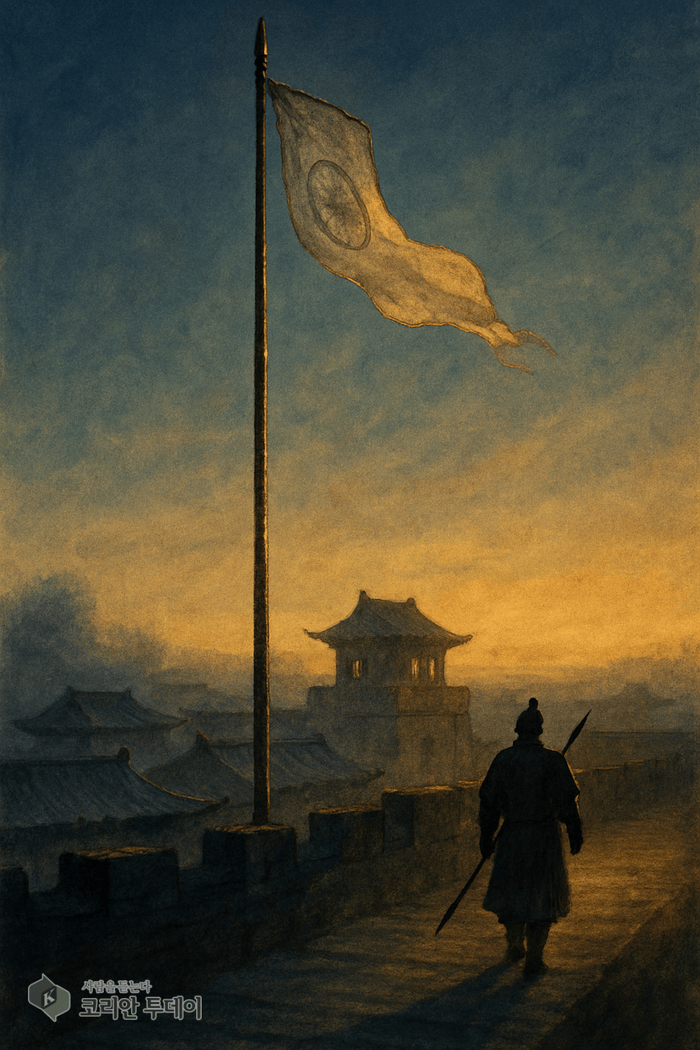
The next morning, upon the gate of Xuzhou, Liu Bei’s banner rose. The twenty thousand foot soldiers moved from the plain outside the walls into the inside of the walls, and were laid again within old Xuzhou. A writing was sent to Cao Cao’s (曹操) Xudu. “This body shall not return to Xudu. Within Xuzhou, I shall continue the grain of Han.”
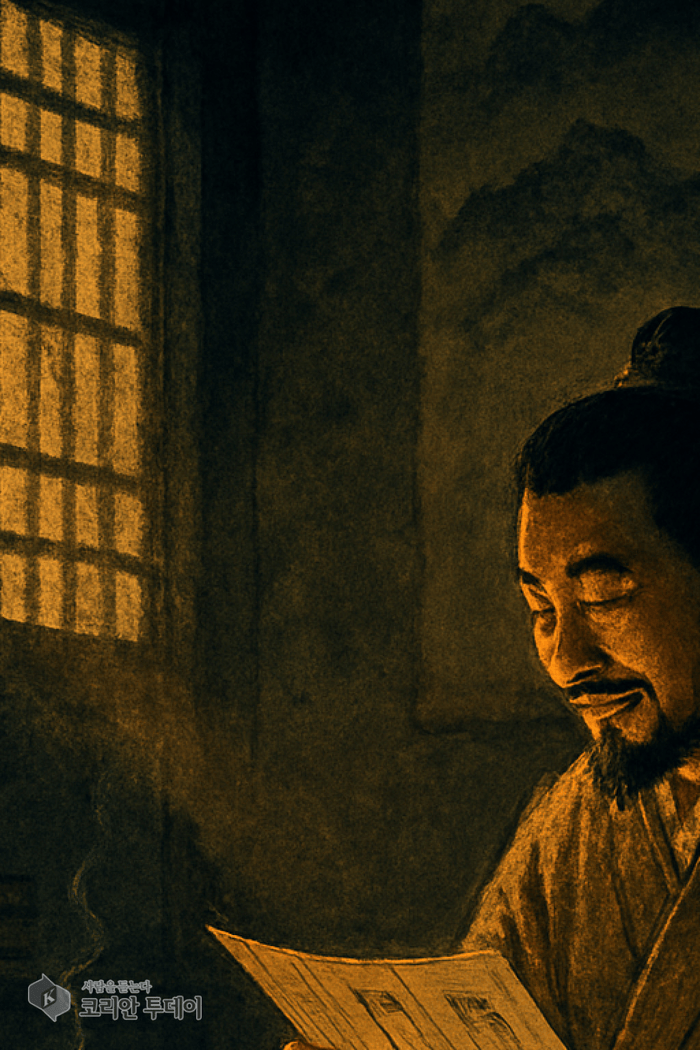
Inside the tent at Xudu, Cao Cao read the writing. His eyes widened. His hand gripped the corner of the table deeply. Xun Yu (荀彧) continued low. “My Lord. My remonstrance has today hit its mark (的中).” Cao Cao swallowed a low breath. “Wenruo. Xuande’s grain was not a grain my hand could hold.”
Inside Xuzhou, Che Zhou’s body was taken in silence to a low field outside the eastern gate and buried at dusk. No ceremony was held. A captain whose neck has passed beneath a crescent blade at the end of a cup of warmed wine rarely has a ceremony; a returning lord rarely can afford to grant one. Two soldiers of Xuzhou’s old garrison dug the grave, and one of them whispered a line of an old Xuzhou village song as he shoveled the last earth. The other did not ask what the line meant. Old village songs are answers older than any governor’s name; they do not need to be explained beneath the shovel.
Far away at Xudu, Guo Jia stepped into the tent with a tray of tea. He set the tray beside Cao Cao and did not pour. Cao Cao looked at the tea and did not drink. After a long moment, Guo Jia spoke low. “My Lord. Today’s matter was laid at this seat by my hand. If it must be repaid, let it be repaid upon my own head.” Cao Cao gave a low laugh. “Fengxiao (奉孝). Today’s matter belonged to every seat in this tent, not only yours. Pour the tea.” Guo Jia poured. Cao Cao lifted the cup. The cup did not tilt.
At Xuzhou, Chen Deng walked along the eastern wall after nightfall and counted the lamps of the garrison towers. He expected twelve; he counted fourteen. Two towers tonight had a second lamp lit beside the first. Chen Deng did not ask why. A strategist whose lord has just retaken a walled city rarely asks why a tower has lit a second lamp. He walked back to the main gate without speaking. Somewhere to the east, a boatman on the river had begun to sing; the song was of a Xuzhou that had lost its master and found him again within a single season. Chen Deng listened without turning his head toward the river, and continued on to his own door. The door was open; his wife had already laid out a thin shawl for the evening air. He did not take it up. A man whose grain has been tied the evening before beneath the line of an edict does not reach for a shawl inside the same hour.
The eighty-first night of Book 3 deepened quietly beneath Liu Bei’s banner upon the tower of Xuzhou. The three characters Jugyeong-nak (冑頸落, the fall of Che Zhou’s neck) were planted as a seed: the breath on which a cup of warmed wine, the blade of the Crescent, a wrapped neck, and a writing sent to Xudu lay at one seat. The single step of Day 80’s Banseoju (返徐州) had, this night, entered deeper into the grain within the walls.
—
“✒️ A Word from the Commentator — Dr. Yeon Samheum
There is an evening on which the grain of a single person must be cut. When that cutting is laid beneath another hand rather than your own, the weight of later days is lightened. Upon your own evening today, is there a seat where a cutting is best laid beneath another hand? Might you look, once more and quietly, into the grain of that laying?
THE KOREAN TODAY × WIA CODE
이 기사의 WIA Code

WIA Code 스캐너로 비추면 인터넷 없이 발행 사실과 위·변조 여부를 확인할 수 있습니다.
휴대폰 기본 카메라로 찍으면 스캐너 안내 페이지가 열립니다 — 기사 바로 열기

움직이는 코드는 스트림입니다 — WIA Code 스캐너로 약 40초 비추면 기사 전문(사진 포함)이 폰에 저장되어 인터넷 없이도 읽을 수 있습니다.
WIA Code · 코리안투데이


Leave a Reply