
Evening Edition · Wednesday, August 25, 1926
🕙
10:10 PM KST (1:10 PM UTC) — As the clock smiles, reflect on a century of history
Hook Opening
Good evening, and welcome to “100 Years Ago Today.” As you wind down your day, let’s step back to a Wednesday in colonial Seoul — Gyeongseong, as it was then called — where a front-page editorial dared to ask an uncomfortable question, and three days earlier a single newspaper column had already sent two men toward a courtroom. Across the Pacific, in New York, a very different crowd was pressing against a funeral home’s plate-glass windows, desperate for one last look at a dead matinee idol. Three continents, three kinds of urgency, one ordinary Wednesday: August 25, 1926.
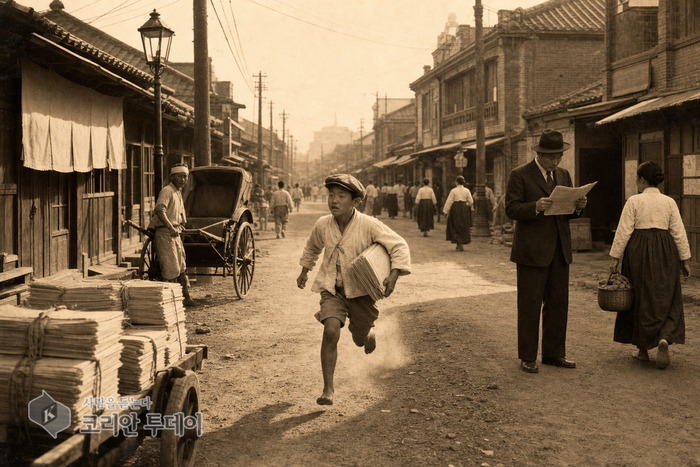
Korea Under Colonial Rule
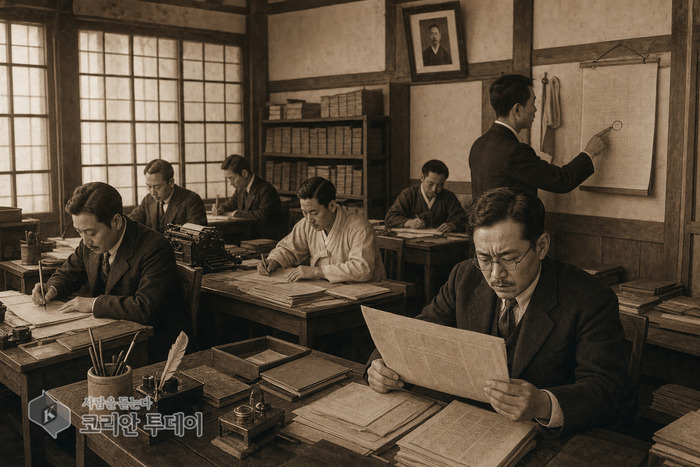
That morning’s Dong-A Ilbo led its front page with an editorial titled “Warlords’ China and the People’s China” — a pointed essay contrasting a China ruled by armed factions with one that might someday be ruled by its own people.[1] Korean readers, living under their own armed colonial rule, needed no footnote to understand the parallel.
The editorial ran under a shadow. Three days earlier, on August 22, a short satirical column called “Hoengseolsuseol” (“Rambling Talk”) had triggered a crackdown: its writer, Choi Won-sun, was charged under the Security Law, and the paper’s editor-publisher, Kim Cheol-jung, under the Newspaper Law.[2] On this Wednesday, both men were still awaiting trial — a hearing that would finally convene on September 8 at the Gyeongseong District Court, where prosecutors would seek eight months’ imprisonment for Choi and six months’ detention for Kim. It was the second press crackdown the paper had weathered that year alone; in March, it had been suspended entirely for printing a May Day telegram from an international farmers’ union.[2]
East Asia in Turmoil
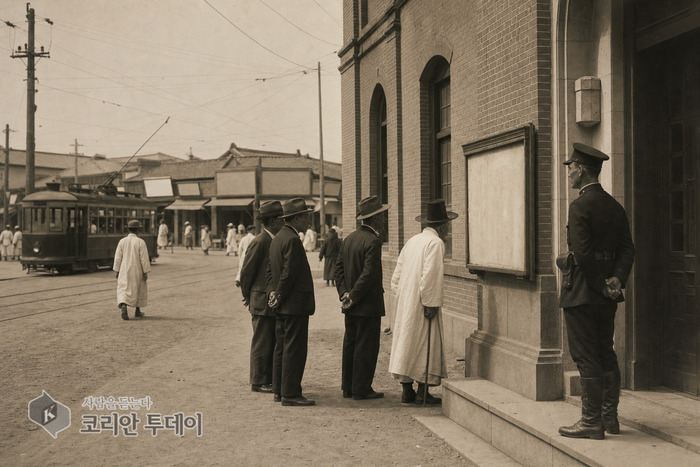
The censorship of a single column did not stand alone. Barely two and a half months earlier, on June 10, some 300 students from Jungang School had shouted “Long live Korean independence” as King Sunjong’s funeral procession passed through Jongno, scattering handwritten manifestos.[3] Colonial police and soldiers — seven thousand strong in Seoul alone — moved to crush the demonstration; roughly a thousand students were detained nationwide that single day.[3] By this Wednesday in August, interrogations and surveillance from that movement were still grinding on, and a newspaper column could still land a man in court.
The World Stage
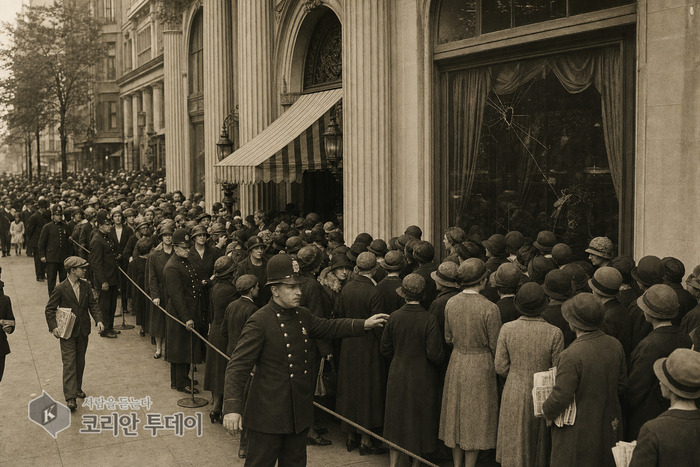
In New York, a very different kind of crowd was forming. Two days earlier, silent-film idol Rudolph Valentino had died at 31; his body now lay at Frank E. Campbell’s Funeral Church on Broadway, drawing mourners estimated in the tens of thousands.[4] The scene had already turned chaotic — women rushing the doors, a plate-glass window shattered by the crush. On this very Wednesday, funeral home staff moved the coffin from the second floor to the ground floor simply to keep the line moving.[4] Four uniformed “Fascisti,” rumored to be sent by Mussolini himself, stood watch — in truth, hired by the funeral home’s own press agent.
Farther west, Chiang Kai-shek’s National Revolutionary Army had seized the Yangtze port of Yuezhou three days prior, bringing all of Hunan province under Nationalist control and opening the road toward Wuchang.[5] And in Athens, a bloodless coup three days earlier had removed dictator Theodoros Pangalos, packed off aboard a naval destroyer.[6]
Colonial Parallels
A censored column in Seoul was not unique to Korea. In British India that same year, the colonial press faced its own web of sedition and press-act prosecutions; in Ireland, newly independent but still scarred, newspapers navigated the aftermath of civil-war censorship; in the American-administered Philippines, editors walked a similar line between nationalist sentiment and colonial tolerance. Wherever an empire ruled, the newsroom was rarely far from the courtroom.
Person of the Day
Kim Cheol-jung was not a firebrand by trade — he was an editor-publisher, the man whose name legally anchored every word his paper printed. Under the Newspaper Law, that signature alone was enough to summon him to court. On this Wednesday, he went about the ordinary business of putting out a newspaper, knowing a hearing date was already fixed for three weeks later. It is a particular kind of resolve — or simple necessity — to keep printing the news while waiting to be sentenced for the last issue.
Understanding Daily Life
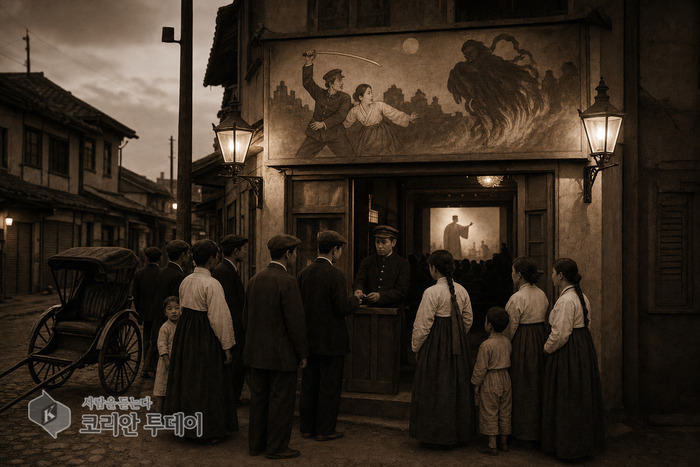
Picture Gyeongseong that Wednesday: newsboys sprinting through the alleys at dawn with bundles of the morning edition; at midday, passersby slowing near the district courthouse to scan the notice board for word of the press trial; at dusk, small crowds gathering outside silent-film theaters, waiting for the byeonsa — the live film narrator — to bring the screen to life, every reel having first passed the censor’s stamp. It was a city learning, out of necessity, to read between the lines.
Century Mirror
| August 25, 1926 | Today | |
|---|---|---|
| Press freedom | A single column could send a writer and editor to court[2] | Constitutionally protected speech and press |
| Entertainment | Silent films narrated live by a byeonsa, every reel censored | Global streaming, instant and largely uncensored |
| Public mourning | News of a foreign star’s death took days to cross an ocean by cable and print | Breaking news reaches the whole world in seconds |
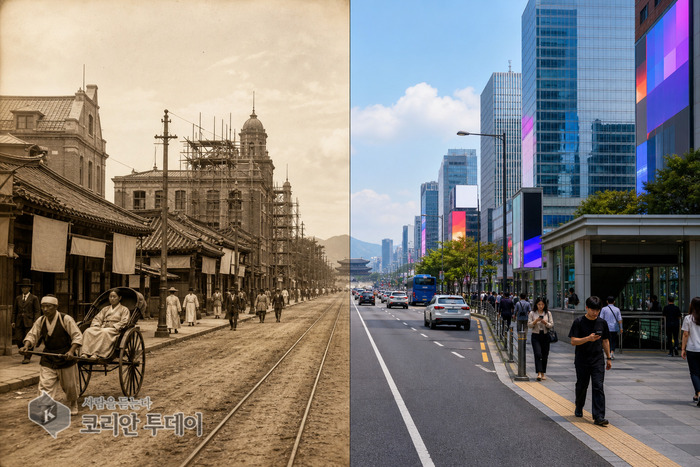
A hundred years separate the newsroom that sent two men toward a courtroom over one column, and the one that publishes freely today. That century wasn’t given — it was paid for, in small installments, by people like Choi Won-sun and Kim Cheol-jung.
Tomorrow’s Preview
Tomorrow, Thursday, August 26, 1926 — another day in colonial Gyeongseong awaits. Join us tomorrow evening at 10:10 PM KST. Good night.
Sources: [1] Dong-A Ilbo, Aug 25, 1926, p.1, “Warlords’ China and the People’s China” (Korean History Database, National Institute of Korean History, db.history.go.kr) · [2] Dong-A Ilbo press prosecution over the Aug 22, 1926 “Hoengseolsuseol” column (Uri Yeoksa Net, “Judicial Punishments”) · [3] June Tenth Movement (Encyclopedia of Korean Culture; Uri Yeoksa Net) · [4] Crowds at Campbell’s Funeral Church, Aug 24-25, 1926 (History.com and contemporary accounts) · [5] National Revolutionary Army’s Northern Expedition, capture of Yuezhou, Aug 22, 1926 (Wikipedia, “Northern Expedition”) · [6] Fall of Theodoros Pangalos, Aug 22, 1926 (Wikipedia, “August 1926”)
THE KOREAN TODAY × WIA CODE
이 기사의 WIA Code

WIA Code 스캐너로 비추면 인터넷 없이 발행 사실과 위·변조 여부를 확인할 수 있습니다.
휴대폰 기본 카메라로 찍으면 스캐너 안내 페이지가 열립니다 — 기사 바로 열기

움직이는 코드는 스트림입니다 — WIA Code 스캐너로 약 140초 비추면 기사 전문(사진 포함)이 폰에 저장되어 인터넷 없이도 읽을 수 있습니다.
WIA Code · 코리안투데이






Leave a Reply