
[Day 93] A First Seat at Xinye
March · *The Woman Beneath the Moonlight* | about 3 min read
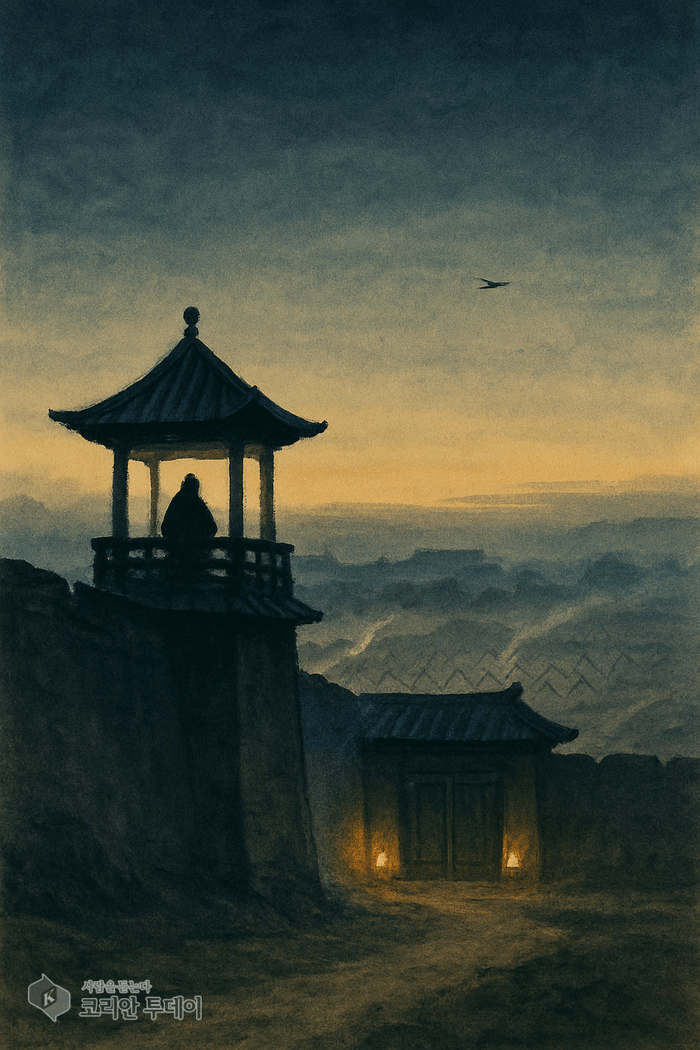
On the morning after the welcome beneath the lamp of Jingzhou’s (荊州) main hall, the three men — Liu Bei (劉備), Guan Yu (關羽), and Zhang Fei (張飛) — first set foot upon the small walled city of Xinye (新野).
Xinye was small. Its walls ran just short of four li in circuit. It had four gates, one tower, and some five thousand households. Liu Bei’s twenty thousand foot soldiers could not all be housed inside, and more than half encamped upon the plain outside the walls.
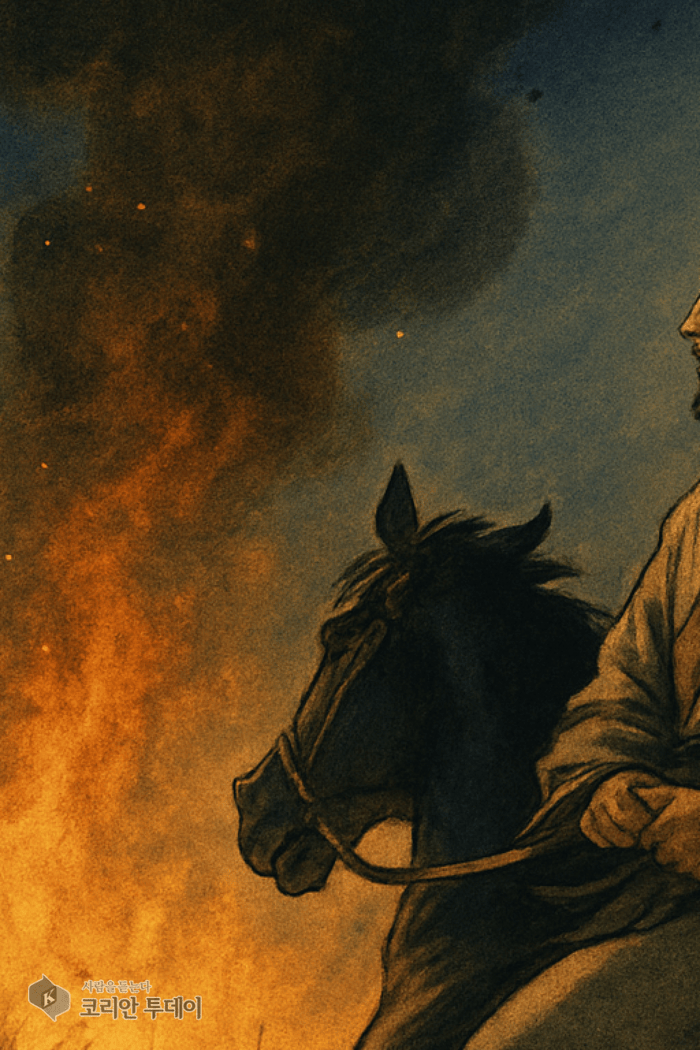
Liu Bei climbed the tower. His eyes turned toward the northern horizon. Xudu (許都) lay in that direction, and Cao Cao’s (曹操) forces were stirring again today from that quarter.
Guan Yu stood at his side. “Elder brother. From today, upon this tower, you shall watch long the grain of Xudu.” Liu Bei nodded. “Yunchang. This walled city is small, and it lies beneath Lord Jingsheng’s grain. Even so, within this small grain, our own new grain may yet be raised.”
Zhang Fei spoke next. “Elder brother. The people here received us this morning with a quiet smile. The grain of this walled city is a warm grain.” Liu Bei nodded. “Yide. Let us keep that grain long.”
In the days that followed, Liu Bei extended several kindnesses to the common people (百姓) of Xinye. He lightened the tax (稅金), sent a single dou of rice to a poor house, and sent a bowl of medicine (藥) to a sick house.
The people of Xinye began to sing in quiet voices. “Lord of Xinye (新野牧), Governor Liu (劉使君) has come; the common people shall grow abundant (豐足).” The song moved from inside the walls to outside, and reached even Xiangyang (襄陽), the great capital of Jingzhou.
At Xiangyang, the song reached the ear of Liu Biao (劉表). Liu Biao gave a faint smile. Yet the same song also reached his second wife, Lady Cai; her eyes sank a grain shallow. The grain of Cai Mao (蔡瑁) sank with his sister’s.
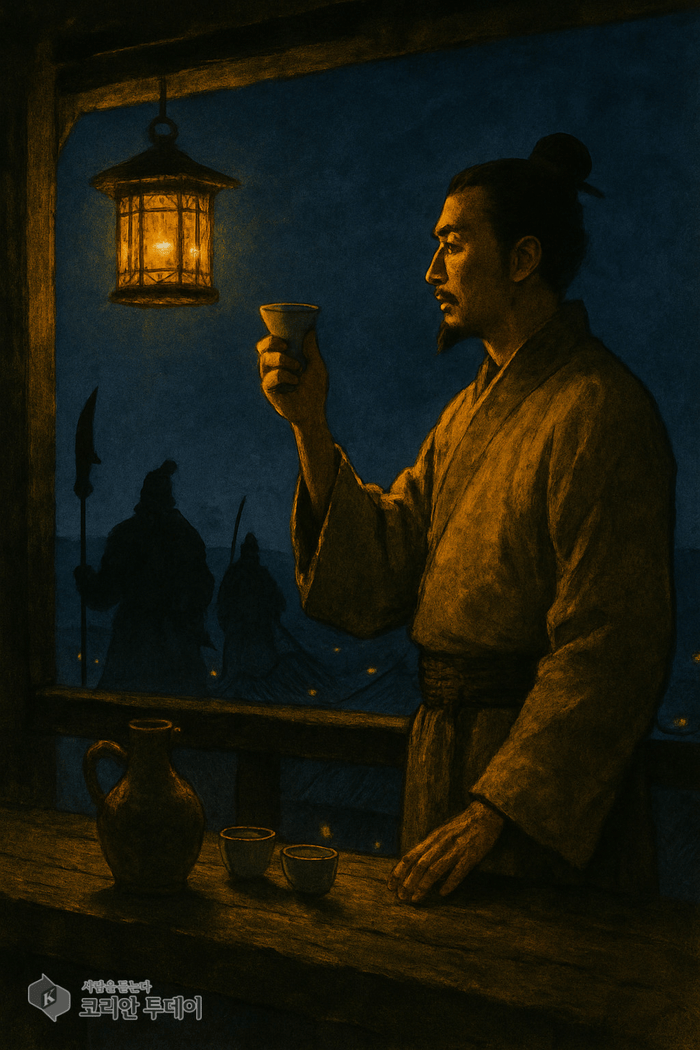
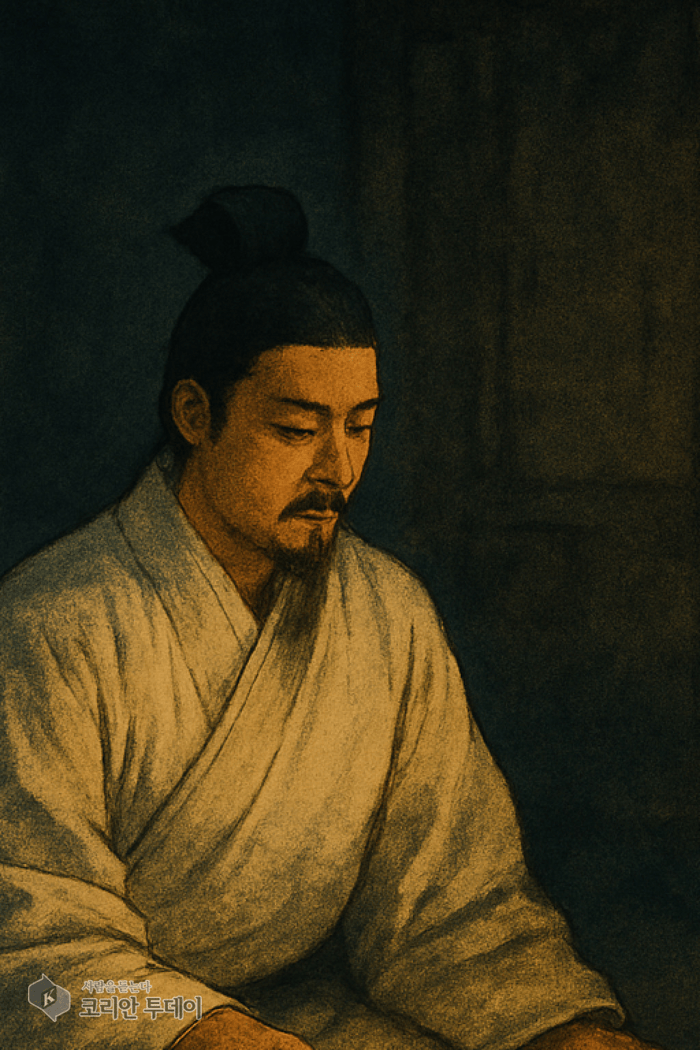
That evening, Liu Bei raised a cup of wine upon the tower of Xinye. Guan Yu and Zhang Fei stood at his side. Their three cups touched lightly. Liu Bei spoke quietly. “Yunchang, Yide. Today’s seat of Xinye has become our first grain. Let us, at this seat, raise our new grain a grain.”
Down in the small market of Xinye, a child of perhaps seven chased a kite made of thin yellow paper. The string slipped from the child’s hand, and the kite rose toward the battlement of the tower. Liu Bei, standing at the battlement, caught the string as the kite passed overhead. He wound it slowly into a small coil, descended the stairs, and returned the kite. The child bowed without speaking and ran off. It was a small thing. Yet in the decades to come, that child, grown into a man, would tell his grandchildren about a new governor who had returned a yellow kite without scolding. Some seats of a governor are remembered by grandchildren through kites, not through edicts.
Upon the plain outside the walls, where half the twenty thousand foot soldiers kept their tents, Guan Yu walked along a line of tents before sundown. He stopped at one where a young soldier was mending his boot with a needle and rough thread. Guan Yu nodded and walked on without comment. The young soldier understood without being told that his captain had seen him mending his own boot, and in the weeks to come he would mend it three evenings a week rather than waiting for a quartermaster. A commanding gaze that passes without scolding often teaches faster than a long word.
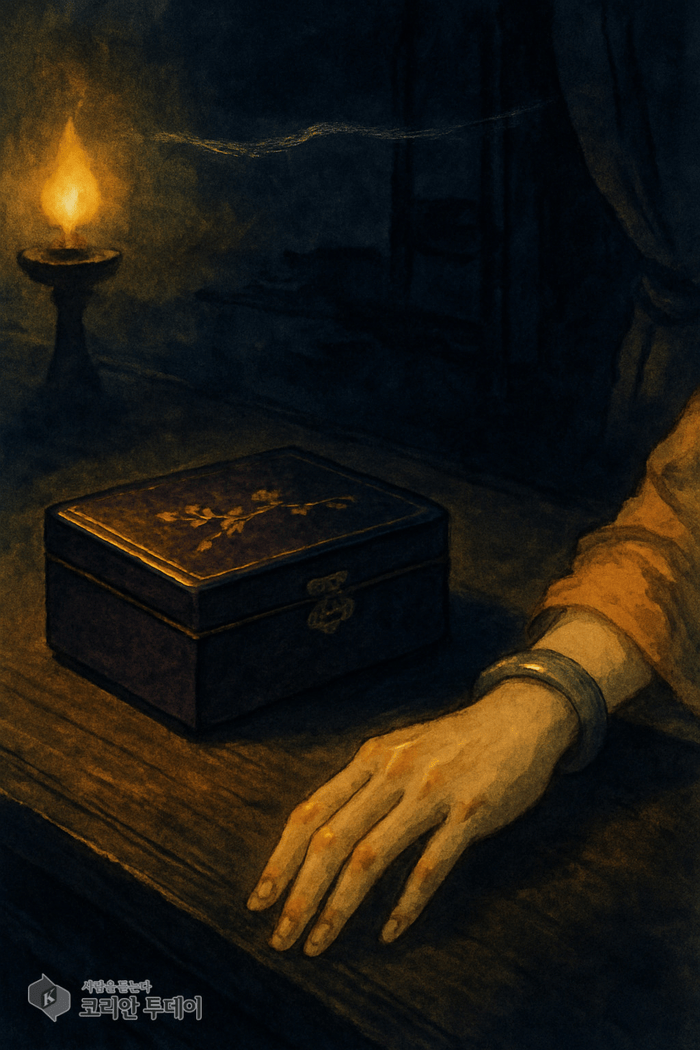
At Xiangyang, inside Lady Cai’s inner chamber, she laid her palm upon a small lacquer box of combs and did not open it. That evening she had heard her brother Cai Mao’s quiet report of the song spreading from Xinye, and heard with it the way her husband Liu Biao had smiled at the report. Two smiles in one evening — her husband’s and her brother’s — were not of the same grain. A second wife who has detected two grains in two smiles at the same table rarely opens her box of combs that night; she only rests her palm upon the lacquer and keeps the comb inside. In the years to come, the combs in that box would remain untouched for long stretches; on certain mornings Lady Cai’s hair would be dressed by a maid, without her own hand intervening.
At Xinye, inside the kitchen of the governor’s residence, an old cook laid a thin strip of salted meat into the soup of Liu Bei’s evening meal. The strip came from a jar he had kept in the back corner of the pantry for a year, waiting for the right occasion. He had, this evening, decided without being asked that this was the occasion. A cook who has kept salted meat a year in the back of a pantry rarely asks permission before laying it in the soup on the right evening. The soup that night was a grain saltier than on previous evenings; Liu Bei noticed, said nothing, and finished the bowl.
The ninety-third evening of Book 4 deepened quietly upon the tower of the small walled city of Xinye. The three characters Sinya-jwa (新野坐, the seat of Xinye) were planted as a seed — the breath on which a small walled city of four li, five thousand households, a single dou of rice, a bowl of medicine, and the song of Lord of Xinye all lay at one seat. The welcome of Day 92’s Gyeongseung-yeong (景升迎) had, this evening, reached the tower of Xinye.
—
“✒️ A Word from the Commentator — Dr. Yeon Samheum
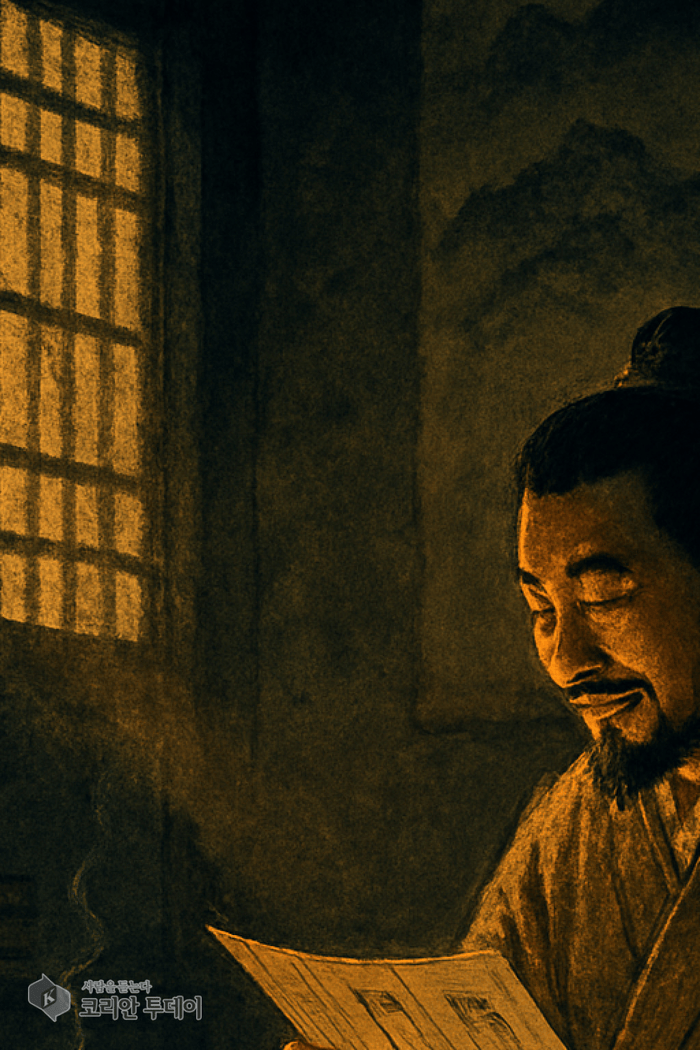
There is an evening on which a person’s grain is laid for the first time upon a small walled city, and the common people of that small walled city receive that grain with a quiet song. That quiet song also sinks the ear of a larger grain a grain shallow. Upon your own evening today, is there perhaps a quiet song of a small walled city? Might you look, once more, into the grain of that song?
THE KOREAN TODAY × WIA CODE
이 기사의 WIA Code

WIA Code 스캐너로 비추면 인터넷 없이 발행 사실과 위·변조 여부를 확인할 수 있습니다.
휴대폰 기본 카메라로 찍으면 스캐너 안내 페이지가 열립니다 — 기사 바로 열기

움직이는 코드는 스트림입니다 — WIA Code 스캐너로 약 43초 비추면 기사 전문(사진 포함)이 폰에 저장되어 인터넷 없이도 읽을 수 있습니다.
WIA Code · 코리안투데이


Leave a Reply