
Evening Edition · Tuesday, August 31, 1926
Northern Expedition Troops Reach Wuchang’s Walls as Seoul Awaits a Press Trial
🕙 10:10 PM KST (1:10 PM UTC) — As you wind down your day, a century unfolds
Good evening. It is Tuesday, August 31, 1926, in colonial Korea. Two stories reach us tonight: one from a newspaper office in Gyeongseong (present-day Seoul), the other from a besieged city on the Yangtze. Neither seemed connected at the time. Both belonged to the same restless year — a year that had already seen an emperor’s funeral and a nationwide cry for independence, and was now watching a press case crawl toward trial while, far to the west, an army closed a ring around a walled city. The exact weather in Gyeongseong that day is not confirmed in surviving records, so we leave it undescribed rather than invent it.
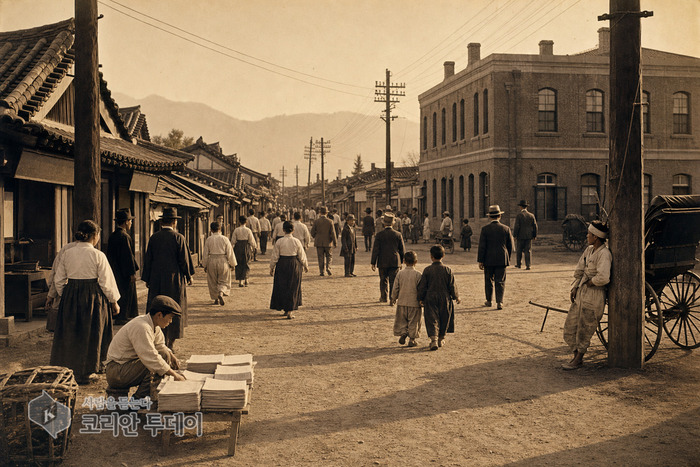
Korea Under Colonial Rule
Nine days earlier, on August 22, the Chosun Ilbo had published a short column titled “Hwaengseolsuseol” — literally “rambling talk,” a wry commentary slot still running in Korean newspapers a century later. One line in that column was enough to bring down the law. Its writer, Choi Won-sun, was indicted for violating the Peace Preservation (Security) Law; the paper’s editor and publisher, Kim Cheol-jung, was indicted separately under the Newspaper Law for allowing it into print. Their trial was set for September 8 at the Gyeongseong District Court, still eight days away. Prosecutors were preparing to seek an eight-month prison term for Choi and a six-month detention for Kim — for a single sentence of newsprint. As of this Tuesday, neither man knew the outcome; they were simply waiting, along with the rest of the paper’s staff, for a date on the calendar to arrive.
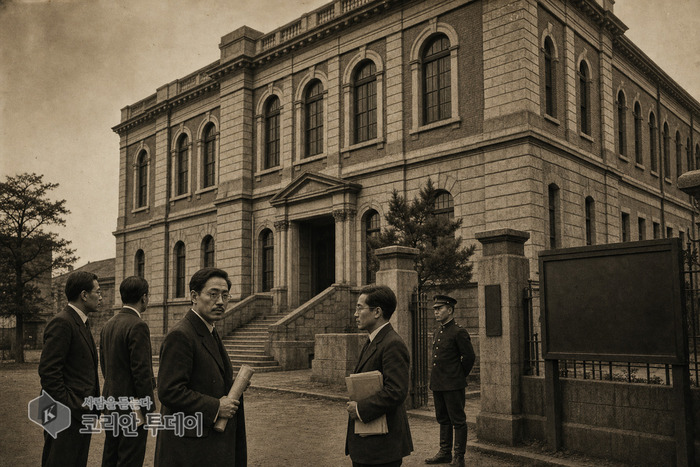
East Asia in Turmoil
The press case sat inside a larger year. Emperor Sunjong had died that April, and his funeral procession in June had become the occasion for a fresh wave of street protest — the June Tenth Movement, echoing the independence demonstrations of 1919. The colonial government, meanwhile, pressed forward with its Rice Production Development Plan, shipping ever more Korean rice to Japan even as, by official count, roughly one in ten Koreans that year fell into the “poor, destitute, or begging” categories of colonial statistics. And in Tokyo that same August, members of the Ilwolhoe group — including An Gwang-cheon and Ha Pil-won — were joining the Leninist League, forming what would become known as the ML faction of the Korean communist movement. Censorship at home, hunger in the countryside, organizing abroad: three threads of the same colonial fabric, pulling in different directions at once.
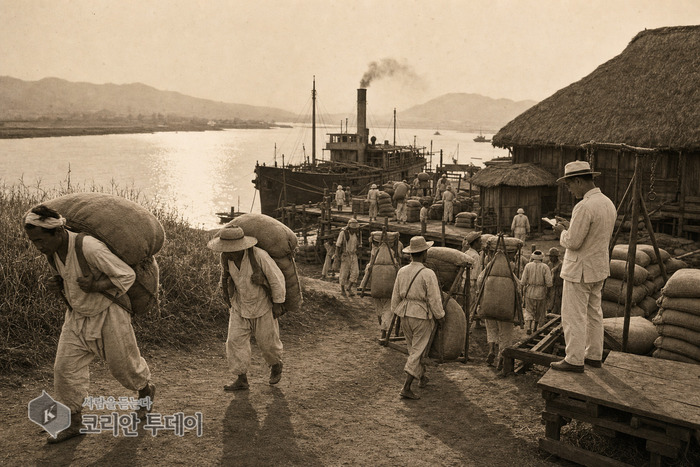
The World Stage
Nearly two thousand kilometers to the west, in Hubei province, China, a much louder story was unfolding. For two days, the National Revolutionary Army — Chiang Kai-shek’s Nationalist force, marching north from Guangzhou to unify China under the Northern Expedition — had been locked in ferocious combat with the forces of the northern warlord Wu Peifu near Hesheng Bridge. At dawn on August 30, a general assault broke the deadlock: Ye Ting’s Independence Regiment punched through the enemy line first, and Wu Peifu, in a desperate bid to hold his collapsing front, reportedly had fleeing officers beheaded and their heads hung from telegraph poles as a warning. It did not work. The Nationalists killed roughly 2,000 of Wu’s men, captured over 3,500 officers and soldiers, and seized 24 artillery pieces and nearly 3,000 rifles.
Colonial Parallels
A jailed columnist in Seoul and a besieged garrison commander in Wuchang were, in their very different ways, both subjects of empire in 1926 — a year when colonial and semi-colonial peoples across Asia were testing the limits of imperial control. In British India, the Swaraj Party was pressing for self-rule through the legislature even as the colonial press faced its own sedition prosecutions. In Ireland, just four years removed from the Anglo-Irish Treaty, the new Free State was still working out how much independence its independence actually contained. In the Philippines, American administrators debated the pace of Filipinization of the civil service. Korea’s Newspaper Law and Peace Preservation Law were, in this light, not an isolated cruelty but one instance of a pattern repeated, with local variations, across nearly every colonized society of the decade.
Person of the Day: Choi Won-sun
Choi Won-sun was, as of this evening, an ordinary Chosun Ilbo columnist waiting for a court date — not yet a name history would remember for heroism, simply a writer who had done his job and was now facing eight months in prison for it. What we can confirm from the record is narrow: his column ran on August 22, his indictment followed under the Security Law, and his trial was scheduled for September 8. What his column actually said, and what he felt on this particular Tuesday nine days into the wait, is not preserved in the sources available to us. We report the confirmed facts and leave the rest honestly unfilled, rather than imagine a mind we cannot verify.
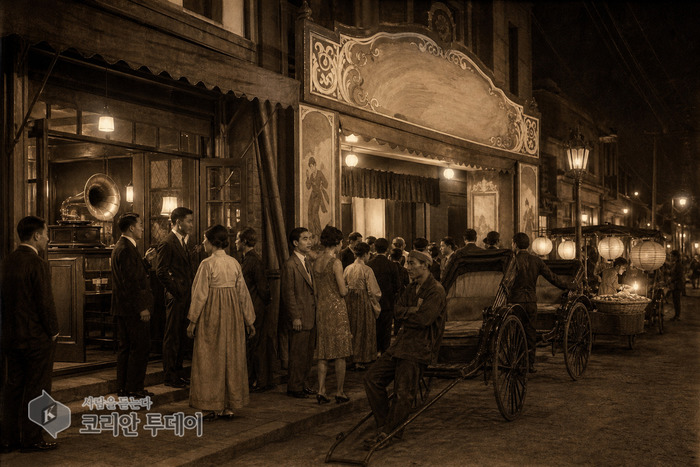
Understanding Daily Life
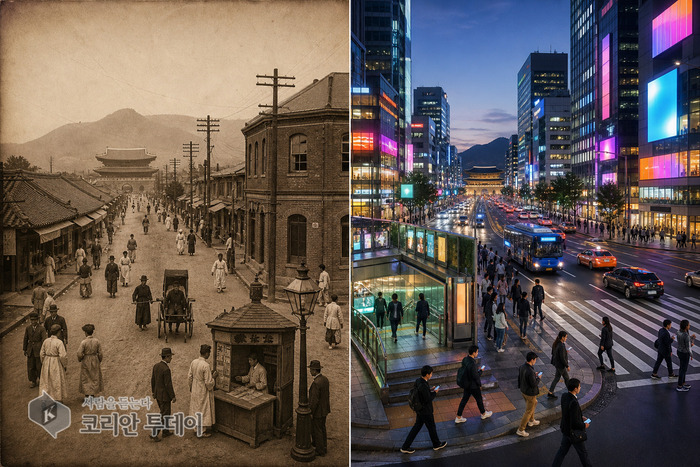
Picture an ordinary Tuesday in Gyeongseong that August: newsboys dropping the morning papers at doorsteps before sunrise, pedestrians seeking shop-awning shade along Jongno as the late-summer sun climbed, gramophone cafes and silent-film theaters in Jongno and Myeongdong lighting their lamps at dusk, department stores like Hwasin preparing for the evening trade, and colonial police making their usual rounds after dark. Somewhere in that ordinary rhythm, word may have circulated about the upcoming press trial — but no surviving account records an actual conversation on the street that day, so we describe the pattern of the season rather than claim a specific scene we cannot document.
Century Mirror
| 1926 | 2026 | |
|---|---|---|
| Press regulation | A single newspaper line could bring criminal charges | Free expression, with defamation addressed only after publication |
| Trial information | A court date announced in a one-line newspaper notice | Live-streamed proceedings, public rulings |
| Street culture | Gramophone cafes, silent films narrated live by a byeonsa | Streaming platforms, multiplex cinemas |
A century separates the era when one sentence in a newspaper could send a man to prison from the era when we read that same newspaper page as a historical document. Somewhere in between, the weight of a single sentence changed hands.
Tomorrow brings September 1, a new month, a new Wednesday in Gyeongseong. Sleep well — and join us again tomorrow evening at 10:10 PM KST.
THE KOREAN TODAY × WIA CODE
이 기사의 WIA Code

WIA Code 스캐너로 비추면 인터넷 없이 발행 사실과 위·변조 여부를 확인할 수 있습니다.
휴대폰 기본 카메라로 찍으면 스캐너 안내 페이지가 열립니다 — 기사 바로 열기
움직이는 코드(스트림) 한 장에 기사 전문(사진 포함)이 담겨 있습니다 — WIA Code 스캐너로 약 127초 비추면 폰에 저장되어 인터넷 없이도 읽을 수 있습니다. Stream.mp4 도 여기서 받습니다.
WIA Code · 코리안투데이






Leave a Reply