
[Day 99] A First Step of the Three Visits
March · *The Woman Beneath the Moonlight* | about 3 min read
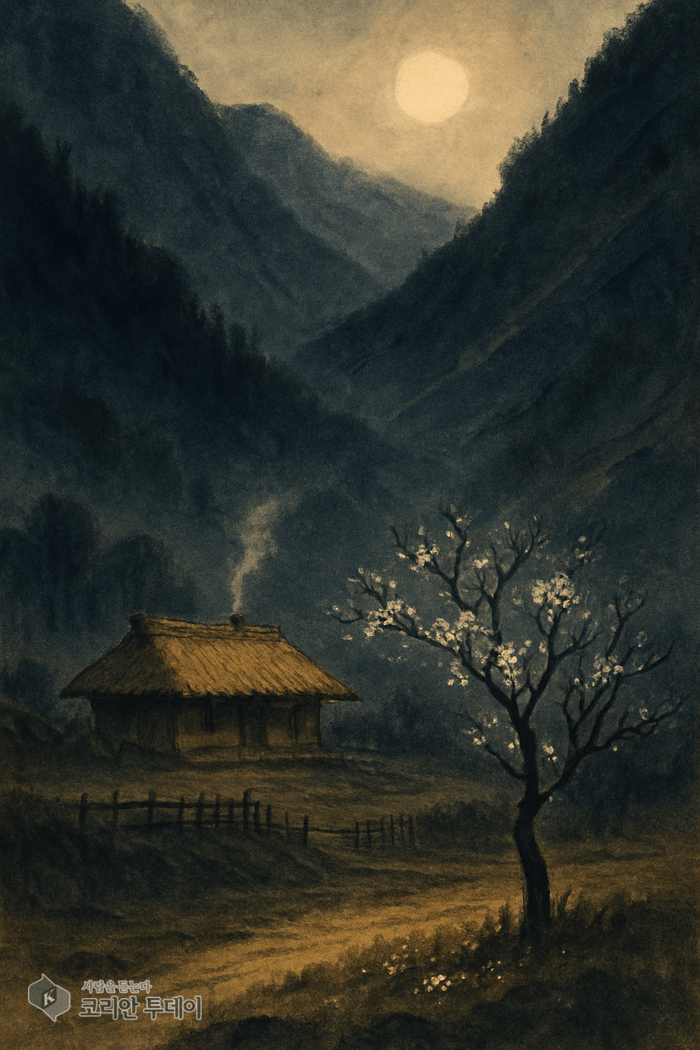
A few days after receiving from Xu Shu (徐庶) the name Zhuge Liang (諸葛亮), Liu Bei (劉備) set his first step before the thatched hall (草廬) of Longzhong (隆中).
Longzhong was a small valley among the mountain skirts southwest of Xiangyang (襄陽). At its center stood a thatched hall (草廬, a house roofed with straw), quiet and plain. The master of that hall was Zhuge Liang (諸葛亮); his style, Kongming (孔明); his sobriquet, Wolong (臥龍).
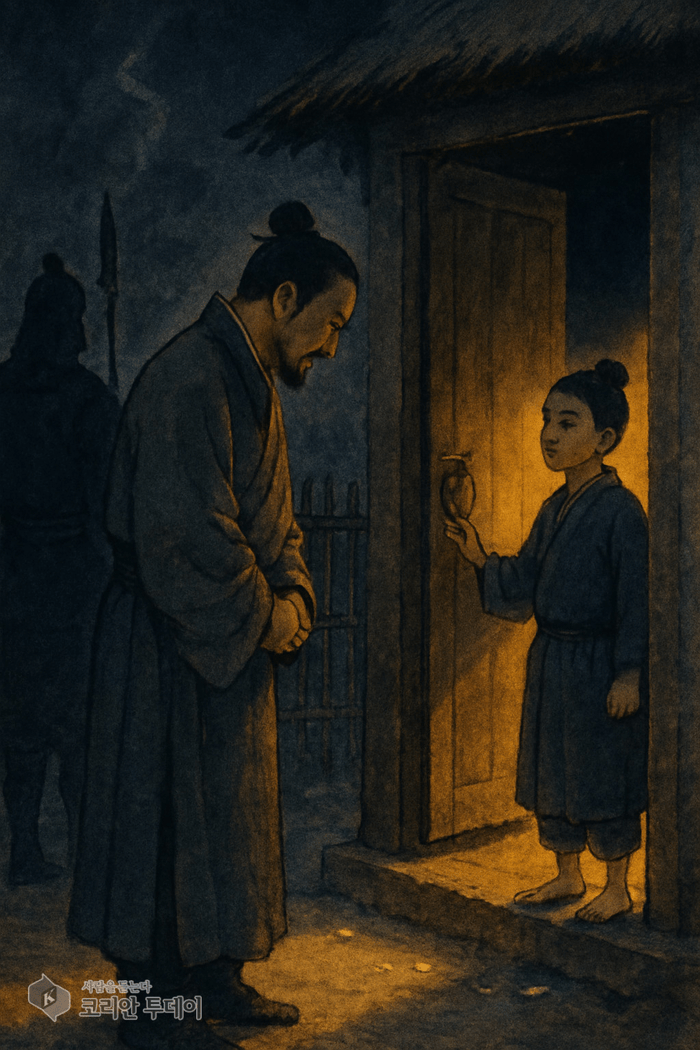
Liu Bei reached Longzhong with Guan Yu (關羽) and Zhang Fei (張飛). He bade the two wait a step behind and stood himself before the door of the hall. A small lad (童子) opened it.
Liu Bei bowed low. “I am Liu Bei, Left General (左將軍) of Han (漢). I wish to meet Master Wolong.” The lad answered quietly. “The master took to the road this morning. When he will return is not known.”
Liu Bei bowed deeply. “Today I have not met Master Kongming, but I shall come again. When the master returns, please convey the name of Liu Bei.”
Liu Bei lingered a while beneath a plum tree in the courtyard. A few plum petals lay upon the ground. His eyes rested low upon them.
Zhang Fei swallowed a low sigh. “Elder brother. Today’s single step has met a headwind. Next time, send a man ahead to confirm the road before we come.” Liu Bei shook his head slowly. “Yide. The way of the Three Visits (三顧) is to climb three times upon one’s own feet. It is not a way of sending a man ahead.”
Guan Yu nodded deeply. “Elder brother. The two younger brothers shall receive that teaching.” Liu Bei gave a low smile.
On the road back to Xinye (新野), a young woodcutter (柴夫) was carrying a load of firewood down the mountain path. He sang in a low voice. “Wolong is still asleep; the time is not yet ripe. When the time is ripe, the dragon shall rise.”
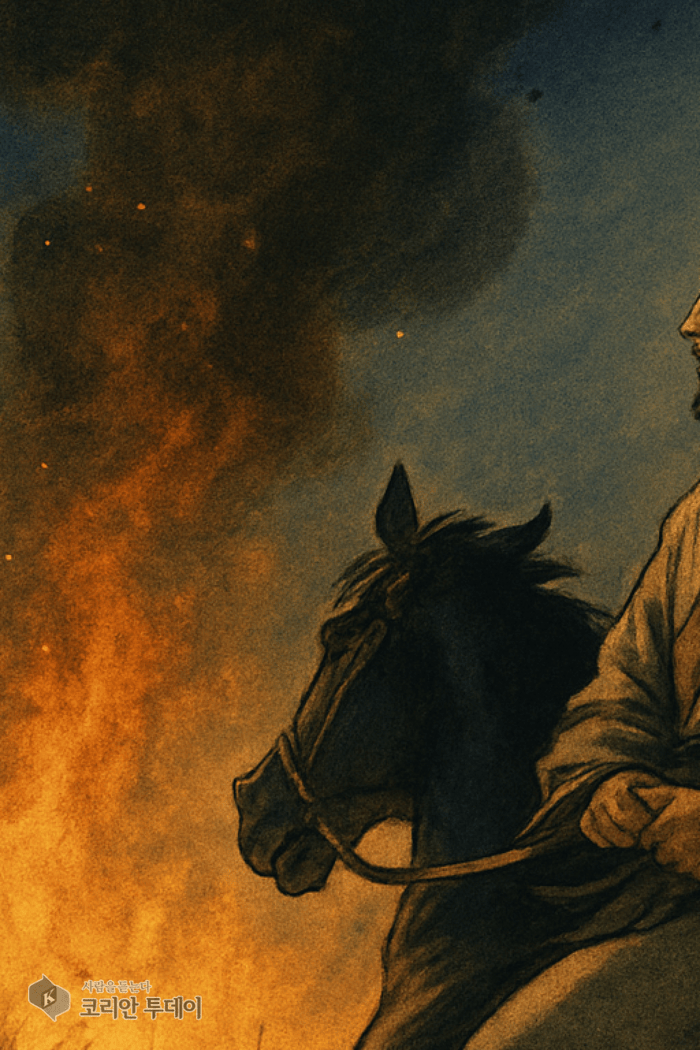
Upon his horse, Liu Bei listened deeply to that song. His eyes sank deeper. “Today’s first step has rested upon a single woodcutter’s song.”
A little further down, the three brothers passed a small stream that ran crosswise beneath a stone bridge. Zhang Fei, still grumbling, dismounted to let his horse drink. Guan Yu did not dismount; he only watched a small leaf turn at the edge of a stone. Liu Bei sat upon Dilu’s back and watched neither leaf nor horse. He looked back toward the valley. From this distance the thatched roof was invisible, yet his gaze stayed upon the roof he could not see. A governor whose first visit has found the master absent rarely looks at the nearer stream or the nearer leaf; he looks at the roof he cannot yet see. Zhang Fei remounted, and the three rode on. The stream ran quietly beneath the stone bridge, unremarked.
At the next bend of the road, an old farmer working a dry field paused his hoe to watch the three riders pass. He had heard a rumor that a tall governor had visited the hall in the valley that morning. He did not call out; he only laid his hoe down for a breath and took it up again. A farmer who has watched a governor ride toward a hall and then ride back toward a city rarely calls out; he only rests his hoe for a breath. The breath is enough. In the coming year, that farmer would tell his own son of the three riders, and the son would remember only that his father had rested a hoe for a breath, and not the name of the governor.
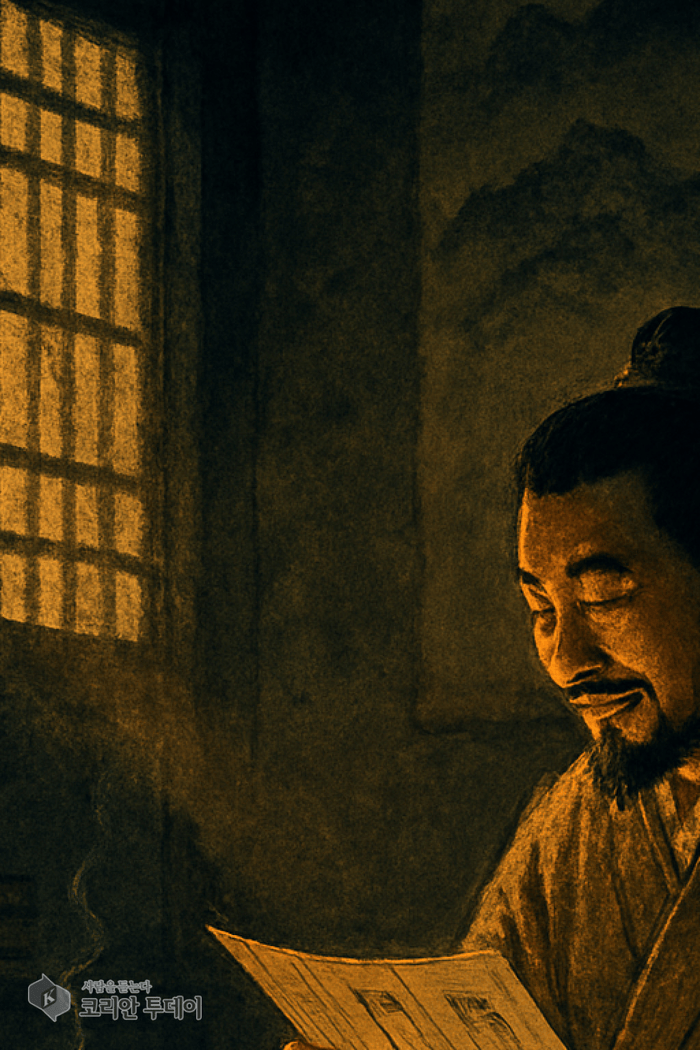
Back at Xinye that night, Liu Bei sat alone at a low table and traced the outline of the Longzhong valley upon a scrap of rice paper from memory. He drew the hall as a small square inside the valley, a single line for the plum tree in the courtyard, and a line for the road by which the woodcutter had descended. He wrote no name upon the paper. A governor who has drawn a sage’s hall as a small square rarely writes the name yet; the name belongs to a later visit. He folded the scrap once and slid it beneath his low inkstone to keep it flat.
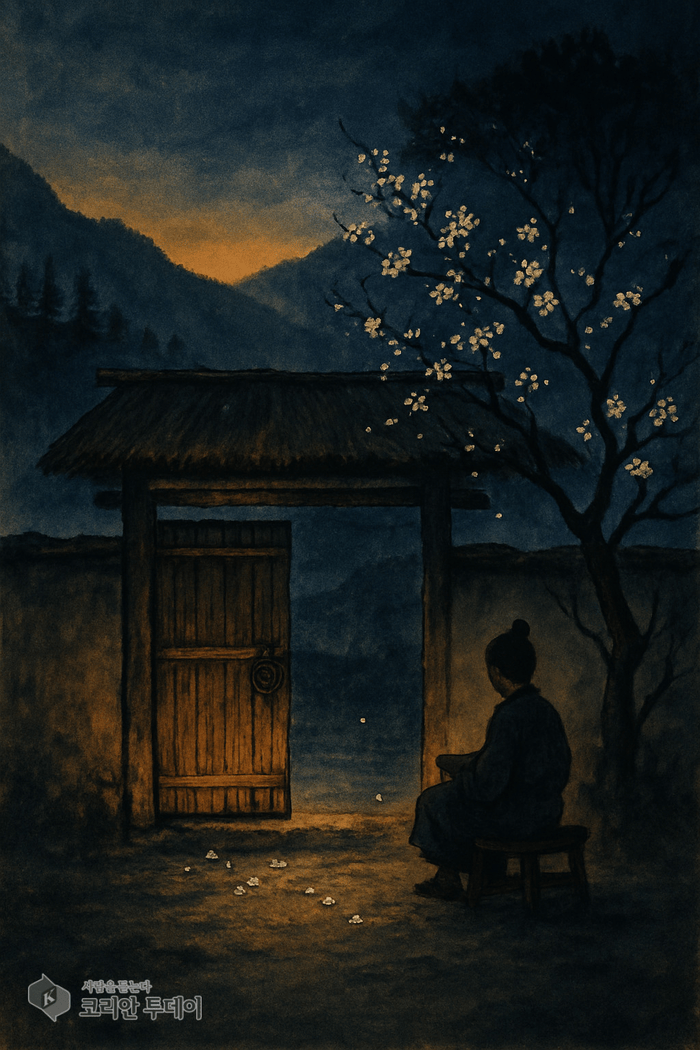
At Longzhong, the small lad closed the courtyard gate as the last light of afternoon faded. He had not spoken the governor’s name to his master; his master had asked only that the name of any visitor be remembered, not repeated. A lad of twelve serving a sage rarely repeats a visitor’s name unasked; he only keeps it against his master’s eventual question. The lad sat upon a low stool beside the plum tree and ate a small bowl of evening rice in silence. The plum petals kept falling lightly, a little more than they had that morning.
The ninety-ninth evening of Book 4 deepened quietly beneath the plum tree of Longzhong’s thatched hall. The three characters Chobang-ryeo (初訪廬, the first visit to the thatched hall) were planted as a seed: upon one breath, a young lad’s quiet word, plum petals in the courtyard, a woodcutter’s song, and the first step of the Three Visits all rested at one seat. The back of Day 98’s Moseo-wi (母書僞) had this evening reached before the door of Longzhong’s thatched hall.
—
“✒️ A Word from the Commentator — Dr. Yeon Samheum
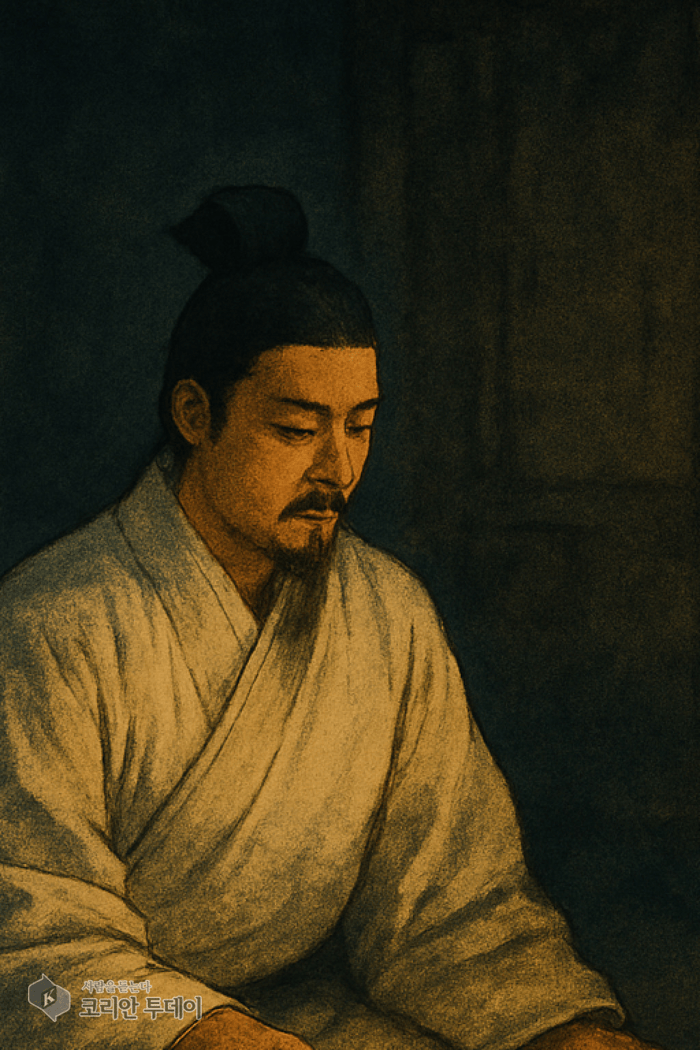
There is an evening on which a person’s single step is laid, for the first time, before the door of a thatched hall. That step returns without meeting the hall’s master. Upon your own evening today, is there perhaps a first step that has not met its master? Might you look, once more and quietly, into the grain of that returning?
THE KOREAN TODAY × WIA CODE
이 기사의 WIA Code

WIA Code 스캐너로 비추면 인터넷 없이 발행 사실과 위·변조 여부를 확인할 수 있습니다.
휴대폰 기본 카메라로 찍으면 스캐너 안내 페이지가 열립니다 — 기사 바로 열기
움직이는 코드(스트림) 한 장에 기사 전문(사진 포함)이 담겨 있습니다 — WIA Code 스캐너로 약 48초 비추면 폰에 저장되어 인터넷 없이도 읽을 수 있습니다. Stream.mp4 도 여기서 받습니다.
WIA Code · 코리안투데이


Leave a Reply