
The Ministry of Science and ICT and the National Information Society Agency have released 29 types of AI training data secured by the five elite teams of the 「Sovereign AI Foundation Model」 project on the ‘AI Hub’ website on the 27th. Amounting to roughly 35.44 million items and an estimated 1.56 trillion tokens, the data can be downloaded and used free of charge by anyone, including domestic companies, researchers and students.
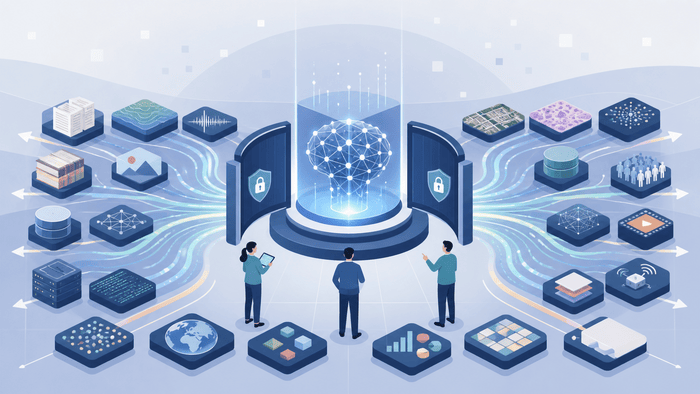 [코리안투데이] The Ministry of Science and ICT opens 29 training datasets for the 「Sovereign AI Foundation Model」 © 장형임 기자 |
The Ministry of Science and ICT (Deputy Prime Minister and Minister of Science and ICT Bae Kyung-hoon) and the National Information Society Agency (President Kim Hyung-chul) announced on the 27th that they would release a total of 29 types of data, secured by the five elite teams of the 「Sovereign AI Foundation Model」 project during the first-stage evaluation, on the AI Hub website (aihub.or.kr).
The volume opened up amounts to about 35.44 million items, which converts to an estimated 1.56 trillion tokens. In theory, this is enough to train a large-scale AI model on the order of 70 to 80 billion parameters. The participating elite teams, based on their consortium lead organizations, are five in number: Naver Cloud, Upstage, SK Telecom, NC AI, and the AI Research Institute of the LG Corporate Management Development Institute (LG AI Research).
The data were planned by each elite team in line with its development strategy and secured with a 2025 data-building and processing budget of 15 billion won. They span a wide range, from large-scale pre-training datasets to multimodal data such as video and audio, and even red-teaming data aimed at ensuring safety.
By team, Naver Cloud built 2.34 million public video items and 520,000 broadcast video items, along with 15.5 million pieces of video-clip-based text and 12 million voice question-and-answer items. The text consists of captions describing scenes sentence by sentence and can be used to train an AI model’s video comprehension and image-generation models.
Upstage built a large-scale pre-training dataset of 1 trillion tokens and 500,000 items of post-training data. The pre-training dataset can be used to train a large-scale AI model from scratch, while the post-training data can be used to develop AI agents that reason, judge and execute.
SK Telecom built high-difficulty, multi-step reasoning data in specialized domains such as mathematics, science and law, post-training data for voice and images, and about 10,000 items of Korean-style red-teaming data reflecting domestic laws and the universal values of Korean society. These can be used to strengthen an AI model’s practical problem-solving capabilities and to improve its safety and reliability.
NC AI built seven types of data covering core LLM capabilities such as long-context understanding, step-by-step reasoning, multi-turn dialogue, question answering and multimodality, drawing on real field data including manufacturing technical documents and civil-complaint counseling audio. LG AI Research filmed more than 50 kinds of household activities in 50 real home environments across the country, securing more than 170,000 video clips and building a physical-AI multimodal dataset optimized for Korean home environments, with multi-layered labeling of object, segmentation, pose and context information.
Ahead of the release, the NIA and the Telecommunications Technology Association (Chairman Son Seung-hyun) received the full datasets from each elite team after the first-stage evaluation and carried out measures including quality verification, personal-information and harmfulness checks, and the exclusion of data with license restrictions. Under the participation conditions set out in the project notice, teams must open up at least 50 percent of the data they secure; Naver Cloud, Upstage, SK Telecom and NC AI decided to release the entirety of their quality-verified data, while LG AI Research decided to statistically select and release its data in compliance with the mandatory disclosure volume.
All of the 29 released datasets can be searched by team and by type under the ‘Sovereign AI Model Data’ section of the AI Hub and downloaded free of charge by any citizen of the Republic of Korea. Some of the data can be used through a separate application in the ‘Safety Zone’, a secured online environment. This is expected to serve as a practical development foundation for small and medium-sized enterprises, researchers and students who have struggled to secure large-scale training data.
The Ministry of Science and ICT plans to also release, after quality verification, the data built during the upcoming second-stage evaluation. Kim Kyung-man, Director General for Artificial Intelligence Policy, said, ‘The 「Sovereign AI Foundation Model」 project carries great significance in that it goes beyond simply developing AI models, contributing to the qualitative growth of the entire AI ecosystem through the experience and know-how accumulated in the development process,’ adding, ‘As the data released today are precious assets embodying the elite teams’ AI training strategies, they will become the seedbed that drives the growth and self-sustaining strength of the AI ecosystem.’
지역 홍보대사 신청 기자양성과정 신청 코리안투데이 지부장 신청 코리안투데이 인천강화
THE KOREAN TODAY × WIA CODE
이 기사의 WIA Code

WIA Code 스캐너로 비추면 인터넷 없이 발행 사실과 위·변조 여부를 확인할 수 있습니다.
휴대폰 기본 카메라로 찍으면 스캐너 안내 페이지가 열립니다 — 기사 바로 열기
움직이는 코드(스트림) 한 장에 기사 전문(사진 포함)이 담겨 있습니다 — WIA Code 스캐너로 약 23초 비추면 폰에 저장되어 인터넷 없이도 읽을 수 있습니다. Stream.mp4 도 여기서 받습니다.
WIA Code · 코리안투데이





Leave a Reply