
[Day 111] The Scroll at the Southern Window
April · The Night of All Losses | About 4 minutes’ read
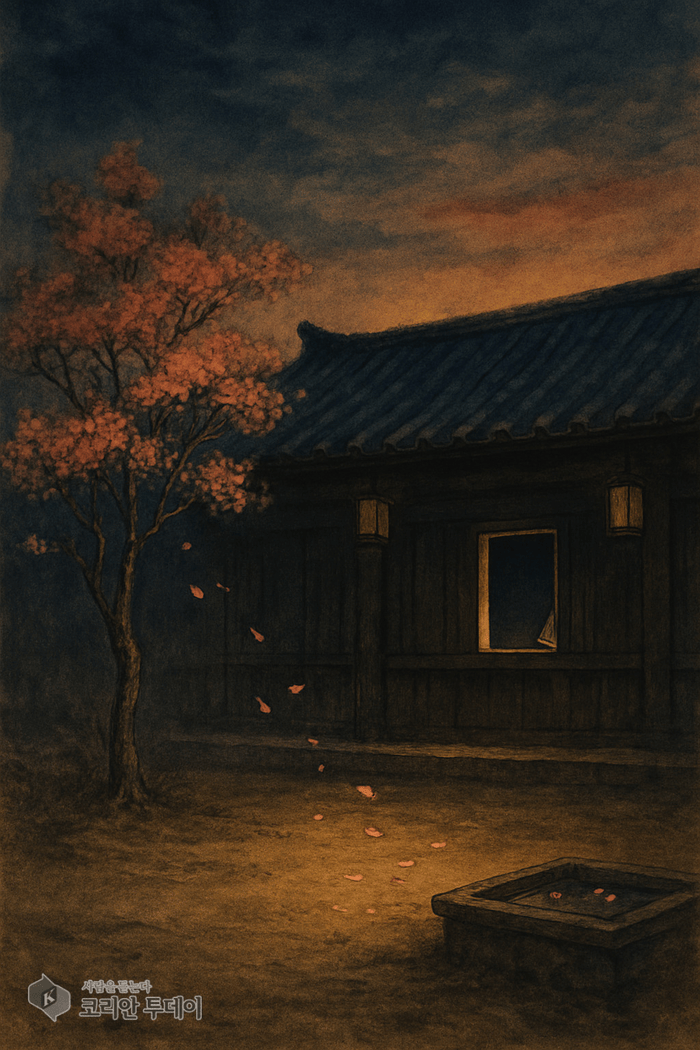
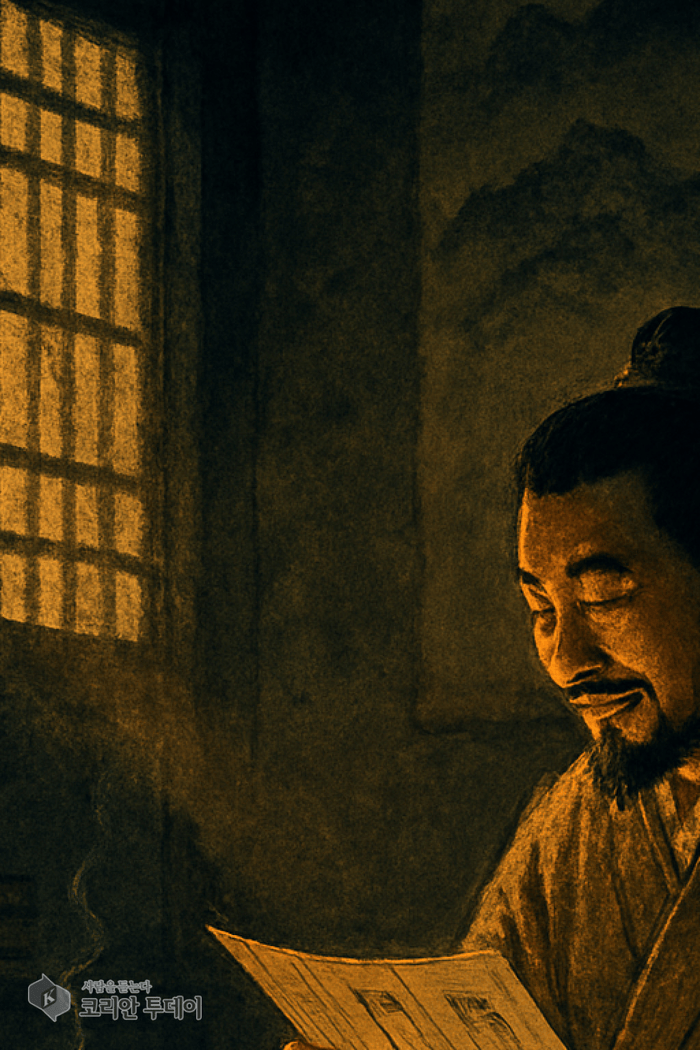
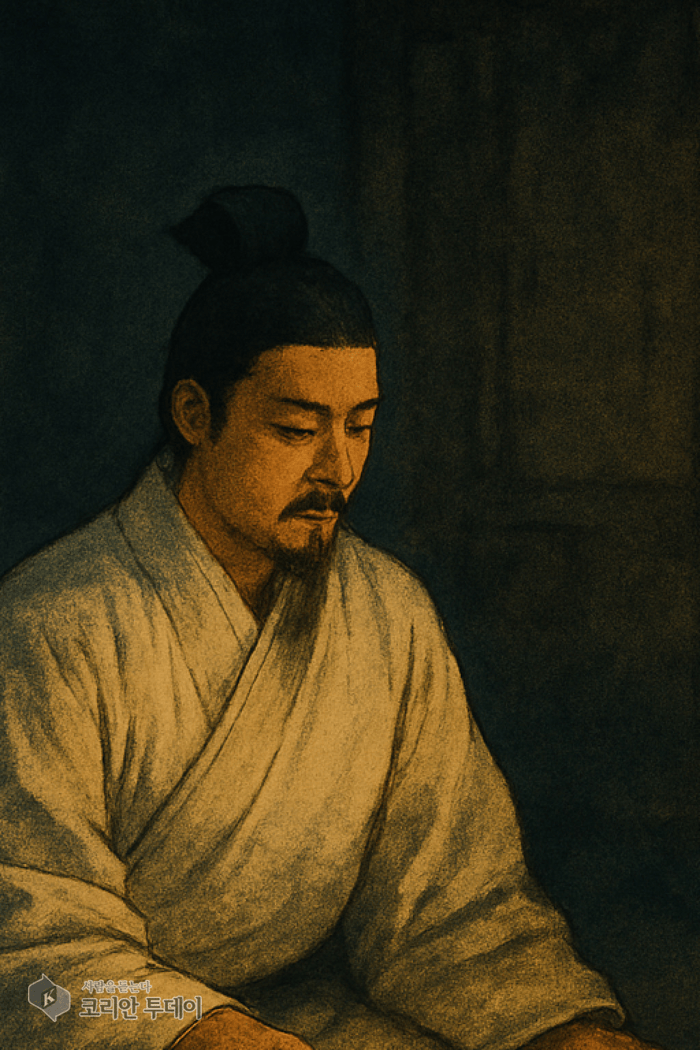
On the evening after Ma Teng’s (馬騰) name had been set upon the scroll, Cao Cao (曹操) sat at the southern window. The candles on the western side of the Chancellor’s residence had already gone out. Only the southern window stood open, and through that single opening the late-summer evening wind passed quietly across the room. The end of the wind lifted the corner of the scroll upon the desk, lightly. The ink did not stir; only the paper lifted, and sank back.
Upon the desk lay a full map of Jingzhou (荊州). With Xiangyang (襄陽) at its center — to the north, Nanyang (南陽) and Fancheng (樊城); to the south, Jiangling (江陵) and Gong’an (公安); to the east, Xiakou (夏口) and Jiangxia (江夏); to the west, Yidu (宜都) and Zigui (秭歸). All nine commanderies of Jingzhou fit within a single sheet. Xun Yu (荀彧) had drawn the map from the War Office (兵部) archives two days earlier.
Cao Cao looked long at the center of the map. Xiangyang. There, for eight years now, Liu Biao (劉表), Inspector of Jingzhou, had been seated — a man who had not once risen from that seat.
At a small point to the south, Cao Cao’s gaze paused. A place about a finger’s breadth northwest of Xiangyang. There stood two characters: Xinye (新野).
Cao Cao laid his finger upon those two characters. For a long while the finger did not leave. It was the same finger with which, the day before, he had drawn the circle around the name of Liu Bei (劉備).
“Wenruo (文若). How long has this Xinye been his seat?”
Xun Yu bowed beside the map.
“A small county in the north of Jingzhou, my lord. The foremost line of defense. Word came that Liu Biao placed Liu Bei there around Jian’an’s sixth year (201), so it has been, perhaps, six years now.”
“Six years…”
Cao Cao said it low.
He looked down at the map again.
For six years Liu Bei had held the single seat of Xinye. Six years — long enough for a man to till his own field, to mend his own roof, to forget his own name. But Cao Cao knew today, more deeply than ever, that Liu Bei was not a man who forgot his own name.
“Fengxiao (奉孝) told me never in my life to take Liu Bei lightly.”
“That is the second time, my lord, that you have said so to me.”
“At this seat of Xinye, Liu Bei is doing nothing. Or, to put it more precisely, he is doing the doing of nothing.”
Xun Yu nodded.
“Inside that doing of nothing, a man may quietly be tuning his own beat.”
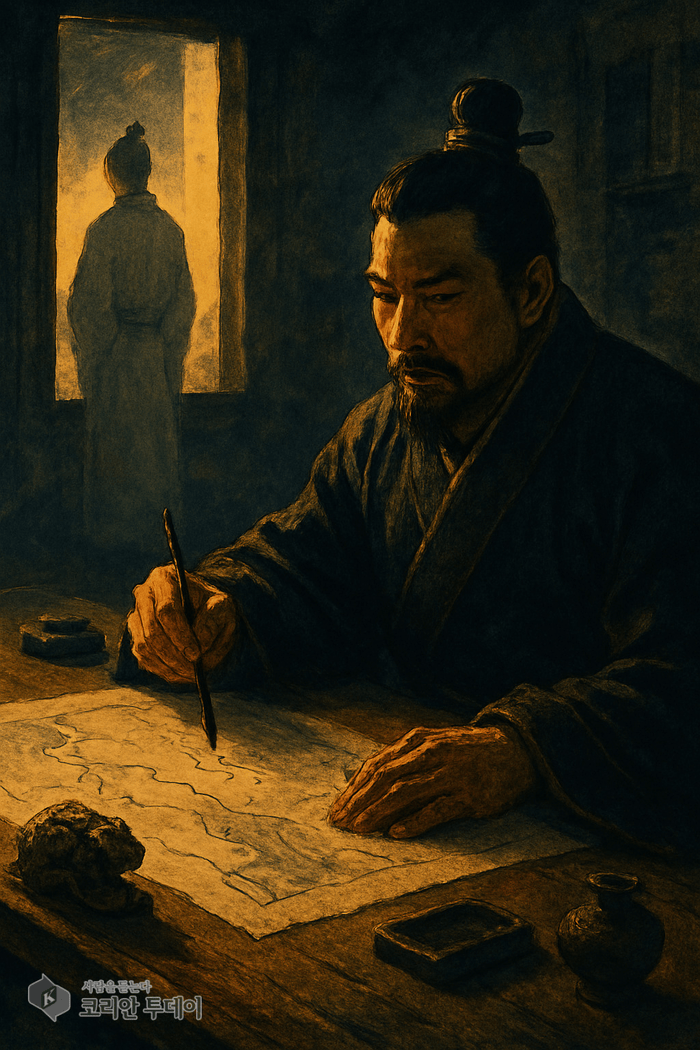
Cao Cao raised his eyes from the map and looked out the window.
The end of summer was near. The crape myrtle blossoms in the courtyard were falling one by one. Beneath those falling petals, Cao Cao felt Fengxiao’s seat once more. Had Fengxiao lived to see this day, what small character would he have written beside the dot of Xinye on this map? For a long while Cao Cao thought of that character.
At last he took up his brush. Beside the two characters of Xinye, in small writing, he added a single line.
慢起 (Rises Slowly)
He read those three characters aloud. Rises slowly. Not a forecast that Liu Bei would one day rise slowly, but a conclusion — that Liu Bei’s rising would itself be a slow rising.
“Had Fengxiao been here today, these three characters would have stood here.”
Xun Yu said nothing.
Cao Cao shifted his gaze to the southern edge of the map, toward Jiangdong (江東).
There sat the twenty-five-year-old Sun Quan (孫權). At his side, Zhou Yu (周瑜), now thirty-three. Cao Cao laid his finger upon both names, and drew it back.
“Fengxiao told me: so long as Zhou Yu is there, do not cross the river.”
“Take that word heavily today as well, my lord.”
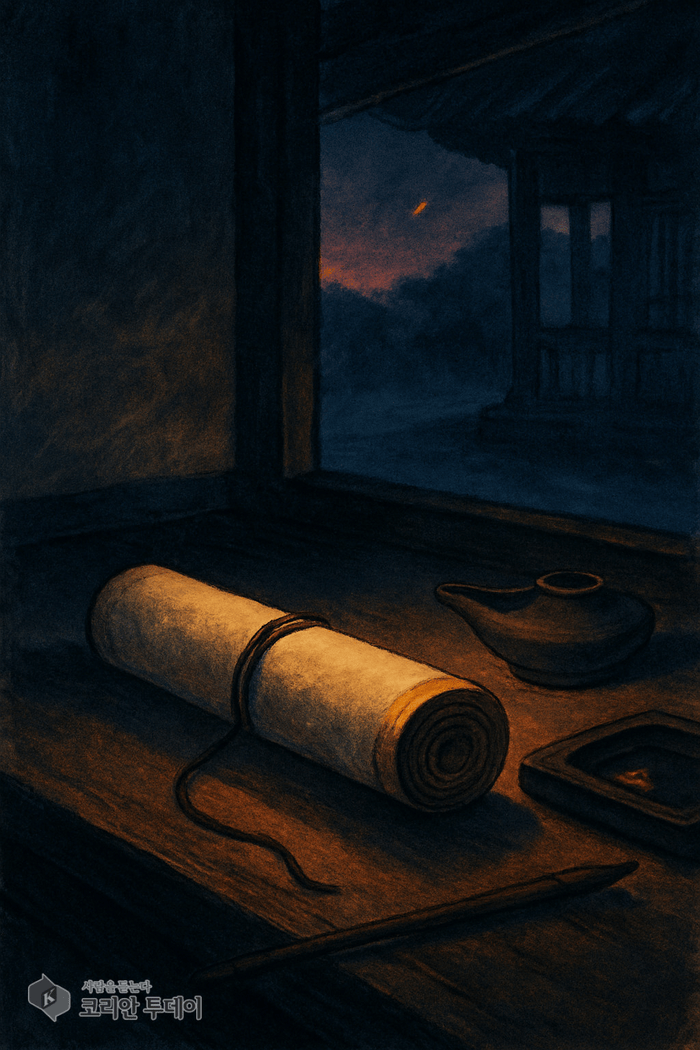
Cao Cao rolled the scroll, the map of Jingzhou, slowly.
At the southern window, the evening deepened.
The sky above Xudu was slowly turning red. Under that red sky the map was already rolled away. And yet within Cao Cao’s mind, the single sheet that held Xiangyang · Xinye · Jiangxia · Jiangling · Gong’an · Yidu · Zigui — all of Jingzhou — would not be rolled away through the whole of that night.
A single beat of the year to come, at the southern window of Xudu this evening, began very slowly to find its own seat.
—
“✒️ A line from your editor — Dr. Yeon Sam-heum
Have you ever, upon your own map, set down a person’s name and written beside it three small characters — rises slowly? Those three characters are not a slighting of that person. They can be written only by one who has, before anyone else, discerned how deep that person’s rising will be when it comes. Is there, beside you today, a name you would like to write rises slowly next to? The evening on which three characters are set down beside a name is not an evening of judgment. It is an evening in which you, before anyone else, imagine the hour on which that person will one day rise. Imagination stands at the very front of preparation. What one can imagine clearly, one has already quietly begun to ready oneself for.
THE KOREAN TODAY × WIA CODE
이 기사의 WIA Code

WIA Code 스캐너로 비추면 인터넷 없이 발행 사실과 위·변조 여부를 확인할 수 있습니다.
휴대폰 기본 카메라로 찍으면 스캐너 안내 페이지가 열립니다 — 기사 바로 열기
움직이는 코드(스트림) 한 장에 기사 전문(사진 포함)이 담겨 있습니다 — WIA Code 스캐너로 약 46초 비추면 폰에 저장되어 인터넷 없이도 읽을 수 있습니다. Stream.mp4 도 여기서 받습니다.
WIA Code · 코리안투데이


Leave a Reply