
Tonight in Seoul is Chuseok, the fifteenth day of the eighth lunar month, when the harvest moon is traditionally at its fullest. And yet not one report we could find describes how the city spent it.
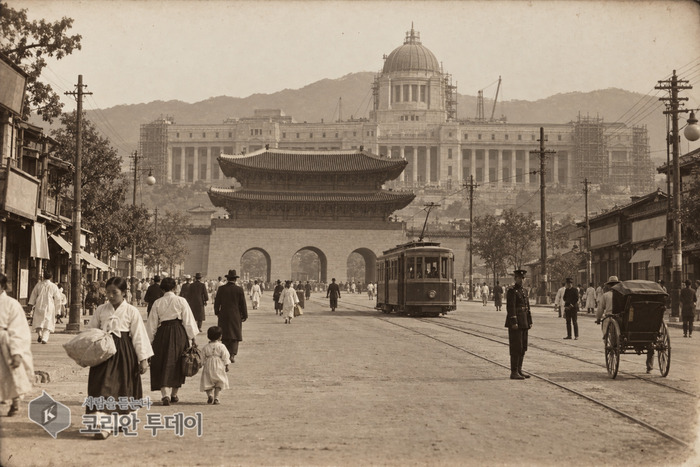
So we will not invent a festival scene. What we can verify is the calendar: ten days from now, on October 1, the colonial government will hold the completion ceremony for its enormous new headquarters in front of Gwanghwamun gate. Because Tuesday’s theme is law and culture, tonight we visit the courtrooms and the cinemas.
For International Readers: Korea in 1926 was sixteen years into Japanese colonial rule (1910-1945). Korean-language newspapers existed, but they lived under press laws that could turn a single column into a criminal case.
📰 Korea Under Japanese Rule – As Day Ends
Today’s Headlines in Review
The front pages of Dong-A Ilbo [dong-ah il-bo] and Chosun Ilbo [cho-sun il-bo] for this exact date could not be confirmed, so we quote none. Instead, here are two cases that filled the papers around this time.
🏛️ Government-General Records
Gazette contents for today: unconfirmed. The new building’s timeline is on record: ridge-beam ceremony on May 17, 1923; trial use from January 4, 1926; completion ceremony on October 1, 1926, timed to the regime’s “Colonial Rule Commemoration Day.”
⚖️ In the Courtroom
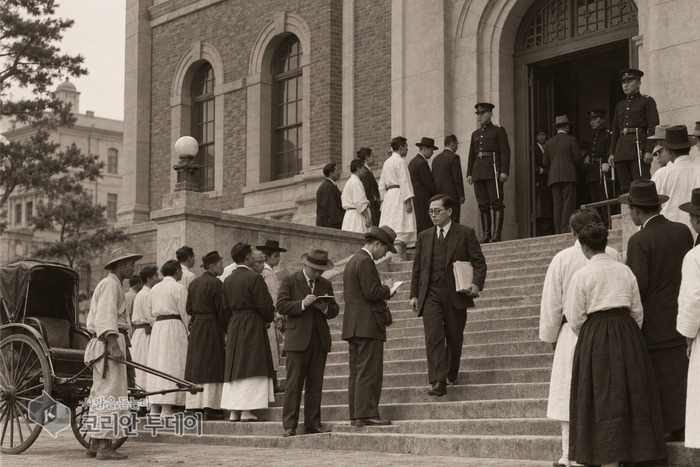
The column case. On August 22, Dong-A Ilbo ran a short column titled “Hoengseol-suseol” (“Rambling Remarks”). Its author, Choe Won-sun, was charged under the Public Security Law; the publisher, Kim Chul-joong, under the Newspaper Law. At the September 8 hearing at the Keijo (Seoul) District Court, prosecutors demanded eight months’ imprisonment for Choe and six months for Kim. We could not confirm the verdict.
The communist party trials. On September 13, the same court opened proceedings in the first and second Korean Communist Party cases. The second case grew out of the arrests that followed the June 10 student demonstrations.
🌏 East Asia in Turmoil
China. Chiang Kai-shek’s Northern Expedition set out on July 9 to break the warlords. Hanyang fell on September 6 and Hankou on September 7, but the walled city of Wuchang held out. It would fall on October 10.
Japan. Emperor Taisho was too ill to rule, and Crown Prince Hirohito had governed as regent since 1921. Three months from now, on December 25, the emperor will die and the Showa era will begin.
Korea abroad. The Provisional Government in Shanghai had been led by Hong Jin since July 7. Kim Gu takes over on December 14.
🌍 The World Stage
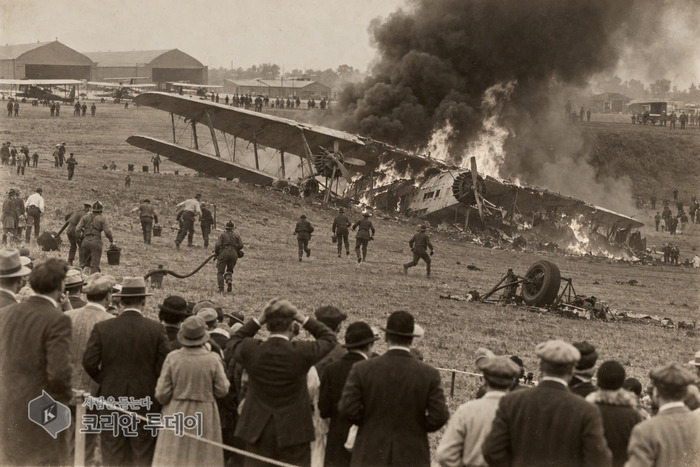
Long Island, New York. French war ace René Fonck tried to win the Orteig Prize for the first non-stop flight between New York and Paris. His three-engine Sikorsky S-35 was thousands of pounds overweight, and its auxiliary landing gear broke away during takeoff. The aircraft plunged down a slope at the end of the runway and burst into flames. Fonck and his co-pilot escaped; the radio operator and a mechanic died. Charles Lindbergh would win the prize eight months later.
The Gulf Coast. The Miami hurricane weakened as it moved over Mississippi and Louisiana. The Red Cross counted 373 dead and 6,381 injured. A day earlier, gunmen had fired more than a thousand rounds at Al Capone’s headquarters in Cicero, Illinois, and missed him.
Europe. Germany had joined the League of Nations this month. “Away with cannon and machine guns,” said France’s Aristide Briand. “Instead, conciliation, arbitration, and peace!” Four days ago he and Gustav Stresemann met privately at Thoiry, near Geneva.
🌐 Colonial Parallels
China was never formally colonized, but its rivers carried foreign steamers and gunboats under treaty privileges. In late August and early September, the Wanhsien incident on the Yangtze pitted a Sichuan warlord’s soldiers against British merchant shipping and ended with Royal Navy gunboats in action. Korea and China stood on different roads, but both faced the same question: who decides what happens on our own land, and under whose guns? We found no same-day comparison for September 21 itself.
👤 Person of the Day: Choe Won-sun
Choe Won-sun was a columnist at Dong-A Ilbo. His August 22 column brought a Public Security Law prosecution and a demand for eight months in prison. The paper was already in trouble: in March it had been suspended a second time for reprinting a Moscow telegram to Korean farmers on the anniversary of the March 1st Movement. What Choe’s column actually said we could not verify, so we say nothing about its content. What we know is the price attached to it.
🎭 Understanding Daily Life: The Picture Houses
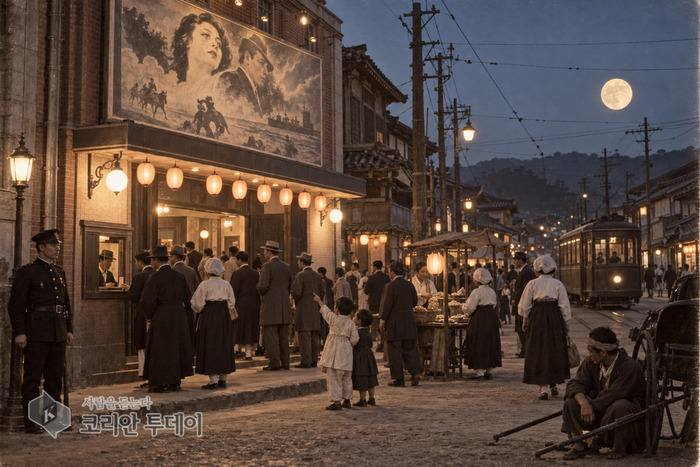
We could not confirm what was showing tonight. What is confirmed is the map: Dansungsa, Joseon Theater, and Umigwan were the main venues for Koreans in northern Seoul. In an age of silent film, a live narrator called a byeonsa [byuhn-sah] spoke the dialogue. In late February, Umigwan staged Korea’s first sound-film demonstration, sixteen short films by Lee de Forest.
Ten days from now, on October 1, Dansungsa will open Arirang, written, directed by, and starring Na Un-gyu. On opening day, mounted police were called out to handle the crowds, and colonial detectives sat in the audience because the narrators’ lines sometimes veered into anti-Japanese expression. Under tonight’s moon, that premiere is still ten days away.
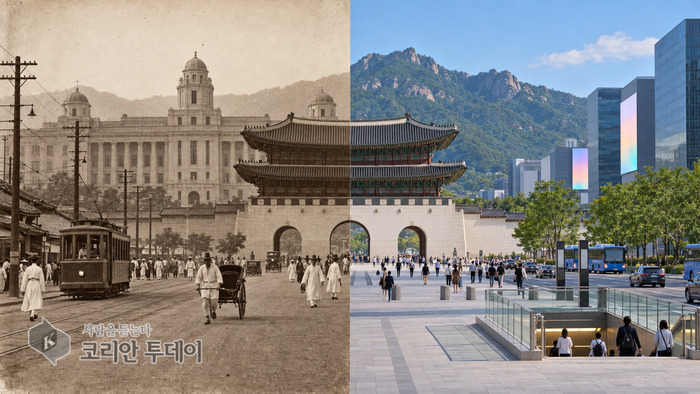
🔄 Century Mirror
| 1926 | 2026 | |
|---|---|---|
| Law | One column can become a Public Security Law case | The constitution guarantees freedom of the press |
| Culture | Silent films read aloud by a narrator, detectives in the seats | Theaters and streaming; this year marks 100 years of Arirang |
| Chuseok | Tuesday, September 21 | Friday, September 25 |
K-culture now travels the world, and one of its roots is a film that police watched as closely as the audience did. Freedoms we take for granted were argued over in rooms like the ones we visited tonight.
Tomorrow’s Preview
Join us tomorrow at 10:10 PM KST for Wednesday, September 22, 1926. Nine days remain until the new headquarters is dedicated. Elsewhere in the world, Thomas Edison will declare radio broadcasting “a commercial failure.” Rest well.
The Korean Today • global@thekoreantoday.com
Every evening at 10:10 PM KST (1:10 PM UTC), we bring you 100 years ago today.
© 2026 The Korean Today. All rights reserved.
THE KOREAN TODAY × WIA CODE
이 기사의 WIA Code

WIA Code 스캐너로 비추면 인터넷 없이 발행 사실과 위·변조 여부를 확인할 수 있습니다.
휴대폰 기본 카메라로 찍으면 스캐너 안내 페이지가 열립니다 — 기사 바로 열기
움직이는 코드(스트림) 한 장에 기사 전문(사진 포함)이 담겨 있습니다 — WIA Code 스캐너로 약 145초 비추면 폰에 저장되어 인터넷 없이도 읽을 수 있습니다. Stream.mp4 도 여기서 받습니다.
WIA Code · 코리안투데이






Leave a Reply