
[Day 135] Footprints on the First Snow
May · The Third Door | About 4 minutes’ read
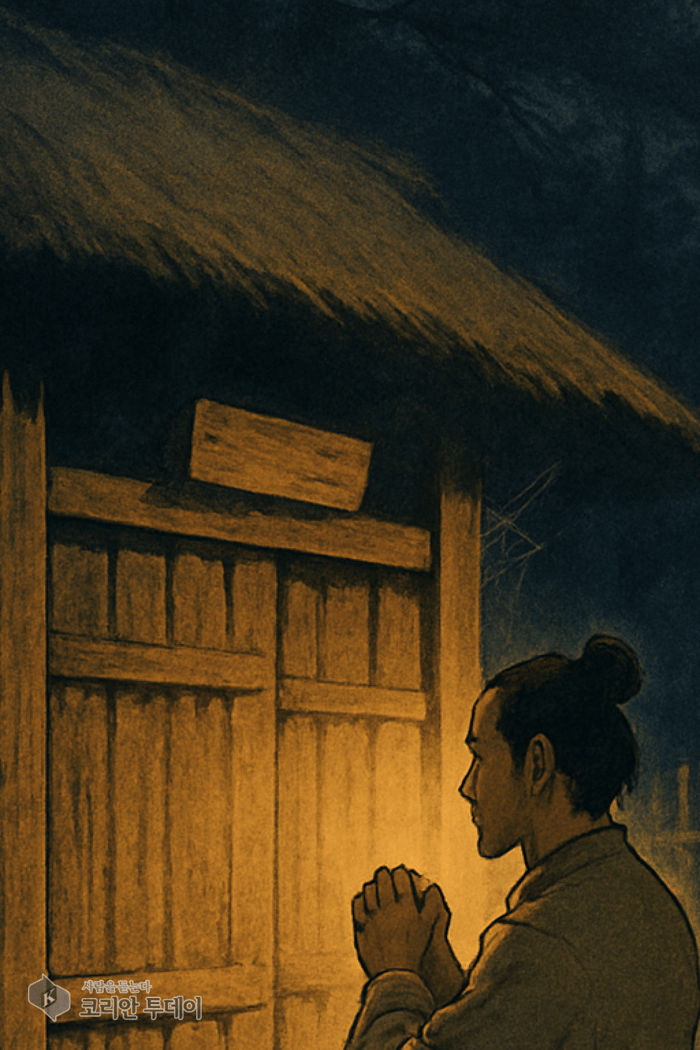
Ten months after Xu Shu (徐庶) had left, it was an early morning at the threshold of the early summer of Jian’an 13 (208 CE).
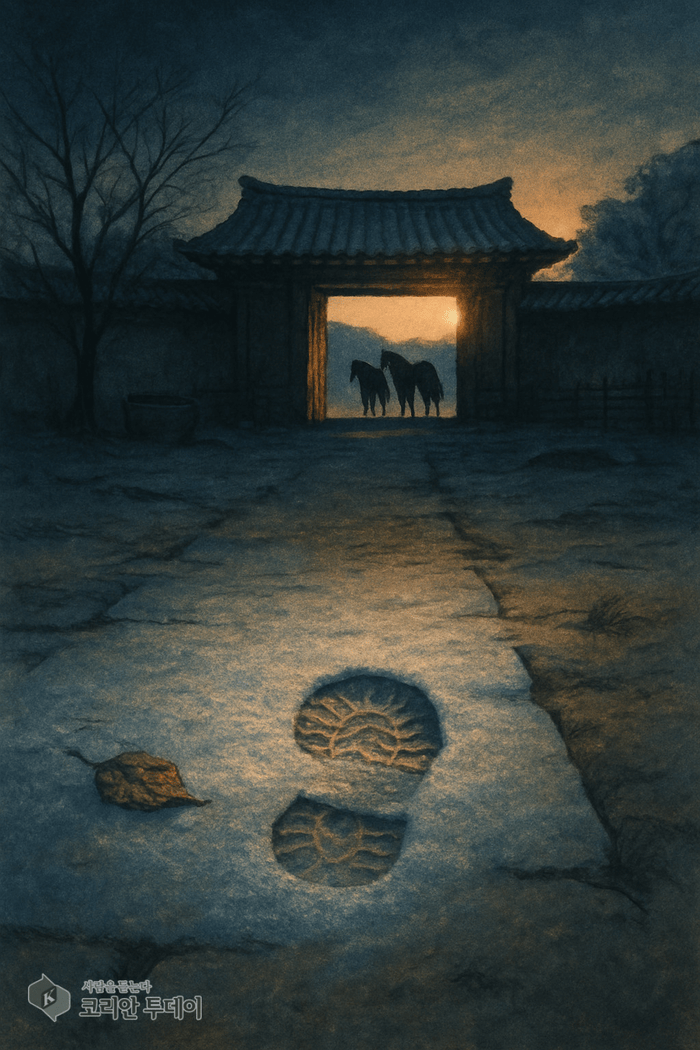
The season for first snow in the back yard of Xinye (新野) had already passed. But a late-spring rain that came up from the south two days ago had turned to frost in the night, and left a thin white layer this morning upon the stones of the yard. When Liu Bei (劉備) pressed his first print upon that frost, the morning light came down upon the print. It was too thin to call snow, and too firm to call dew.
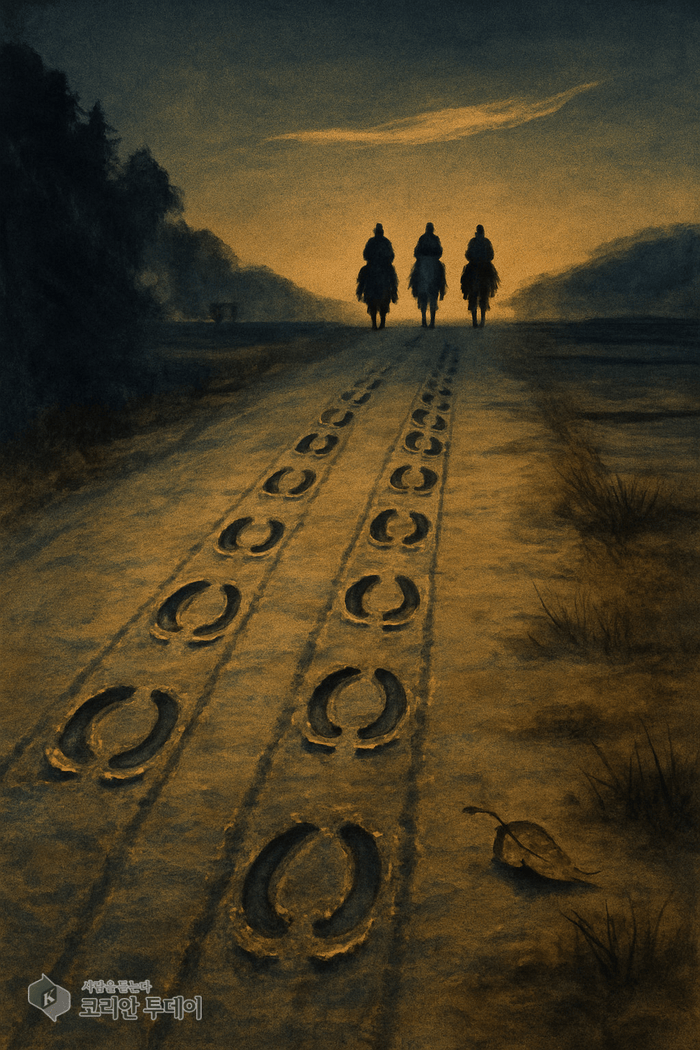
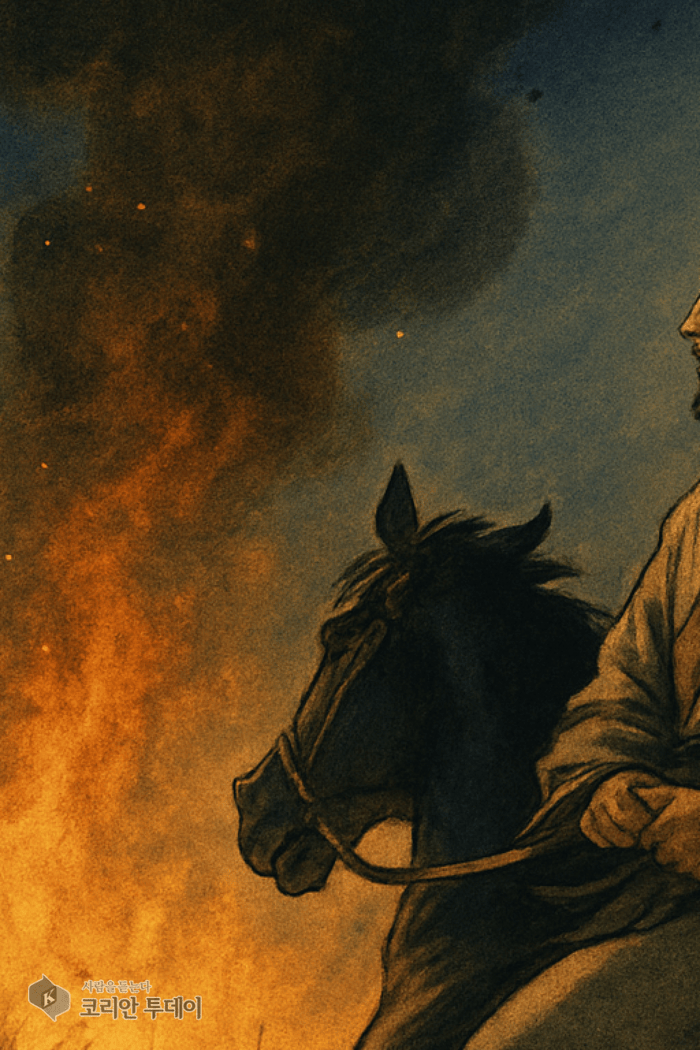
Guan Yu (關羽) and Zhang Fei (張飛) were already waiting at the north gate. Three horses stood in a line. The horse in the middle was Dilu (的盧). To the left was Guan Yu’s chestnut charger; to the right, Zhang Fei’s black horse. The three men’s attire was not that of generals. They wore no armor. The blades at their waists hung light. Today was not a ride out to strike anyone.
Liu Bei drew a map out of his robe upon horseback and opened it.
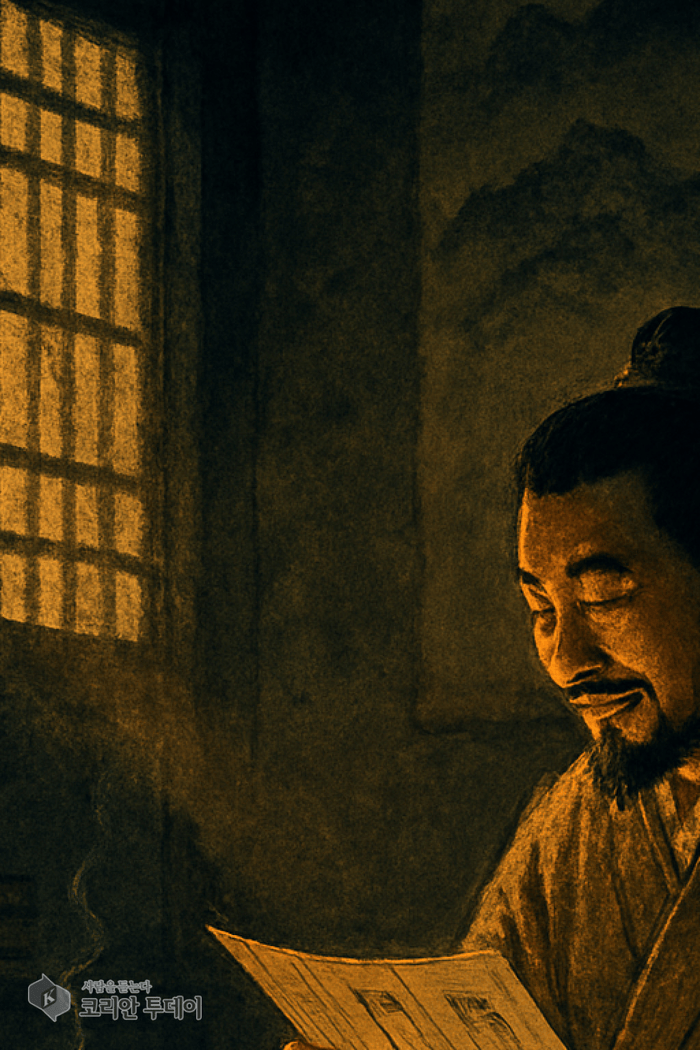
Upon a strand of Wolonggang (臥龍崗) in Nanyang (南陽), the six characters Xu Shu had written remained. 諸葛孔明 草廬. Beside them, the three characters Liu Bei had added last autumn — 第一步 (The First Stride) — also remained. He laid his finger upon those three characters, and folded the map again. He put it back into his robe.
“Yunchang, Yide. Today’s stride is a stride of standing before the gate of one man. Even if the gate does not open, let us not grow angry before it.”
Guan Yu bowed his head. Zhang Fei gave a short snort, but nodded in the end. His breath gathered white in the morning air, and scattered.
The three horses that left Xinye rode south all morning. Around noon, they reached a small village beneath Wolonggang of Nanyang. Before the village flowed a clear brook. In a paddy beside the brook, several farmers were setting rice seedlings. Among them, one man, though dressed as a farmer, was light in his carriage and clear in his gaze.
Liu Bei dismounted, and with clasped hands asked him.
“Good farmer. I have heard there dwells in this village one Master Zhuge Kongming (諸葛孔明). In which direction does his cottage lie?”
The farmer straightened his back and looked at Liu Bei. Then he smiled quietly.
“Master Kongming’s cottage lies about a li up this stream. But this morning, the master has gone to visit a friend’s house, and is not at home.”
“When is he likely to return?”
“That, the master himself does not know, nor do I. On some days he returns by evening; on others, it takes ten days.”
The farmer bent down again and resumed his seedlings. Liu Bei bowed in thanks.
Upon a strand of the Wolonggang hill stood a small thatched cottage (草家).
The brushwood gate was shut. Above the gate hung three small characters: 臥龍崗. The writing was composed. Each stroke had been carved deep.
Liu Bei stood a pace before the gate. Guan Yu and Zhang Fei stood three paces behind him. Liu Bei did not knock. With clasped hands, he offered only a brief salute toward the gate. No sound came from within. It was as the farmer had said.
Liu Bei stood a long while before the gate. In a corner of the gate, a single small spider’s web flashed in the sunlight. The web had been newly spun this morning. Before the gate of a house whose master was away, a spring spider was making a seat of its own. Liu Bei looked long at that web.
Behind him, Zhang Fei let out a brief breath. The words let us turn back rose to his throat, but after a single look at the back of his elder brother’s head, slid down again. Guan Yu drew his hands before him and stood so, a long while.
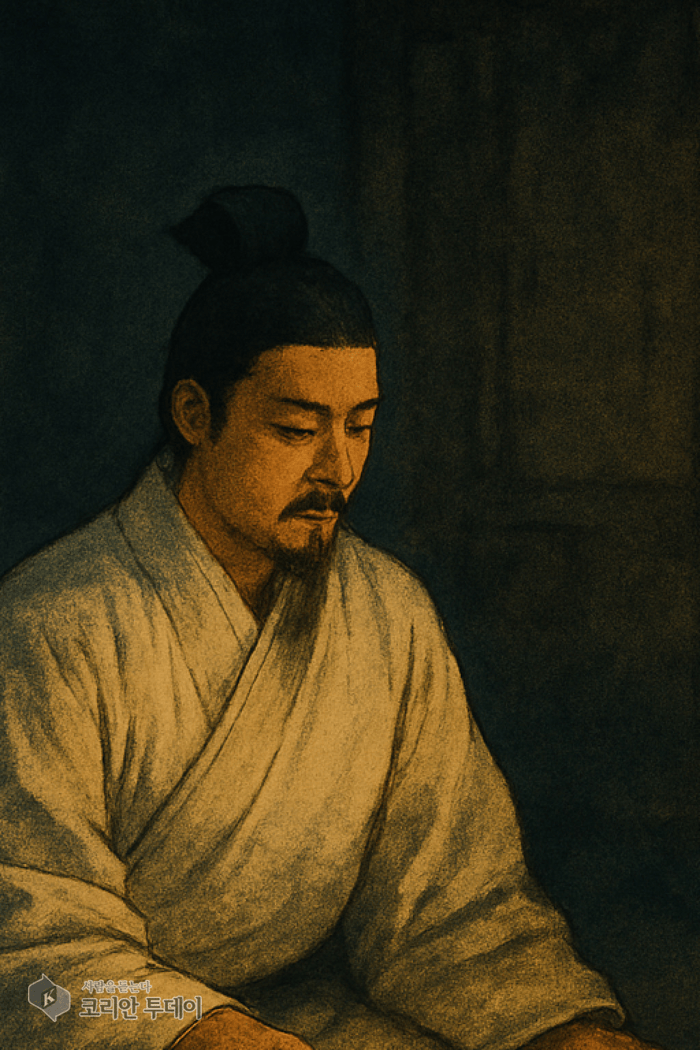
At length Liu Bei smiled, small. Within the smile lay one strand of lightness.
“Yunchang, Yide. Today’s stride, let us turn back here. That we came here, this gate shall have remembered.”
Liu Bei turned his horse’s head. As he turned, he lifted his eyes once more to the three characters above the gate. 臥龍崗. While he read them, somewhere within him, the measure of an evening on which this gate would one day open was already, from far ahead, finding its seat.
On the frost of the road back, three lines of hoofprints were quietly left. Zhang Fei turned upon horseback to look back. The three characters above the brushwood gate of Wolonggang were receding into a small dot upon the frost.
The first of three strides today — in three lines of frost-tracks — now tied the hill of Nanyang and the back yard of Xinye together. Two more of such tyings remained. Zhang Fei murmured inside himself, small. Two more. Guan Yu said nothing. Liu Bei did not turn back.
—
“✒️ A line from your editor — Dr. Yeon Sam-heum
On the day of the first stride, when the gate does not open, the act of not growing angry, of turning back and going home, is a seat that stretches the measure of the second and third strides to come. A stride that does not knock, that only offers a salute and turns back, is not a weak stride; it is, rather, the firmest first stride of any preparation worth the name. Has there been, beside you, a seat at which you once turned back quietly before an unopened gate? The mark of that turning is already a first written greeting to the one who, later, will open the gate to you. Closed gates do not ignore the quiet ones at their threshold; they listen. The listening is not audible to the one who walks up, but it is almost never absent. Some doors test, across several seasons, the manner in which a person turns away. Those who turn away well are, almost always, the ones who, much later, are let in without resistance.
THE KOREAN TODAY × WIA CODE
이 기사의 WIA Code

WIA Code 스캐너로 비추면 인터넷 없이 발행 사실과 위·변조 여부를 확인할 수 있습니다.
휴대폰 기본 카메라로 찍으면 스캐너 안내 페이지가 열립니다 — 기사 바로 열기
움직이는 코드(스트림) 한 장에 기사 전문(사진 포함)이 담겨 있습니다 — WIA Code 스캐너로 약 53초 비추면 폰에 저장되어 인터넷 없이도 읽을 수 있습니다. Stream.mp4 도 여기서 받습니다.
WIA Code · 코리안투데이


Leave a Reply