
ESG Green Signal · Ep.24
✏️ Changhee Baek | ⏱️ 7 min read
ESG Green Signal Ep.24 · Sustainability in Your Closet
Before choosing something new, imagine another season with the clothes you already own
Some mornings, we open the wardrobe and feel we have nothing to wear. The hangers are crowded, yet we reach for the same familiar pieces. There are trousers we loved when we bought them but never found comfortable, a shirt set aside after losing a button, and a jacket saved for an occasion that has yet to arrive. A change of season often sends us looking for new clothes. Today, why not look a little further into the wardrobe instead? A more sustainable relationship with clothing can begin right there.
Sustainability in your closet does not mean giving up fashion or constantly denying yourself. It means learning which clothes feel right, caring for what you have, and responsibly finding the next destination for pieces you no longer use. ESG—considering the environment, people, and responsible management together—feels more approachable when translated into everyday life. Enjoying style and caring for our belongings can share the same wardrobe.
🌱Consider a garment’s whole journey
Clothes pass through many stages before reaching a shop. Raw materials become yarn and fabric, which are dyed, sewn, and transported to us. These processes involve resources, energy, and human labor. After purchase, washing, drying, and storage continue the story. Thinking about this journey, much of it invisible on a price tag, adds another consideration to our choices: how often and how long we will be able to wear something.
When you need new clothes, look beyond the material name or an environmentally friendly claim and consider whether the garment suits your life. Does it work with the bottoms you wear regularly? Can you move comfortably? Can you manage the care it requires? Even a purchase made with good intentions is unlikely to see much use if it stays in the wardrobe because it feels uncomfortable. When a sale makes a decision feel urgent, pausing to check what you already own can help.
🌱Keep wearing through care and repair
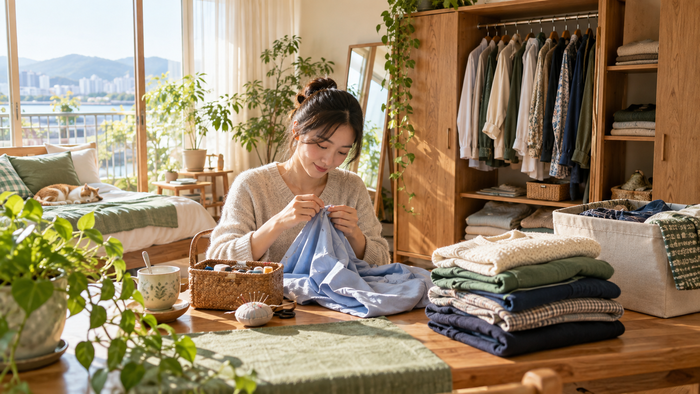
When sorting your wardrobe, begin by looking for clothes you could wear again. Bring out pieces pushed to the back, try them on for comfort, and pair them with other garments. You may rediscover combinations you had forgotten. Consider why you stopped reaching for an item, too. If a missing button or loose hem is the reason, a small repair could bring it back into use. If the work feels beyond your skills, ask a local alterations shop what is possible.
Care begins with checking a garment’s condition and care label. Rather than automatically washing frequently or putting it off too long, respond to dirt, perspiration, and the fabric’s needs. Treat small stains in a way suited to the material, and follow the washing and drying instructions. Dry clothes thoroughly before storing them, and check seasonal pieces before putting them away so they are ready to enjoy when you take them out again. Before buying special care products, see what you can do with tools already at home.
🌱Think about the next person’s wardrobe
Clothes that no longer suit you may be useful to someone else. When giving away or selling an item, look at it from the recipient’s perspective. Make sure it is clean and wearable, and describe stains or damage honestly. Even when offering clothes to someone close to you, asking whether they need them is a considerate first step. The pleasure of clearing your own wardrobe should not become someone else’s burden to sort through.
Before donating clothes or using a collection service, check which items and conditions are accepted. Not every garment will be worn again or recycled, so placing it in a collection bin does not by itself complete the cycle of reuse and recovery. For clothes that can no longer be worn, follow your local disposal guidance. You can also ask retailers about repair services and material information. Such questions signal what sellers need to explain more clearly.
💡 Action Guide
★☆☆ Rediscover a forgotten piece
Try on something from the back of your wardrobe and find a combination that works with clothes you already own.
★★☆ Make a small repair
Repair a garment left unworn because of a button or hem, either yourself or with help from a local alterations shop.
★★★ Find the next wearer
Check the condition of clothes you no longer wear and the acceptance rules of sharing or donation services, then connect them with someone who needs them.
⚠️ Watch Out For This
Words such as environmentally friendly, natural, or recycled cannot tell us everything about a garment’s environmental impact. Check which material or process a claim refers to and whether there is evidence to support it. Finding ways to keep wearing clothes that still serve you, before rushing to replace them with environmentally marketed products, can help reduce unnecessary consumption.
A sustainable wardrobe does not need to be a collection of perfect choices. It can simply be a place where small acts accumulate: sewing a button back on, wearing a forgotten garment, and thoughtfully passing something to a person who needs it. When you open your wardrobe today, ask yourself: could this piece stay with me for another season?

Changhee Baek
Gyeonggi-Hanam Branch Chief, The Korean Today
ESG Management Columnist
Sustainability Consultant
Director, WIA Journalists Association
#ESGaction #SustainableLiving #GreenSignal #SmallStepsBigChange
Your story, too, can become a book — together with WIA Book Healing.
 |

THE KOREAN TODAY × WIA CODE
이 기사의 WIA Code

WIA Code 스캐너로 비추면 인터넷 없이 발행 사실과 위·변조 여부를 확인할 수 있습니다.
휴대폰 기본 카메라로 찍으면 스캐너 안내 페이지가 열립니다 — 기사 바로 열기
움직이는 코드(스트림) 한 장에 기사 전문(사진 포함)이 담겨 있습니다 — WIA Code 스캐너로 약 84초 비추면 폰에 저장되어 인터넷 없이도 읽을 수 있습니다. Stream.mp4 도 여기서 받습니다.
WIA Code · 코리안투데이





Leave a Reply