
ESG Green Signal · Ep.16
✏️ Changhee Baek | ⏱️ 7 min read

ESG Green Signal Ep.16 · Auditing Your Home Energy
A small household energy transition that begins with the electricity bill
Once a month, the electricity bill arrives in the mailbox or as a phone notification. It is easy to glance at the numbers and think, “This month was a bit high,” then move on. But that bill is also a small signal showing how energy is being used at home.
A home energy audit may sound like something that requires an expert with special equipment, but the first step is much simpler. Notice when the living room lights are turned on, how often the refrigerator door is opened, and whether unused chargers are still plugged in. Environmental action in ESG begins less with grand declarations and more with this kind of everyday observation.
🌱Seeing Electricity Flow at Home
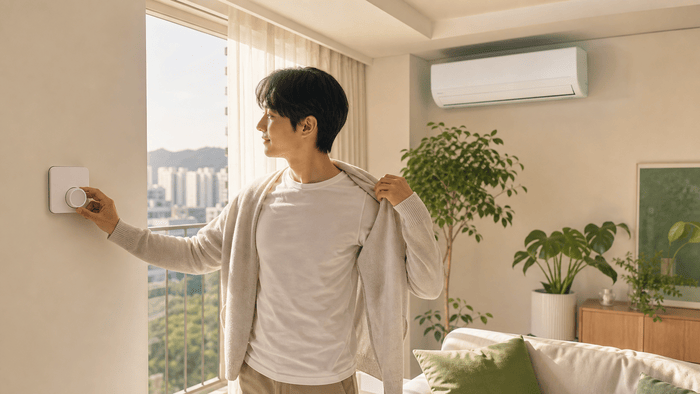
The first step in auditing home energy is to see where electricity is being used. It becomes easier when we think by space: kitchen, living room, bedrooms, and bathroom. Some appliances, such as the refrigerator, need to stay on, while others, like lights or the television, depend more on daily habits.
What matters is not a harsh promise to use less at all costs, but the willingness to find moments of waste. Lights left on in empty rooms, screens kept running after brief use, and devices plugged in for long hours on standby are places where energy slips away unnoticed. Simply recognizing that flow is already the beginning of change.
🌱Saving Without Losing Comfort
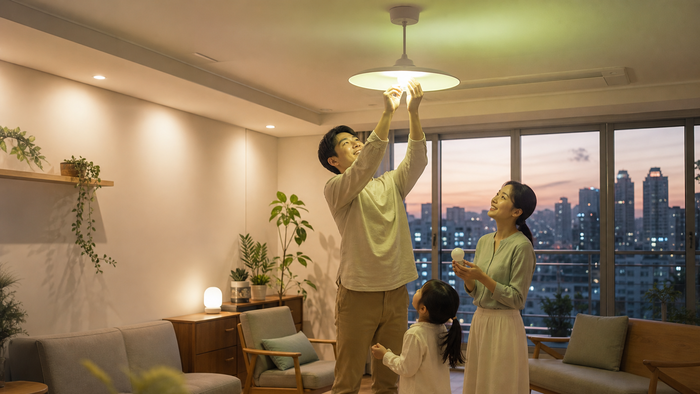
Saving energy does not mean living with discomfort. It can mean keeping the brightness you need while switching old bulbs to more efficient lighting, organizing frequently used outlets with switched power strips, or checking windows and door gaps when heating or cooling. The key is to reduce wasted energy without lowering the quality of daily life.
In a shared household, it is better to set small rules than to blame one another. The last person leaving home can check lights and power, laundry and dishwashing can be done in fuller loads when possible, and windows can be kept from staying open too long during heating or cooling. Simple agreements that everyone understands are enough.
🌱Turning Bills into Records
An electricity bill can become more than a notice of cost; it can become a record of daily life. Compare this month with last month and think about what changed. Were there more hot days, more time working from home, or a new appliance? Such changes in life are reflected in energy use.
This record helps each household make better decisions. In one home, lighting may be the main issue; in another, heating and cooling habits may matter more. Rather than copying someone else’s saving tips, reading the pattern of your own home is closer to sustainable practice.
💡 Action Guide
★☆☆ One Walk-Through
Before going to bed, walk through the home once and check lights, screens, and chargers that can be turned off.
★★☆ Room-by-Room Notes
For one week, write down frequently used appliances and unnecessary on-time in the kitchen, living room, and bedrooms.
★★★ Monthly Energy Talk
Look at the electricity bill together as a family and choose one habit to change next month.
⚠️ Watch Out For This
Buying an energy-saving product does not lead to real savings if it causes overall use to increase. Instead of trusting the word “eco-friendly” on its own, we need to check whether we are actually using less and using things longer at home. In many cases, using existing devices properly and maintaining them well can be the better choice.
Auditing home energy does not begin with a grand slogan for the planet. It begins by checking one switch this evening. When small checks are repeated, the electricity bill becomes not a sheet of worry but a record of change. This week, take a quiet look at the flow of electricity in your home and begin one easy practice with your family.

Changhee Baek
Gyeonggi-Hanam Branch Chief, The Korean Today
ESG Management Columnist
Sustainability Consultant
Director, WIA Journalists Association
#ESGaction #SustainableLiving #GreenSignal #SmallStepsBigChange
Your story, too, can become a book — together with WIA Book Healing.
 |

THE KOREAN TODAY × WIA CODE
이 기사의 WIA Code

WIA Code 스캐너로 비추면 인터넷 없이 발행 사실과 위·변조 여부를 확인할 수 있습니다.
휴대폰 기본 카메라로 찍으면 스캐너 안내 페이지가 열립니다 — 기사 바로 열기

움직이는 코드는 스트림입니다 — WIA Code 스캐너로 약 75초 비추면 기사 전문(사진 포함)이 폰에 저장되어 인터넷 없이도 읽을 수 있습니다.
WIA Code · 코리안투데이




Leave a Reply