
In the first year of the government’s ‘Comprehensive Measures to Eradicate Voice Phishing’ announced last year, the number of cases fell 39.9 percent and financial losses dropped 43.2 percent. Analysts attribute the gains to a shift in the government’s approach from after-the-fact cleanup to a focus on prevention and blocking.
 [코리안투데이] Meeting of the pan-government Task Force on Voice Phishing at the Government Complex Seoul © 장형임 기자 |
On September 2, at 2 p.m., the government convened a meeting of the pan-government Task Force on Voice Phishing at the Government Complex Seoul, chaired by Office for Government Policy Coordination Minister Lim Ki-geun, to review the first year of results from the ‘Comprehensive Measures to Eradicate Voice Phishing’ announced last year. The meeting was attended by the Office of the Senior Secretary for Public Safety along with related agencies including the Ministry of Science and ICT, the Ministry of Justice, the Ministry of Culture, Sports and Tourism, the Financial Services Commission, the Korea Communications Commission, the Personal Information Protection Commission, the Supreme Prosecutors’ Office, the National Police Agency and the Financial Supervisory Service.
Voice phishing has grown increasingly sophisticated as new schemes emerge one after another, broadly threatening the property and daily lives of the public. In response, the government announced comprehensive measures last August centered on the pan-government task force, pursuing six major policy tasks and 15 action items, including the launch of an integrated response unit, emergency blocking of phone numbers used in crimes, stronger AI-based detection and warnings, and enhanced international cooperation.
As a result, voice-phishing crime, which had been on the rise year-on-year through September 2025, declined for 10 consecutive months in both the number of cases and losses from October 2025 to July 2026. Over that period, cases fell 39.9 percent from 20,900 to 12,554, and losses dropped 43.2 percent from 1.1137 trillion won to 632.4 billion won. In July of this year in particular, cases numbered 907, down 61.7 percent from the same month a year earlier, while losses fell 74.9 percent to 33.7 billion won.
The key to the strengthened response was collaboration among relevant ministries. In October last year, the government expanded and reorganized the Integrated Telecommunications-Financial Fraud Reporting and Response Center, established at the National Police Agency, into the ‘Integrated Telecommunications-Financial Fraud Response Unit,’ creating a system in which 10 staff from six agencies — the Ministry of Science and ICT, the Korea Communications Commission, the Financial Services Commission, the Financial Supervisory Service, KISA and the Financial Security Institute — work jointly. Before its launch, reports could only be filed during weekday daytime hours and the response rate stood at around 60 percent, but now reports can be received 24 hours a day, 365 days a year, with the response rate maintained at around 98 percent.
The National Police Agency, in cooperation with the Korea Internet & Security Agency, the three mobile carriers and Samsung Electronics, has been operating an ’emergency blocking system’ since last November that suspends both incoming and outgoing calls on phone numbers used in crimes for seven days. Under the existing ‘suspension of use’ measure, blocking took an average of two to three days, but emergency blocking has cut that time to within 10 minutes. Since the system took effect, 115,088 cases have been blocked to date. In addition, through July of this year, 38,577 phishing crime suspects were arrested, up 18.4 percent from a year earlier, along with 16,917 suppliers of criminal tools such as fraudulent bank accounts and burner phones.
International cooperation was also strengthened. The National Police Agency operated a ‘Korea Task Force’ in Cambodia, arresting 217 scam-crime suspects and rescuing eight victims, and forcibly repatriating 137 overseas fugitives by charter flight. From October last year through July this year, 405 members of overseas scam organizations were arrested and 274 were repatriated. Centered on its ‘Joint Investigation Division for Voice-Phishing Crime,’ the Supreme Prosecutors’ Office booked 313 people and detained 154, raising the pretrial-detention rate from 35.9 percent before the measures to 49.2 percent. Through its ‘Special Response Task Force on Transnational Crime,’ the Ministry of Justice repatriated groups such as a Cambodia-based husband-and-wife fraud ring that had swindled about 10.1 billion won from 97 domestic victims.
A preventive response system was also established. The Ministry of Science and ICT blocked access to URLs in malicious text messages (April 2025), operated a system to block text messages sent from invalid numbers (June 2026), and, in cooperation with Google, applied the automatic malicious-app blocking program (EFP) to all Android phones. Since last December, a feature that detects and warns of suspected voice-phishing calls has been provided by default (on an opt-out basis) in Samsung devices and the phone apps of the three carriers. The AI platform launched by the Financial Services Commission in October last year had shared 463,000 pieces of suspicious information through the end of July this year, preemptively blocking 66.36 billion won in attempted fraud.
Legal and institutional improvements followed. The Korea Communications Commission revised the Network Act to impose fines of up to 6 percent of related revenue on those involved in illegal spam, while the Ministry of Science and ICT revised the Telecommunications Business Act to prevent the activation and distribution of burner phones and announced ‘comprehensive measures to prevent fraudulent mobile-phone use.’ The Financial Services Commission revised the Act on Refunds for Telecommunications Fraud to include voice phishing involving virtual assets in the scope of victim relief. The Ministry of Justice revised the Criminal Act to allow sentences of up to 30 years in prison even for losses under 500 million won when many victims are involved, and revised the Act on the Confiscation of Corrupt Property and the Act on Regulation of Concealment of Criminal Proceeds to strengthen the recovery of criminal proceeds.
Responses to new types of scams were also reinforced. Using the enhanced customer-verification system under the Act on Reporting and Using Specified Financial Transaction Information, the Korea Financial Intelligence Unit (FIU) took temporary measures on 6,914 cases from June 30 to August 21, of which 5,018 were subject to transaction suspension. This year, the National Police Agency blocked some 53,000 social-media accounts abused for crimes and sent about 51,000 risk alerts to people feared to be at risk. Public-private cooperation also expanded: together with KB Financial Group and the Credit Counseling and Recovery Service, a one-stop support system for voice-phishing victims has been in place since June, providing 118 tailored services to date, including debt adjustment, psychological counseling and legal counseling.
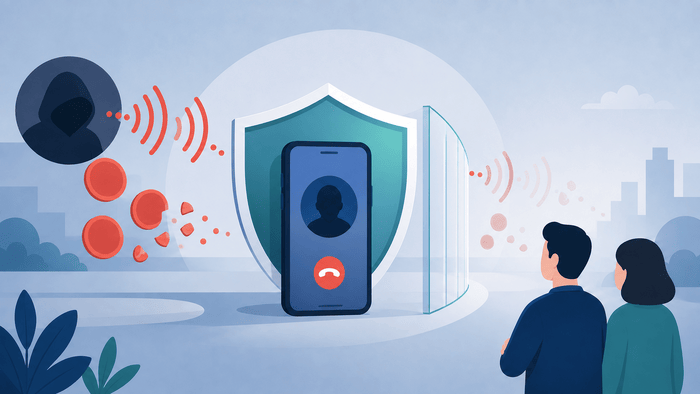
These results are directly tied to the everyday safety of the public. A decline in cases where a single phone call or text message wipes out a lifetime’s savings means the shield protecting people from the traps of fraud crime has grown thicker. In particular, 24-hour report reception and number blocking within 10 minutes function as practical safeguards that let victims get help the moment they realize they have been targeted.
Office for Government Policy Coordination Minister Lim Ki-geun called the past year’s results ‘an exemplary case of inter-ministry collaboration and proactive administration,’ and asked officials to ‘work hard on cooperation and communication so that these achievements are not confined to voice phishing but spread to other fields as well.’ He added, ‘The greatest goal of the Lee Jae-myung administration is to be a government that protects the lives of the people and safeguards their livelihoods,’ stressing that ‘because responding to voice phishing is a crucial task in protecting people’s lives, please take on this great responsibility and work even harder.’
지역 홍보대사 신청 기자양성과정 신청 코리안투데이 지부장 신청 코리안투데이 인천강화
THE KOREAN TODAY × WIA CODE
이 기사의 WIA Code

WIA Code 스캐너로 비추면 인터넷 없이 발행 사실과 위·변조 여부를 확인할 수 있습니다.
휴대폰 기본 카메라로 찍으면 스캐너 안내 페이지가 열립니다 — 기사 바로 열기
움직이는 코드(스트림) 한 장에 기사 전문(사진 포함)이 담겨 있습니다 — WIA Code 스캐너로 약 18초 비추면 폰에 저장되어 인터넷 없이도 읽을 수 있습니다. Stream.mp4 도 여기서 받습니다.
WIA Code · 코리안투데이




Leave a Reply