
By Columnist Kim Mi-hee
Why Scent Reaches the Heart First
It is often said that people sense a space through the nose before they see it with the eyes. The scent that hits as soon as a door opens shapes a first impression of that space, and that impression can translate into physical tension before it is even put into words. So when the smell that greets you after a long day of effort is heavy and stale, your spirits can sink before you even have a chance to sit down. This is not oversensitivity — it is a natural response anyone would have.
Spaces used for caregiving are especially prone to accumulating odors. Frequent ventilation is often difficult, and the smells of disinfectant, medicine and bedding used for long periods of lying down tend to build up layer upon layer. You may have noticed how heavy the air feels when opening your parent’s door in the morning, or your own door in the evening after a tiring day. That momentary stuffiness may seem trivial, but when it repeats every day, it quietly accumulates in the mind of the caregiver as well.
Changing the scent of a space, then, is not a luxury but closer to a small act of tending to the texture of the day. The goal is not to force in a pleasant fragrance, but to lift away one layer of heavy, stagnant air. The methods introduced in this article are not claims that aromatherapy can cure or prevent illness — they are practical ways to gently ease the air and the mood in daily life. The change does not need to be dramatic. Simply making that first breath a little more comfortable when you open the door is enough of a start.
Starting With a Bowl of Hot Water
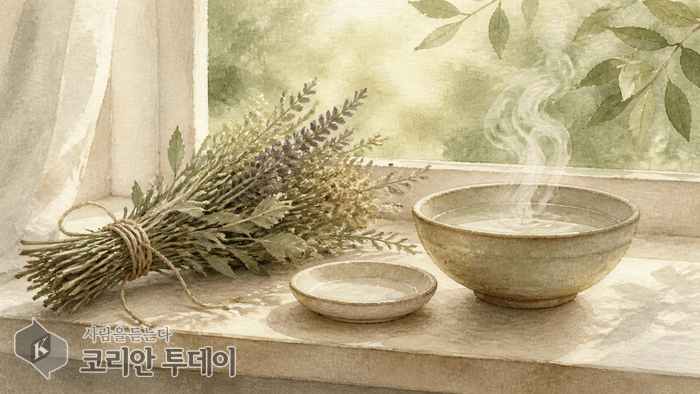
What a diffuser essentially does is slowly release fragrance compounds into the air. A bowl of hot water can serve the same purpose. Steam rising from hot water cannot carry scent far or for long, but it is more than capable of softening the air in a nearby space. The difference becomes especially noticeable quickly in small rooms or bathrooms where odors tend to linger.
The method is simple. Fill a bowl or a wide cup with hot water, float a handful of dried herbs such as lavender or rosemary in it, or add a drop or two of a favorite aromatic oil, and place it by a window or in a corner of the room. As steam rises, the scent spreads gently through the room; once the water cools, simply reheat it or replace it with fresh water. When placing this in a parent’s room, dried herbs tend to be gentler and more comfortable than oil, so it may be best to start there.
What makes this method worthwhile is the brief time spent preparing it. The few minutes spent boiling water, filling the bowl and choosing herbs to float naturally involve moving your hands while steadying your breath. It creates a small window of preparation devoted entirely to yourself, distinct from the hands you use to cook meals or manage medication. Even without being anything grand, such moments can serve as a brief comma in the middle of the day.
A Small Dish Is Enough
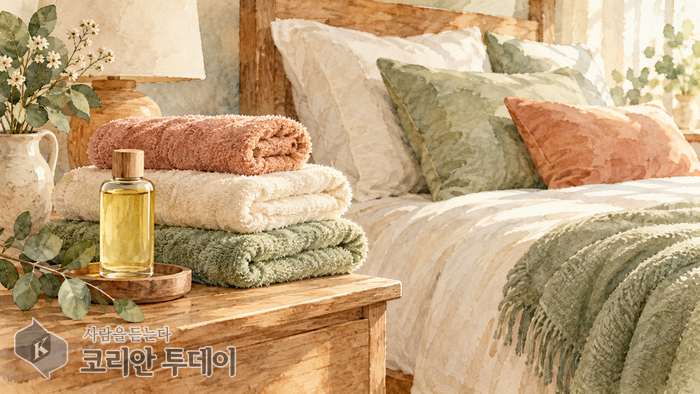
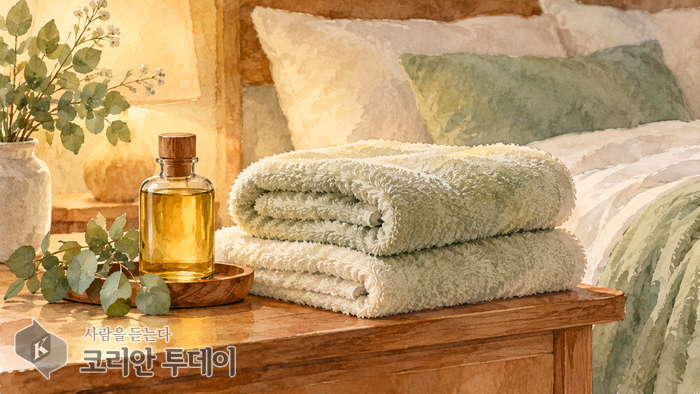
On days when hot water feels like too much trouble — especially days when you need to stay close to your parent and can’t step away — there is an even simpler method. Line a small dish or saucer with tissue or a cotton pad, add a drop or two of a favorite oil, and place it by a window or on a bedside table. Even without heat, the scent spreads gently and fades gradually over time, so it is not overly stimulating. Placing it near a window or doorway, where air naturally moves through the room, works better than placing it right next to a bed where someone often lies.
This method is especially useful when it is hard to ventilate an entire room overnight or while out during the day. For example, after bathing your parent and tidying their room in the morning, placing a small dish by the window before heading out can make the air noticeably different when you return in the evening. The dish can be washed and reused, and only a few drops of oil are needed each time, so the cost is minimal. Most importantly, since no fire or heat is involved, it is safe to use in a space where an elderly parent stays.
When choosing a scent, it is best to start with something familiar and comforting rather than strong or elaborate. Scents already familiar from the kitchen, such as lavender, yuzu or citrus peel, tend to feel less unfamiliar to parents as well. Some people find strong scents cause headaches or discomfort, so it is best to start with just a drop or two of oil and adjust up or down after observing the response over a few days. It is worth remembering that all of this is a way of easing the mood in daily life, not a method for eliminating or treating any symptom.
The Heart Behind Choosing a Scent, the Heart Behind Changing a Space
Changing the scent of a space is ultimately also about being attentive to the feelings of the people who live in it. A scent that is pleasant to you may feel burdensome to your parent, and the reverse can be true as well. That is why it helps to try one scent very lightly at first, then observe your parent’s expression and reaction and adjust from there. I believe this process is itself an extension of caregiving — the attentiveness to another person’s comfort, even over something as small as a scent.
It is also worth remembering that ventilation and fragrance are not in competition but work together. Before filling the air with scent, it helps to open a window, even briefly, to let out stale air first. Placing a bowl of dried herbs or a small dish afterward allows a gentle scent to settle over the freshly circulated air, creating a far more natural and comfortable feeling. Rather than trying to mask odors with fragrance, it helps to think of it as first cleansing the air and then adding a touch of scent on top.
Today’s Heart-Care Practice
★☆☆This evening, fill a bowl with hot water and place it by a window. Stand in front of it and watch the steam rise for just 30 seconds while breathing slowly. As your eyes follow the steam, your breathing naturally slows, and that brief moment becomes time devoted entirely to yourself within the day.
★★☆Line a small dish with a cotton pad, add just one drop of your favorite oil, and place it by a window in the room. As the scent fades, add another drop, and over a day or two, adjust the strength of the scent to suit yourself. These small decisions about adjusting the scent give a sense that you are caring for yourself today.
★★★On a day when you have a bit more time, open a window to air out the room for five minutes, then float dried lavender or citrus peel in a bowl of water and sit beside it for a while. Simply feeling, in your body, the way scent settles over air that has just been cleansed by ventilation can leave both the room and the mind feeling more in order.
Always start with just a drop or two of oil, and if your parent is sensitive to scent or has weak respiratory health, watch their reaction closely before use. Please remember that the methods in this article are everyday wisdom for easing mood and the atmosphere of a space — not a way to prevent or treat illness.
For more heart-care stories, visit the Korea Self-Healing Association.
Kim Mi-hee — aromatherapist, social worker, certified care worker, and hospital companion manager — draws on her own experience caring for aging parents to write practical, useful guidance for caregivers in the same situation. The Korean Today, Nam-Incheon.
#SignsOfEmotionalCare #Aromatherapy #EverydayScent #CaregivingForParents #SelfCare #NoDiffuserNeeded
[ Reporter Kim Mi-hee: incheonsouth@thekoreantoday.com ]
Become a Local Ambassador Apply as Branch Director The Korean Today — Nam-Incheon
 |
THE KOREAN TODAY × WIA CODE
이 기사의 WIA Code

WIA Code 스캐너로 비추면 인터넷 없이 발행 사실과 위·변조 여부를 확인할 수 있습니다.
휴대폰 기본 카메라로 찍으면 스캐너 안내 페이지가 열립니다 — 기사 바로 열기
움직이는 코드(스트림) 한 장에 기사 전문(사진 포함)이 담겨 있습니다 — WIA Code 스캐너로 약 36초 비추면 폰에 저장되어 인터넷 없이도 읽을 수 있습니다. Stream.mp4 도 여기서 받습니다.
WIA Code · 코리안투데이



Leave a Reply