
Seoul’s Gangseo-gu (District Mayor Jin Kyo-hoon) has selected “Five Promises” as its action agenda to fix the unreasonable work practices employees encounter on the ground, launching an effort to build a fair yet efficient organizational culture. The five tasks are: not repeatedly producing similar documents; cutting down on paper printouts and filing; holding meetings and reporting only as much as necessary; prioritizing respect and communication over burdensome customs; and creating a workplace where people feel secure. At the heart of the initiative is scrapping the “office presence lamp” (jaesil-deung)—a symbol of the manager-centered, authoritarian approval culture—and shifting to a working culture centered on frontline staff. “An organizational culture of integrity cannot be built through orders or declarations alone,” District Mayor Jin Kyo-hoon said, pledging that managers would lead by example.
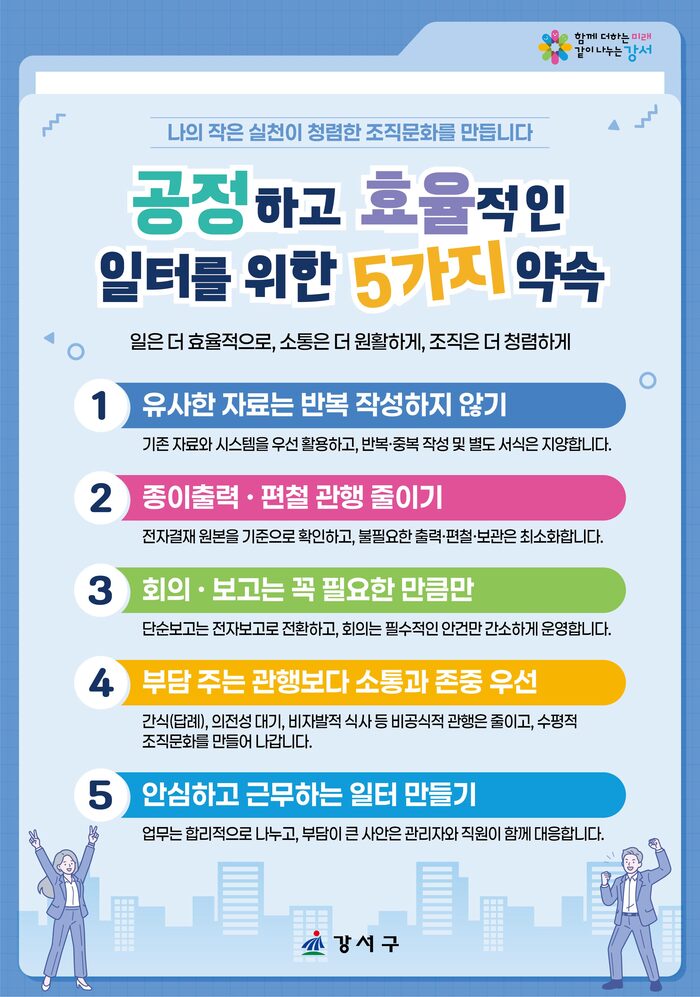 [코리안투데이] Poster for the tasks to reform unreasonable practices © 송정숙 기자 |
A distinctive feature of these improvement tasks is that they began not with directives handed down from above but with voices from the field. The district conducted a survey of all employees and gathered a wide range of frontline opinions through a “junior staff roundtable” chaired by the district mayor himself. In the process, it analyzed the practices that had been imposing inefficiency and burden on the workplace and organized them into the five tasks. The targets for improvement were the pain points that frontline workers had long found troublesome—repetitive document preparation, routine paper printing, and perfunctory meetings.
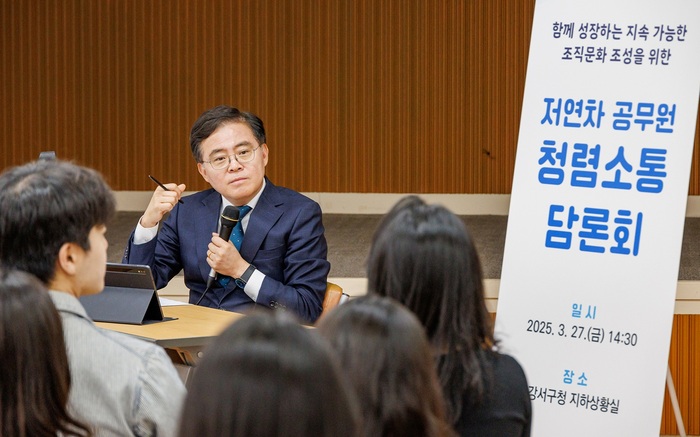 [코리안투데이] Scene from the integrity communication forum for junior civil servants (March 27)-1 © 송정숙 기자 |
Specifically, going forward the district will avoid re-creating materials that can be checked in its electronic document system or that have already been prepared, and will minimize the paper printing and document filing that had been done out of habit. Simple information sharing and minor administrative matters will be replaced by electronic reporting via email or messenger, and meetings will be held only around items that genuinely require discussion. On the organizational culture side, the district will simplify formality-centered procedures such as protocol, leave attendance at meals and staff dinners to individual choice, and distribute work in a balanced way that takes workload and difficulty into account. For high-burden tasks such as handling abusive complaints or responding to the council, it will also strengthen a collaborative system in which managers take part.
In particular, starting this month the district has switched to an online method of checking whether managers are in their offices through its internal administrative system. By eliminating the “office presence lamp” that used a light to signal whether someone had stepped away from their desk, the move is seen as a symbolic measure to transform a superior-centered, face-to-face and authoritarian culture into an efficient, frontline-centered one. As a trend emphasizing communication and autonomy—stripping away rigid hierarchy and formalism—spreads across the public sector, the initiative is significant in that the district has given it concrete form through visible reform of everyday practices.
The tasks also align with the direction for organizational management that District Mayor Jin Kyo-hoon has stressed since the launch of the ninth popularly elected local government. At his inauguration ceremony held on the 1st for senior officials, Jin cited swift decision-making, a streamlined reporting system, and a culture of mutual respect, emphasizing the need for an “organization that can work lightly.” Rather than leaving the improvement tasks at the level of policy-setting, the district delivered them as open training through an expanded managers’ meeting and streamed it live on YouTube for all employees to watch, making clear that this is a shared institutional task for every department and manager to practice together.
Going forward, the district plans to have each department select and carry out at least one task to reform unreasonable practices suited to its own circumstances, review the results, and spread best practices to all departments. Alongside this, it will distribute promotional posters, provide manager training, and share improvement cases. “Starting with managers leading by example, we will reduce unnecessary practices and create an environment where employees can work fairly and efficiently,” Gangseo-gu District Mayor Jin Kyo-hoon said. For more information, contact the Gangseo-gu Office’s Audit Officer (☎02-2600-6009).
송정숙 기자 (gangseo@thekoreantoday.com)
지역 홍보대사 신청 기자양성과정 신청 코리안투데이 지부장 신청 코리안투데이 강서
코리안브랜드대상 신청 최고경영인대상 신청 소비자만족도대상 신청
|




Leave a Reply