
By Columnist Kim Mi-hee
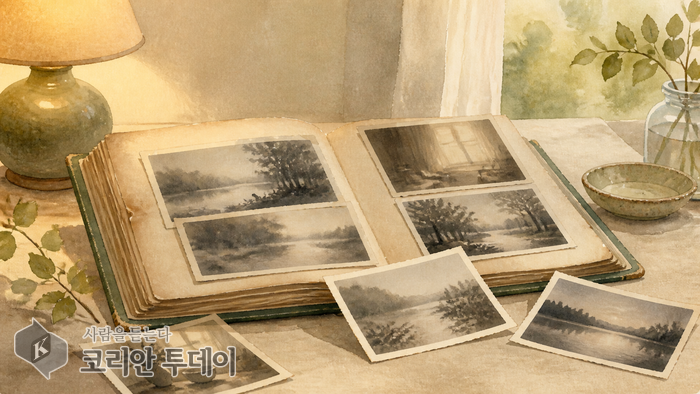
Why a Single Photograph Can Open the Conversation
As people age, recent events often fade quickly, while memories from their younger years tend to remain vivid. Experts say this is because memories that have been recalled and retold repeatedly over the years are etched more deeply into the mind. That is why someone might struggle to recall what side dish they had yesterday, yet describe the scene of moving house thirty years ago in vivid detail. Reminiscence therapy focuses on exactly this point: rather than repeatedly asking about recent events, it shifts the direction of conversation toward memories that are already well preserved and easy to draw out.
This is not a vague comfort technique but a conversational method actually used in the field by social workers and caregivers. Rather than bluntly asking an elderly person to confirm today’s date or their own name at a first meeting, practitioners use old photographs or familiar objects as a bridge to open conversation naturally. This is because people find it far easier to speak in front of a stranger when the topic is something they know well — a story in which they themselves are the protagonist. A single photograph, then, is not simply a keepsake but functions like a doorknob into conversation.
Evenings When Words Just Skim the Surface
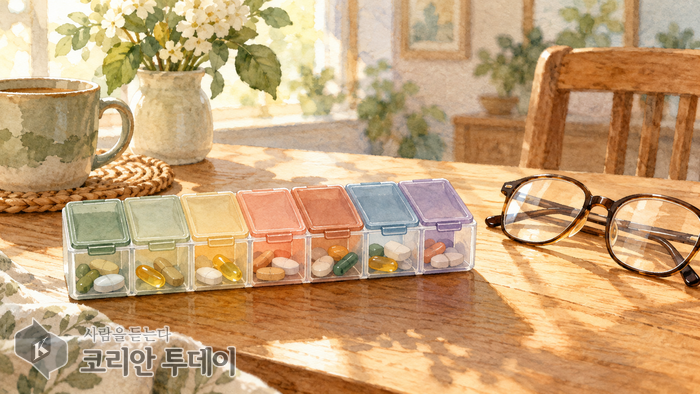
Questions like “What did you eat today?” or “Did you take your medicine?” can end up filling a conversation with nothing but check-ins. Parents, too, often respond to such questions with a short “Yes” or “I ate” and nothing more. Before long, you may realize that even sitting in the same room together does not translate into much real face-to-face conversation. For caregivers, that silence — as if there is simply nothing left to say — can feel especially heavy.
During the years I cared for my own parents, there were many evenings when I sat in a living room filled only with the sound of the television, unsure of what to say. Once the usual check-ins were done, silence would follow, and I only later realized that silence wore on both of us. Then one day, I happened to take out a few old photographs to show my parents, and the conversation that followed was far longer and livelier than usual. From that experience, I learned that conversation begins not with asking better questions, but with finding a good starting point.
The Technique of Opening Conversation With a Photograph
The core of reminiscence therapy lies not in any special equipment but in the direction of the questions. When showing a photograph, questions that demand a factual answer — “When was this taken?” or “Where is this?” — tend to be far less effective than questions about senses and emotions, such as “How did you feel that day?” or “What do you think it smelled like then?” Questions without a single correct answer place no pressure on the listener and instead leave room for the story to unfold freely. This is also why, in social work settings, conversations that share emotion and experience are prioritized over ones that simply confirm facts.
In practice, one or two photographs are enough. Rather than laying out an entire album at once, it helps to set aside a single striking photo in advance and simply offer it, saying, “Please take a look at this.” Once the older person begins telling the story, it is important not to interrupt to correct details or question the logic, but to listen through to the end while nodding along. Even if some facts are slightly off, the emotions and expressions that surface in that moment are the real substance of the conversation. It also helps to allow the conversation to wander naturally rather than forcing it back on track.
When There Is No Photograph, Try Knocking on Other Senses
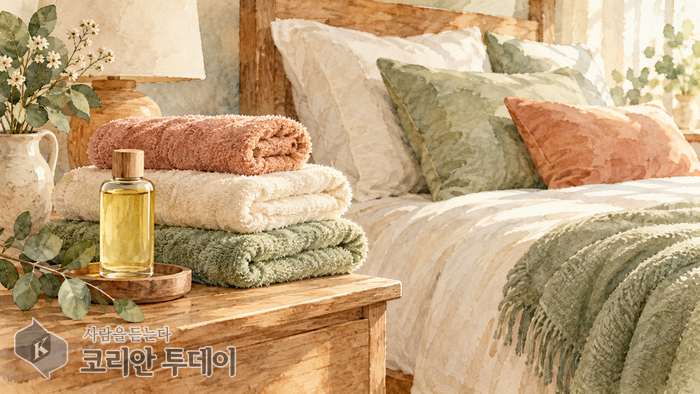
Many households do not have a ready photo album on hand. In that case, an old radio song, a familiar food smell, or the feel of a well-worn object can serve just as well as a starting point. People recall old memories not only through sight but also through smell and sound, and scent in particular can gently soothe the mind without any need for explanation. Simply dabbing a familiar scent, such as lavender or citron, onto a handkerchief kept nearby can make the atmosphere of a conversation noticeably more comfortable.
That said, it is worth remembering that such sensory practices are ultimately a form of self-care that softens the mood of a conversation — not a treatment that cures or prevents illness. Whether it is a photograph, a scent or a sound, the purpose is ultimately the same: to create a little more time to sit face-to-face and talk a little longer, a little more comfortably. When such moments accumulate, they can become both a healthy habit for the brain and a cherished routine of remembering together.
A Time That Stays With the Caregiver, Too
What makes reminiscence therapy valuable is that it is not only for the older person. Listening to old stories often brings unexpected moments in which caregivers learn things about their parents’ younger years — their dreams and hardships — that they never knew before. Such moments can add unexpected warmth to caregiving that had felt like nothing but obligation. In the midst of exhausting caregiving days, the conversation itself can become a source of comfort.
Ten minutes or so of conversation shared over a single photograph may not change an entire day. But that short span of time can easily become the warmest moment of the day. Rather than searching for a perfect method, it is enough to make the small attempt of pulling one old photograph out of a drawer this evening. As that small attempt is repeated, the time in which real conversation flows between parent and child may gradually grow longer.
Today’s Heart-Care Practice
★☆☆This evening, pick one old photograph from a drawer or album and hand it to your parents. All you need is a single question that asks about feeling, such as “How did you feel that day?” instead of “When was this?” The key is shifting the conversation away from confirming facts and toward sharing feelings.
★★☆Jot down a brief note about one memorable part of the story that came up while looking at the photograph. The next time you meet, bring it up again with something like, “That story you told me last time…” — this can give both of you the sense that the conversation is building rather than starting over each time. The experience of stories accumulating naturally extends the time spent remembering together.
★★★If you have the time, try dabbing a familiar scent — lavender or citron, for instance — onto a handkerchief and bringing it along to the conversation. The scent can soften the mood of the exchange, turning the time spent talking into a small moment of self-care for both the caregiver and the older person.
If looking at a photograph brings up a sad memory or a painful story and moves the older person to tears, there is no need to force a change of subject — simply staying with that emotion for a moment is enough. If the person seems especially distressed or confused during the conversation, it is best not to push forward and to take a break instead.
For more heart-care stories, visit the Korea Self-Healing Association.
Kim Mi-hee — aromatherapist, social worker, certified care worker, and hospital companion manager — draws on her own experience caring for aging parents to write practical, useful guidance for caregivers in the same situation. The Korean Today, Nam-Incheon.
#ReminiscenceTherapy #TalkingWithParents #EmotionalCare #FamilyCaregiving #SelfCare #CognitiveStimulation
[ Reporter Kim Mi-hee: incheonsouth@thekoreantoday.com ]
Become a Local Ambassador Apply as Branch Director The Korean Today — Nam-Incheon
 |
THE KOREAN TODAY × WIA CODE
이 기사의 WIA Code

WIA Code 스캐너로 비추면 인터넷 없이 발행 사실과 위·변조 여부를 확인할 수 있습니다.
휴대폰 기본 카메라로 찍으면 스캐너 안내 페이지가 열립니다 — 기사 바로 열기

움직이는 코드는 스트림입니다 — WIA Code 스캐너로 약 35초 비추면 기사 전문(사진 포함)이 폰에 저장되어 인터넷 없이도 읽을 수 있습니다.
WIA Code · 코리안투데이



Leave a Reply